Recurring Patterns: How Your Birth Chart Reveals Behavioral Cycles
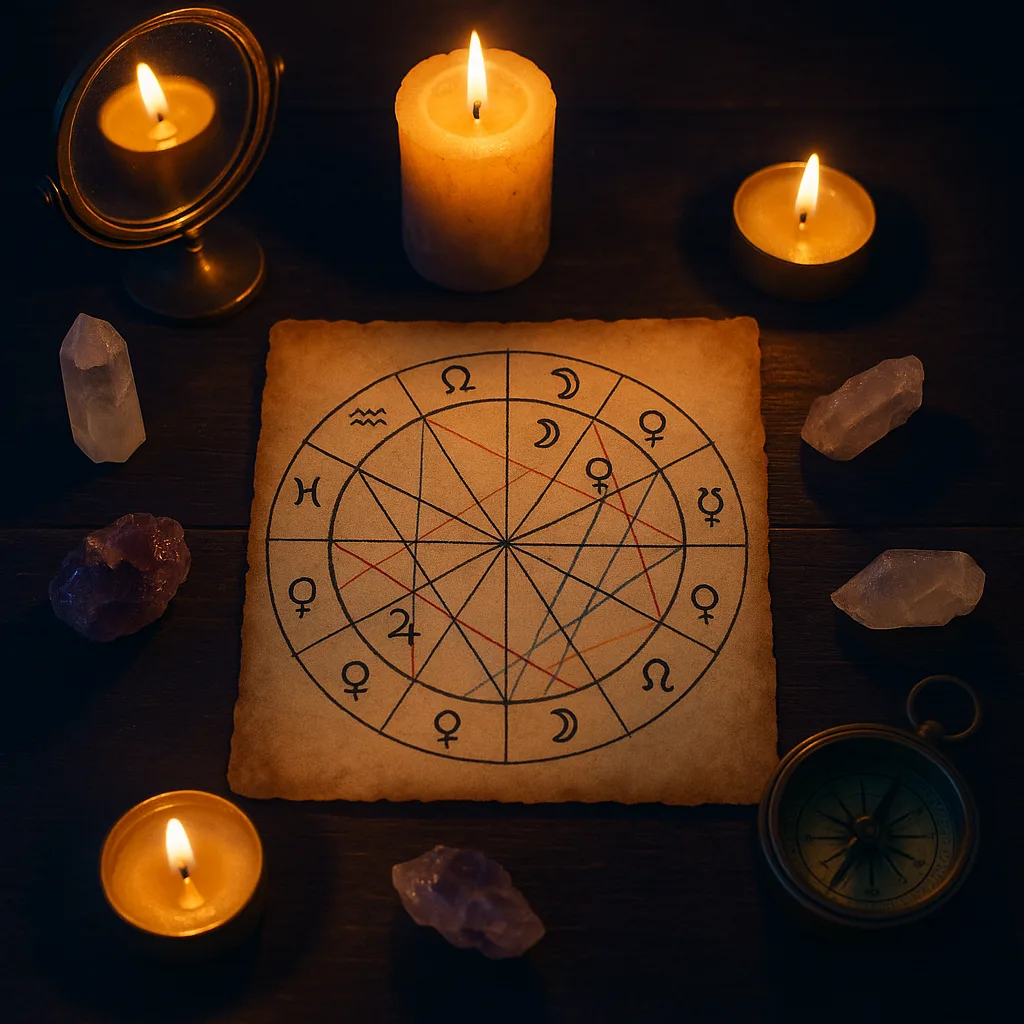
Today, September 8, 2026, the Moon exits its waning phase in Leo and enters New Moon, forming a Solar Eclipse at its peak at 2:45 p.m. (Brasília time), precisely in the sign of the heart and self-expression. It is one of those moments when the sky seems to say: stop carrying what no longer serves you. Dates like this tend to expose something many people have intuited for a long time but avoided confronting. And it is exactly this mechanism, a pattern that keeps reappearing until it is faced, that the birth chart can name with a precision no generic horoscope can reach.
Your birth chart doesn't speak to your day, it speaks to your patterns
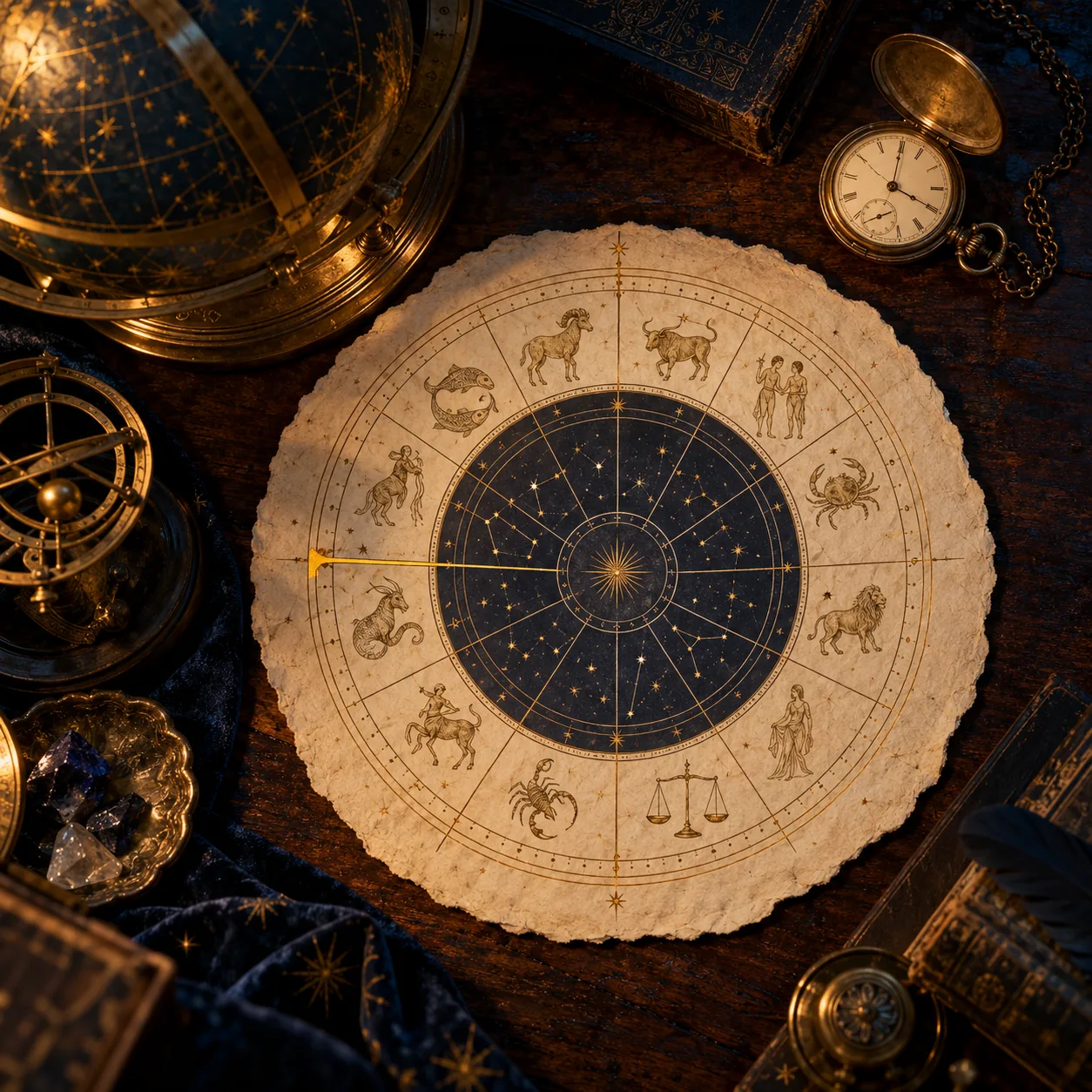
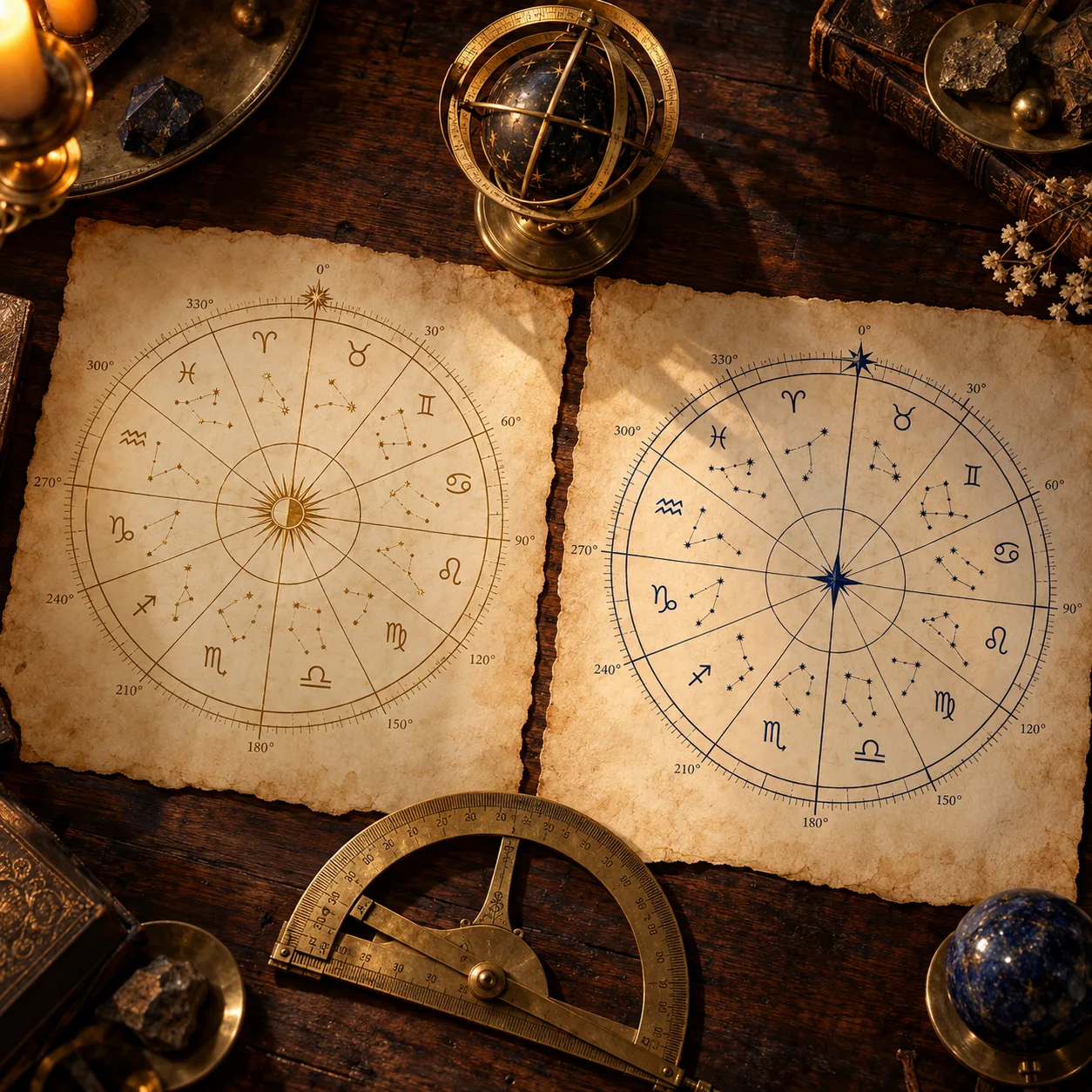
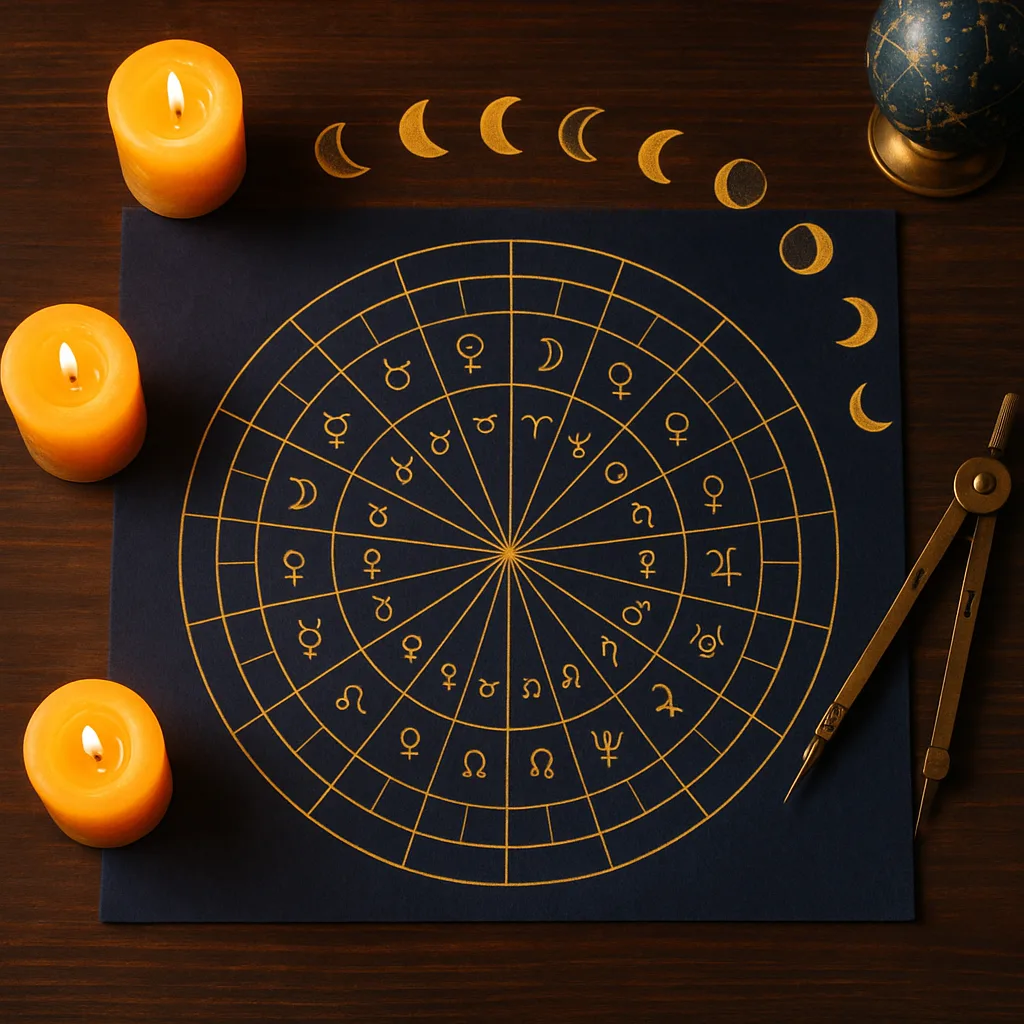
A daily horoscope speaks of general tendencies for those born under the same Sun sign, which includes millions of people with completely different stories. A birth chart is something else: it is a portrait of the exact sky at the moment of your birth, taking into account not only the Sun but also the Moon, Mercury, Venus, Mars and the other planets, distributed across signs, houses and aspects with each other. This combination is what explains why two people born under the same Sun sign can react in opposite ways to the same situation. For those unsure where to begin looking at their own chart, the guide how to read your birth chart for the first time explains the basic logic of planets, signs and houses before diving into more specific patterns.
It is precisely in this specific combination that recurring patterns live. A planet that forms the same type of tense aspect with several other points in the chart, or an astrological house that concentrates several planetary positions, functions as a theme that life insists on bringing back, in different forms, until the person decides to deal with it head-on.
Where to look: aspects, houses and repeating planets
There are some signs in the chart that typically indicate where these cycles are. The table below summarizes the three main ones and what each tends to signal:
| Chart indicator | What it is | What it typically suggests |
|---|---|---|
| Square aspects | Planets at 90 degrees to each other | Internal tensions that call for action and continuous adjustment, not a single final solution |
| Houses with planetary concentration | Three or more planets in the same sector | Area of life (relationships, work, family, communication) that requires recurring attention |
| Rulers in challenging positions | Ascendant ruler in tense aspect with Saturn or Pluto, for example | Patterns linked to self-image or fear that repeat in different life phases |
None of these indicators works as a sentence. They point to where it is worth paying closer attention, not what will necessarily happen. Those wanting to better understand the logic behind squares, trines and other angles between planets can consult the article on conjunction, opposition, trine and square, which details the geometry of these aspects. The concentration of planets in one specific house takes on different weight depending on whether that house is angular, succedent or cadent, a distinction explained in angular, succedent and cadent houses.
Mercury retrograde as a temporary magnifying glass on your own patterns
In 2026, Mercury is retrograde three times: from February 26 to March 20, from June 30 to July 23 (in Cancer) and from October 24 to November 13 (in Scorpio), totaling 68 days in the year, nearly 19% of the calendar. From an astronomical standpoint, it is an optical effect: Mercury orbits the Sun in just 88 Earth days, and when Earth overtakes it in speed, it appears to move backward across the sky, though it continues its normal path around the Sun. For those wanting to track these periods and other planetary positions throughout the year, the site In-The-Sky.org publishes daily ephemerides with dates of conjunctions and planetary visibility windows in the sky.
The interesting symbolic use of this period is not to blame Mercury for lost messages or broken plans. It is to observe: when the same type of misunderstanding, the same forgetfulness, the same doubt about self-confidence returns repeatedly during these cycles, it usually points to a personal pattern that already existed in your birth chart and the retrograde period simply highlights it more clearly for a limited time. It is a short, recurring period that works almost like a reminder: this matter has not been resolved yet. This kind of observation fits the broader idea that certain days carry more weight than others, a theme addressed in planetary transits in daily life.
The backdrop of 2026: Saturn and Neptune in conjunction
Some associate 2026 with a collective moment of reviewing old structures, with the conjunction of Saturn and Neptune in Aries. Saturn represents limits, responsibility and what has already been built; Neptune symbolizes dissolution, uncertainty and the exhaustion of forms that no longer make sense. When the two meet in the sign that opens the zodiac, linked to action and new beginnings, the symbolic reading is that old structures, whether personal or collective, no longer sustain themselves alone.
It is worth treating this as symbolic and cultural material, not as an astronomical fact with proven effect. But as a tool for reflection, this backdrop helps explain why so many people report, this year, the feeling that something needs to change at its root, not just on the surface. If your birth chart already indicated tensions involving Saturn, Neptune or the Aries-Libra axis, this is a period when these questions tend to become more visible. Those who went through or are approaching their Saturn return, around age 29, may recognize this theme more clearly when reading about your Saturn return and life's major cycles.
A simple exercise to start mapping your own cycles
You do not need to master technical astrology to start noticing your own patterns using the chart as a guide. One possible path, in three steps:
- List three situations that have repeated in your life over recent years, changing context but keeping the same underlying feeling (the same sense of not being heard, the same fear of making a commitment, the same difficulty asking for help).
- Look at your birth chart to observe which house and which planets appear associated with this theme (communication typically points to house 3 and Mercury, for example; self-image, to the Ascendant and Sun). The article on the 12 astrological houses helps identify what each sector represents.
- Check whether these points form tense aspects with each other. This does not explain everything on its own, but typically offers clues as to why that specific pattern keeps returning.
The value of this exercise lies not in finding a final answer, but in gaining a more precise vocabulary to name what before seemed only a vague sense of having lived it before.
Self-knowledge is not about eliminating the pattern, it is about recognizing it earlier
Curiously, digital engagement data (such as that released by the Co-Star app in 2024) shows that content about Mercury retrograde generates up to three times more interest than any other astrological topic. This suggests that astrology's greatest appeal lies not in prediction itself, but in the relief of realizing that what you experience has a name, has a form, has a recognizable shape.
Using your birth chart as a self-knowledge tool, in this sense, does not mean waiting for a pattern to disappear completely. It means training your eye to recognize it earlier, with less suffering and more clarity about what to do differently the next time it knocks on your door.
Frequently asked questions
How do I know if a behavior pattern is really in my birth chart?
The most common sign is repetition of tense aspects, like squares, involving the same planet or house. When different situations in life carry the same underlying feeling, it is worth observing in your chart which points appear associated with this recurring theme.
Does Mercury retrograde really cause these patterns or just expose them?
This article treats Mercury retrograde as an optical effect, not as a direct cause of problems. The period functions more as a temporary magnifying glass: it brings to the surface, for a few weeks, patterns that already existed in the person's birth chart.
Do I need to know technical astrology to identify my own cycles?
No. The article suggests a simple three-step exercise: list repeated situations, observe which houses and planets in your chart relate to that theme, and check whether there are tense aspects between them, without requiring deep technical knowledge.
Does the Saturn and Neptune conjunction in 2026 affect everyone the same way?
Not necessarily. The text treats this transit as symbolic and cultural backdrop, which tends to become more apparent for those who already had, in their own birth chart, tensions involving Saturn, Neptune or the Aries-Libra axis.
Recomendado
Astro Reflexo
Descubra o que os astros revelam sobre quem você é. Em menos de um minuto, calculamos seu Sol, Lua e Ascendente com precisão astronômica e uma inteligência artificial escreve um resumo personalizado só para você.
Universo Astral Editorial Team · Birth charts and numerology
This article was produced by the Universo Astral editorial team, with AI tools assisting research and drafting and human review before publication. If you spot anything inaccurate or outdated, let us know at our contact email.