Nakshatra vs. Sun Sign: Why Vedic Astrology Splits the Zodiac Into 27 Constellations Instead of 12
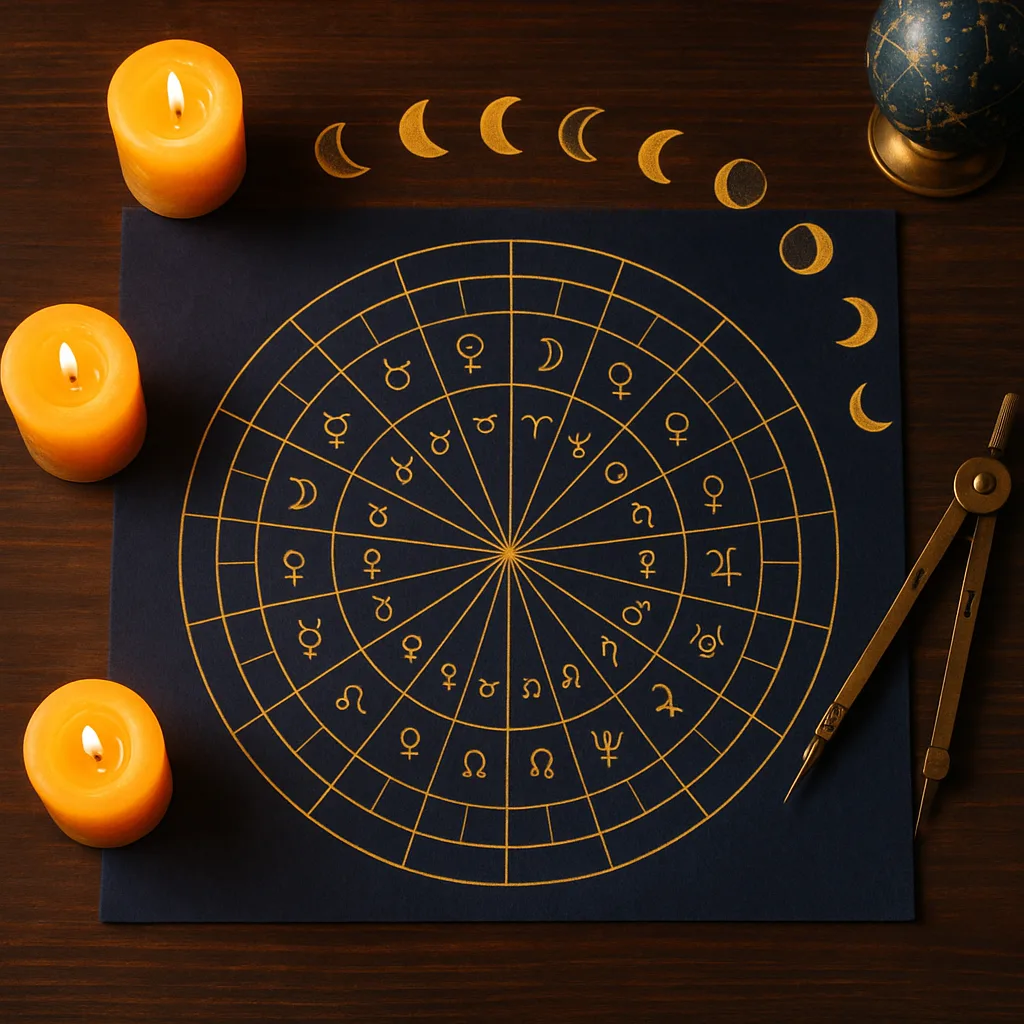
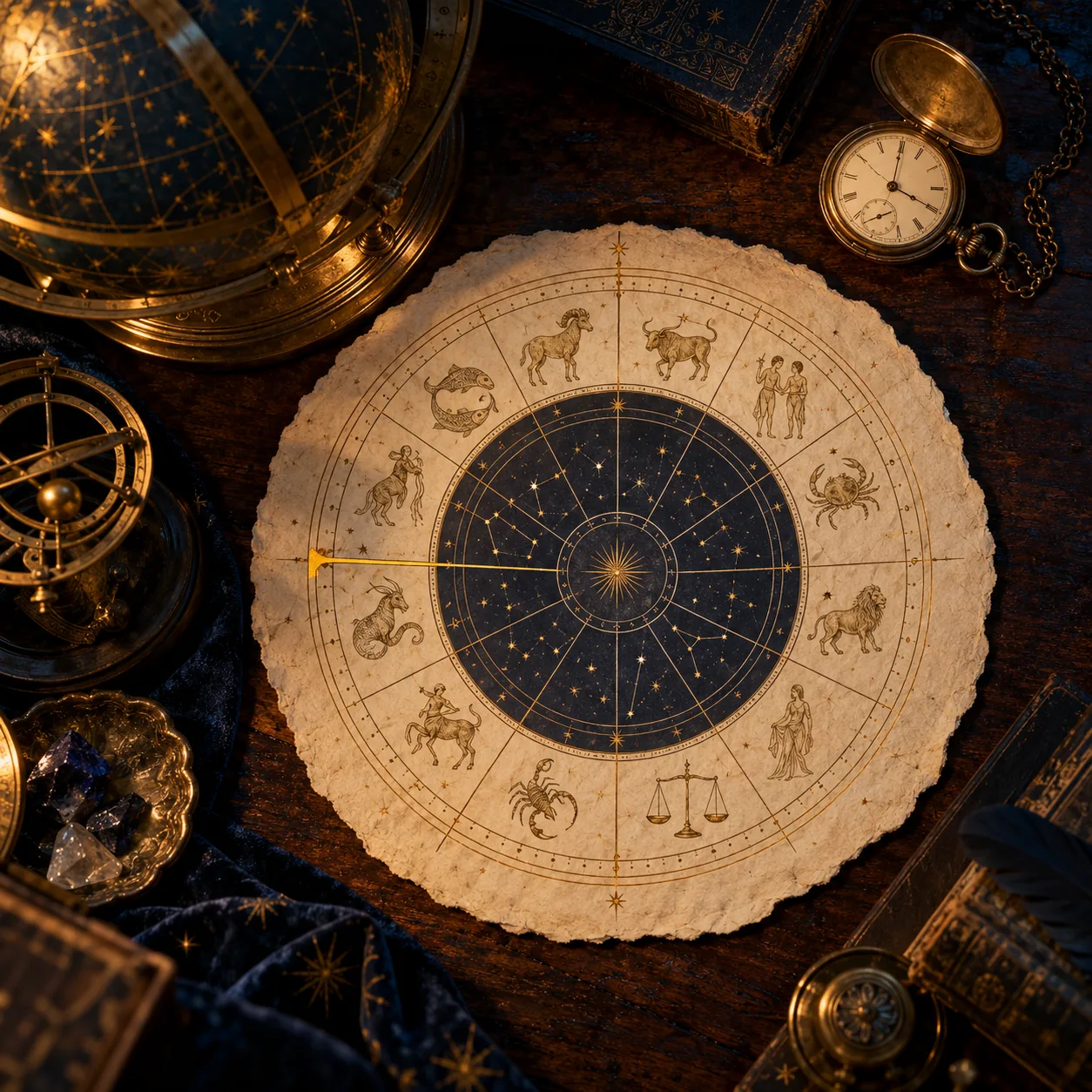
While Western horoscopes settle the matter with 12 signs of 30 degrees each, Jyotish divides the same sky into 27 smaller segments of 13°20′. This isn't about which system is more correct. They're two different clocks spinning inside the same 360-degree circle, each synced to a different celestial body: the Sun on one side, the Moon on the other.
That's the root of the difference between nakshatra and sun sign, and it's also why someone who knows their Western sign well might feel a bit lost the first time they look at a Vedic chart full of names like Ashwini, Rohini, or Mula. It's worth understanding the mechanics before trying to memorize any list.
Two layers on the same circle, not two rival systems
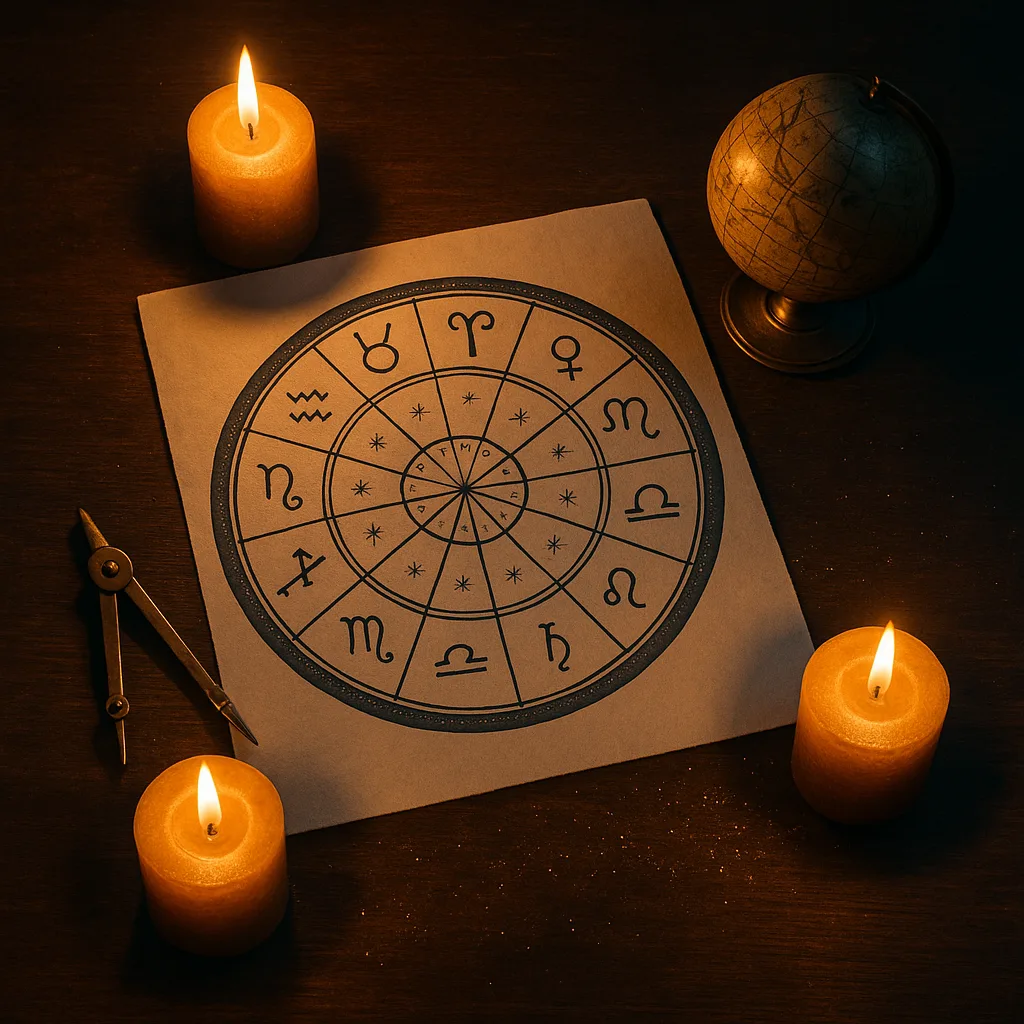
The first common mistake is assuming Jyotish simply swaps the 12 signs for 27 nakshatras. That's not it. The Vedic system keeps the 12 rashis (the signs, conceptually equivalent to Aries, Taurus, Gemini, and so on) and overlays them with a second, finer grid of 27 stellar sectors: the lunar mansions.
The math is straightforward: 27 nakshatras multiplied by 13°20′ each add up to exactly 360 degrees of the zodiac. Since each sign spans 30 degrees, it ends up containing 2 full nakshatras plus a piece of a third one, a ratio of 2 and 1/4 nakshatras per sign. This alone shows visually why the boundaries don't line up: almost no nakshatra fits neatly inside a single sign. Rohini (entirely within Taurus) and Ardra (entirely within Gemini) are the exceptions that prove the rule.
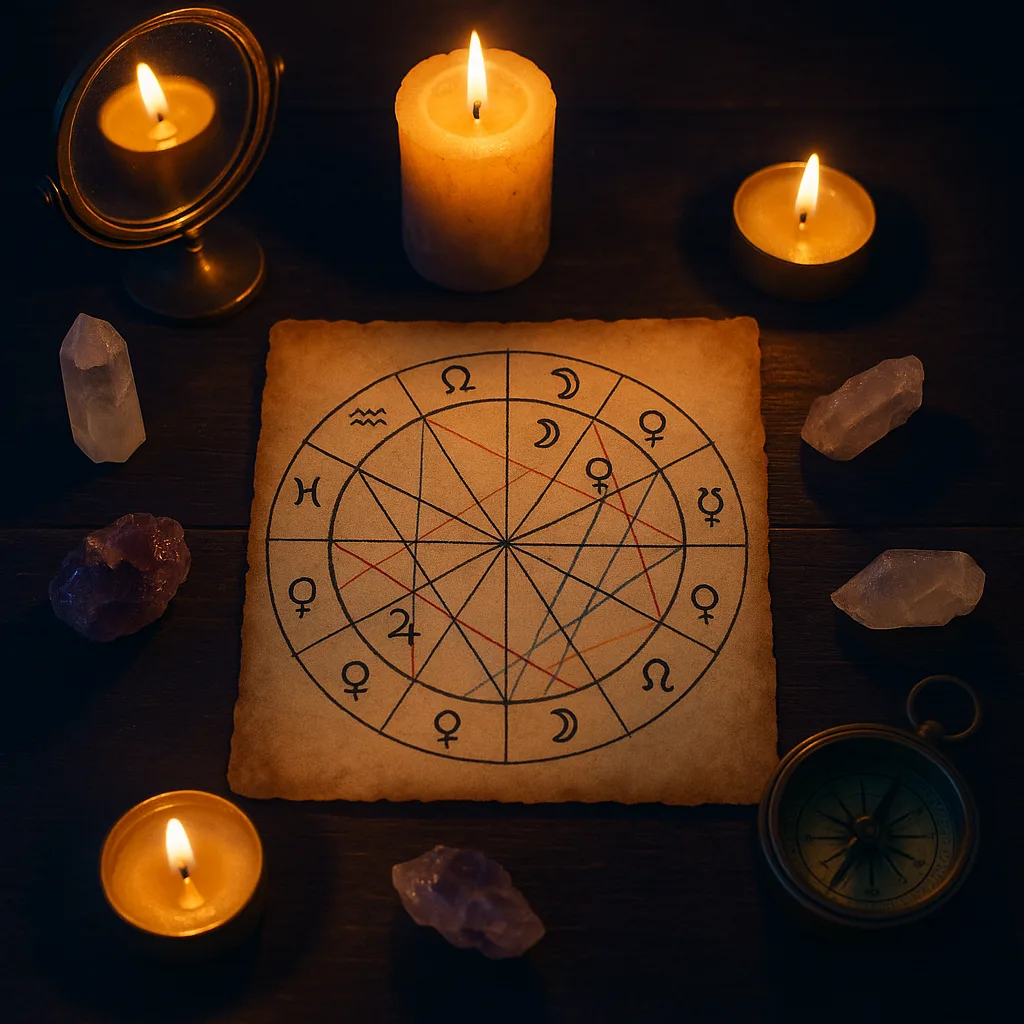
In practice, this means a Vedic astrologer doesn't just look at which sign someone's Moon is in. They ask: in which of the 27 smaller slices, exactly, did that Moon fall? It's a finer resolution on the same surface, not a replacement map.
Why exactly 27: the Moon keeps its own calendar
The number 27 wasn't chosen for aesthetics or loose numerology. It corresponds to a real astronomical fact: the sidereal month, the time the Moon takes to complete one orbit relative to the fixed stars. According to NASA's Moon fact sheet, this cycle lasts roughly 27.3 days.
The Vedic sages who systematized this calendar made an elegant calculation: if the Moon travels the entire zodiac in about 27.3 days, spending roughly one full day in each sector, dividing the sky into 27 parts allows the lunar path to be tracked day by day, almost like a planner. This is the opposite of what the Sun does in the Western zodiac: the Sun takes about 30 days to cross a single sign, which gives us the monthly rhythm of the 'signs of the month' most people are familiar with.
This comparison of speeds captures the underlying difference well: the Western system of 12 signs follows the Sun's yearly clock; the system of 27 nakshatras follows the Moon's near-daily clock. Two different timepieces measuring the same space.
It's worth noting that a 28-nakshatra variant existed historically, including one called Abhijit, mentioned in texts like the Atharvaveda. This 28-nakshatra version never fully disappeared, but it was reserved for specific uses, while the 27-nakshatra system became the standard for the zodiac and for calculating planetary periods.
The difference that matters more: sidereal zodiac versus tropical zodiac
There's a second point, technically even more decisive, that explains why nakshatra and sun sign start from different reference frames: Jyotish uses the sidereal zodiac, while modern Western astrology uses the tropical zodiac.
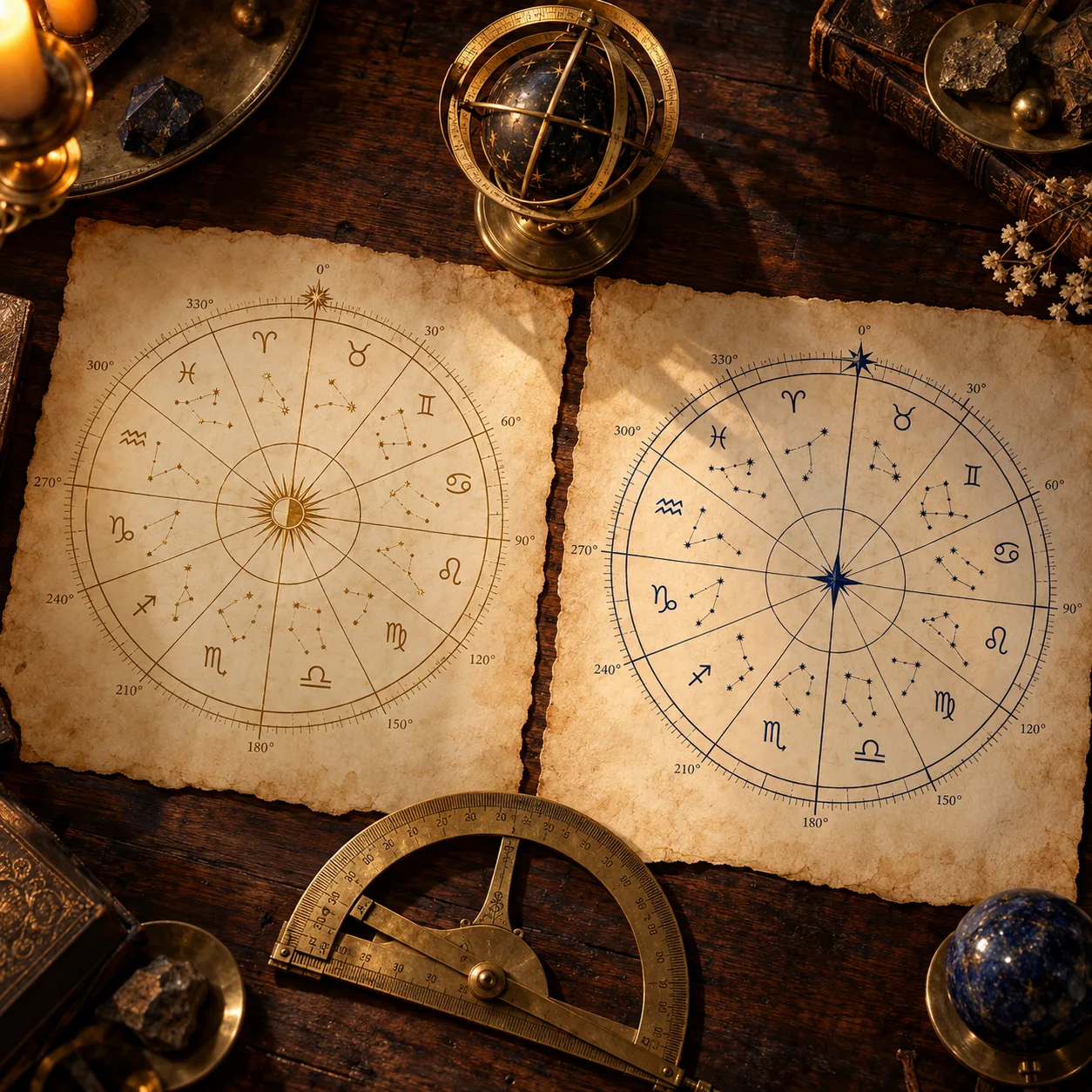
The Western tropical zodiac fixes 0° Aries at the March equinox, regardless of where the constellations actually sit in the sky at that moment. The Vedic sidereal zodiac, on the other hand, anchors its starting point to the actual fixed stars, using an adjustment called ayanamsa.
This adjustment exists because of a real astronomical phenomenon documented since antiquity: the precession of the equinoxes. According to Britannica, this is a cyclical wobble in Earth's rotational axis, spanning thousands of years, that slowly shifts the apparent position of the stars relative to the calendar. The Greek astronomer Hipparchus had already noticed this shift when comparing his star catalog, completed around 129 BCE, with earlier Babylonian records.
In contemporary practice, the most widely used adjustment system in India is the Lahiri ayanamsa, anchored near the star Spica (Chitra). Its value hovers around 24 degrees in the 2020s and grows slowly, about 50 arcseconds per year. That's the value subtracted from a planet's tropical position to arrive at its sidereal position.
The practical result is that a person's Vedic 'sign,' calculated on the sidereal zodiac, almost always differs from the sun sign they know from the West, sometimes by a full sign's distance. This isn't an error in either system: they're different rulers measuring the same sky from different starting points. For anyone wanting to build this foundation before diving into nakshatras, it's worth revisiting the article on how to read a birth chart for the first time.
Where nakshatras come from: a system older than the 12-sign horoscope
A historical detail that tends to surprise people: the nakshatra system is actually older within the Indian tradition than the 12-sign horoscope with an ascendant. The Vedanga Jyotisha, one of the earliest known Indian texts on astrology, dates to the final centuries BCE, though it may reflect an earlier oral tradition from around 700 to 600 BCE.
The 12-sign horoscope format with an ascendant, as we know it today both in the West and in India, has Hellenistic roots and arrived in Indian territory around the 2nd and 3rd centuries CE. In other words: Jyotish absorbed a system of Greek origin and merged it with a native tradition of lunar observation that had already existed for centuries.
The Vedas mention nakshatras more than 200 times, used to guide rituals, agricultural decisions, and even the choices of kings. The classical text that systematizes the human traits attributed to each nakshatra is the Brihat Jataka, by Varahamihira, the Indian astronomer and astrologer of the 6th century CE, who devotes an entire chapter to the subject.
What each nakshatra carries that a sign alone doesn't
A Western sign is essentially a 30-degree slice with an element, a quality, and a ruling planet. A nakshatra carries a more specific layer of information: it has its own name, a ruling deity (devata), a ruling planet among the nine Vedic grahas, and an associated mythological symbol.
Each nakshatra is further divided into 4 padas, or 'steps.' That gives 27 times 4, or 108 padas total across the zodiac, a number that corresponds exactly to the 108 divisions of the D-9 chart (navamsha), used to analyze marriage and life purpose in Jyotish.
The 27 nakshatras are also grouped into three temperament categories called ganas, used mainly in marital compatibility analysis: Deva Gana (more spiritual, peaceful temperament), Manushya Gana (practical, oriented toward family and work), and Rakshasa Gana (intense, independent, intuitive). This classification has no direct equivalent among the 12 Western signs, just as the 12 Western astrological houses follow their own division logic that shouldn't be confused with that of the nakshatras.
Vimshottari Dasha: the application that only exists because there are 27 nakshatras
The difference between nakshatra and sun sign isn't just theoretical: it underpins one of the most widely used tools in Jyotish, the Vimshottari Dasha system, with no direct equivalent in Western astrology.
The word vimshottari means '120' in Sanskrit, referring to the total length of the cycle: 120 years, divided into nine consecutive planetary periods. Each planet governs a fixed block of years:
| Planet (Graha) | Period length |
|---|---|
| Ketu | 7 years |
| Venus (Shukra) | 20 years |
| Sun (Surya) | 6 years |
| Moon (Chandra) | 10 years |
| Mars (Mangala) | 7 years |
| Rahu | 18 years |
| Jupiter (Guru) | 16 years |
| Saturn (Shani) | 19 years |
| Mercury (Budha) | 17 years |
The starting point of this entire cycle is defined by the nakshatra where the Moon sat at the moment of birth, not by the sun sign. The calculation follows this sequence:
- Locate the exact sidereal longitude of the natal Moon and divide it by 13°20′ to identify which of the 27 nakshatras it fell in.
- Check which of the nine planets rules that specific nakshatra: that planet opens the person's first Dasha period.
- Calculate how much of that nakshatra remained at the moment of birth, proportionally, to determine how many years are left of that first planetary period.
- Follow the fixed sequence of the nine planets from that point on, always in the same order, repeating the 120-year cycle.
This mechanism is traditionally attributed to the sage Parashara, in the text Brihat Parashara Hora Shastra. For anyone wanting a better grasp of how the grahas fit into this calculation, it's worth reading the article on the 9 classical planets of Jyotish.
Comparing the two logics side by side
| Criterion | Western astrology (tropical) | Jyotish (sidereal) |
|---|---|---|
| Zodiac's zero point | March equinox, fixed | Anchored to fixed stars (Lahiri ayanamsa, near Spica) |
| Main division | 12 signs of 30°, tied to the Sun | 12 signs + 27 nakshatras of 13°20′, tied to the Moon |
| Reference body for the cycle | Sun (tropical year) | Moon (sidereal month, about 27.3 days) |
| Predictive time system | Transits and progressions over the 12 signs | Vimshottari Dasha, fixed 120-year cycle |
This table helps clarify why the question 'nakshatra or sun sign, which matters more' starts from a flawed premise. These are two layers of reading with different functions within the same Vedic chart, and neither replaces an analysis of the Lagna (the sidereal ascendant) or the study of the houses, something the article on the 12 astrological houses explains in detail for anyone just starting to piece this full picture together.
Frequently asked questions
Does nakshatra replace the sign in Vedic astrology?
No. Jyotish keeps the 12 signs (rashis) as usual and adds the layer of 27 nakshatras on top, which details the position of the Moon and other planets with greater precision. The two pieces of information are read together, not one instead of the other.
Why is my Vedic sign different from my Western sign?
Because the two systems use zodiacs with different starting points. The Western one is tropical, fixed to the March equinox; the Vedic one is sidereal, adjusted to the actual position of the stars through the ayanamsa. This accumulated difference, caused by the precession of the equinoxes, can shift the calculated sign by as much as a full sign.
How do I find out my birth nakshatra?
You need to calculate the exact sidereal position of the Moon at the moment of birth and check which of the 27 sectors of 13°20′ it falls into. This calculation is usually done with Vedic astrology software or by an astrologer, using an accurate birth date, time, and location.
Do the 27 nakshatras relate to Chinese zodiac signs or other cultures?
Not directly. The nakshatras are a specific construction of the Indian Vedic tradition, documented in texts like the Vedas and the Vedanga Jyotisha. Other ancient cultures, such as Chinese and Arabic traditions, developed their own systems of lunar mansions, with different logics and numbers of divisions.

Recomendado
MAPA ASTRAL E NUMEROLÓGICO PERSONALIZADO
Mapa Astral + Numerologia Um mergulho profundo na sua essência. E se tudo o que você procura… já estivesse dentro de você - esperando para ser revelado?
Universo Astral Editorial Team · Birth charts and numerology
This article was produced by the Universo Astral editorial team, with AI tools assisting research and drafting and human review before publication. If you spot anything inaccurate or outdated, let us know at our contact email.