How to Read a Birth Chart for the First Time: A Beginner's Guide
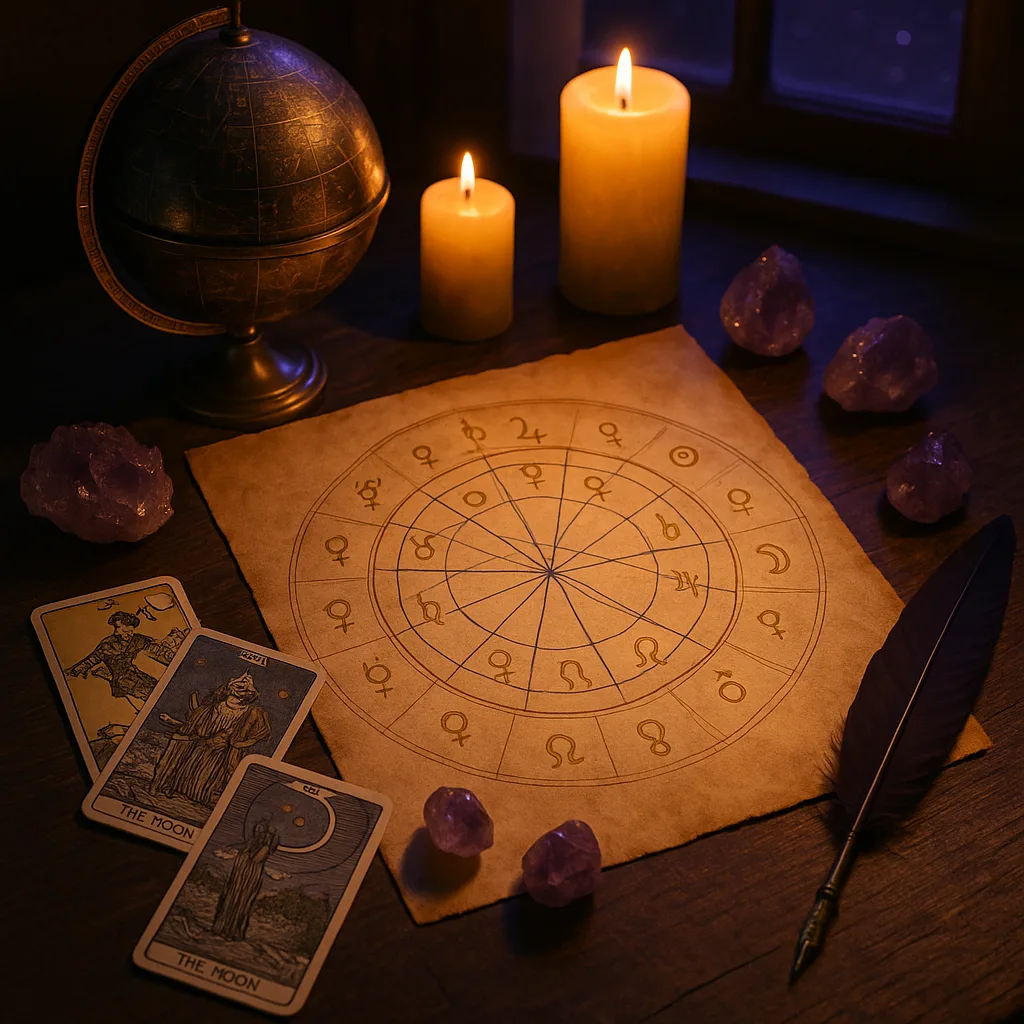
If you've just generated your birth chart and are looking at a circle full of symbols, lines and numbers, it's normal to feel a bit overwhelmed. Decoding this chart is simpler than it looks once you understand the logic behind it. This guide walks through the basics step by step, so you can start recognizing your own story in the chart.
What a birth chart actually is
Think of your birth chart as a snapshot of the sky taken at the exact moment you were born. At that instant, the Sun, Moon and other planets occupied specific positions relative to Earth, and that configuration is recorded like a kind of cosmic fingerprint, unrepeatable and entirely yours.
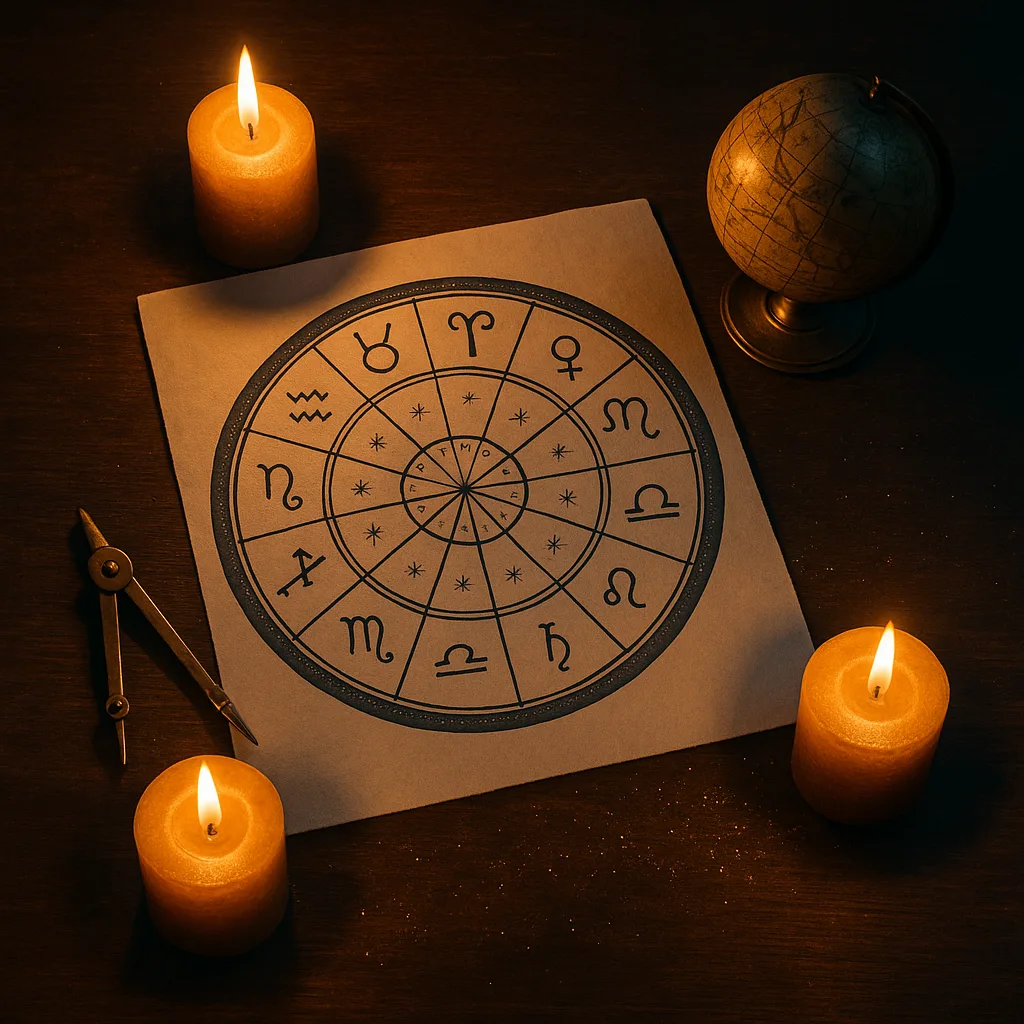
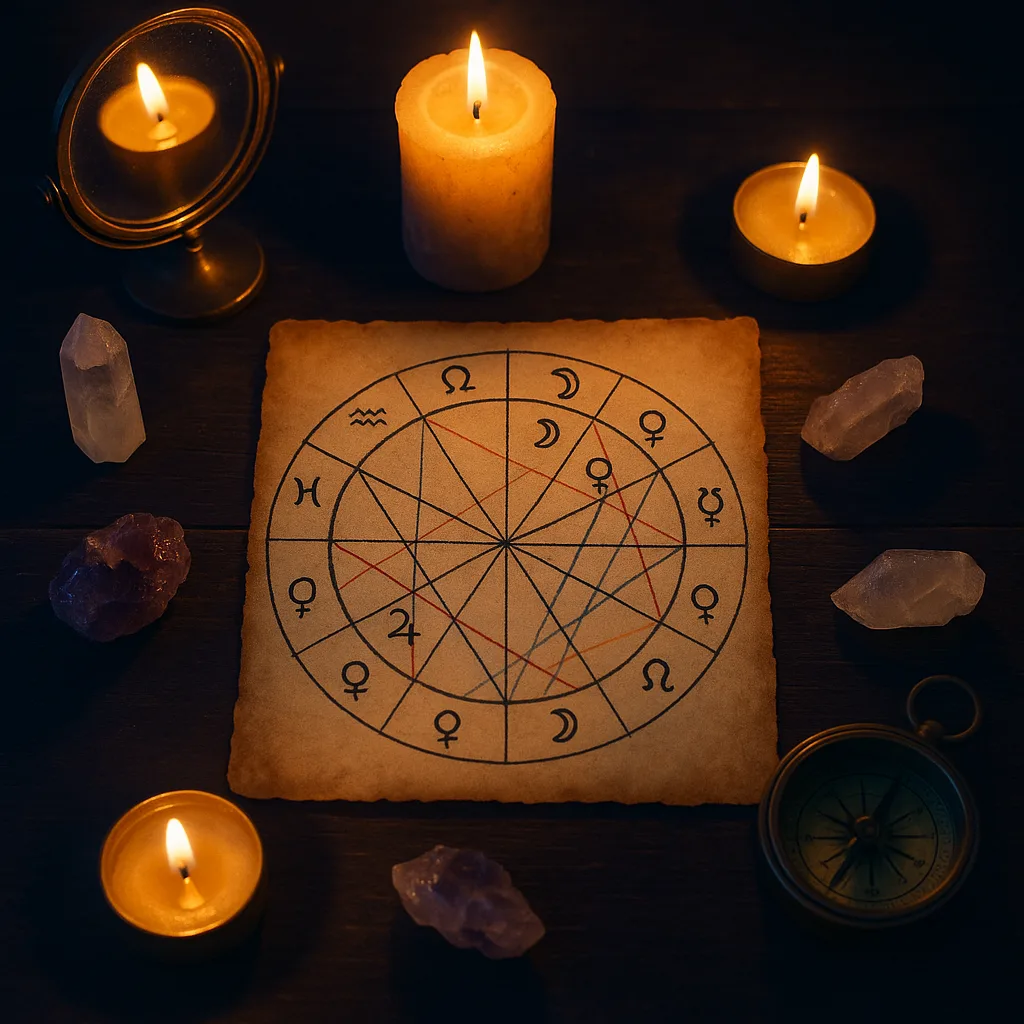
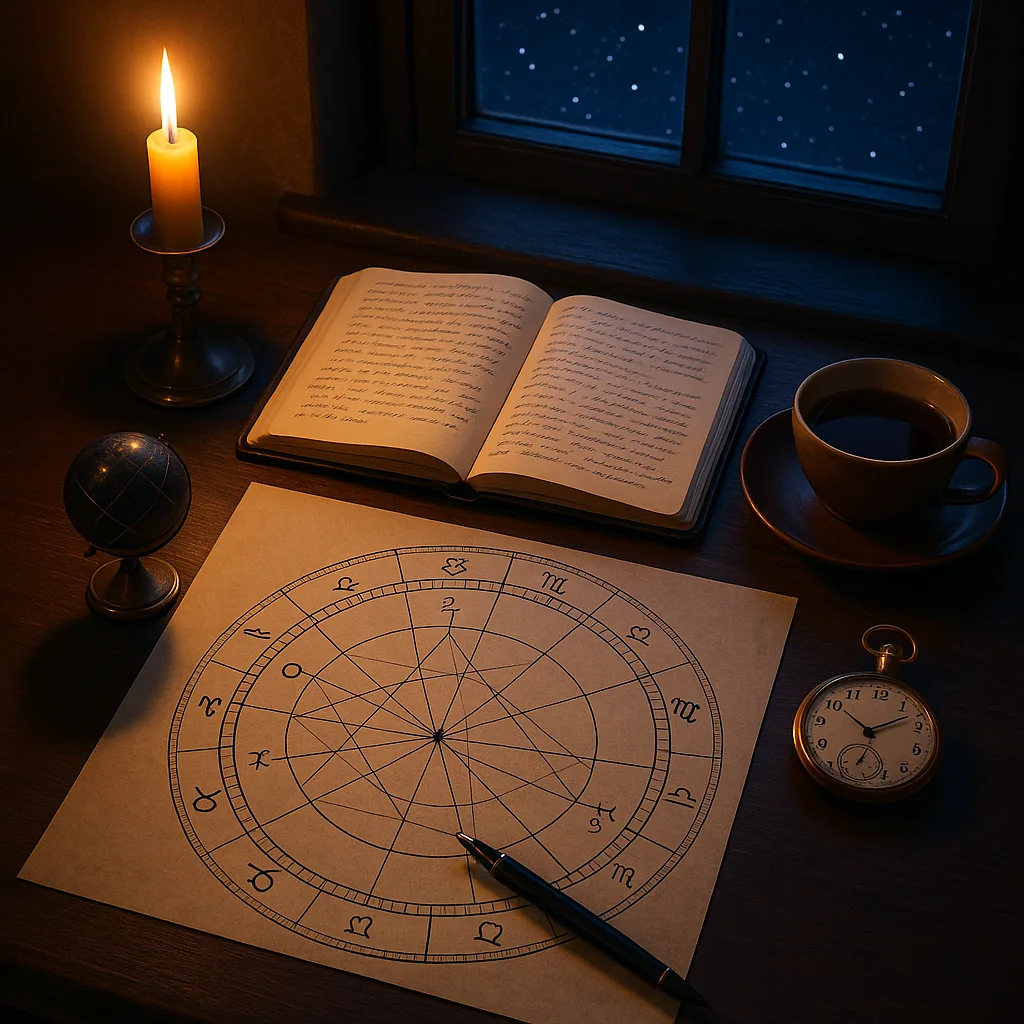
Visually, this snapshot is represented by a circle divided into twelve slices, called astrological houses. Each slice corresponds to an area of life: relationships, work, family, spirituality, and so on. Scattered across this circle are the planets, each positioned in a zodiac sign and within one of these houses.
One point worth emphasizing: there's no such thing as a good or bad chart. Astrology doesn't deal in definitive verdicts. It works with tendencies, potentials and possible paths. A challenging placement isn't a curse. It's an invitation to self-knowledge and growth in a particular area of life.
The three pieces of data that make it all possible
For an accurate reading, three pieces of information are essential: your date, time and place of birth. Since the chart is a snapshot of the sky at that moment, any inaccuracy in these details can shift planets and houses and distort the interpretation.
The birth time deserves special attention. A difference of a few minutes is enough to change the Rising Sign and the layout of the houses. If you're not sure of your exact birth time, check your full birth certificate, which usually has this information recorded. Without that precision, the reading falls short, especially for the Rising Sign.
To generate your chart for free, there are reliable tools widely used by astrology students, such as Astro.com, AstroSeek, Cafe Astrology and Personare. Enter your details and, within seconds, you'll have your chart ready to explore.
The logic behind the chart: actors, roles and stages
One useful way to understand the structure of a birth chart is to imagine a stage play. Three elements combine to tell the story:
- The planets are the actors. Each one represents a different energy or psychological function. The Sun is the lead role, tied to your essence and identity. The Moon handles your emotional world. Mercury governs communication and thinking. Venus speaks of affection and pleasure. Mars, of action and drive. And so on with the rest.
- The signs are the roles, the costumes the actors wear. They define the style, the tone, the way each planet expresses its energy. Mars in Aries acts impulsively and directly; that same Mars in Libra seeks diplomacy before acting. It's the same actor, but in a different costume.
- The houses are the stages. They show which area of life that energy tends to show up in most strongly. House 2, for example, relates to finances and material resources; House 7, to partnerships and relationships.
The challenge of reading a chart lies in weaving these three layers together. The same planet behaves differently depending on the sign it's in and the house it occupies. That's why two people with the Sun in Cancer, for instance, can experience that energy in very different ways, depending on the rest of their chart.
Where to start: the Sun, Moon and Rising Sign trio
With so many symbols, it's tempting to want to understand everything at once, but that usually creates more confusion than clarity. A better path is to start with the three most important pillars of the chart: the Sun, the Moon and the Rising Sign.
Sun: the essence you carry
The Sun sits at the symbolic center of the chart and represents your core identity, your vitality, and the way you assert your presence in the world. It's the most familiar point in popular astrology: when someone says 'I'm a Scorpio' or 'I'm a Gemini,' they're referring to the sign the Sun was in at the moment of birth.
Moon: the territory of emotions
If the Sun speaks to who you are on the outside, the Moon reveals what's happening in your inner world. It's connected to your emotions, habits, intuition, and the way you seek comfort and emotional security, including at home and in your closest relationships. The Moon changes signs roughly every two and a half days, which makes it one of the most personal and specific points in the chart, since few people born on the same day share the same lunar position.
Rising Sign: the opening tone of your story
The Rising Sign marks the beginning of House 1 and determines how the rest of the houses are laid out around the circle. It's often described as the social mask, the way you present yourself to the world during first impressions, before people get to know the deeper layers of your personality. It's also the point most sensitive to your exact birth time, which is why accurate data matters so much.
A step-by-step approach so you don't get lost
After looking at this initial trio, you can keep moving through the chart layer by layer, without rushing. A sequence that works well for beginners:
- Identify your Rising Sign and note which sign opens House 1.
- Look at the Sun and Moon together, as an axis between identity and emotion.
- Find the ruling planet of your Rising Sign and see what sign and house it's positioned in.
- Look at Mercury, Venus and Mars: your mind, your affections, and the way you take action.
- Consider Jupiter and Saturn, which speak to expansion, opportunities, limits and responsibilities.
- Take note of Uranus, Neptune and Pluto, associated with deeper, more collective transformations.
- Read the houses, paying special attention to the ones with more planets concentrated in them. These are your activated life areas.
- Look at the aspects, the angles the planets form with one another, which reveal tensions and harmonies.
- Notice which elements (fire, earth, air, water) and modalities (cardinal, fixed, mutable) show up most often in your chart. This reveals your general behavior patterns.
The goal isn't to memorize ready-made meanings, but to observe the patterns that repeat throughout your own chart and gradually build the synthesis.
One reading at a time
You don't need to, and shouldn't try to, understand everything at once. The birth chart is a lifelong study, and each time you revisit it you'll notice new layers of understanding. Start with the essentials and save the finer details for later.
Over time, you'll notice that the sky at your birth doesn't determine your fate. It points to possibilities, tendencies and invitations. How you respond to these energies is up to you.
Recomendado
Astro Reflexo
Descubra o que os astros revelam sobre quem você é. Em menos de um minuto, calculamos seu Sol, Lua e Ascendente com precisão astronômica e uma inteligência artificial escreve um resumo personalizado só para você.

Recomendado
Estátua Gato Bastet Egito Antigo
Inspiração Egípcia Autêntica Representa Bastet, a deusa egípcia da proteção, harmonia e energia feminina.
Universo Astral Editorial Team · Birth charts and numerology
This article was produced by the Universo Astral editorial team, with AI tools assisting research and drafting and human review before publication. If you spot anything inaccurate or outdated, let us know at our contact email.