Conjunctions, Oppositions, Trines & Squares: Your Chart's Hidden Geometry
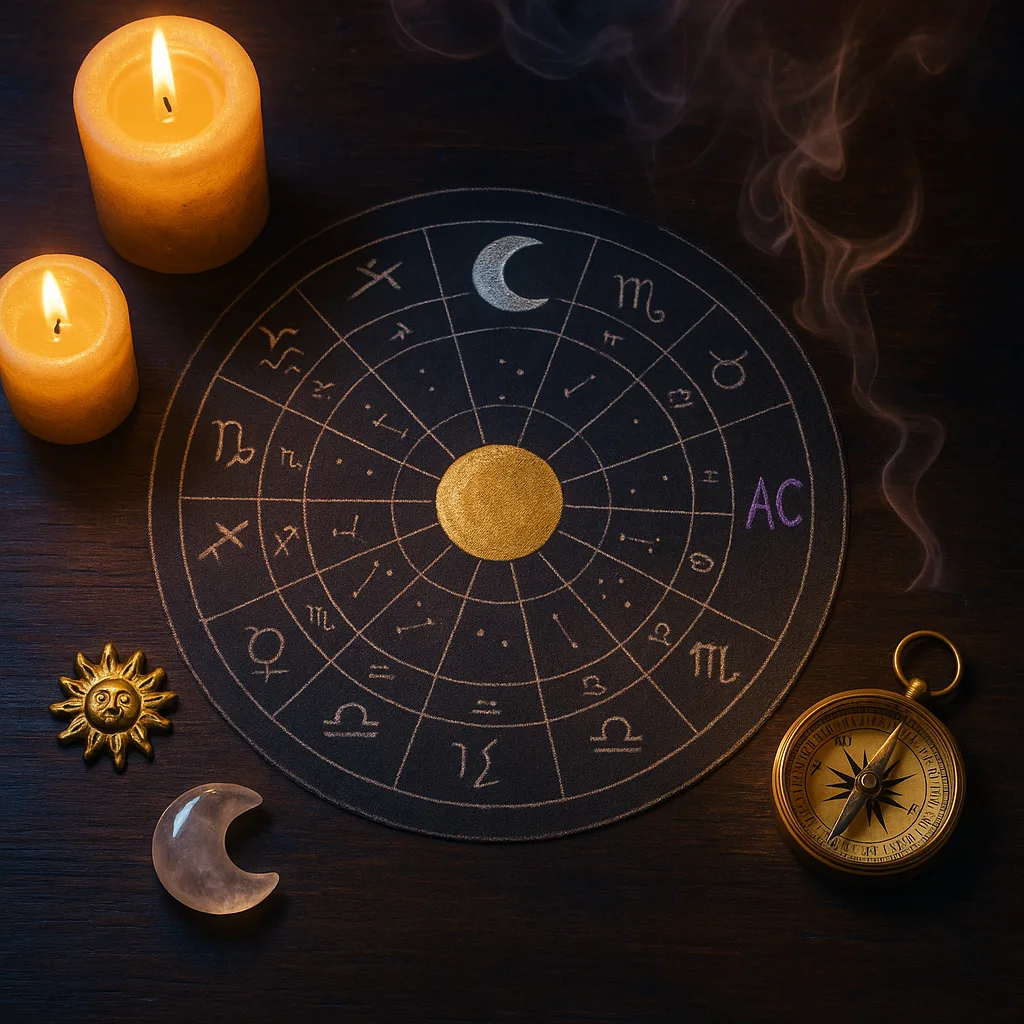
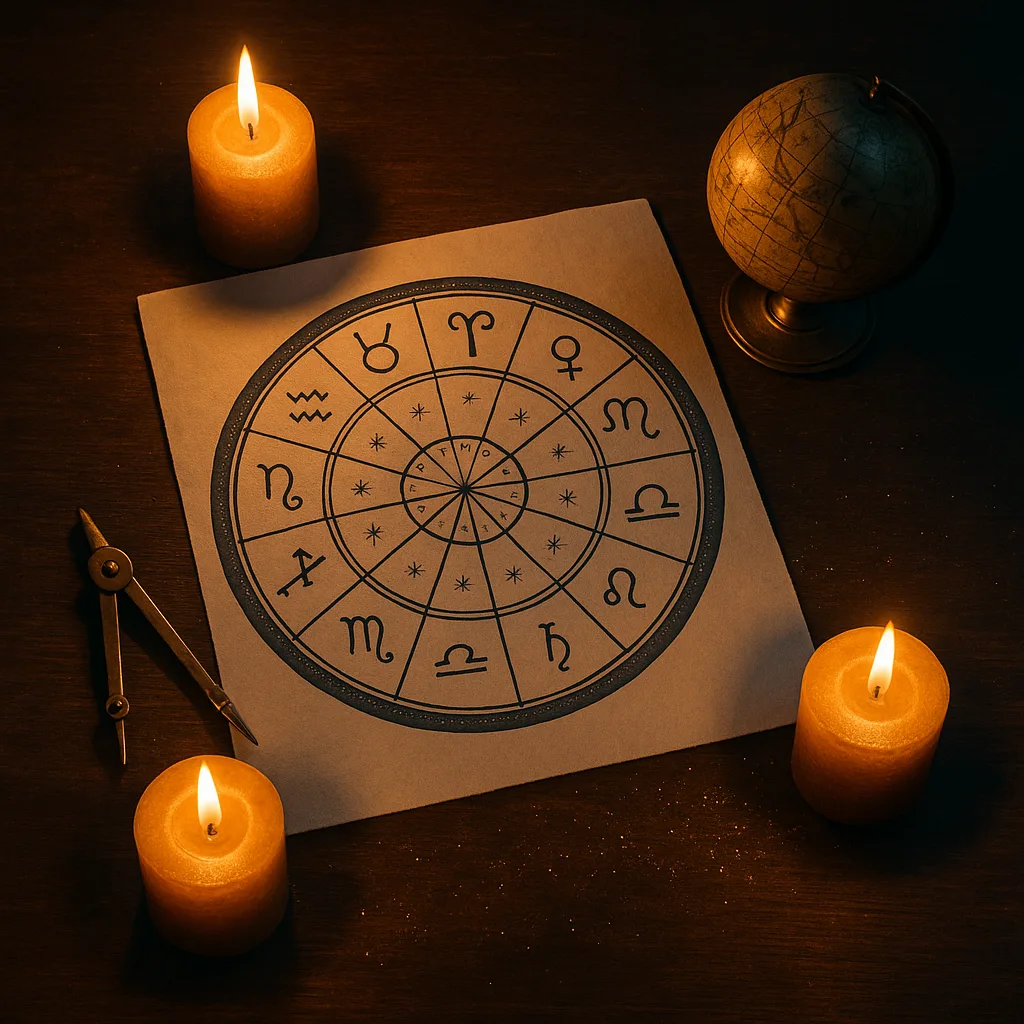
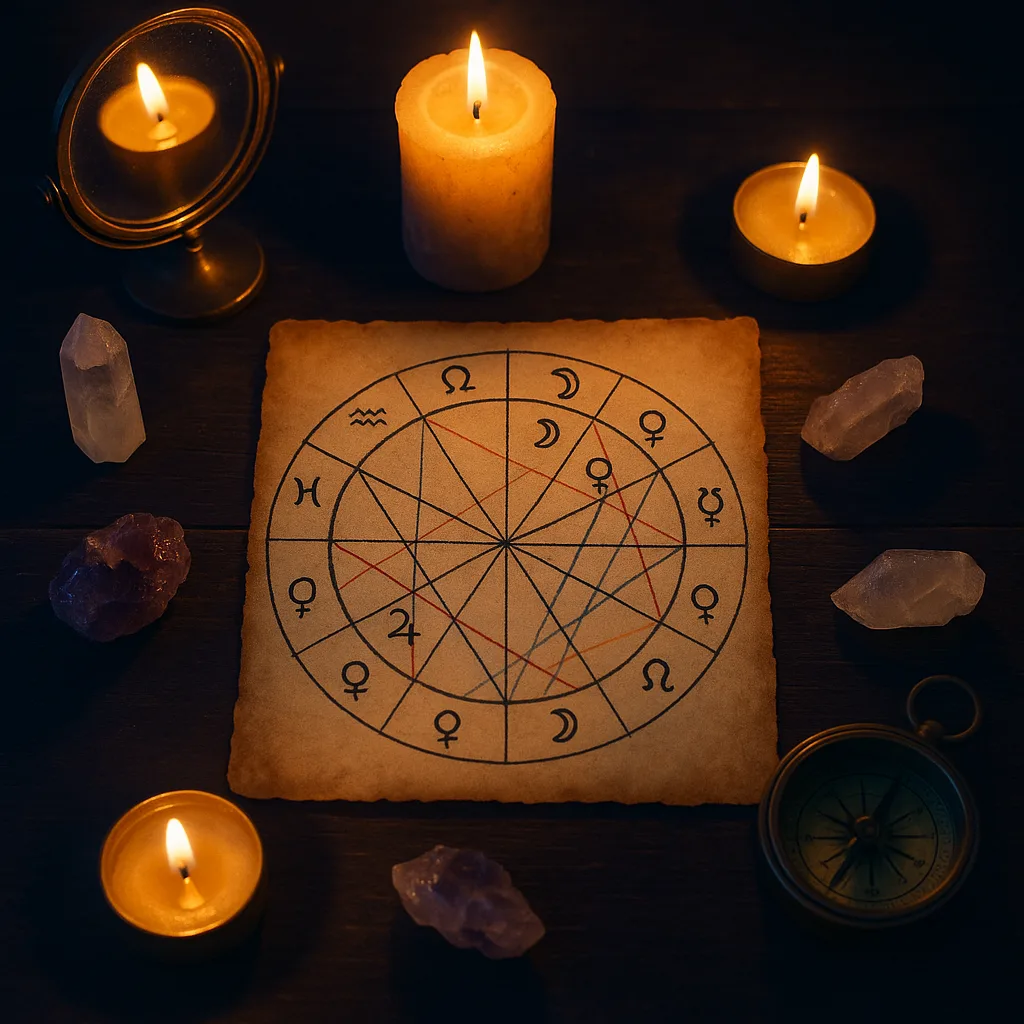
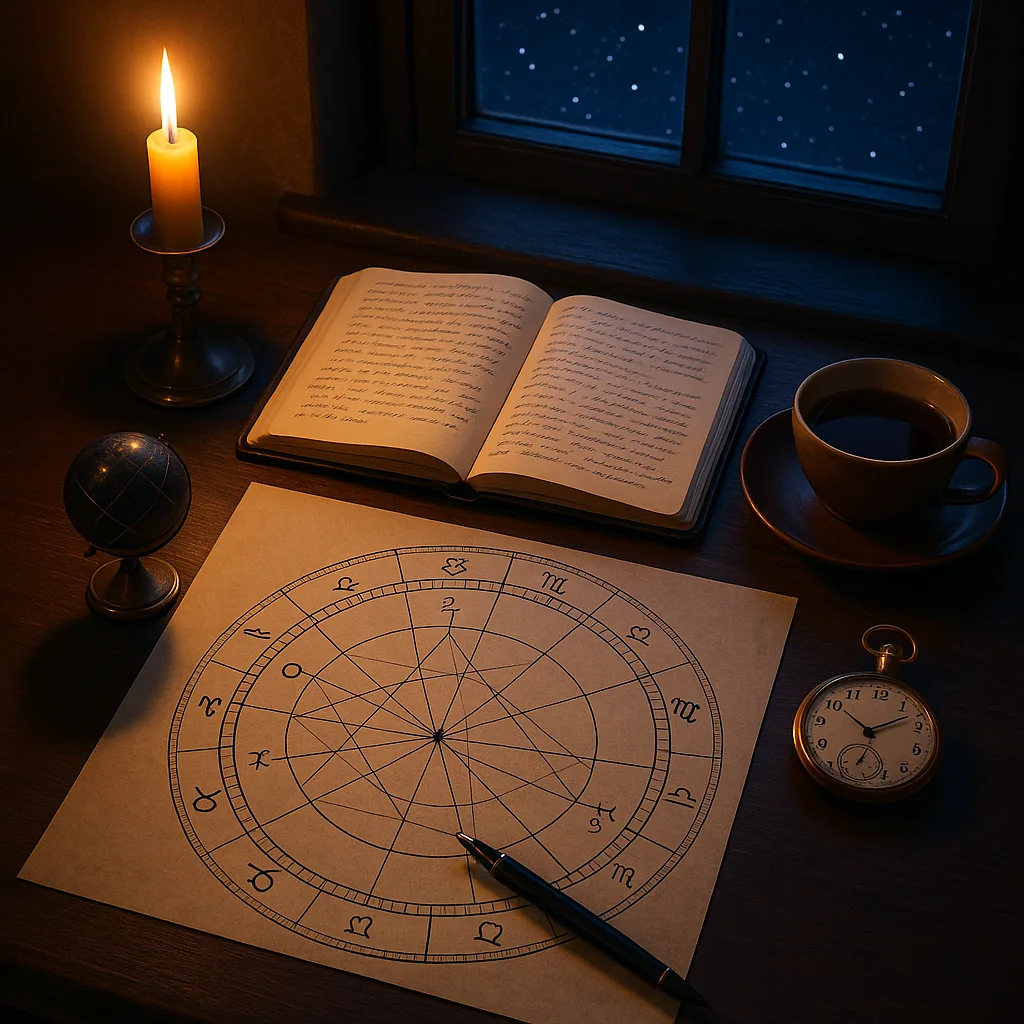
Pull up your birth chart, if you have one handy, and look at the center of the wheel. You'll see lines crossing from one side to the other, connecting planets that appear far apart in the drawing but are actually in constant dialogue. Those lines aren't decoration. They are the astrological aspects, the angles planets form with each other at the exact moment you were born. It's in this interplay of angles, not just in each planet's isolated position, that a chart gains depth, contradiction, and a certain beauty.
There are several possible aspects. Some are considered minor, like the semi-square or the quincunx, and function almost like footnotes. But four of them carry most of the interpretive weight: conjunction, opposition, trine, and square. Each represents a different way for two planets to interact: sometimes in harmony, sometimes in friction, and sometimes in a fusion so close it's hard to tell where one energy ends and the other begins.
Conjunction: When Two Planets Move as One
A conjunction happens when two planets sit at nearly the same zodiac degree, 0 degrees apart from each other. It's considered the most intense aspect, because there's no distance between the two energies at all. They blend together and act as a single, unified force from then on.
An example helps: imagine a conjunction between Mercury, the planet of communication and reasoning, and Mars, the planet of action and impulse. This person is likely to communicate in a direct, high energy, almost unfiltered way, and at the same time carry a restless mental energy that never stops processing ideas. The two traits move together, inseparable from each other.
A conjunction isn't automatically an easy aspect. It depends on which planets are meeting there. A conjunction between Venus, which speaks of bonding and affection, and Uranus, which speaks of freedom and rupture, tends to require real inner work, since these are natures pulling in opposite directions even while joined together. A conjunction between Venus and Jupiter usually flows more easily, since both planets speak the language of expansion and pleasure. The sign where the conjunction falls also shapes the result: that same Mercury Mars pairing would express itself in a more emotional way in Cancer, and in a sharper, more critical way in Virgo.
Opposition: Two Sides of the Same Coin
When two planets sit 180 degrees apart, on opposite sides of the zodiac wheel, we get an opposition. It always occurs between signs on the same axis: Aries and Libra, Taurus and Scorpio, Gemini and Sagittarius, Cancer and Capricorn, Leo and Aquarius, Virgo and Pisces. These signs share the same underlying theme but express it in opposite directions.
In practice, an opposition tends to feel like an internal tug of war. An opposition between the Sun and the Moon, for instance, may indicate that a person's identity and conscious will (the Sun) aren't always aligned with their deeper emotional needs (the Moon), as if two parts of the self wanted different things at the same time.
The upside is that this kind of tension, because it puts two forces in plain view of each other, tends to be easier to recognize consciously. Some astrologers argue that opposition, though uncomfortable, is actually simpler to work with than a square, because the conflict is out in the open rather than buried inside a single point of the chart. When handled well, this tension expands a person's range of possibilities: they learn to move between two modes of being instead of staying locked into just one.
Trine: Ease That Can Become a Comfort Zone
A trine forms when two planets sit 120 degrees apart, and this only happens between signs that share the same element: fire with fire, earth with earth, air with air, water with water. Because they speak the same elemental language, these planets cooperate with each other almost effortlessly, making the trine the most harmonious aspect in astrology.
Planets in trine often point to talents a person doesn't even recognize as talents, simply because they feel too natural to notice. It's an ability exercised without effort, and because of that, people sometimes undervalue it, even though someone without that aspect would need a lot of practice to reach the same level.
There's an important catch, though: a chart with many trines can breed a certain complacency. If several areas of life flow without obstacles, a person may lose the drive to challenge themselves or step outside the comfort zone these aspects create. The trine makes things easy, but too much ease comes with its own cost.
Square: Friction That Forces You to Act
A square happens when two planets form a 90 degree angle, usually connecting signs that differ in both element and modality, like Aries and Cancer, or Taurus and Leo. Along with the opposition, it's considered one of the most challenging aspects in a chart, but with a difference: while the opposition exposes conflict between two visible poles, the square tends to generate a more internal kind of friction, harder to spot at first, because the person doesn't always immediately recognize that a recurring discomfort comes from the clash between two planetary energies that don't easily speak the same language.
That's why the square is often described as the aspect that pushes you to act. It won't let a person sit still: it creates friction, generates discomfort, and demands constant decisions and adjustments. People with prominent squares in their chart often report feeling like they're always fighting in a certain area of life, but it's exactly that repeated effort which, over time, builds strength, resilience, and a capacity to overcome obstacles that more harmonious aspects rarely require.
One Sky, Many Readings
None of these four aspects exists in isolation on a chart. Usually a planet connects to several others at once, forming a web of tensions and support that only makes sense when viewed as a whole. A generous trine can soften a difficult square. An uncomfortable opposition can find relief through a nearby conjunction. It's this whole network, not a single isolated aspect, that tells the real story of how the sky's energies are organized within you.

Recomendado
Manual Prático da Astrologia
O universo sempre exerceu um fascínio indescritível sobre a humanidade. De todas as suas maravilhas, a astrologia se destaca como uma antiga arte que tem intrigado e inspirado gerações.

Recomendado
Estátua Gato Bastet Egito Antigo
Inspiração Egípcia Autêntica Representa Bastet, a deusa egípcia da proteção, harmonia e energia feminina.
Universo Astral Editorial Team · Birth charts and numerology
This article was produced by the Universo Astral editorial team, with AI tools assisting research and drafting and human review before publication. If you spot anything inaccurate or outdated, let us know at our contact email.