Sun Sign and Rising Sign: How Astrology Reads Identity and First Impressions
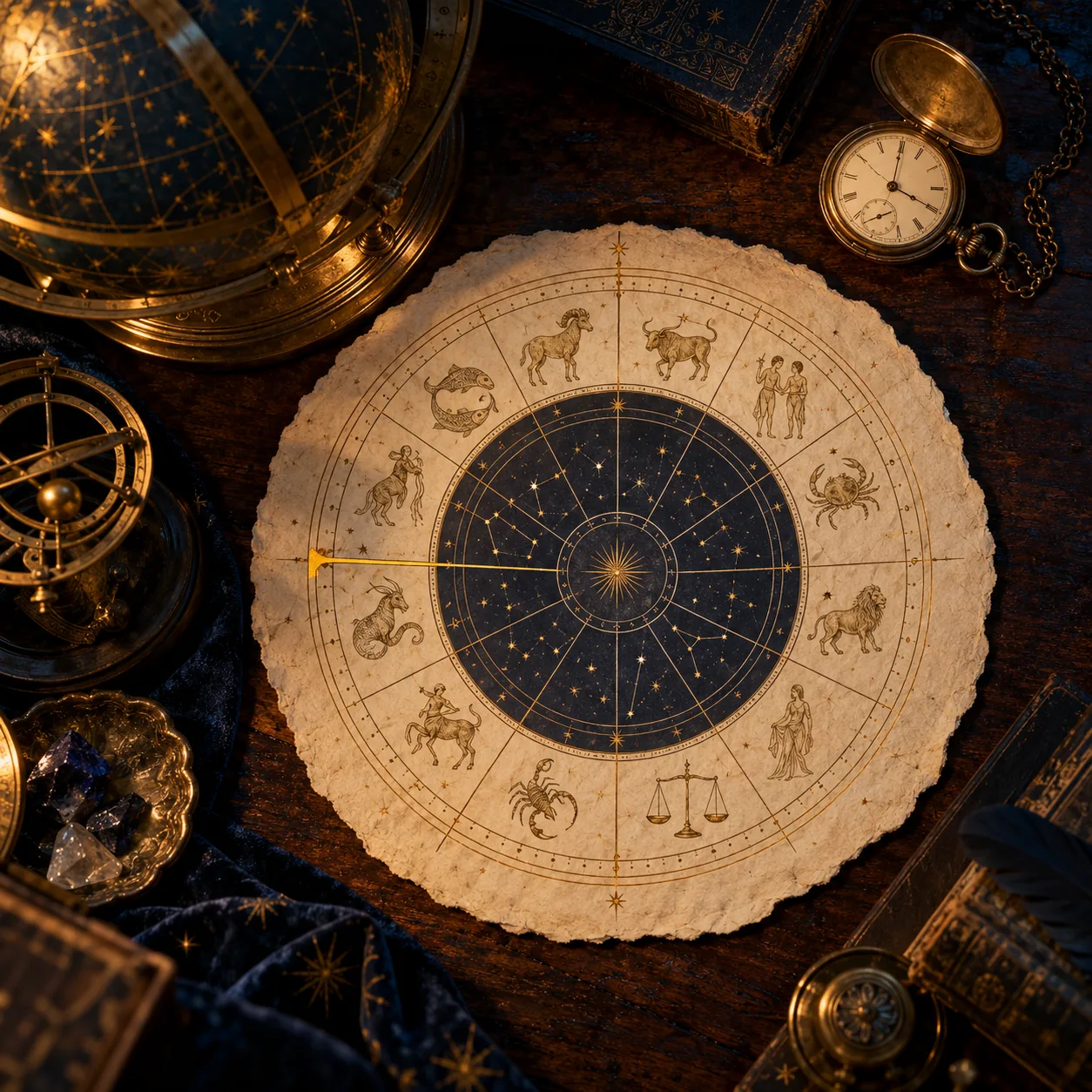
One Leo might turn heads the moment they walk in. Another Leo might hold back and say little during a first encounter. In astrological interpretation, the sun sign alone does not explain that difference. The rising sign plays a part in this reading, especially when it comes to posture and first impressions.
The Sun and the rising sign sit in different places on the chart
The sun sign corresponds to the zodiac band occupied by the Sun at birth. The date is usually enough to identify it, which is why it is the main figure used in popular horoscopes. There is one exception: when a birth happens close to the moment the Sun shifts into the next sign, the time of birth may also be needed.
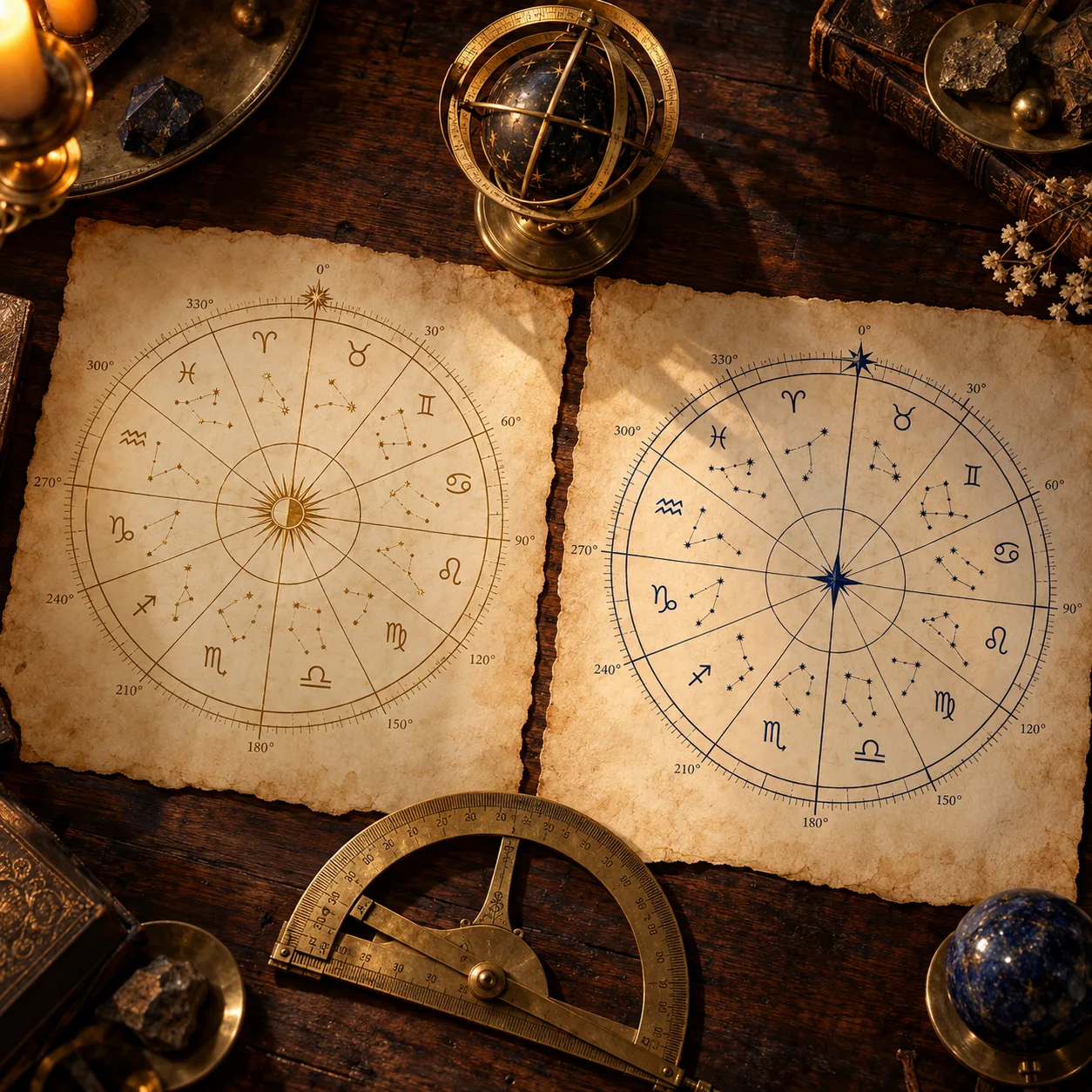
To find the rising sign, astrologers look at the point where the ecliptic meets the eastern horizon. The sign containing that point is called the ascendant, or rising sign. Because the Earth's rotation constantly changes the sky's orientation relative to the observer, the result depends on the date, time and coordinates of birth.
In Vedic astrology, this point is called the Lagna. Its ruling planet is known as the Lagnesha. The Lagna serves as the reference point for organizing the twelve houses, though interpretive methods vary between schools and systems.
Why timing matters so much for the rising sign
The Sun stays in each sign for roughly a month. The rising sign, by contrast, moves through the entire zodiac over the course of a single day, following Earth's rotation. Dividing the roughly 24 hours in a day by the twelve signs gives a rough reference of two hours per sign, but the real duration is not the same for each one.
Spreading 360 degrees across one day gives an average of 15 degrees per hour. That figure helps explain why the rising sign is so sensitive to clock time, but it does not reflect a constant speed. Latitude and the specific region of the ecliptic involved both affect the pace.
Because of this, births two hours apart can land in different rising signs. Even a ten-minute gap can shift the calculated sign if the point falls close to a zodiacal boundary. In other cases, the same error changes the degree without changing the sign.
Sunrise offers a rough point of reference: at that moment, the Sun sits near the eastern horizon, so the rising sign is close to the Sun's own zodiacal position. Moving forward one sign every two hours from there is just a simplification, not a substitute for an actual astronomical calculation.
What data goes into the calculation
Birth chart software combines birth details with geometric relationships between Earth and the sky. The process involves the following data and steps:
- Entering the day, month and year of birth.
- Recording the time as precisely as possible, accounting for time zone and whether daylight saving time was in effect.
- Identifying the latitude and longitude of the birthplace. These coordinates define the horizon used in the calculation.
- Converting the civil time record into Universal Time and obtaining the sidereal time for that longitude. This measurement establishes the sky's orientation relative to the local meridian.
- Combining that orientation with latitude and the tilt of the ecliptic to find where it crosses the eastern horizon.
- Expressing the resulting position in degrees and identifying which sign it falls in. A result of 14 degrees Taurus, for instance, means a Taurus rising sign.
Vague references like 'in the morning' or 'after lunch' leave a wide margin of uncertainty. Without a reliable birth time, the result should be treated as an estimate. The astrological houses can also be affected by this imprecision. The relationship between the birth horizon and the reading of the first house is covered in more detail in the article on the first astrological house and the rising sign.
The rising sign in the history of astrology
Using the birth horizon took shape in Hellenistic astrology, developed in the Mediterranean world with significant input from Egypt. This system brought together zodiacal knowledge of Babylonian origin and Egyptian elements tied to the decans. Greek was one of the main languages through which these texts were transmitted.
The word 'horoscope' comes from horoskopos, a term tied to observing or marking the hour. Its historical use is connected to the rising point, whose position made it possible to place a birth within the sky's daily movement.
Claudius Ptolemy, who worked in Alexandria in the 2nd century CE, is one of the known authors from this tradition. The Almagest contains his mathematical treatment of astronomy. The Tetrabiblos lays out principles of astrological interpretation. Horoscope records preserved in Egypt, on materials such as papyrus and pottery, help document the ancient practice.
Vedic tradition also gives the rising sign major importance through the Lagna. Comparing it with Western astrology requires attention to which zodiac is used, since the sidereal and tropical systems rely on different reference points to mark out the signs. The article on ayanamsha and the differences between Vedic and tropical signs explains this distinction.
Identity, emotions and the way we present ourselves
In astrological language, the Sun usually represents identity and personal expression. The Moon is linked to emotional needs and instinctive reactions. The rising sign is associated with initial posture, the way someone approaches situations, and the traits that come through at the start of a relationship.
This reading can include body language, behavior in unfamiliar settings and protective responses to discomfort. These are symbolic associations within astrology, not objective measurements of personality.
Some interpretations compare the rising sign to the Jungian concept of the persona, understood as the side of personality oriented toward social life. This is an interpretive parallel: the psychological concept and the astrological point belong to separate systems.
As examples, a Gemini with Pisces rising tends to come across initially as more dreamy or reserved. A Leo with Cancer rising is associated with a more cautious, sensitive first impression. Within this framework, the rising sign shapes how the sun sign gets expressed, without replacing it.
How many combinations the chart allows
Crossing twelve sun signs with twelve rising signs produces 144 basic combinations. Adding the twelve possible moon signs brings the total to 1,728. That count only considers three components, without factoring in degrees, aspects or the other planets.
The Moon takes roughly 27.32 days to complete its sidereal cycle. The NASA page on the Moon states, in rounded figures, that it completes one orbit around Earth in about 27 days. Dividing that sidereal period by the twelve zodiac bands gives an average stay of just over two days per sign. The actual time varies along the way.
People born on the same date can share a sun sign while having different rising signs and house placements. Birth time and location account for much of that variation. Even twins can end up with different rising signs if their births fall on opposite sides of the moment a sign changes.
| Component | Symbolic association | Data needed for calculation | Approximate time per sign |
|---|---|---|---|
| Sun | Identity and personal expression | Date, with attention to time near transitions | About one month |
| Moon | Emotions and instinctive responses | Date and time, with time zone correction | Between two and three days |
| Rising sign | Personal presentation and initial approach | Date, time and location | Two hours on average, with variable duration |
The Moon's sidereal period of approximately 27.32166 days works out to about 27 days, 7 hours and 43 minutes. The average time per sign comes from dividing that cycle into twelve parts. It does not mean the Moon spends exactly the same amount of time in each one.
The rising sign is a geometric position, not a celestial body moving along an orbit. Because of that, the idea of planetary retrograde does not apply to it in the same way. When reading a chart, it is interpreted together with every other element, including in cases where someone does not recognize themselves in the popular description of their own sun sign.
Frequently Asked Questions
What is the difference between the sun sign and the rising sign?
The sun sign tells you which sign the Sun was in at birth. The rising sign comes from the relationship between the ecliptic and the eastern horizon at that specific place and time. Astrology links the Sun to identity and the rising sign to how someone starts interactions and presents themselves.
Why can the two fall in different signs?
They correspond to different positions on the chart. While the Sun spends about a month in each sign, the rising sign depends on the local orientation of the sky throughout the day. There is no rule requiring them to match.
Does my rising sign change my sun sign?
No. Your Sun's position stays the same. The rising sign adds another layer to the astrological reading, particularly when it comes to posture and first impressions.
What is the difference between the Moon sign and the rising sign?
The Moon is a celestial body, and its sign depends on its zodiacal position. The rising sign is a calculated point based on the horizon. In astrological interpretation, the Moon relates to emotions, while the rising sign relates to how someone makes first contact with people and situations.
Can an approximate birth time reveal my rising sign?
It can give you an estimate, and the margin of error depends on how wide the time range is. Near a transition, a difference of just a few minutes can change the sign you land on. To pin down the exact degree with confidence, you need an accurate birth time along with the correct location data.
Recomendado
Astro Reflexo
Descubra o que os astros revelam sobre quem você é. Em menos de um minuto, calculamos seu Sol, Lua e Ascendente com precisão astronômica e uma inteligência artificial escreve um resumo personalizado só para você.
Universo Astral Editorial Team · Birth charts and numerology
This article was produced by the Universo Astral editorial team, with AI tools assisting research and drafting and human review before publication. If you spot anything inaccurate or outdated, let us know at our contact email.