Angular, Succedent, and Cadent Houses: Why Not Every House in Your Birth Chart Carries the Same Weight
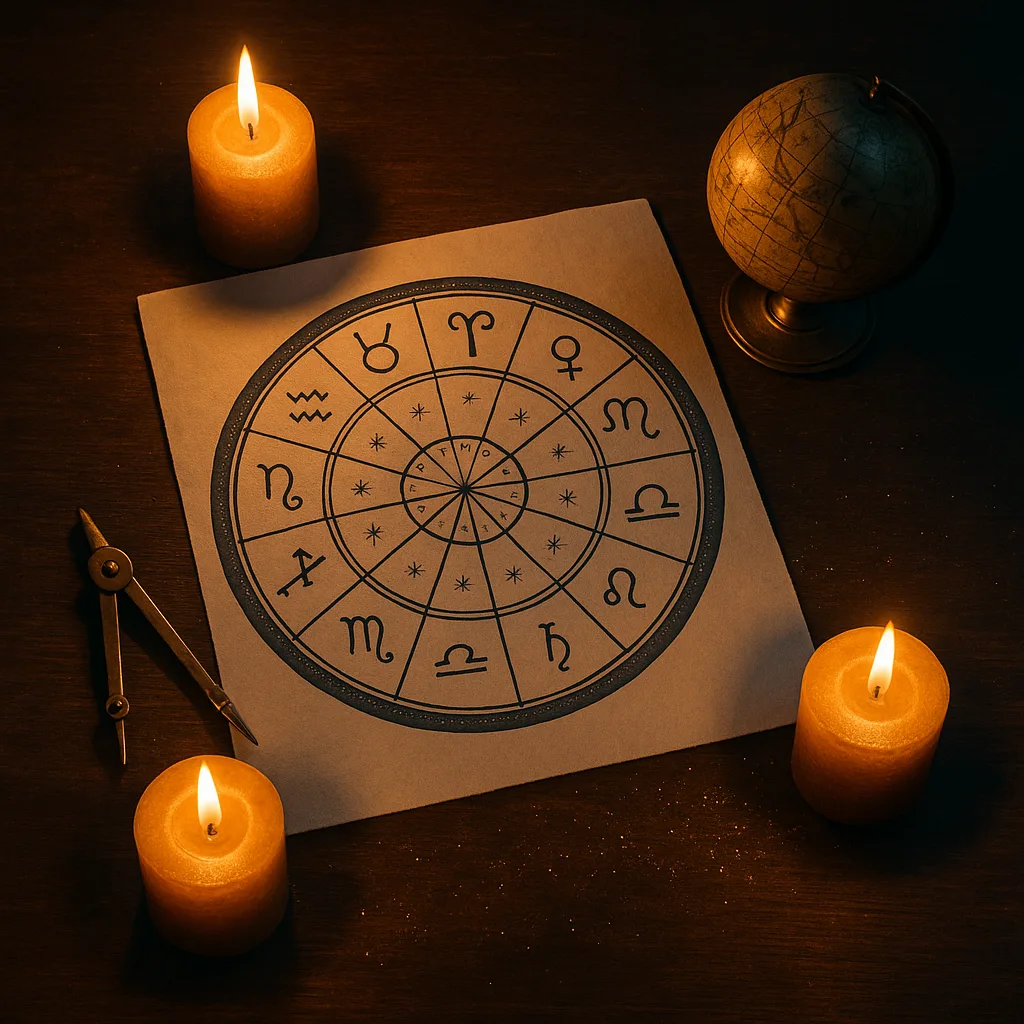
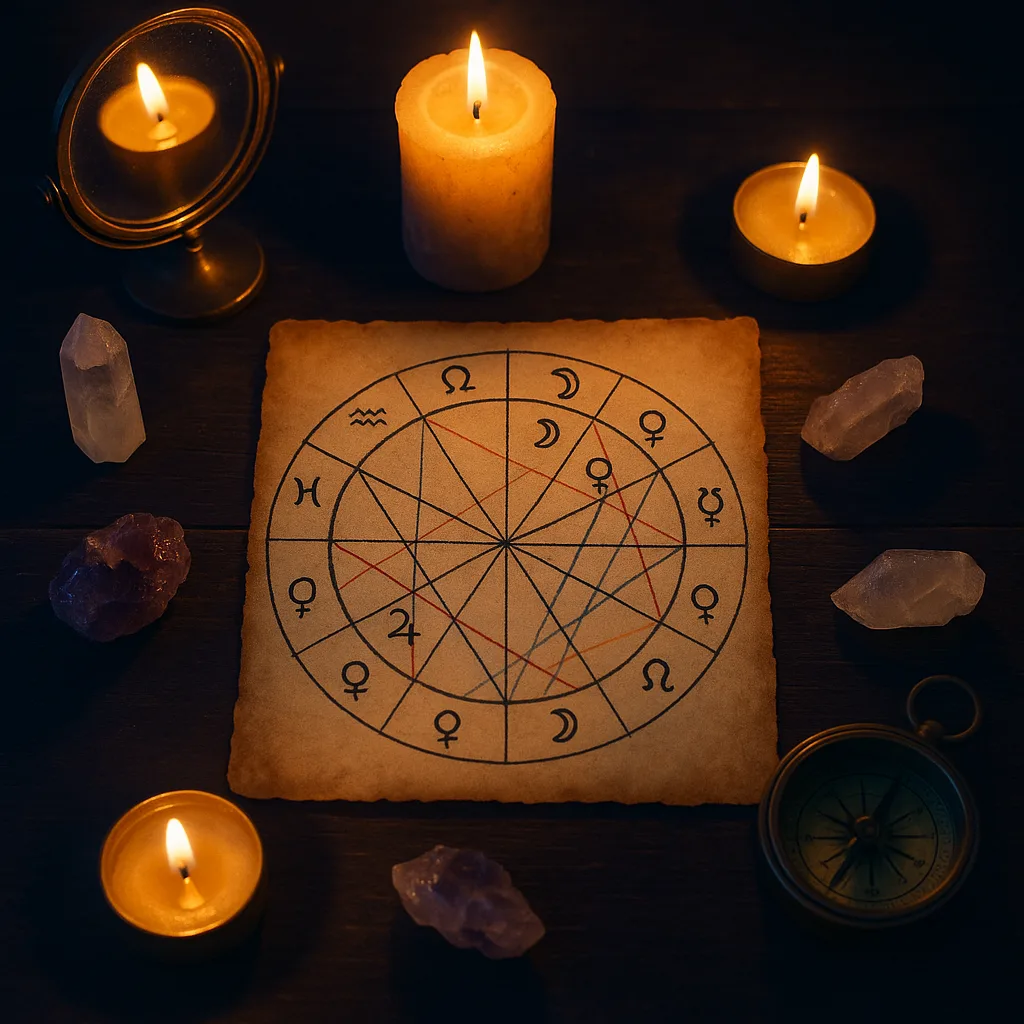
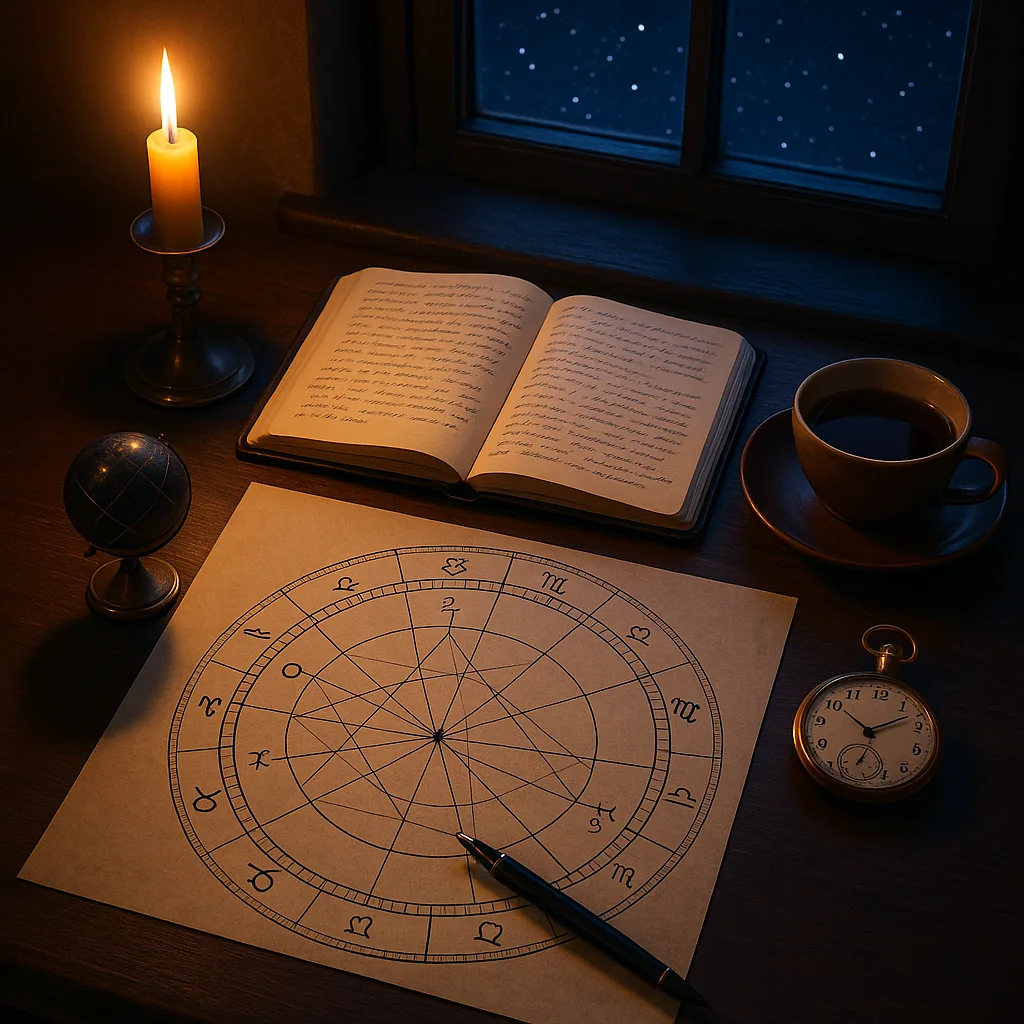
If you've ever looked at your birth chart and noticed that some planets seem to carry more weight than others, even without being in conjunction with anything, it might be an effect of their position relative to the four angles of the sky. There's a traditional classification that divides the 12 houses into three groups: angular, succedent, and cadent. It doesn't replace the meaning of each house individually, but it explains why the same planetary energy can show up with different intensities depending on where it falls.
The four points that hold up the chart
Houses 1, 4, 7, and 10 are called angular because they coincide with the four structural angles of the birth chart: the Ascendant, the Imum Coeli, the Descendant, and the Midheaven. These points mark the exact moment of birth in relation to the horizon and the local meridian, which is why they carry a heavier symbolic charge than the other houses.
Astrologers often say an angular house has a lot of light. It's a way of describing how planets placed in these houses tend to express themselves more visibly and actively in a person's life. House 1 speaks to identity and how you present yourself to the world, House 4 to roots and home life, House 7 to partnerships and agreements, House 10 to career and public presence. A planet that lands in any of these rarely goes unnoticed. It tends to become a recurring theme, something the person lives out directly and concretely, not just behind the scenes.
These four houses also connect to the cardinal signs (Aries, Cancer, Libra, and Capricorn), which in astrological tradition are associated with beginnings, initiative, and action. That's no coincidence: angular and cardinal share this idea of inaugural movement, of opening doors.
What holds things up once something begins
Houses 2, 5, 8, and 11 make up the succedent group. They come right after each angular house in the chart's sequence, and the traditional symbolic reading is that they carry forward what was started there. If House 1 launches identity, House 2 asks how that identity sustains itself materially. If House 4 speaks to roots, House 5 asks how that foundation expresses itself through pleasure and creativity. If House 7 speaks to meeting another person, House 8 asks what happens when that relationship deepens to the point of transforming who we are. And if House 10 speaks to public calling, House 11 asks how that calling connects to groups, networks, and collective projects.
Planets in succedent houses tend to point to areas of accumulation and gradual development. It's not the most immediately visible energy from the outside, but it's usually what sustains a person's life structure over the long run: resources, values, bonds that deepen, emotional and material wealth built up over time.
The houses that call for adaptation
Finally, houses 3, 6, 9, and 12 are the cadent ones. They relate to the mutable signs (Gemini, Virgo, Sagittarius, and Pisces), which tradition associates with adjustment, flexibility, and transition between phases. The symbolic logic here is that the resources built up in the succedent houses go through a process of assimilation in the cadent ones, until they're ready to feed the next angular house and restart the cycle.
House 3 speaks to learning and everyday exchange, House 6 to routine and the fine-tuning of body and daily work, House 9 to expanding beliefs through study and travel, House 12 to what stays tucked away in the unconscious until it finds a way to express itself. Planets in these positions usually call for more reflection before turning into concrete action. It's as if the energy needs to go through an internal digestion process before it becomes visible.
One useful (symbolic, not literal) way to sum up the three groups: angular houses initiate, succedent houses consolidate, cadent houses transform and prepare the ground for the next beginning. It's a flow, not an absolute hierarchy of importance. A cadent house packed with planets is still an active, relevant area of life, it's just that the energy there tends to work in a more internal way before it shows up in the world.
What about an empty house?
A common question for anyone starting to study their own chart is what to do with houses that have no planets in them. An empty house doesn't mean that area of life is irrelevant or that nothing will happen there. It simply means that, at the exact moment of birth, no planet was positioned in that particular sector of the sky.
These houses are still read normally, by looking at the sign on the cusp (the entry line of the house) and the planet that rules that sign elsewhere in the chart. An empty House 7, for instance, doesn't mean an absence of relationships. It invites you to look at where Venus sits, or the ruler of Libra, or the ruler of whichever sign occupies that cusp, to understand how the theme of partnerships plays out in a more indirect way.
Why this division matters in practice
Knowing which group each house in your chart falls into helps calibrate expectations. If most of your planets are concentrated in angular houses, your life is likely marked by highly visible decisions and events, with little room to stay behind the scenes. If the concentration sits in cadent houses, it makes sense that you'd need more time to reflect before acting, and that's not a flaw, it's simply the rhythm your chart suggests.
It's worth remembering that this classification into angular, succedent, and cadent houses is one traditional layer of reading among others. It doesn't cancel out the specific meaning of each of the 12 houses, it just adds a lens on the intensity with which these areas tend to show up. Combined with the sign on the cusp and the planets present, it helps build a fuller picture of where your energy concentrates and where it needs more patience to bloom.

Recomendado
Curso MAPA ASTRAL
CURSO DESTRAVE SUA VIDA COM MAPA ASTRAL EM ATÉ 08 SEMANAS!

Recomendado
MAPA ASTRAL E NUMEROLÓGICO PERSONALIZADO
Mapa Astral + Numerologia Um mergulho profundo na sua essência. E se tudo o que você procura… já estivesse dentro de você - esperando para ser revelado?
Recomendado
Astro Reflexo
Descubra o que os astros revelam sobre quem você é. Em menos de um minuto, calculamos seu Sol, Lua e Ascendente com precisão astronômica e uma inteligência artificial escreve um resumo personalizado só para você.
Universo Astral Editorial Team · Birth charts and numerology
This article was produced by the Universo Astral editorial team, with AI tools assisting research and drafting and human review before publication. If you spot anything inaccurate or outdated, let us know at our contact email.