Bhava: The 12 Houses of Vedic Astrology and How to Read Each One

Anyone moving from Western astrology into jyotish usually notices one thing right away: Vedic chart houses have no crooked cusps and no intercepted signs. Every house is a full 30-degree block, always. That difference may sound technical, but it completely changes how the chart is read, and that's what this article focuses on.
What bhava means and why the Vedic count works differently
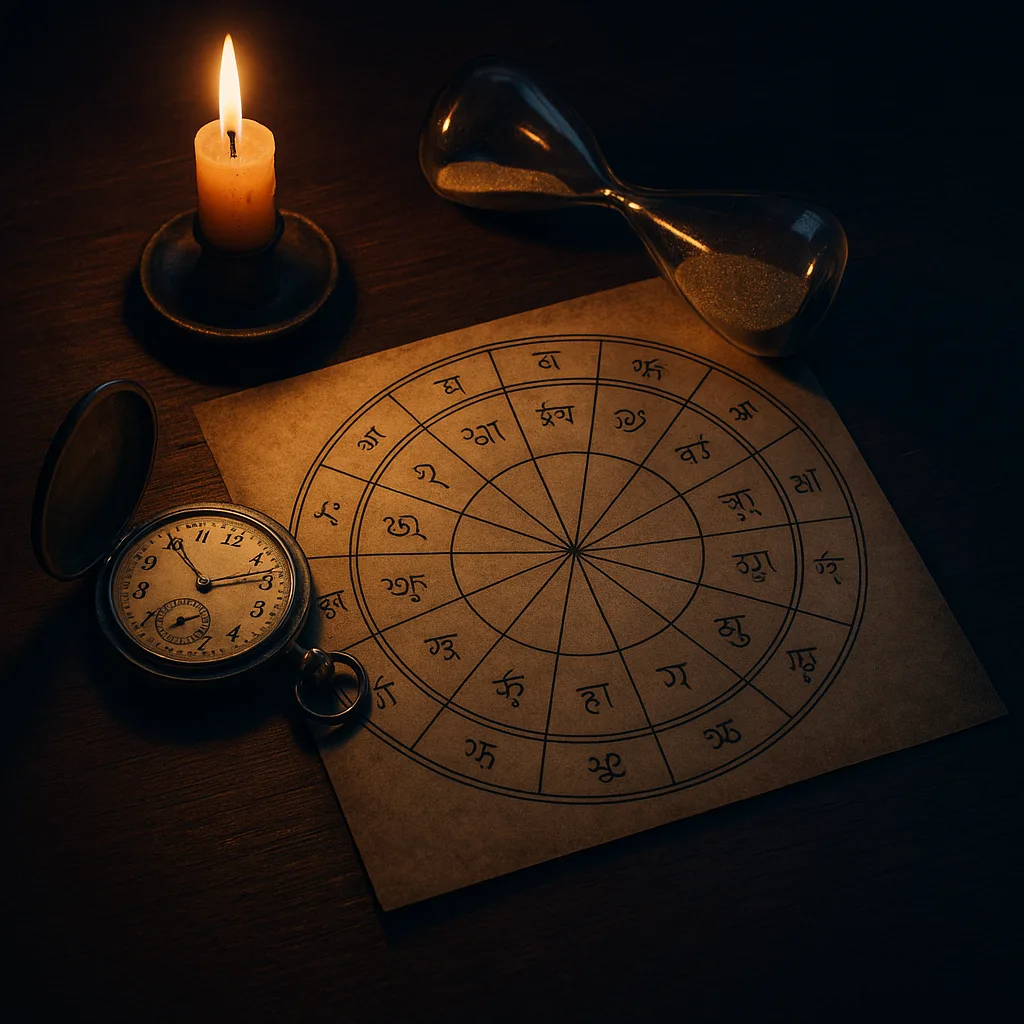
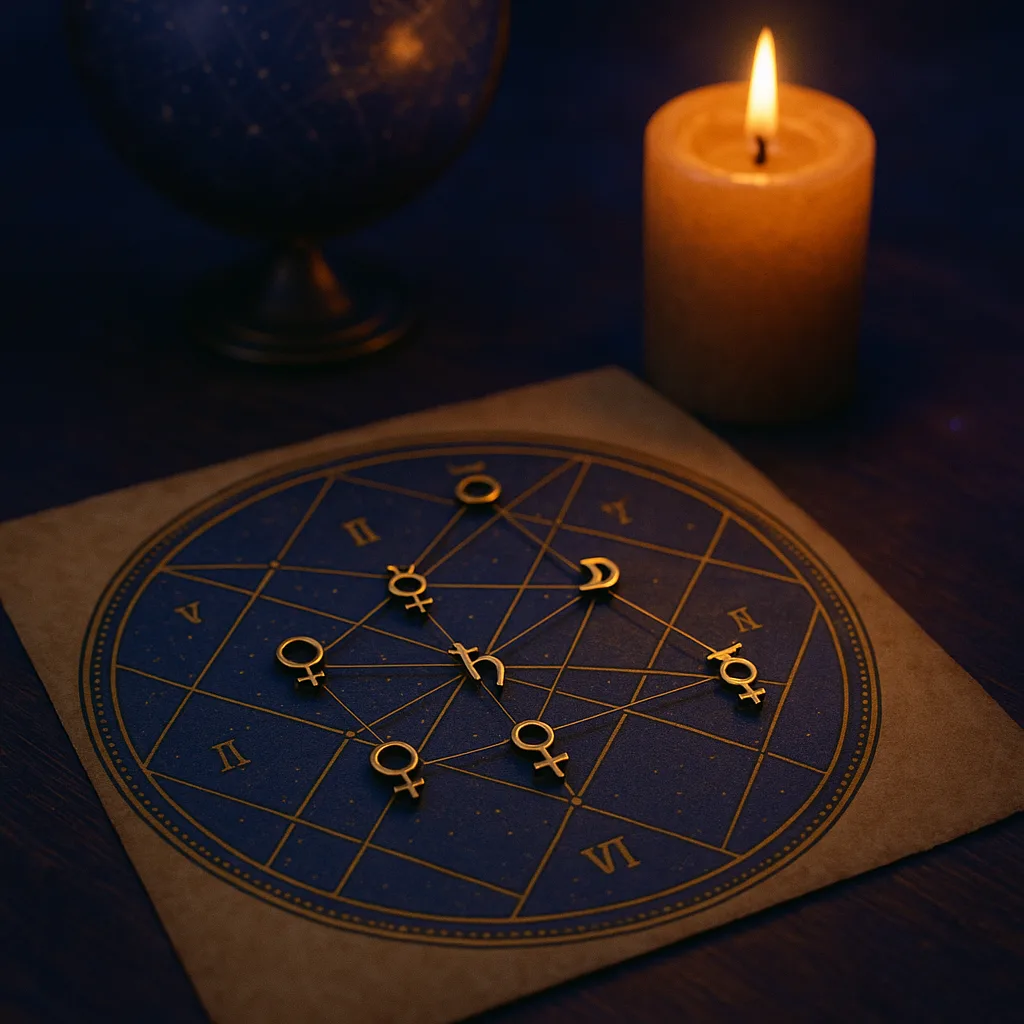
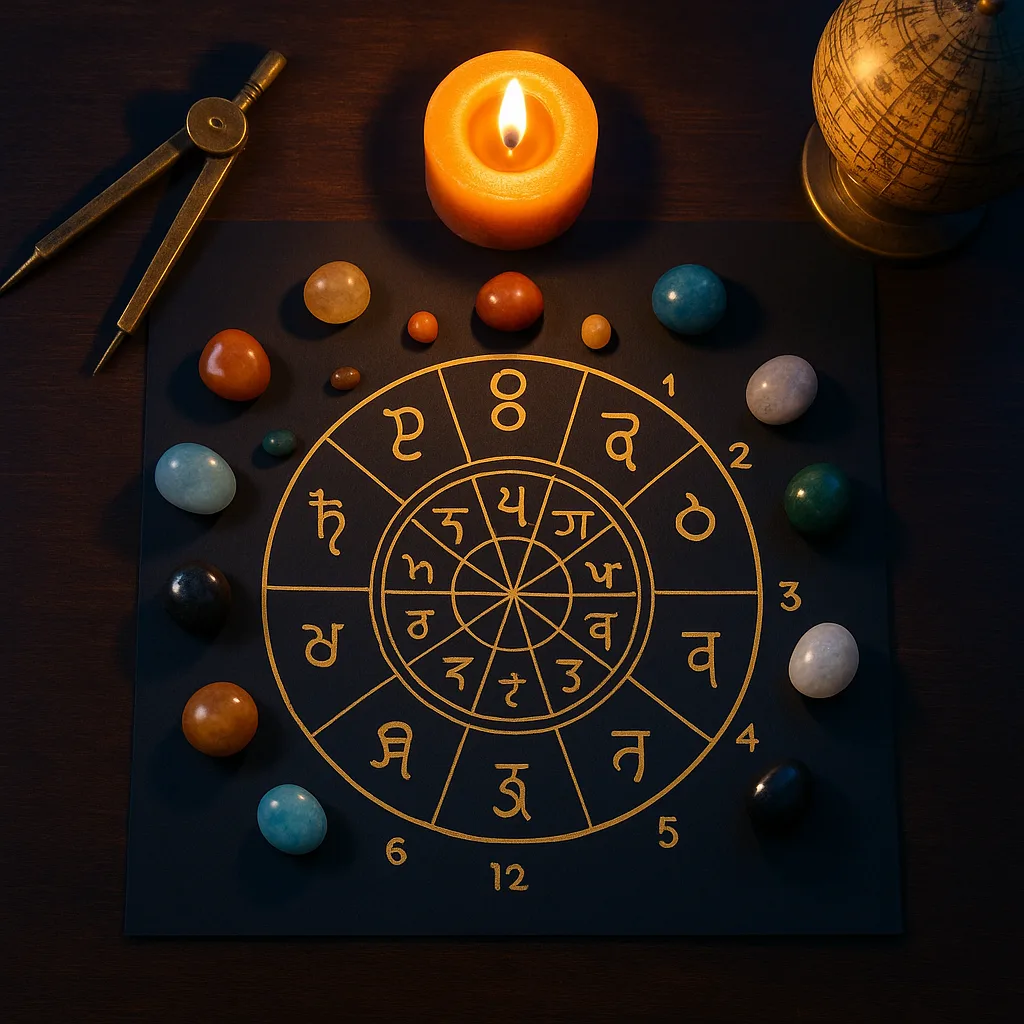
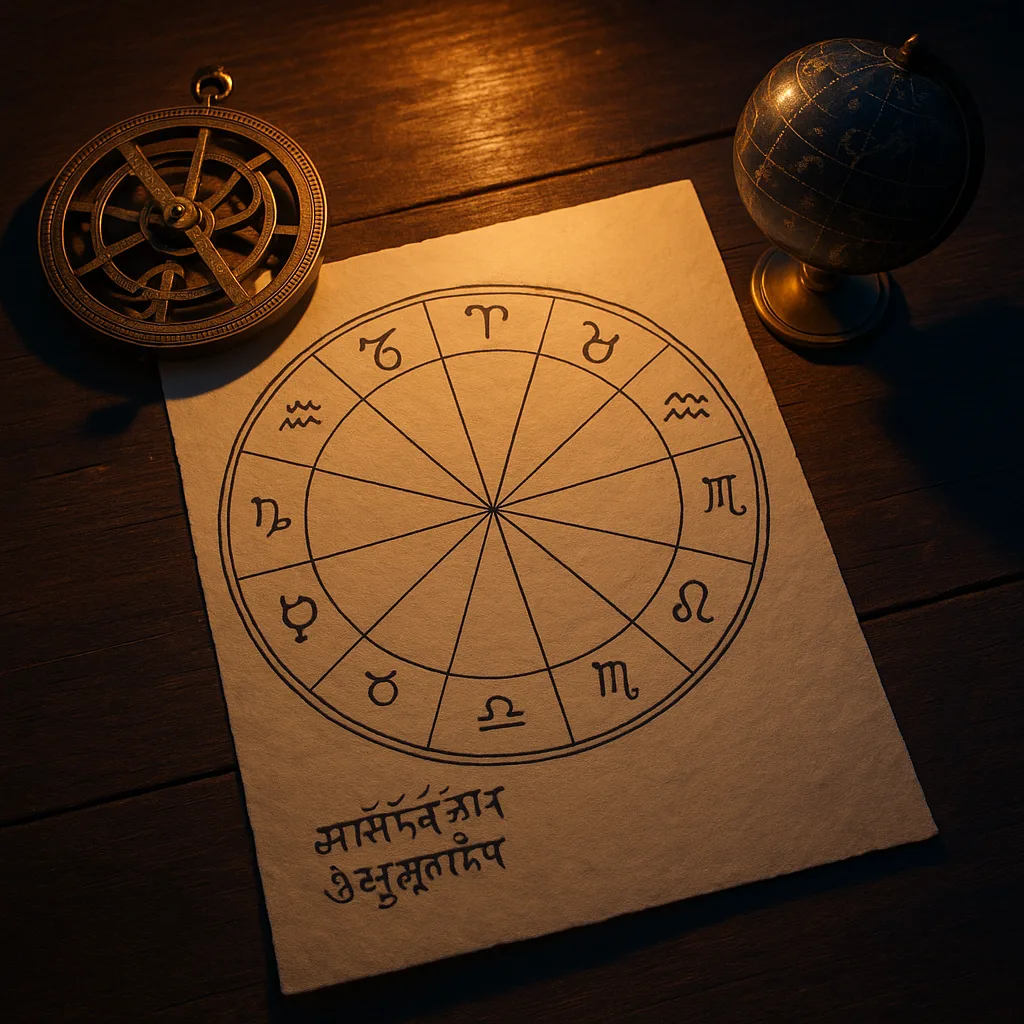
Bhava is the Sanskrit term for what the West calls an astrological house. The set of twelve bhavas forms what's called the bhava chakra, the wheel of houses that structures every Vedic birth chart. The logic used to build it, however, follows its own path: the whole sign system.
In whole sign houses, traditionally used by jyotish, each house corresponds to exactly one complete sign of the sidereal zodiac. There's none of the house-size variation found in the Placidus system, which dominates modern Western astrology today. Placidus divides the sky based on the time each degree of the ecliptic takes to cross the chart's angles (Ascendant and Midheaven), producing unequal houses depending on birth latitude and time.
In classical jyotish, this simply doesn't happen: the sign containing the degree of the Lagna (sidereal Ascendant) becomes the entire first house, the next sign becomes the second, and so on, always in 30-degree blocks. It's worth noting this isn't an exclusively Indian invention. Whole sign houses go back to Hellenistic astrology of the 1st century BCE and were, for centuries, the original system in both the West and India, until the West shifted toward time-based models like Placidus starting in the 17th century. For more on how the starting point of this count is calculated, see our article on the Lagna in Vedic astrology, since it's the ascendant sign that defines where the first house begins.
There is a historical variant, the Sripati Bhava system, which resembles the Western Porphyry model, placing cusps at the Lagna, Descendant, Midheaven and Imum Coeli, dividing each quadrant into three parts. The modern Krishnamurti Paddhati (KP) school even incorporates Placidus itself. But the reference standard, used by classical texts and by most Vedic astrologers to this day, remains whole sign.
Where this difference comes from: the sidereal zodiac and ayanamsa
The root of this divergence between the West and India isn't just methodological, it's astronomical. Jyotish works with the sidereal zodiac, anchored to the fixed stars, while Western astrology uses the tropical zodiac, anchored to the equinox points. The angular distance between the two systems is called ayanamsa.
This gap exists because of the precession of the equinoxes: Earth's axis slowly traces a circle in space, like the axis of a spinning top before it falls, completing one full cycle roughly every 26,000 years. According to astronomical data published by NASA, this shift makes stars and constellations appear to drift from west to east at a rate of about 0.014 degrees per year. The accumulated effect is that the sidereal Lagna calculated by jyotish typically falls about 24 degrees behind the tropical Ascendant calculated for the same birth moment and location. In practice, this means the same person might have, say, Scorpio rising in the Western system and Libra rising in the Vedic one, which naturally shifts the entire house count that follows. This mechanism is explored in more depth in our article on ayanamsha explained.
The functional categories: kendra, trikona, upachaya, dusthana and maraka
The classical text most often cited for systematizing the role of each bhava is the Brihat Parashara Hora Shastra (BPHS), attributed to the sage Parashara. While its original composition date is uncertain, the most widely circulated version has 97 chapters and appears, among other editions, in R. Santhanam's 1984 translation, digitized and available in public domain archives such as the Internet Archive. This is the text that organizes the twelve houses into functional groups, regardless of which sign each one contains:
- Kendras (angular houses): 1, 4, 7 and 10. These are the chart's structural houses, tied to life, home, partnerships and career. Traditionally considered the strongest.
- Trikonas (trine houses): 1, 5 and 9. Associated with luck, dharma and accumulated spiritual merit. The first house belongs to both kendra and trikona at once, which explains why it's read as the most significant house in the entire chart.
- Upachayas (growth houses): 3, 6, 10 and 11. Houses that tend to improve over time. The commentator B. Suryanarain Rao, in his commentary on the Brihat Jataka, already noted that the 3rd, 6th and 11th carry special power to expand the native's fortune over the course of life.
- Dusthanas (difficult houses): 6, 8 and 12. Linked to obstacles, crises and losses. The 6th is a curious case: it belongs to both upachaya and dusthana at once, which is why it tends to bring challenges that, once overcome, generate strength, particularly tied to physical resilience and immunity.
- Marakas (symbolically sensitive houses): 2 and 7. In the tradition of dasha systems, these are read as periods of greater vital vulnerability, always on the symbolic plane, never as a literal prediction of health events.
This functional classification is why two houses can share similar thematic territory yet carry very different interpretive weight. If you want to see a similar hierarchy among houses discussed in the Western system, compare this with our article on angular, succedent and cadent houses, which covers an equivalent (though not identical) division in the tropical system.
The 12 bhavas, one by one
The table below gathers the traditional Sanskrit name of each house, its functional category, and the domains jyotish tradition assigns to it.
| House | Sanskrit Name | Category | Main Domains |
|---|---|---|---|
| 1 | Tanu / Lagna Bhava | Kendra + Trikona | body, identity, vitality, temperament |
| 2 | Dhana Bhava | Maraka | accumulated wealth, speech, family of origin, face |
| 3 | Sahaja Bhava | Upachaya | courage, siblings, communication, personal effort |
| 4 | Sukha Bhava | Kendra | home, mother, property, inner peace, education |
| 5 | Putra Bhava | Trikona | children, creativity, intelligence, past-life merit |
| 6 | Ripu / Shatru Bhava | Dusthana + Upachaya | enemies, illness, service, debts, competition |
| 7 | Kalatra / Yuvati Bhava | Kendra + Maraka | marriage, partnerships, public life, open enemies |
| 8 | Ayur / Randhra Bhava | Dusthana | longevity, transformation, inheritance, hidden matters |
| 9 | Dharma / Bhagya Bhava | Trikona | luck, father, guru, long journeys, philosophy |
| 10 | Karma Bhava | Kendra + Upachaya | career, reputation, authority, public actions |
| 11 | Labha Bhava | Upachaya | gains, fulfillment of desires, social networks, older siblings |
| 12 | Vyaya Bhava | Dusthana | losses, moksha, isolation, life abroad |
How to read your own house, step by step
Knowing the name and category of each bhava is only half the job. Actual reading combines several factors at once. Here's the procedure jyotish tradition uses:
- Determine the Lagna. The sidereal ascendant sign defines which sign occupies the first house of the entire chart.
- Count the remaining houses in zodiacal sequence. The sign following the Lagna becomes the second house, the next one becomes the third, and so on until the cycle of twelve signs fills all twelve houses.
- Identify the lord of each house (bhava lord). Every house is ruled by the planet that rules the sign it contains. If Taurus falls in the fourth house, for instance, Venus becomes the lord of the fourth house, and wherever Venus sits elsewhere in the chart, it carries that house's themes with it.
- Look at the occupying planets. Any planet placed inside a house colors its themes with that planet's nature, whether benefic or malefic, combined with the nature of the sign present there.
- Cross-reference with the karaka, the house's natural significator. Each house has a planet traditionally associated with it, regardless of where that planet sits in the chart: the Sun is karaka of the ninth house and of the father figure, Venus is karaka of the seventh house and of marriage, Jupiter is karaka of the fifth (children) and the ninth (luck and dharma).
- Check the aspects received (drishti). The Vedic aspect system doesn't work by exact degree like in the West, but by whole house: Saturn fully aspects the third and tenth houses counted from its position, Jupiter aspects the fifth and ninth, Mars aspects the fourth and eighth. It's a fixed rule, with no exception by degree.
- Combine it all. The strength and tone of a house never come from a single isolated factor, but from the sum of the sign it contains, the planets occupying it, the position and strength of its lord elsewhere in the chart, and the aspects it receives.
This same combination of house lord, occupant and karaka is the kind of combinatory logic used to identify a Rajayoga, the success combinations covered in our article on Rajayoga in Vedic astrology, which depends precisely on the connection between kendras and trikonas discussed above.
A bit of historical context
Jyotish shares roots with Hellenistic astrology. According to historical records gathered by sources such as the Encyclopaedia Britannica, the Greek system of astrology reached India around the 2nd and 3rd centuries CE, and local astrologers adopted much of the Western zodiac, integrating it with their own philosophical concepts, such as reincarnation and the doctrine of the five elements. There's ongoing academic debate over how much of this system already existed independently in India before that contact, and how much arrived from outside, a question that remains open among historians of astrology. Later exchanges also left their mark: elements of Sassanid astrology, such as the concept of the lord of the year and triplicities, only reached India around the 13th century, through the Tajika texts.
Frequently Asked Questions
How many houses does the Vedic chart have?
The Vedic chart has twelve houses, called bhavas, exactly as in the Western system. The difference isn't in the number but in how each house is delimited: in traditional jyotish, each bhava corresponds to one complete 30-degree sign.
What's the difference between Vedic and Western houses?
Classical jyotish uses the whole sign system, where each house is one complete sign, with no variable cusps. Modern Western astrology typically uses the Placidus system, which calculates unequal-sized houses based on birth time and latitude. On top of that, jyotish uses the sidereal zodiac, while the West uses the tropical zodiac.
How do you know which planet is in which house on a Vedic chart?
You first need to calculate the Lagna (sidereal Ascendant), which defines the sign of the first house. From there, you count the following signs in sequence to fill the other eleven houses, then check which of those signs each planet occupied at the moment of birth.
What is the 7th house in Vedic astrology?
The seventh house, called Kalatra or Yuvati Bhava, is tied to marriage, partnerships and public life. It's both a kendra (angular house) and a maraka, which in jyotish tradition signals strong structural weight in the chart, though it's also associated with periods of heightened sensitivity in dasha systems.
What do kendra, trikona and dusthana mean?
Kendra, trikona and dusthana are categories that classify the twelve houses by function. Kendras (1, 4, 7, 10) are the angular, most structural houses. Trikonas (1, 5, 9) are tied to luck and dharma. Dusthanas (6, 8, 12) are read as houses of challenge, crisis or loss in classical tradition.

Recomendado
Mapa Astral Kármico
Você já sentiu que certos padrões se repetem em sua vida? Relacionamentos que seguem o mesmo roteiro, desafios que parecem voltar ou talentos que surgem naturalmente? Nada disso é por acaso.
Universo Astral Editorial Team · Birth charts and numerology
This article was produced by the Universo Astral editorial team, with AI tools assisting research and drafting and human review before publication. If you spot anything inaccurate or outdated, let us know at our contact email.