Lagna in Vedic Astrology: How to Read the Sidereal Ascendant and Its Real Role in the Chart
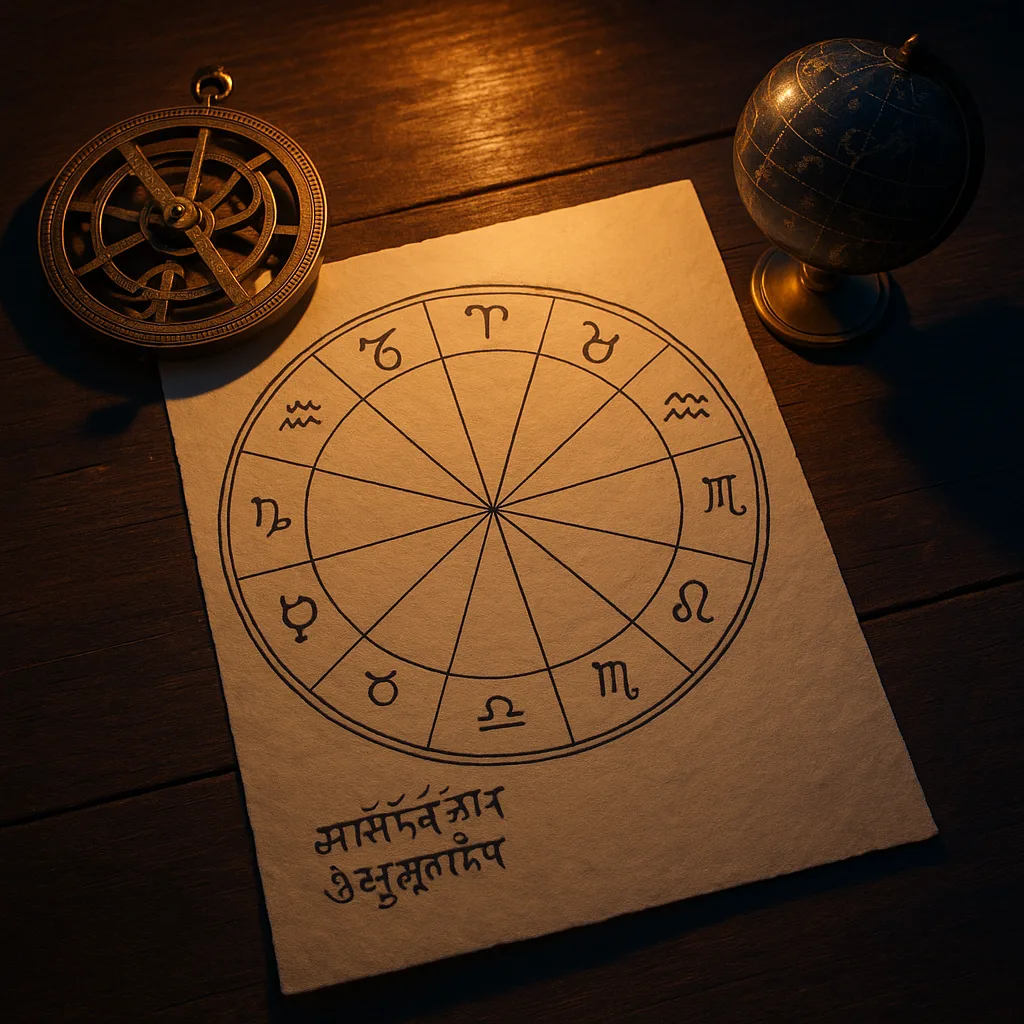
Someone born at dawn, with the Sun in Pisces by the Western zodiac, might discover that in Jyotish their Lagna falls in Aquarius. That is not a calculation error or a rival school giving a different answer: it is the same moment of birth, the same point of the sky touching the eastern horizon, just measured with two different rulers. Understanding this distinction is the first step toward reading a Vedic chart without mixing up criteria that don't actually speak to each other.
What the Lagna actually is
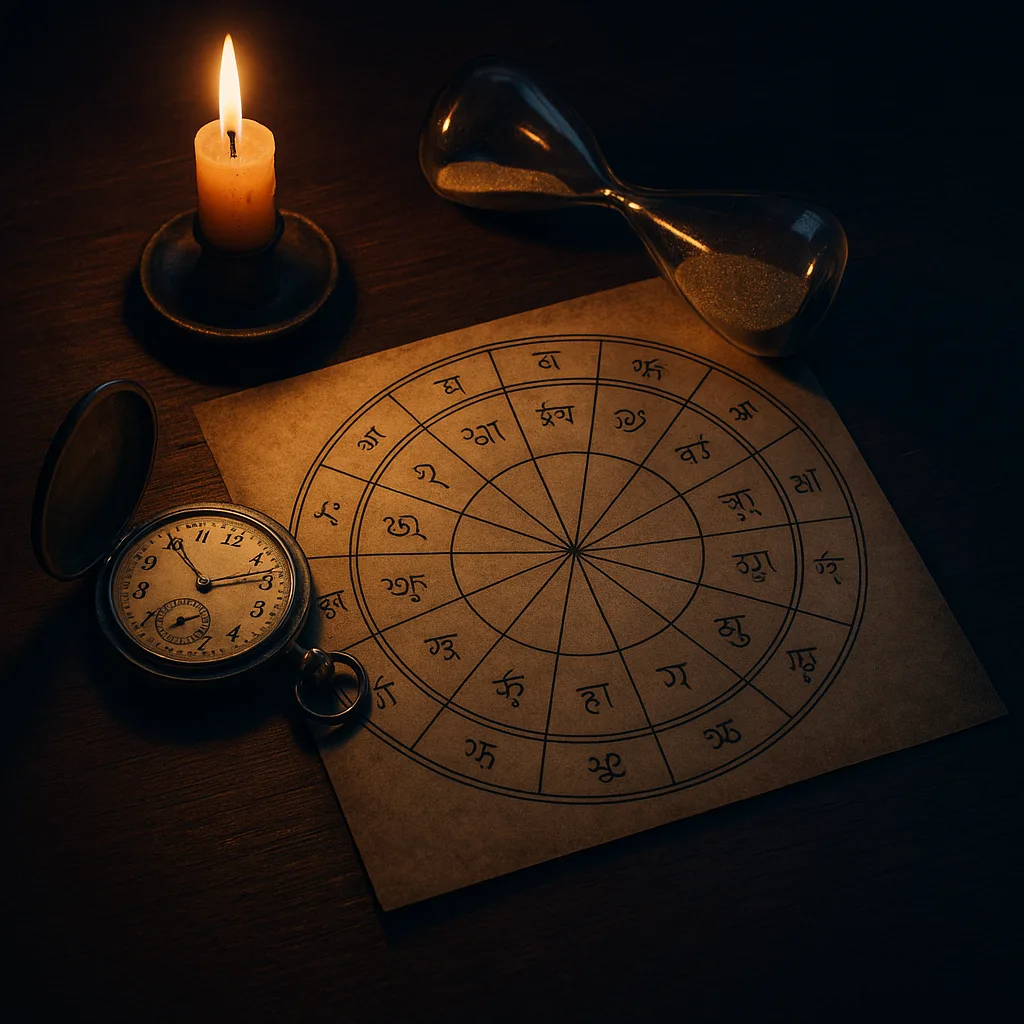
Lagna is the Sanskrit name for the Ascendant: the degree of the zodiac that was rising on the eastern horizon at the exact moment of birth, seen from the place where the person was born. Astronomically, it is the crossing point between the ecliptic (the Sun's apparent path) and the horizon line. This concept is not exclusive to India. The word horoscope itself comes from the Greek horoskopos, meaning hour marker, because Hellenistic tradition already used this point to open the count of the twelve houses: the rising sign becomes the first house, the next one the second, and so on.
What changes between the Western Ascendant and the Vedic Lagna is not the phenomenon being observed, but the zodiac used to name that point. And this is the root of most of the confusion surrounding the topic.
Tropical zodiac versus sidereal zodiac: where the split happens
The modern Western zodiac is tropical: it begins at 0° Aries at the moment of the March equinox, marking the start of autumn in the Southern Hemisphere and spring in the Northern Hemisphere. It's anchored to the seasons, not to the stars. The Vedic zodiac is sidereal: it's anchored to the fixed stars, using reference points such as the star Spica (Chitra, in Indian tradition) to fix its zero point.
The problem is that these two starting points no longer line up. This happens because of the precession of the equinoxes, a real and well-documented astronomical phenomenon. According to data published by NASA, precession is a wobble in Earth's rotational axis that completes one cycle every 25,772 years, slowly shifting the position of the equinox relative to the fixed stars (source: science.nasa.gov). The shift amounts to roughly 50.3 arcseconds per year, equivalent to 1 degree every 71 or 72 years.
This buildup over centuries has created a gap between the two zodiacs that today runs around 23 to 24 degrees, depending on the calculation school used. This gap has a technical name: ayanamsha. It's precisely this value that, subtracted from the tropical degree, converts a Western Ascendant into a Vedic Lagna. It was Hipparchus himself, in the 2nd century BCE, who first noticed this drift by comparing his star catalog to earlier Babylonian records, realizing that it wasn't the stars that were moving, but the orientation of the Earth itself.
Since ayanamsha grows continuously and varies slightly depending on the school (Lahiri, Raman and Krishnamurti, for example, use slightly different anchor points), it wouldn't make sense to fix an exact number here and treat it as final. The safer approach is to calculate the value corresponding to the birth year using ephemeris software at the time of consultation, rather than relying on a figure that will already be outdated within a few years.
Why Jyotish is not isolated from the ancient Western tradition
There is a widespread idea that Vedic astrology developed entirely independently, with no contact with Greek or Babylonian astrology. Historical records tell a different story. According to the Encyclopaedia Britannica entry on the subject, Jyotisha was transmitted to India around the 2nd and 3rd centuries CE from Hellenistic sources, and Indian astrologers incorporated that framework into their own philosophical categories, such as reincarnation and the doctrine of the five elements (source: britannica.com). The very logic of counting the twelve houses starting from the point rising on the horizon, now seen as a signature feature of Jyotish, is inherited from that shared foundation.
The most widely cited classical text on the subject, the Brihat Parashara Hora Shastra, attributed to the sage Parashara, devotes an entire chapter to variations on the Lagna concept itself, describing distinct technical points such as the Bhava Lagna, the Ghatika Lagna and the Hora Lagna, each used for a different type of analysis within the chart. This shows that in Vedic tradition, the Lagna was never treated as a single, closed point, but as a family of reference points with specific functions.
Why the Lagna carries more weight in Vedic reading than the Ascendant usually does in common Western practice
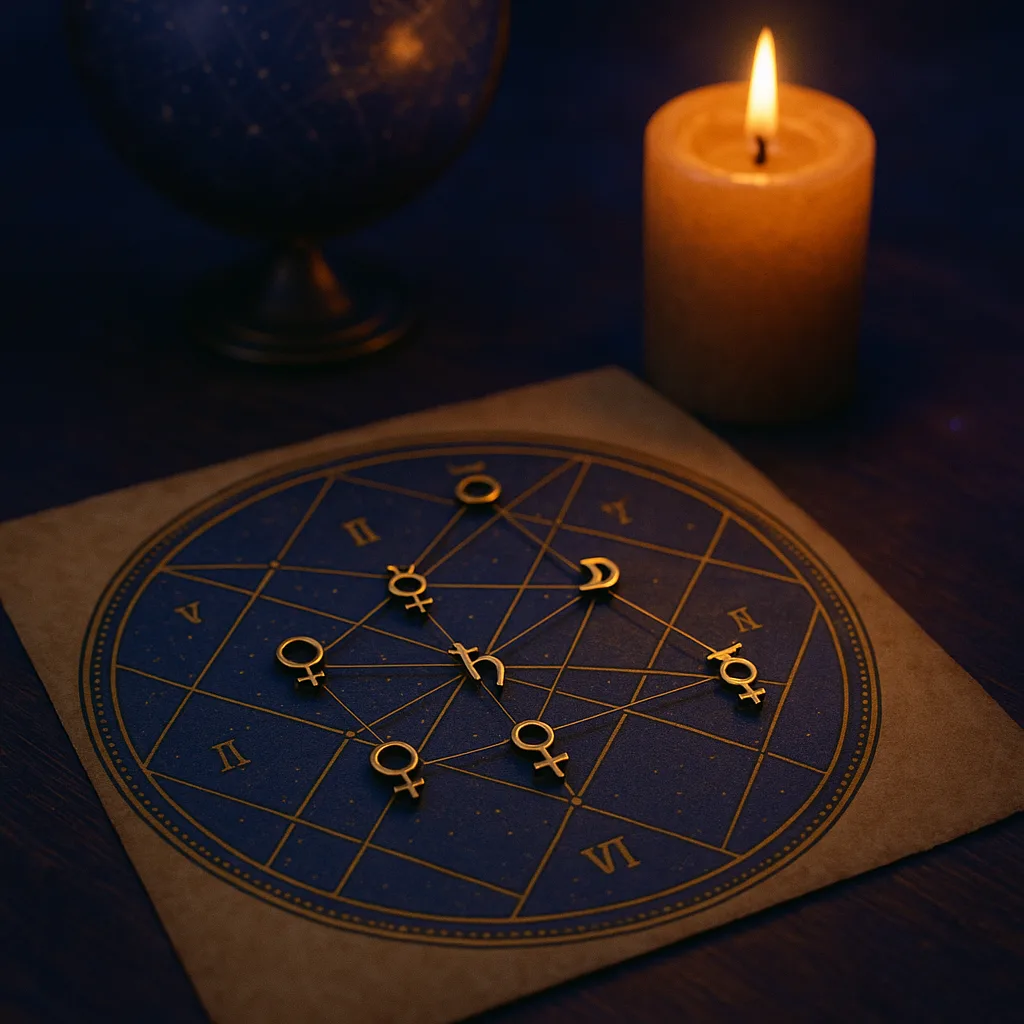
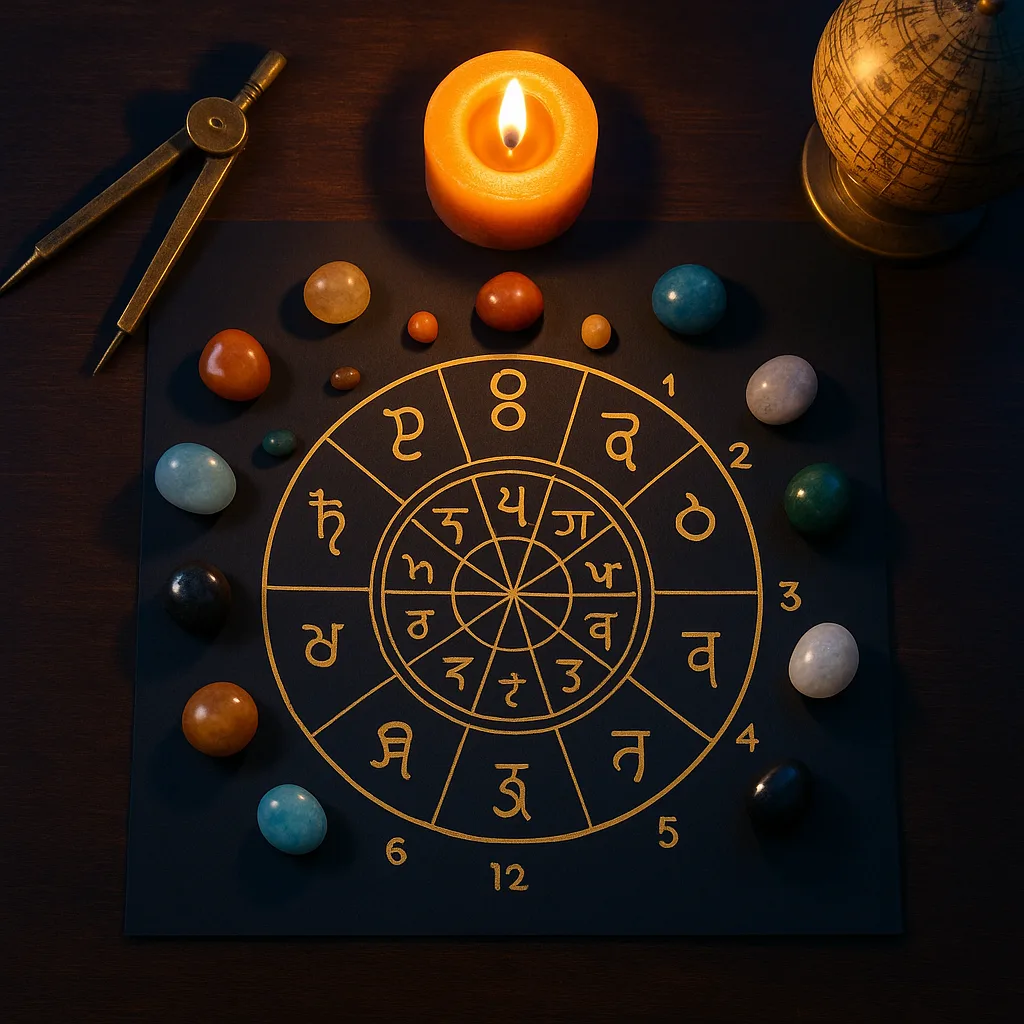
There's a structural difference that goes beyond the zodiac: the house system most used in traditional Jyotish is whole-sign. In this system, the entire sign that is rising becomes the whole of House 1, and the remaining eleven houses follow in complete sign blocks, one after another. This contrasts with Western systems widely used today, such as Placidus or Koch, which divide the houses into unequal time arcs, making the house layout more sensitive to the method chosen.
This difference has a direct practical consequence: in Jyotish, the Lagna itself defines the entire architecture of the chart more directly. And the planet that rules the Lagna's sign, called Lagnesha or lord of the Lagna, is treated as the guiding thread of the whole analysis: its position, strength and aspects are typically examined before any other factor in the chart. In contemporary Western astrology, the Ascendant is often described as the social mask, the way a person appears to the world. In Jyotish, the Lagna corresponds to the first house (Tanu Bhava) and is read as the structural axis of the body, of vitality, and of what the tradition calls physical karma, something closer to the chart's center of gravity than to a surface layer.
How to calculate the Lagna step by step
The calculation itself is technical, but you can follow the logic without complicated formulas:
- Gather precise data: exact time of birth (minutes matter), full date, city and geographic coordinates (latitude and longitude), plus the time zone in effect on that date and location.
- Convert local time into Local Sidereal Time, starting from Greenwich Sidereal Time at midnight on that date and adjusting for elapsed time and longitude.
- Calculate the RAMC, the Right Ascension of the Midheaven, by multiplying Local Sidereal Time (in decimal hours) by 15.
- Apply the trigonometric formula for the tropical Ascendant, which combines the RAMC, the obliquity of the ecliptic (currently close to 23.44°), and the latitude of the birthplace. The result is the exact tropical degree that was rising on the eastern horizon.
- Subtract the ayanamsha corresponding to the birth year (not the current year) from that tropical degree. The result is the sidereal Lagna, in other words, the Vedic Lagna.
- Locate which of the twelve sidereal signs (rashis) that final degree falls into, and, for a deeper reading, identify the corresponding nakshatra as well, since Jyotish always cross-references the Lagna with the lunar constellation.
One detail tends to catch beginners off guard: since each sign takes about two hours to fully cross the eastern horizon, an error of just 15 or 20 minutes in the reported birth time can be enough to shift the Lagna from one sign to another. This is why birth time rectification exists as a separate technical procedure in classical Jyotish, used when the birth certificate lists an approximate or uncertain time.
Western Ascendant and Vedic Lagna side by side
| Criterion | Western Ascendant (tropical) | Vedic Lagna (sidereal) |
|---|---|---|
| Zodiac zero point | March equinox | Fixed stars (e.g., Spica/Chitra in the Lahiri system) |
| Most common house system | Often unequal time arcs (Placidus, Koch) | Whole-sign: House 1 is the entire Lagna sign |
| Relationship to precession | Not incorporated: the zodiac resets at each equinox | Incorporated via ayanamsha, recalculated by year |
| Current gap between the two | Reference (0°) | About 23° to 24° accumulated (check exact value in ephemeris) |
| Interpretive role of the 1st point | Often read as appearance and social behavior | Read as the structural axis of the body, vitality and the first house (Tanu Bhava) |
It's worth noting that this same gap between the two zodiacs also explains why someone's sun sign changes when moving from the Western to the Vedic system, a topic already explored in detail in the article on why your sign changes in Vedic astrology and how ayanamsha explains it. And since the Lagna is also the starting point for counting planetary cycles, anyone who has already studied the Dasha Mahadasha system and how to calculate the major planetary cycles will notice that the lord of the Lagna shows up again as a key piece of analysis in those periods.
Frequently Asked Questions
Are the Lagna and the Ascendant the same thing?
They describe the same astronomical point, the degree of the ecliptic rising on the eastern horizon at the moment of birth. The difference lies in the zodiac used to name that degree: the Western Ascendant uses the tropical zodiac, anchored to the equinox, while the Vedic Lagna uses the sidereal zodiac, anchored to the fixed stars.
Why is my Vedic Lagna different from my Western Ascendant?
Because the two zodiacs are misaligned due to the precession of the equinoxes, a slow movement of Earth's axis documented by NASA. This gap, called ayanamsha, currently adds up to about 23 to 24 degrees and tends to push the Lagna back to the sign before the Western Ascendant in most cases.
How can I find my Lagna without doing the calculation by hand?
You can use Vedic chart software or an ephemeris calculator that already incorporates the ayanamsha, entering your birth date, exact time and location. The key point to watch is the accuracy of the time: a difference of 15 to 20 minutes can shift the Lagna into a different sign.
Is the Lagna more important than the Sun in a Vedic chart?
In traditional Jyotish, the Lagna and its ruler are usually analyzed before any other element, because they structure the entire division of the twelve houses under the whole-sign method. This doesn't diminish the importance of the Sun and Moon, but it explains why the Lagna carries a different interpretive weight than it typically has in more popular Western practice.
Do I need to know my exact birth time to calculate the Lagna?
Yes. Since each sign takes an average of two hours to cross the eastern horizon, a small error in the reported time can change the entire Lagna sign. When there's uncertainty about the birth time, astrologers working with Jyotish turn to a separate rectification process to adjust the data.

Recomendado
Curso MAPA ASTRAL
CURSO DESTRAVE SUA VIDA COM MAPA ASTRAL EM ATÉ 08 SEMANAS!
Universo Astral Editorial Team · Birth charts and numerology
This article was produced by the Universo Astral editorial team, with AI tools assisting research and drafting and human review before publication. If you spot anything inaccurate or outdated, let us know at our contact email.