The Origins of Glyphs: Why Astrology's Symbols Look the Way They Do
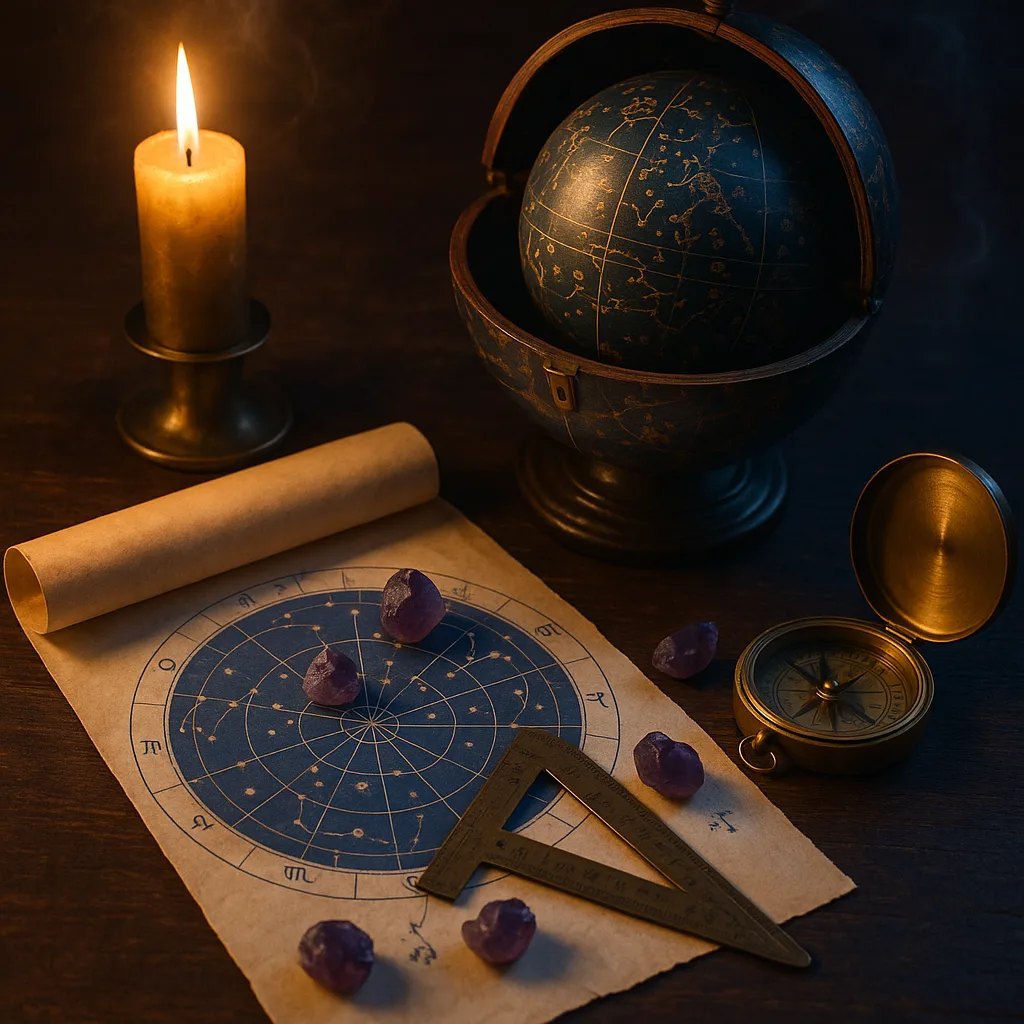
On October 28 of the year 497, a Byzantine astrologer drew a horoscope using symbols nearly identical to those any astrologer sketches today on a napkin. The document survived, was cataloged by historians of Greek astrology, and proves something curious: the glyphs we use to represent planets and signs are neither a recent invention nor the aesthetic whim of some birth chart website. They are a visual code with more than fifteen hundred years of continuous use, and in some cases much longer.
An alphabet with only three letters
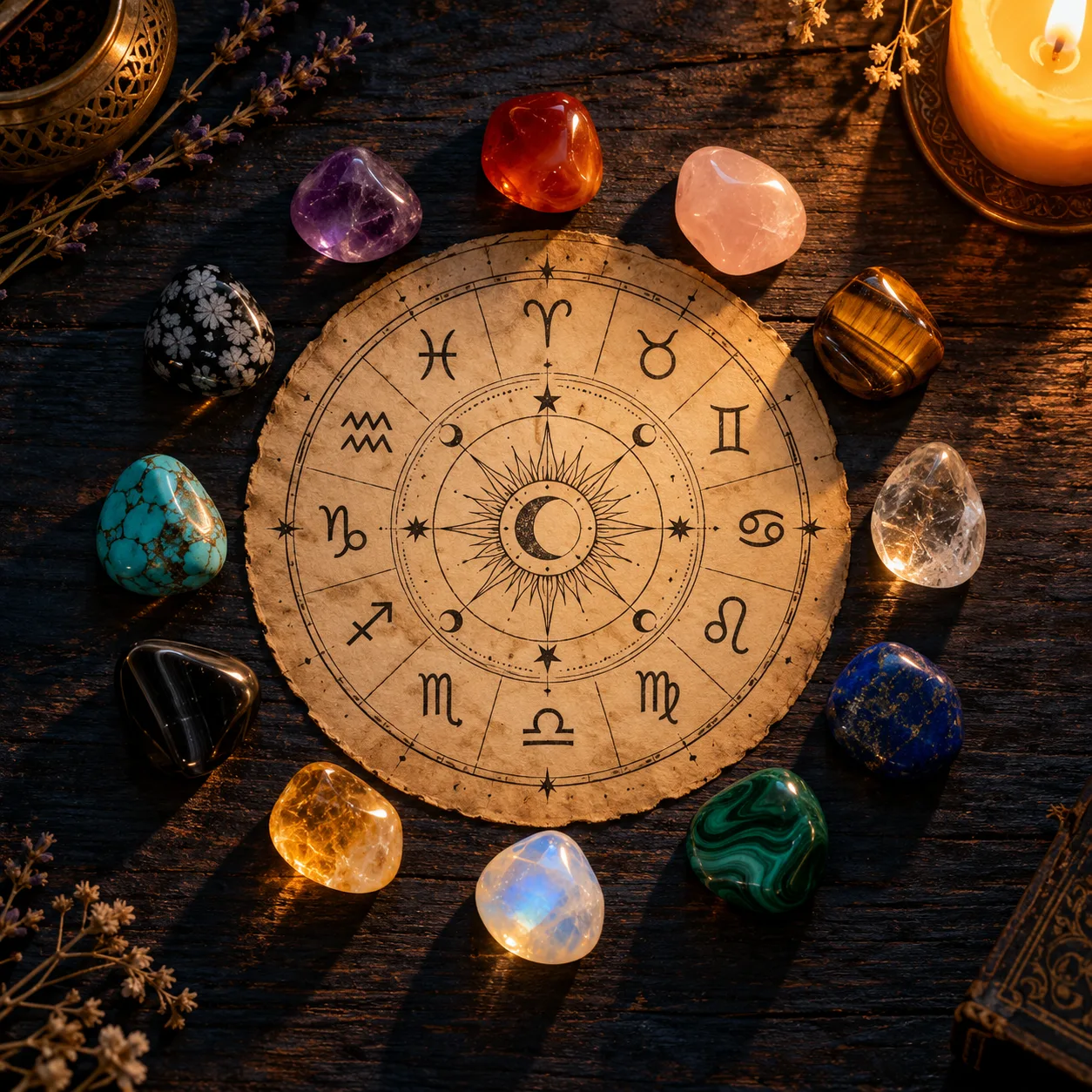
Looking closely, nearly all astrological glyphs, the twelve signs and the ten planets used in modern astrology, arise from the combination of three simple shapes: the circle, the cross, and the semicircle, or crescent. It is as though the sky uses an alphabet of three letters, combined in different ways to form each symbol.
In a reading symbolic of alchemical tradition, each shape carries meaning: the circle represents spirit, that which has no beginning or end; the cross represents matter, the concrete world where things are realized; and the semicircle represents receptivity, like an antenna open to capture something greater. When you see the glyph of Mercury, for example, you see the three shapes stacked in sequence: first receptivity, then spirit, then matter.
This logic of combination becomes clearer when organized side by side. The table below brings together the planetary glyphs mentioned in this article and shows how each derives from the three basic shapes:
| Planet | Combined shapes | Symbolic reading of the mark |
|---|---|---|
| Mercury | Semicircle + circle + cross | Winged helmet, skull and body of the messenger god |
| Venus | Circle + cross | Spirit over matter; today also the symbol for female in biology |
| Mars | Circle + arrow/cross | Spirit directed toward action; today also the symbol for male in biology |
| Leo (sign) | Circle + hook | Direct reference to the animal's arched tail |
| Aries (sign) | Two curved strokes | Stylized reduction of the ram's horns |
Two origins, two different historical periods
A rarely discussed curiosity is that planetary glyphs and zodiacal glyphs did not arise together, nor in the same place. Planetary symbols reach back to the ancient fusion between astrology and alchemy, when these two practices still mixed with what would become astronomy and chemistry. More recent research places the first associations between celestial bodies and mythological figures in ancient Mesopotamia, around the 5th century B.C.E., when the Babylonians already divided the ecliptic into twelve equal parts and linked each visible planet to a deity: Mars to the warrior god Nergal, Venus to the fertility goddess Ishtar. For those wanting to understand how other ancient civilizations reached similar systems of reading the sky, it is worth seeing how different peoples transformed the sky into language in distinct cultural contexts.
The zodiacal glyphs, by contrast, have a later and better documented path. According to experts in the history of astrology, they first appear in Greek papyri from the late Hellenistic period, were preserved and copied by Byzantine scribes during the Middle Ages, and only gained the stylized form we know today during the Renaissance. That is: when you draw the symbol of Cancer or Sagittarius, you are repeating a mark that passed through at least three different historical eras before reaching you.
The winged helmet hidden in Mercury's glyph
Few symbols are as literal as Mercury's. If you look at the glyph, a semicircle over a circle, crossed by a vertical line, you face a miniature portrait of the Roman god Hermes-Mercury: the semicircle at the top are the wings of his winged helmet, the circle below represents the god's skull, or face, and the cross at the base suggests the body or staff he carried as the messenger of the gods. It is a glyph that works almost like an ancient emoji: a compressed image telling a complete mythological story in just a few strokes. Anyone following the actual position of Mercury in the sky, rather than merely the symbol representing it on a chart, can check daily ephemerides and planetary visibility times at in-the-sky.org, which records observable conjunctions and transits day by day.
From Venus and Mars to restroom symbols
One of the most surprising curiosities is this: the symbols ♀ and ♂, used since antiquity to represent the planets Venus and Mars, are exactly the same symbols that today appear on restroom signs, forms, and in biology to indicate female and male. The bridge between these two uses has a name, a date, and a reason, and it has nothing magical about it.
The responsible party was Swedish naturalist Carl Linnaeus, the same person who created the system of species classification we still use today. In 1751, in the work Plantae Hybridae, he needed to quickly indicate which plant was the "mother" and which was the "father" in a hybrid crossing. Instead of writing full words, he borrowed the astrological glyphs: Venus for the female progenitor, Mars for the male. The reason, according to records of the time, was purely practical: to save space in laboratory notes. From there on, the symbols migrated from astrology to biology and, decades later, into the visual culture of the entire world.
There is still a curious note about the technical limits that shaped this history: in 1845, an American physician created an alternative notation (triangles and squares for men, circles for women) simply because the printing press he used did not have the movable types for Venus and Mars in its set. Sometimes the history of symbols is made as much of mythology as of typography.
When the glyph is almost a drawing
Not all symbols hide as much abstraction as the planetary ones. Some signs were drawn in an almost figurative way, as if the illustrator had decided to simplify to the utmost a recognizable feature of the animal or mythological figure. The glyph of Leo, for example, is described by scholars of symbolism as a circle with a hook, a direct reference to the lion's arched tail, ready to move. Aries, similarly, reduces the ram to its two curved horns. These are glyphs that work almost like pictograms, distant heirs to humanity's first attempts to draw the world.
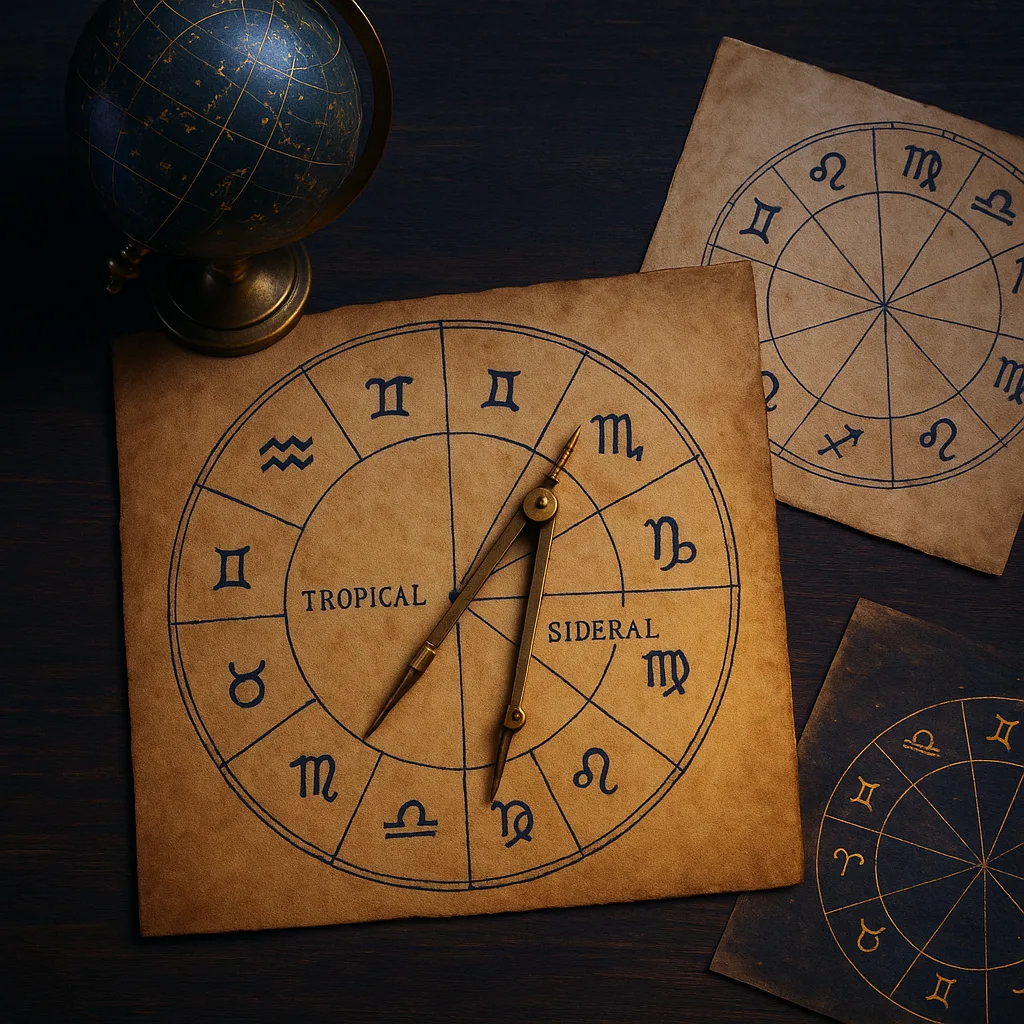
Virgo is a case apart, because it brings together two competing theories that historians of astrology have never fully resolved. One reading suggests the symbol is a stylized version of the first letters of the Greek word parthenos, which means "virgin." Another interpretation, more symbolic, sees in the same mark a female figure crossing her legs in a gesture of modesty and inner sovereignty. The two readings coexist without either canceling the other. Astrology deals this way with its own symbols: it accepts that one mark can carry more than one truth, something similar to what happens when comparing the Western reading of planets with systems like Vedic astrology, which assigns a different solar sign to the same person using a distinct reference point in the sky.
How to recognize the logic behind a glyph: step by step
For those who want to train their eye and identify the origin of an astrological symbol without needing to memorize each one separately, a practical way is to break down the mark into the three basic shapes:
- Observe whether the glyph has a circle. If it does, it is likely to carry a reference to spirit or to a divinity associated with the planet, as occurs in Venus and Mercury.
- Check whether there is a cross or straight line crossing the symbol. This shape usually indicates matter, concrete action, or, in the case of Mars, the tip of a spear.
- Look for a semicircle or open curve. This mark normally represents receptivity, like the wings on Mercury's helmet or the lunar crescent.
- Compare the result with the mythology associated with the planet or with the animal of the sign: in most cases (Leo, Aries, Mercury) the glyph is a direct visual simplification of that reference.
- For ambiguous cases, like Virgo, accept that more than one historical reading can be valid at the same time, since ancient records do not always reach us intact.
Why this still matters for anyone reading a birth chart
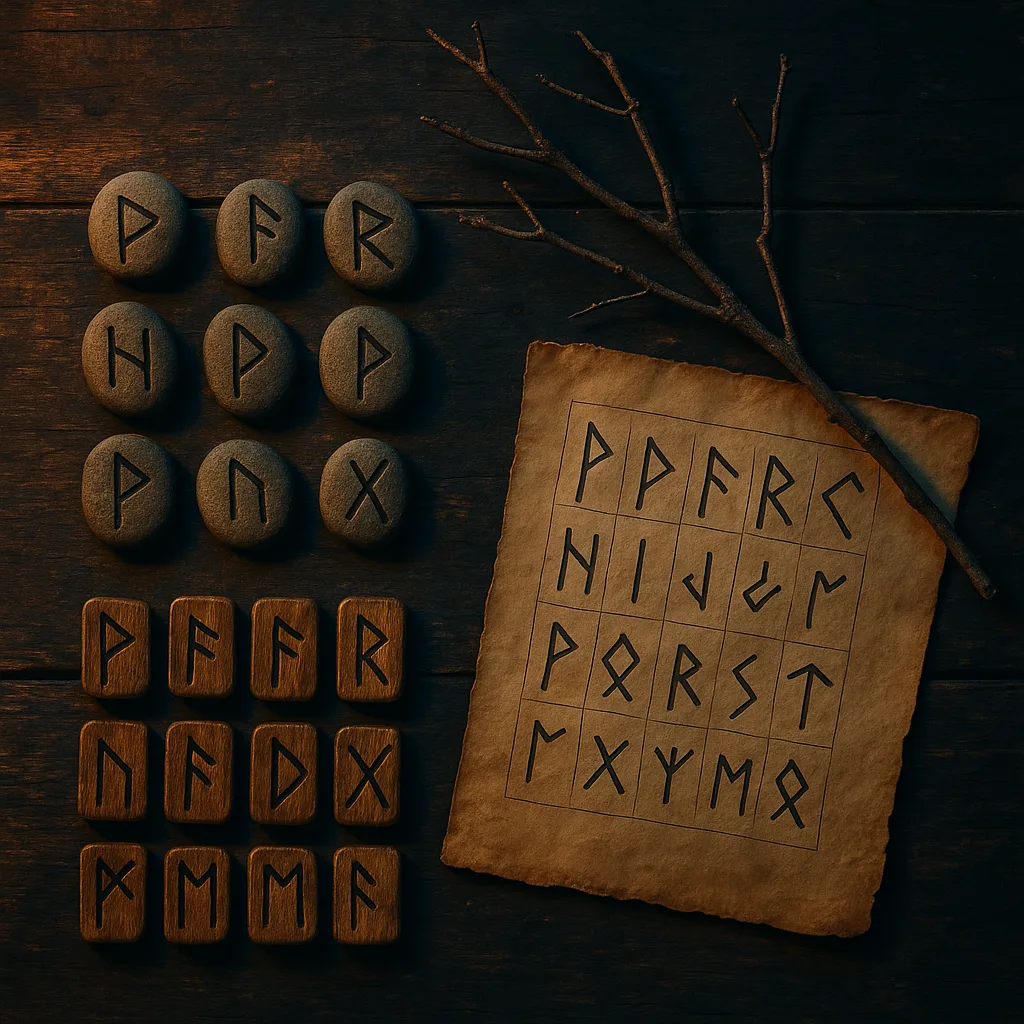
Knowing the origin of a glyph does not change the interpretation of a transit or a house, but it changes the experience of looking at a birth chart. Each mark drawn there passed through Greek scribes, Byzantine monks, medieval alchemists, and even a Swedish botanist concerned with saving ink. When an astrologer quickly draws the symbol of Venus next to a birth date, they are repeating, without realizing it, a graphic gesture that crossed continents and centuries before arriving at that paper, or that screen. This same blend between historical record and symbolic practice appears in other ancient reading systems, like the Norse runic alphabet, which also began as writing before becoming an oracle.
The next time these small drawings appear anywhere, it is worth recognizing them not as mystical ornaments, but as a parallel writing system, as old as languages that have already disappeared, and that continues in use because it fits in any notebook margin.
Frequently asked questions
Why are the glyphs of Venus and Mars the same as the gender symbols?
Because Swedish naturalist Carl Linnaeus borrowed these two astrological glyphs in 1751, in the work Plantae Hybridae, to quickly indicate which plant was the female parent and which was the male parent in a hybrid crossing. From botany, the symbols passed into general biology and later into everyday use on signs and forms.
Did the glyphs of planets and signs arise at the same time?
No. Planetary symbols reach back to the ancient fusion between astrology and alchemy, with roots that historical research places in Mesopotamia around the 5th century B.C.E. Zodiacal glyphs, on the other hand, first appear documented later, in Greek papyri from the Hellenistic period, were preserved by Byzantine scribes, and only gained their current form during the Renaissance.
What does Mercury's glyph represent exactly?
The symbol is read as a stylized portrait of the god Hermes-Mercury: the semicircle at the top represents the wings of the winged helmet, the circle below is the god's skull, and the cross at the base suggests the body or messenger staff. It is considered one of the most literal glyphs in all of astrology.
Why does Virgo's glyph have two different explanations?
Because historians of astrology have never reached a consensus on its exact origin. One theory links the mark to the first letters of the Greek word parthenos ("virgin"), while another interpretation sees in the same symbol a female figure with crossed legs. Both readings are accepted simultaneously within the tradition.
Do all astrological glyphs derive from the same basic shapes?
Most planetary and zodiacal symbols can be broken down into three shapes: the circle (spirit), the cross (matter), and the semicircle (receptivity). Some signs, however, like Leo and Aries, follow a more figurative logic, directly representing a feature of the animal associated with the sign.
Recomendado
Astro Reflexo
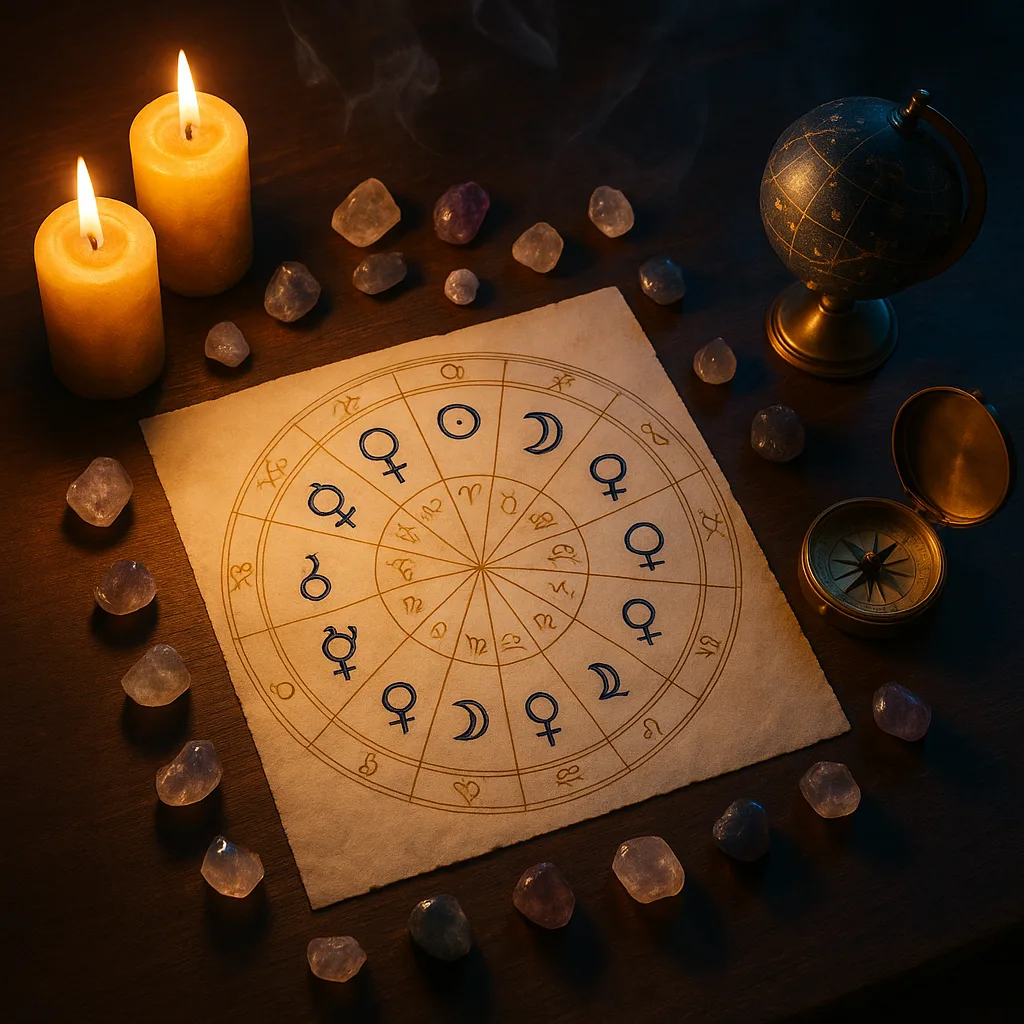
Descubra o que os astros revelam sobre quem você é. Em menos de um minuto, calculamos seu Sol, Lua e Ascendente com precisão astronômica e uma inteligência artificial escreve um resumo personalizado só para você.
Universo Astral Editorial Team · Zodiac signs and fun facts
This article was produced by the Universo Astral editorial team, with AI tools assisting research and drafting and human review before publication. If you spot anything inaccurate or outdated, let us know at our contact email.