Norse Runes: Origin, the Myth of Odin, and How to Start Studying Them
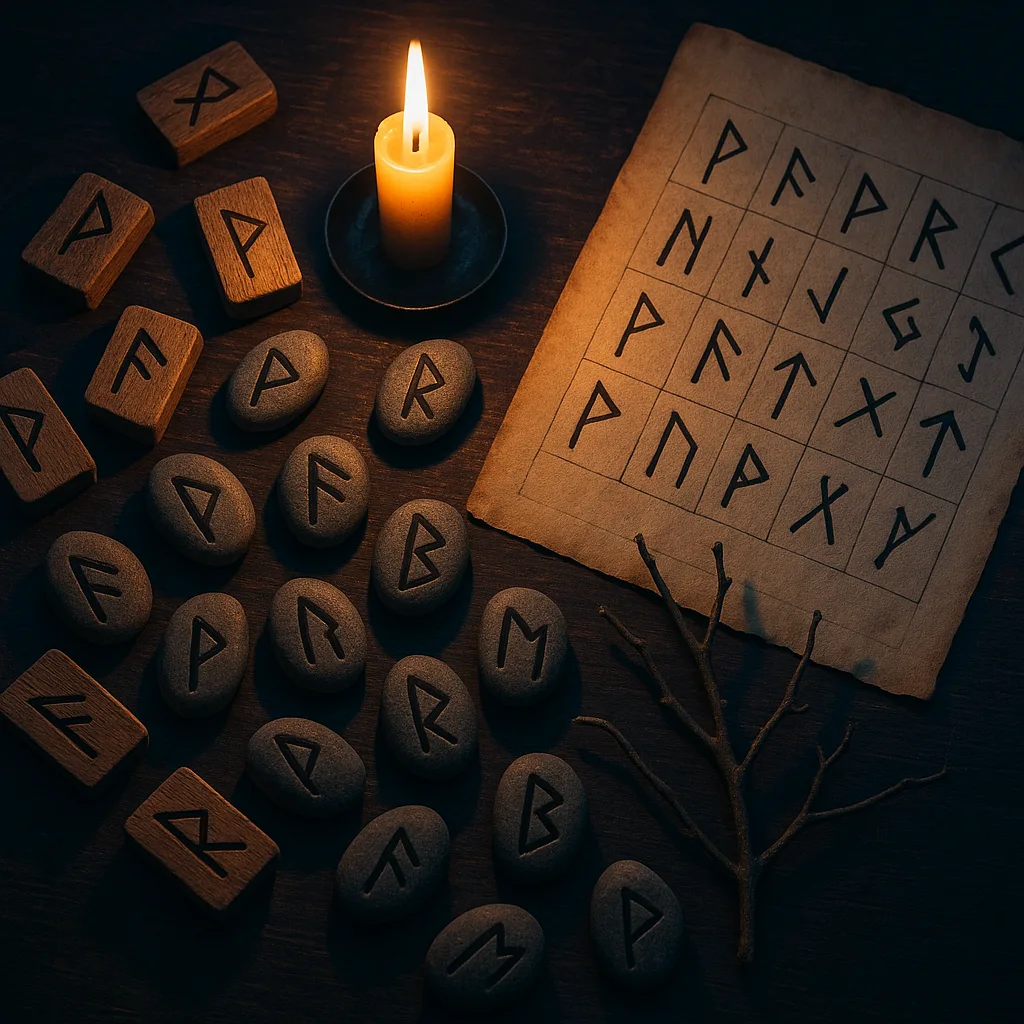
An Alphabet That Whispers Secrets
A stone nearly six feet tall, raised on a Swedish plain more than a thousand years ago, wasn't carved for decoration. It preserved the name of someone who died far from home. This is the real origin of runes, long before tarot decks or the small stone sets sold in esoteric shops today. The word rune comes from the Proto-Germanic rūnō, meaning something like “secret” or “whisper,” which passed into Old Norse as rún before becoming runa in Latin and, eventually, rune in modern languages. The name itself reflects how these letters were understood: never neutral, but symbols carrying weight, used to name the world. For those who carved them, naming was already a form of power.
First an Alphabet, Later a Mystical Symbol
Runes weren't born as a divination system. They started as a functional writing system. The oldest records date back to around 150 AD, and the runic alphabet remained in use, in an almost unbroken sequence, until the 19th century, carved mainly into stone, wood, metal and bone. Researchers still debate the exact origin of these characters: one strong hypothesis is that they emerged from a blend of Latin and Etruscan alphabet influences, adapted by Germanic peoples north of the Alps. The term “runic” only came into use in the 16th century to describe this system, believed to have formed between the 2nd and 3rd centuries AD in Germanic territory, a point that runology (the academic field dedicated to studying runes) treats with fairly consistent evidence.
For most of their history, their use was practical. Runes appeared on weapons to mark ownership, on jewelry as a personal signature, on memorial stones to honor the dead, and even in legal documents: the Codex Runicus, a medieval Danish manuscript, records entire laws written in this alphabet. The so-called runestones, raised between the 5th and 12th centuries, served a role similar to that of a tomb or public monument: celebrating victories, marking inheritances, recounting journeys. Only after this long period of everyday use did the practice of raising these stones fade away, and centuries later, runes would gain the reputation they hold today as a symbolic and divinatory tool.
The Myth of Odin: Wisdom Paid for With Sacrifice
If the historical use of runes was administrative, the symbolic value they carry comes from somewhere else entirely: Norse mythology. According to the Poetic Edda, specifically the poem Hávamál, the god Odin hung himself from the World Tree, Yggdrasil, for nine days and nine nights, without food or water, pierced by his own spear, a voluntary sacrifice made to receive the knowledge of the runes. He didn't stumble upon them by chance or fleeting curiosity: he paid a steep price for that knowledge, earning him the epithet “Father of the Runes.” This connection between Odin and runic writing isn't just literary. It appears documented in historical inscriptions, such as the Noleby Stone in Sweden, which references the god directly.
The myth carries a simple lesson: runic knowledge is earned through dedication, not handed over instantly.
That's a useful lens for anyone hoping to study runes today: they weren't designed to hand out easy answers. They were carved by people who treated writing as something serious, almost sacred, and that seriousness still shapes how many practitioners relate to them.
From the Elder Futhark to the Younger Futhark: An Alphabet That Changed Shape
Like any writing system used for over a thousand years, the runic alphabet didn't stay frozen in time. Runologists typically work with three major variations:
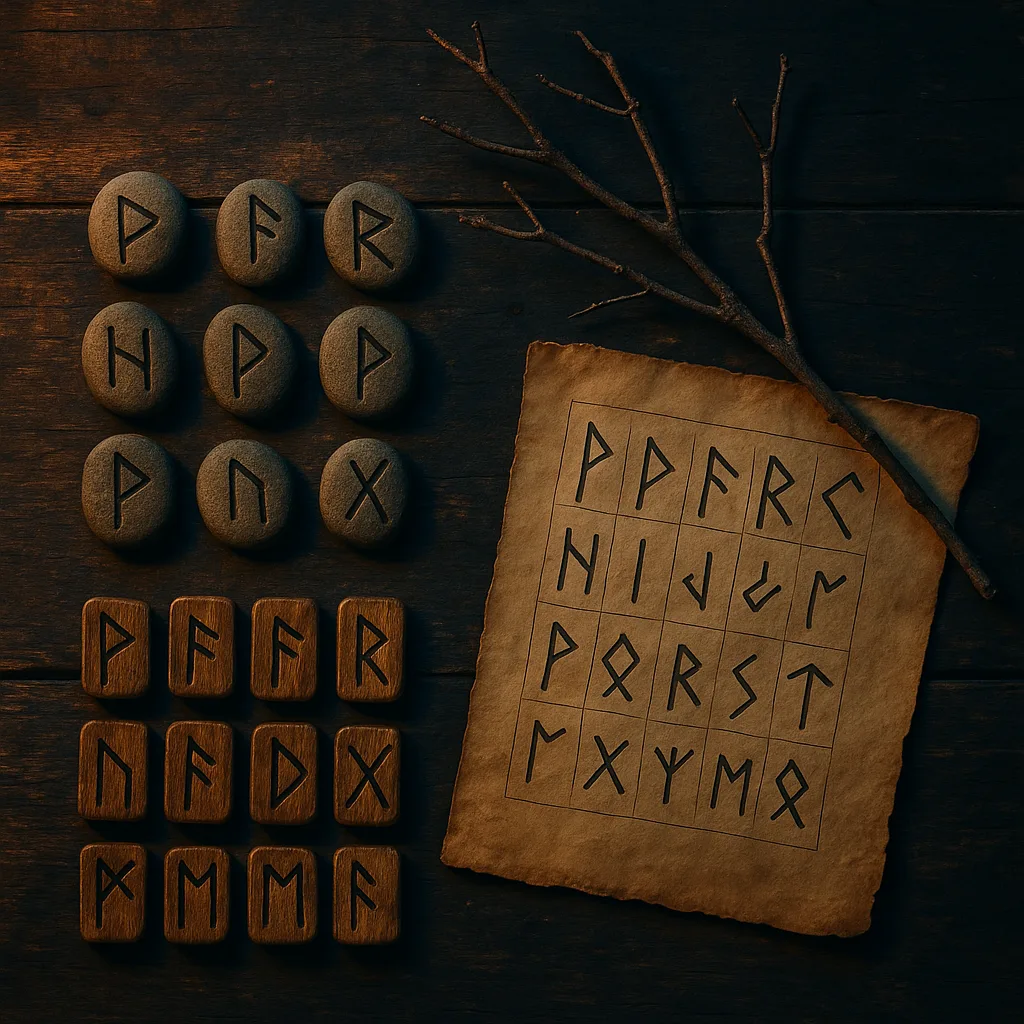
- Elder Futhark: the oldest and most studied version for beginners. It emerged around the 2nd century AD and was used by Germanic and Norse peoples throughout Scandinavia and northern Europe. It has 24 runes, each representing a sound (phoneme).
- Younger Futhark: a simplified version with just 16 runes, which emerged to adapt to the linguistic and cultural shifts of the Viking Age proper.
- Anglo-Saxon Futhorc: an expanded version used in the British Isles, with additional characters to capture sounds specific to Old English.
The name “Futhark” isn't arbitrary: it comes from the first six runes of the alphabet, Fehu, Uruz, Thurisaz, Ansuz, Raidho and Kenaz, the same way “alphabet” comes from alpha and beta, the first two Greek letters. For anyone wanting to study runes from scratch, the Elder Futhark is the most recommended starting point, both for its wealth of documentation and because it's the foundation later versions were built upon.
The Three Clans: How the Elder Futhark Is Organized
A structural quirk makes memorizing the 24 runes of the Elder Futhark much easier: they don't form a loose list, but split into three groups of eight, called ættir (a word meaning something like “clan” or “family”). Each ætt is traditionally linked to a figure from Norse mythology, Freya, Heimdall and Tyr, which gives the study a narrative thread, almost like chapters of a larger story.
A few runes from the first group already set the tone for the whole system:
- Fehu (ᚠ): tied to wealth, abundance and resources earned through one's own effort.
- Uruz (ᚢ): raw strength, health, vitality and the courage needed to start something new.
- Thurisaz: destructive force, but also protection: the idea of a power that can harm or defend, depending on how it's directed.
- Ansuz: associated with Odin and communication with the divine, with words that carry weight.
- Raidho: the rune of travel and cosmic order, of movement that follows the right path.
Runes Aren't Scandinavian Tarot, But They Can Be Read
It's common to see runes described as a kind of “Norse tarot,” but that comparison oversimplifies a system born for a different purpose. While tarot tells stories through images layered with symbolism, and astrology traces patterns through the movement of the stars, runes tend to be more direct: each symbol carries a dense, concise meaning, with less room for visual metaphor. That doesn't make them any less rich, just different. When contemporary practitioners use runes for reflection or symbolic guidance, they usually work with small draws (one or three runes pulled from a pouch, for example), interpreting each symbol by its traditional meaning and its position in the spread.
First Steps for Anyone Who Wants to Really Study
For anyone drawn to the subject beyond mere curiosity, a few approaches can help structure the learning process without getting lost:
- Start with the Elder Futhark: it's the most documented set and the one most cited in historical and mythological sources, which makes it easier to find reliable material.
- Study the three ættir separately: learning eight runes at a time, each tied to a clan and a mythological narrative, is far easier than trying to memorize 24 standalone symbols.
- Separate history from symbolic practice: understanding the archaeological and linguistic use of runes gives you a solid foundation; using runes for personal reflection is a later layer, built on top of that knowledge.
- Read about the mythology surrounding them: learning about the Hávamál and Odin helps explain why runes are treated with such reverence in the traditions that still honor them today.
- Be wary of generic, ready-made lists: each rune carries multiple layers of meaning documented across different sources, so it's worth comparing interpretations before settling on just one.
Studying runes is, at its core, revisiting a tangible piece of Scandinavian history, stones, wood and metal that survived centuries carrying real names, victories and losses. Understanding that changes the way you look at each symbol: not as a puzzle to be solved in seconds, but as a trace left by people who trusted these marks to carry something worth lasting.
Universo Astral Editorial Team · Zodiac signs and fun facts
This article was produced by the Universo Astral editorial team, with AI tools assisting research and drafting and human review before publication. If you spot anything inaccurate or outdated, let us know at our contact email.