Jyotish vs Western Astrology: Why You're Aries Here, Pisces in India
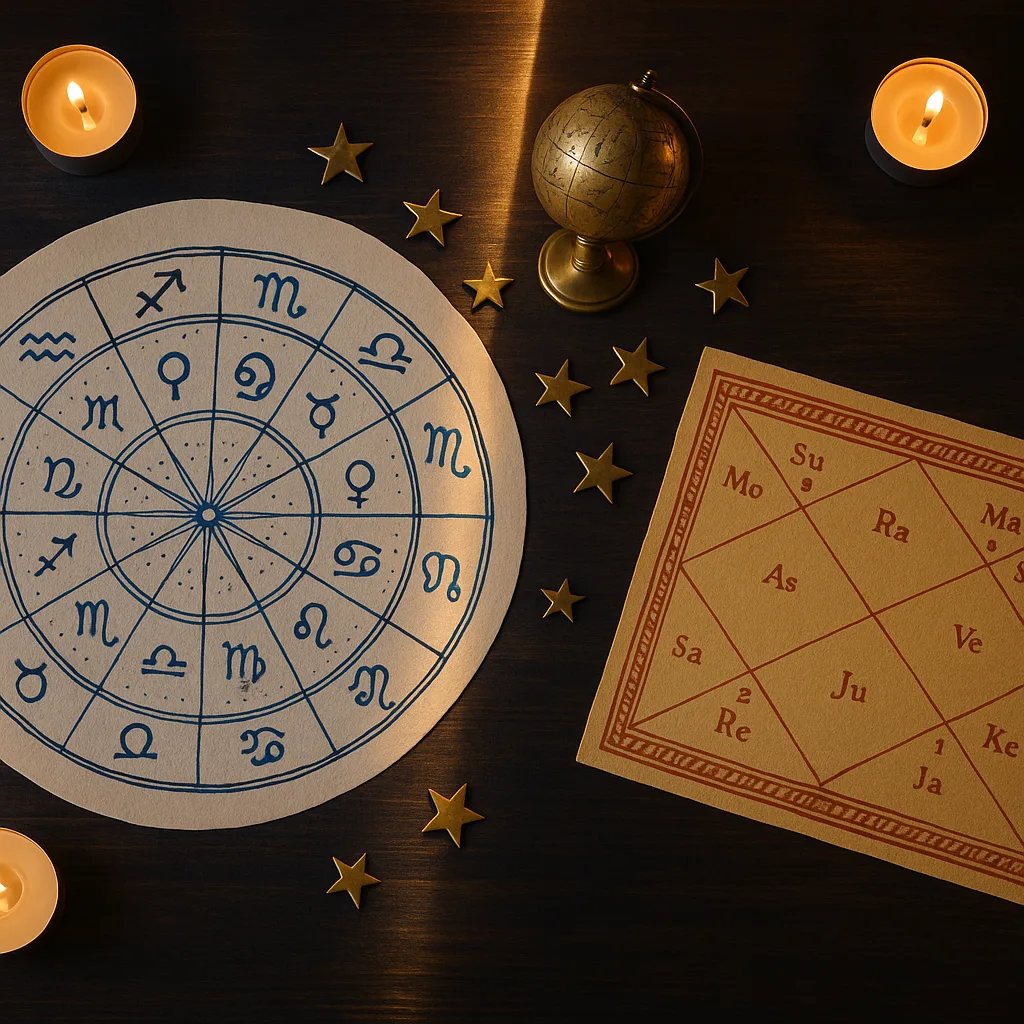
If you were born on April 5th, you've probably been told you're an Aries. Give that same birth date to a traditional Indian astrologer, though, and they'll tell you that you're a Pisces. This isn't a math error or a difference of opinion. These are two complete systems, each with its own logic and starting point, looking at the same sky. One is Western astrology, built on Greek and Mesopotamian foundations. The other is Jyotish, Vedic Indian astrology, whose Sanskrit name translates roughly to "science of light," reflecting the idea that celestial bodies exist to illuminate the path of those who study them.
Both traditions span thousands of years. Both grew out of humanity's attempt to track cycles: moon phases, eclipses, seasonal shifts. Neither counts as empirical science by Western academic standards, but that doesn't make them less rich. Each is an elaborate symbolic and cultural framework with its own internal logic. The real difference comes down to where each tradition sets the zodiac's zero point, and which celestial body sits at the center of interpretation.
Two Rulers, Two Skies: Tropical Zodiac vs Sidereal Zodiac
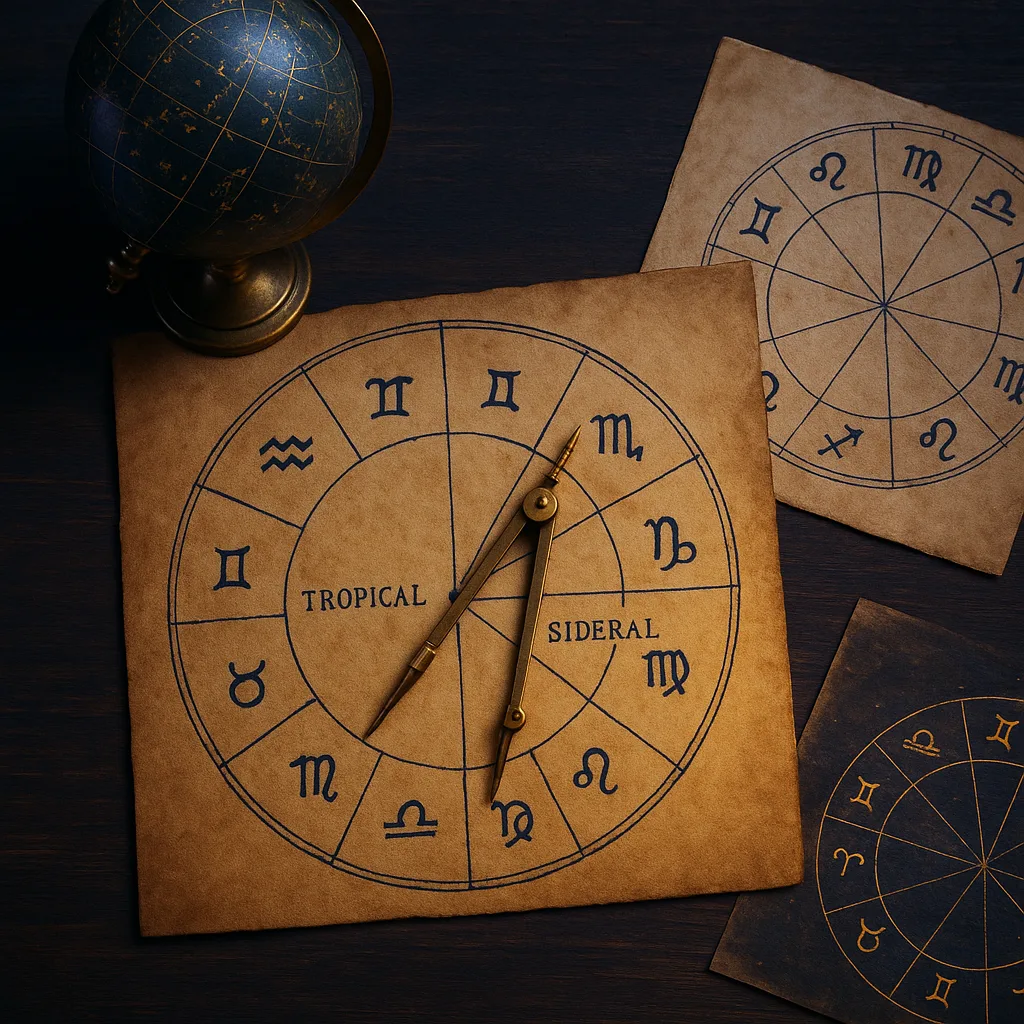
The technical root of the whole disagreement lies in how each system decides where Aries begins. Western astrology uses the tropical zodiac, which fixes 0° Aries at the spring equinox, the moment the Sun crosses the celestial equator heading into the northern hemisphere. This zodiac is tied to the seasons, not to the physical position of the stars.
Jyotish uses the sidereal zodiac instead, which sets 0° Aries according to where the actual stars of that constellation sit in the sky. Roughly two thousand years ago, the two zodiacs nearly lined up. But the Earth's axis wobbles slowly, like a spinning top losing momentum, a phenomenon called the precession of the equinoxes. It takes about 26,000 years to complete a full cycle and causes the equinox point to drift backward by about 50 arc seconds per year relative to the fixed stars. Add that up over the centuries and the gap between the two zodiacs now runs to roughly 24 degrees.
This gap, known in Sanskrit as the ayanamsa, is why someone born on November 25th is a Sagittarius in the West but a Scorpio to a Vedic astrologer. Neither reading is wrong. The sidereal system measures actual stellar position, while the tropical system measures the relationship between the Sun and the seasons. They're different scales, built for different purposes.
The Debate Vedic Astrologers Still Have Among Themselves
Even within Jyotish, there's no single agreed value for the ayanamsa. Several calculation schools exist: Lahiri, adopted as the official standard by the Indian government and the most widely used; Raman; Krishnamurti, favored by a specific predictive branch; and Fagan/Bradley, more common among Western astrologers who use the sidereal method. Each school proposes a slightly different figure for accumulated precession, which can shift planetary positions enough to change the sign of a planet sitting near a cusp.
This disagreement is worth mentioning without taking sides. It's a legitimate, still-active technical debate, and it shows these traditions remain alive, continually reviewed and refined by practitioners across generations.
Sun or Moon: Who Actually Runs the Chart?
If someone asks "what's your sign?" in the West, the answer almost always refers to the sun sign. Contemporary Western astrology builds its reading around three points: the Sun for core identity, the rising sign for how you engage with the world, and the Moon for emotional life, usually discussed in that order in casual conversation, though all three matter in a full reading.
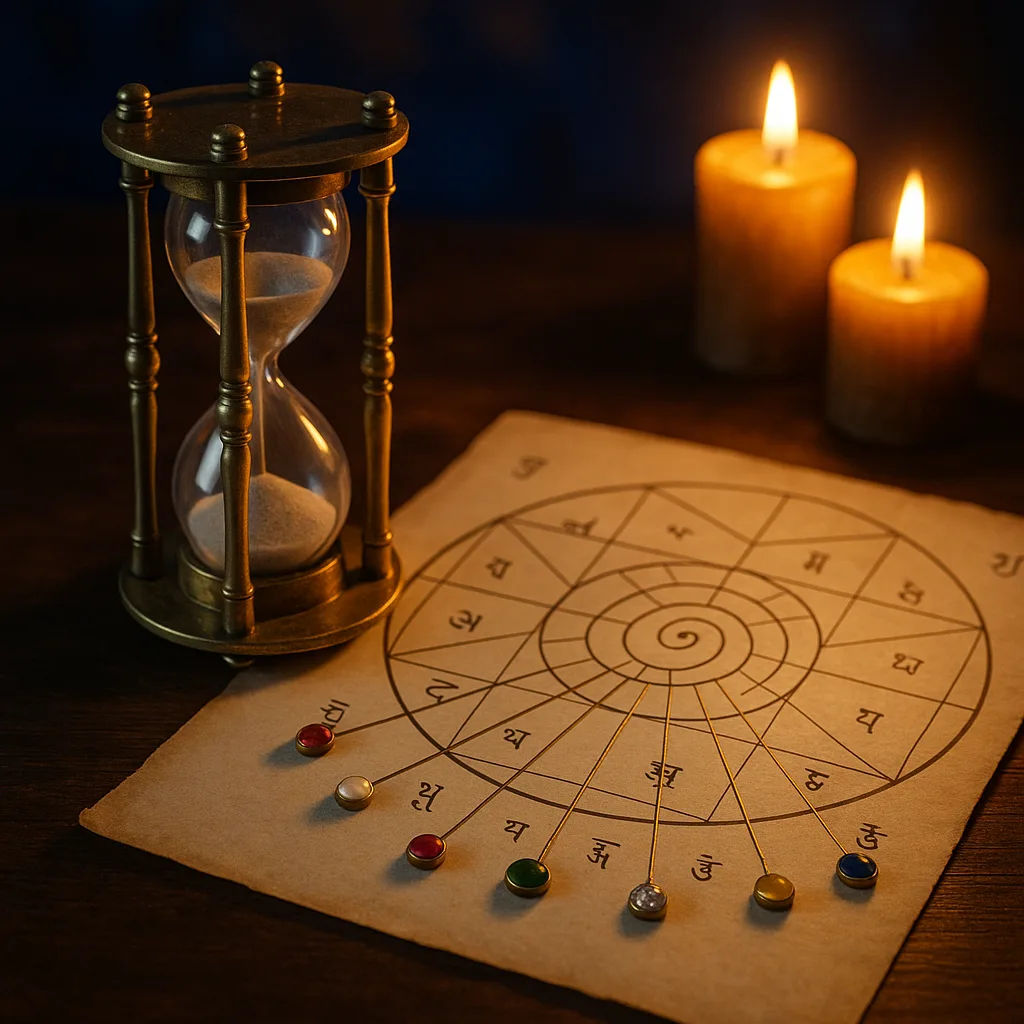
In Jyotish, that order flips. The Moon is treated as the center of consciousness, and its sign carries more symbolic weight than the Sun's. If there's an Indian equivalent to "what's your sign?", it would more likely point to the Moon. A Vedic chart focuses heavily on three elements: the Moon sign, the nakshatra (the exact lunar station the Moon occupied at birth), and the Mahadasha, a sequence of major planetary cycles unfolding over a lifetime, each ruled by a specific planet.
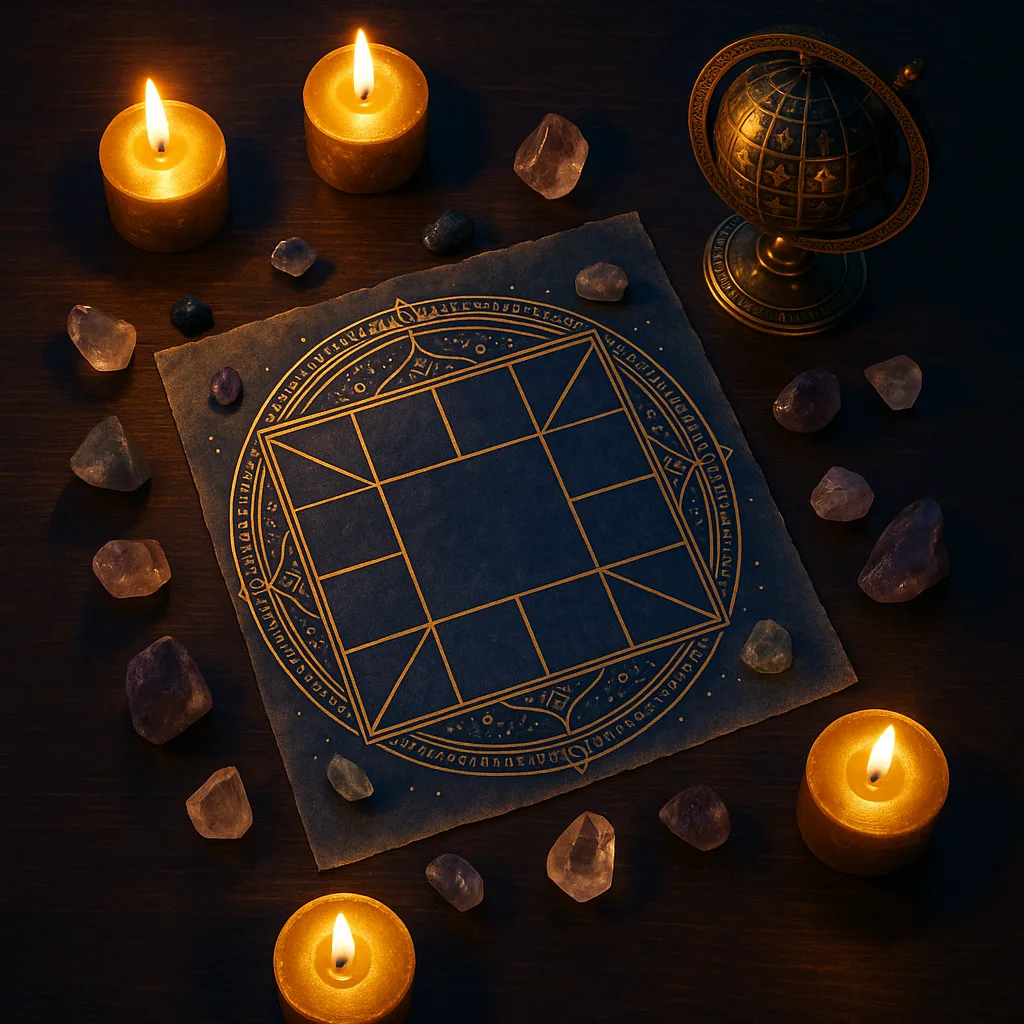
The starting point of the analysis differs too. A Vedic astrologer typically begins with the Lagna, the ascendant calculated for the exact moment of birth, since this element structures the entire chart and determines how planets are distributed across the houses. Modern Western astrology usually starts instead with the Sun-Moon-rising combination, treating these three points as the most accessible entry for anyone beginning to explore themselves through astrology.
Nakshatras: The 27 Lunar Stations the West Doesn't Use
One of the most distinctive features of Jyotish, with no widely used parallel in current Western astrology, is the system of nakshatras: 27 lunar mansions that break the sidereal sky into segments smaller than the twelve traditional signs. Each nakshatra has its own ruling deity, its own symbolism, its own traits, and its own influence on whatever planet passes through it.
Western astrology relies mainly on the twelve signs and the angular relationships between planets (conjunctions, oppositions, trines, squares). Jyotish adds this extra layer of lunar detail on top. It's the difference between a map divided into twelve large regions and one broken into 27 smaller ones. Vedic analysis gains a level of temporal and psychological detail that modern Western tradition generally doesn't pursue in the same way.
Roots Lost in History
The origins of the two traditions are also quite different. Western astrology developed in Ancient Greece and Mesopotamia, systematized by Greek thinkers who turned Babylonian knowledge into something close to what we recognize today. Jyotish has roots in the Vedas, the oldest sacred texts of Indian culture, and is traditionally credited to the sage Parashara, said by legend to have lived some five thousand years ago. Records show Vedic astrology being used to track planetary cycles, moon phases, and eclipses, and to set auspicious dates for ceremonies, dating back at least 1,200 years before the common era.
These are two distinct civilizations answering the same ancient question, what the sky reveals about life on earth, each building its own symbolic vocabulary over the centuries.
Two Lenses, Neither More Correct Than the Other
It's worth resisting the urge to call one system the "true" one. The tropical zodiac speaks more directly to the psychological self and personal growth within this lifetime, which is why it feels natural to define your personality by your Sun sign. The sidereal zodiac, anchored to the fixed stars, tends to reveal karmic patterns and a sense of purpose stretched across much longer cycles, reflected in the Vedic Mahadashas.
Comparing Jyotish and Western astrology isn't really about deciding who's right. It's a chance to recognize that there are at least two valid languages for reading the same sky.
Anyone drawn to both systems doesn't have to pick one for good. Many people consult their tropical chart to understand everyday psychology while also turning to their sidereal chart, with its nakshatra and Lagna, to grasp the broader rhythms of their life. Tropical and sidereal are simply two different angles on the same night sky, and each has something real to offer anyone looking up for meaning.
Recomendado
Astro Reflexo
Descubra o que os astros revelam sobre quem você é. Em menos de um minuto, calculamos seu Sol, Lua e Ascendente com precisão astronômica e uma inteligência artificial escreve um resumo personalizado só para você.

Recomendado
MAPA ASTRAL E NUMEROLÓGICO PERSONALIZADO
Mapa Astral + Numerologia Um mergulho profundo na sua essência. E se tudo o que você procura… já estivesse dentro de você - esperando para ser revelado?

Recomendado
Manual Prático da Astrologia
O universo sempre exerceu um fascínio indescritível sobre a humanidade. De todas as suas maravilhas, a astrologia se destaca como uma antiga arte que tem intrigado e inspirado gerações.
Universo Astral Editorial Team · Zodiac signs and fun facts
This article was produced by the Universo Astral editorial team, with AI tools assisting research and drafting and human review before publication. If you spot anything inaccurate or outdated, let us know at our contact email.