Reading Your Birth Chart for the First Time: Where to Start
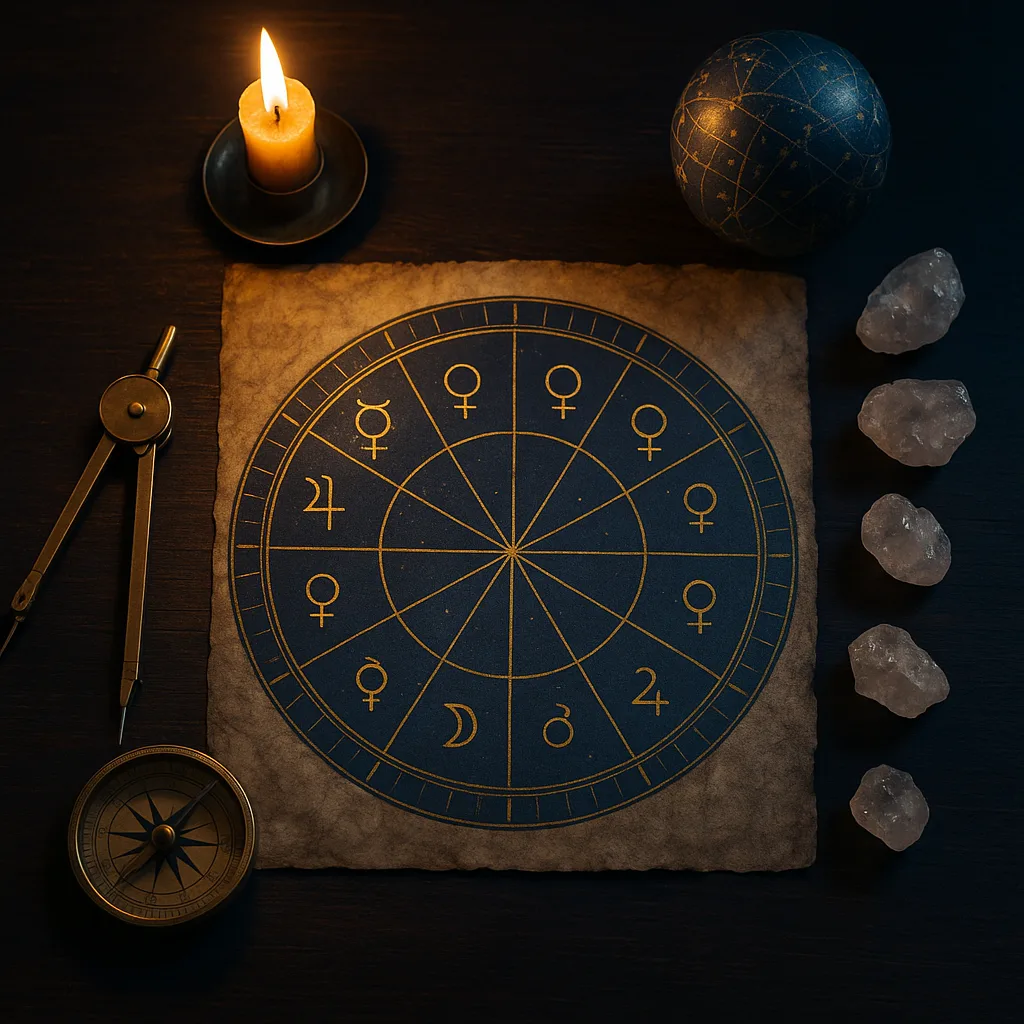
Your birth chart is not a verdict, it's a snapshot of the sky
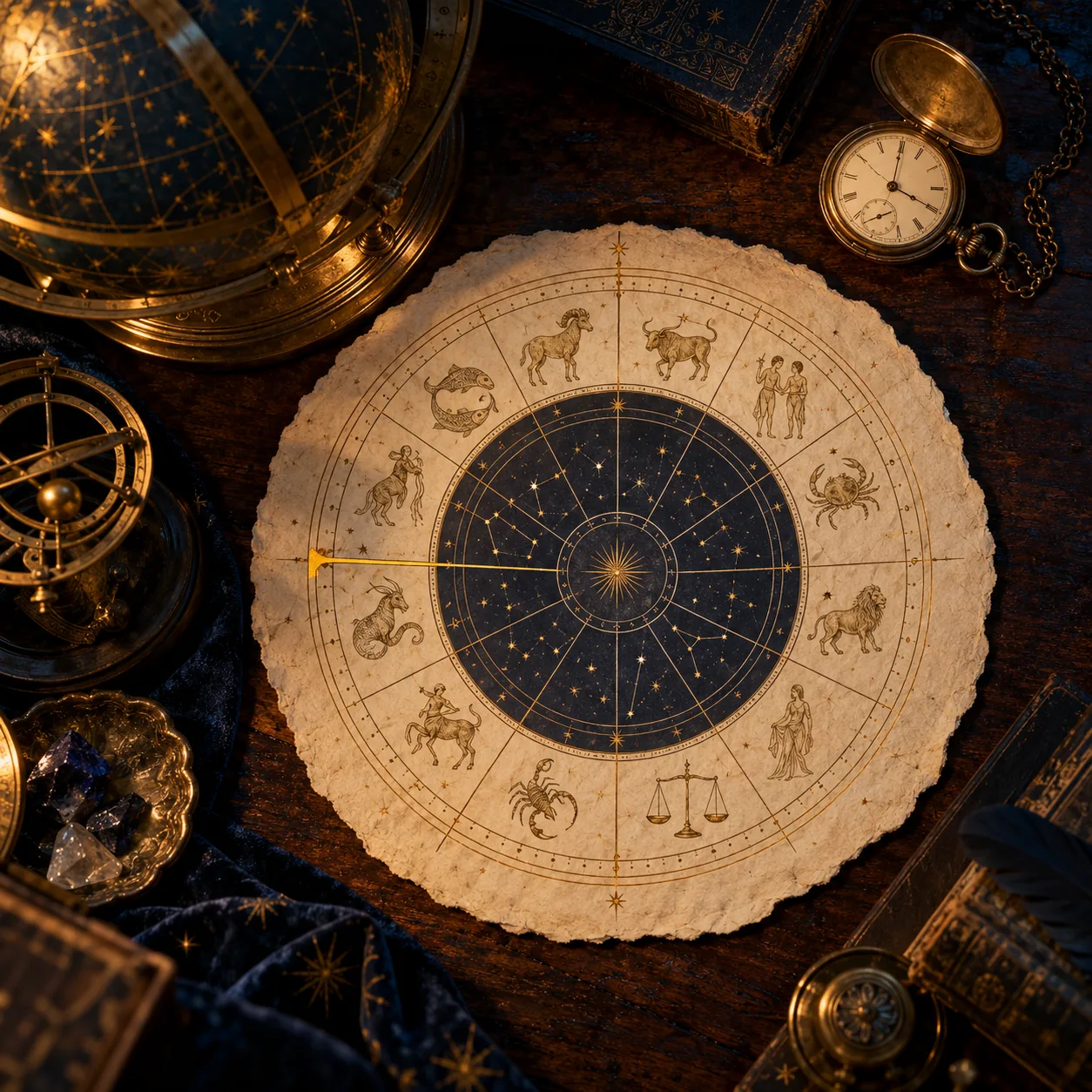
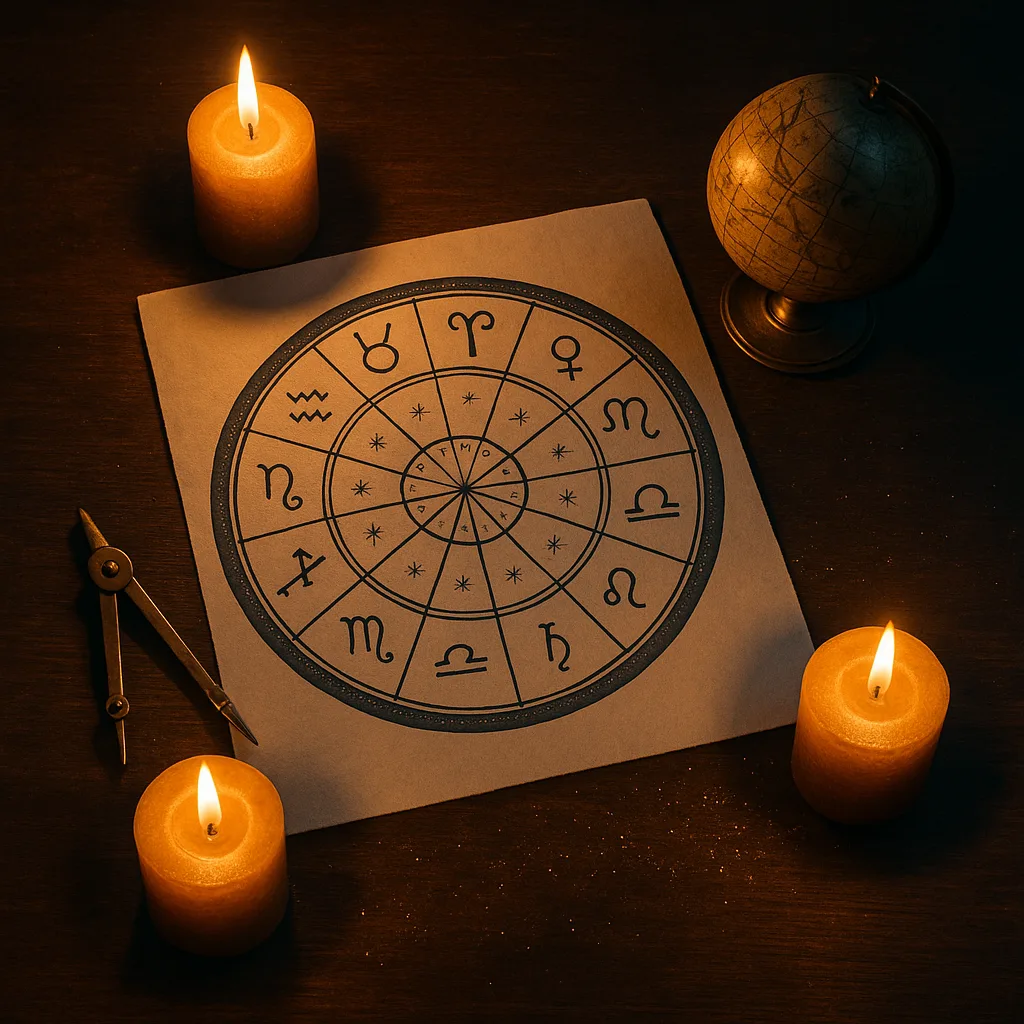
When people open their birth chart for the first time, the reaction usually mixes curiosity with a touch of overwhelm. There are so many symbols, abbreviations, crossing lines and numbers that wanting to understand everything at once can freeze your reading before you start. Think of your birth chart as a photograph of the sky, taken at the exact moment you were born. It captures the position of the Sun, Moon and other planets, and how they were organized in relation to the horizon at your birthplace.
This photograph is not a sentence about who you are or what your destiny holds. It works more like a set of tendencies and possibilities, symbolic clues that help you understand personality traits, emotional patterns, challenges and likely paths. Approaching your chart this way, as a mirror rather than a verdict, already makes the reading feel lighter. For more on this idea, see your birth chart as a mirror for self-knowledge.
First: the three pieces of information your chart needs
For an accurate chart, three pieces of information are essential: birth date, exact time and city where you were born. It sounds straightforward, but the time requires careful attention: it determines the house positions and, in turn, your Ascendant. A difference of just a few minutes can shift your rising sign and reshape much of the interpretation.
If you're unsure of your exact birth time, check your birth certificate or hospital records before drawing conclusions about your chart. Another little-known detail is that different methods exist for dividing the houses, some more widely used than others. This is why two different programs sometimes calculate the same chart with small variations. It's not an error, just a difference in technical approach. Tools like timeanddate.com let you verify time zones and astronomical positions for any city and date, which helps confirm that the data used in your chart calculation is correct.
The three core elements of any interpretation
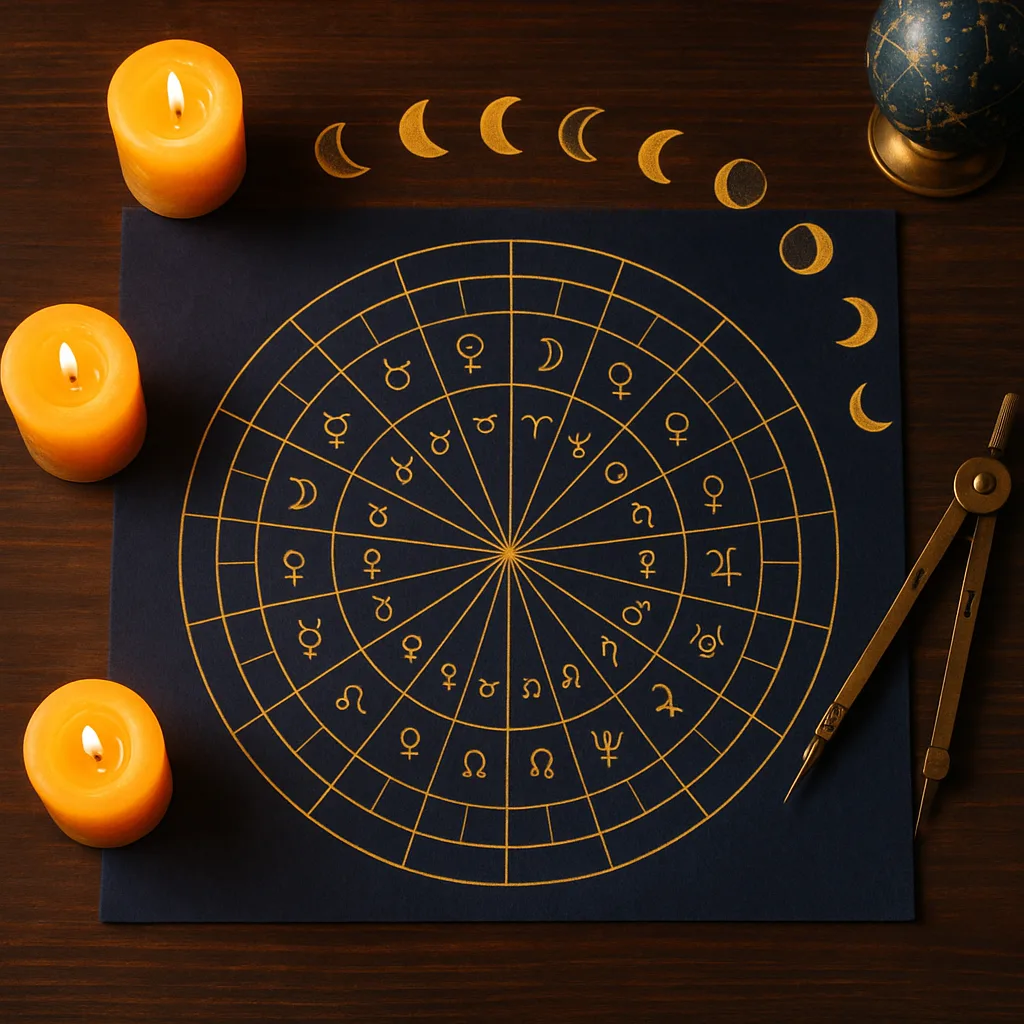
Every birth chart is built from the overlap of three layers: planets, signs and houses. Planets represent distinct functions of the mind and emotions, how we think, love, act and feel. Signs give the style, tone and energy with which these functions show up. Houses indicate which area of life these energies tend to affect.
The same planet behaves differently depending on which sign it's in and which house it occupies. Mars in a more reserved sign, for example, acts differently than Mars in an impulsive sign, and takes on another shade depending on whether it's in the house of relationships or career. This combination is what makes astrology complex and, at the same time, confusing for beginners.
How to start without getting lost
If this is your first look at your own chart, the most useful advice is: don't try to understand everything at once. There's an order that helps organize your thinking and prevents that buried-in-data feeling.
- Start with your Ascendant, which marks the beginning of the first house and shows how you present yourself to the world.
- Look at your Sun and Moon, the pair connecting conscious identity and emotional nature.
- Find where Mercury, Venus and Mars are placed, linked to thought, affection and daily action.
- Next, without rushing, explore Jupiter and Saturn, associated with expansion and limits.
- Save Uranus, Neptune and Pluto for a more advanced stage of study.
This order isn't a hard rule, but it keeps you from trying to decode a Pluto placement before you even understand your own Ascendant. Moving through stages turns a confusing reading into something you can grasp. For a more detailed step-by-step approach to your first reading, follow the 5-step guide to your first chart reading.
The trio that makes the first impression: Sun, Moon and Ascendant
If you can only take three things from this first reading, keep these. Your Sun represents your essence, your vital energy, what's usually called your sun sign. It's not your whole personality, it's the central axis of your identity.
Your Moon rules the emotional realm: how you react inside, what brings emotional comfort, how you handle feelings when no one's watching. Often it weighs more on your daily behavior than the Sun itself.
Your Ascendant is not a planet, but it ranks among the most important points on your chart. It shows your initial way of being, the first impression you make and how you approach new places and situations. That's why many people recognize themselves more in their Ascendant traits than their sun sign, and this combination of all three explains why no one can be summed up in a single sign. The article on Sun, Moon and Ascendant as the trio that reveals who you really are details each of these three pieces separately.
A quick overview of the other planets
Once you grasp this main trio, it's worth taking a brief look, without going deep yet, at the other planets and their symbolic roles. The table below summarizes each one's function:
| Planet | Symbolic area | Note |
|---|---|---|
| Mercury | Communication and reasoning | How you think and absorb knowledge |
| Venus | Affection and values | What you find attractive or pleasant |
| Mars | Action and initiative | Impulse and willingness to act |
| Jupiter | Growth and optimism | Areas where you seek to evolve |
| Saturn | Discipline and limits | Lessons that mature over time |
| Uranus, Neptune and Pluto | Generational influences | Move slowly through the sky, staying in the same sign for years or longer |
It's worth stressing this last point: because Uranus, Neptune and Pluto move slowly through the sky, each stays in the same sign for years, sometimes over a decade. That means these three planets say more about the generation you belong to than about traits unique to you. In a first reading, you don't need to go deep into them.
The houses: the stage where life unfolds
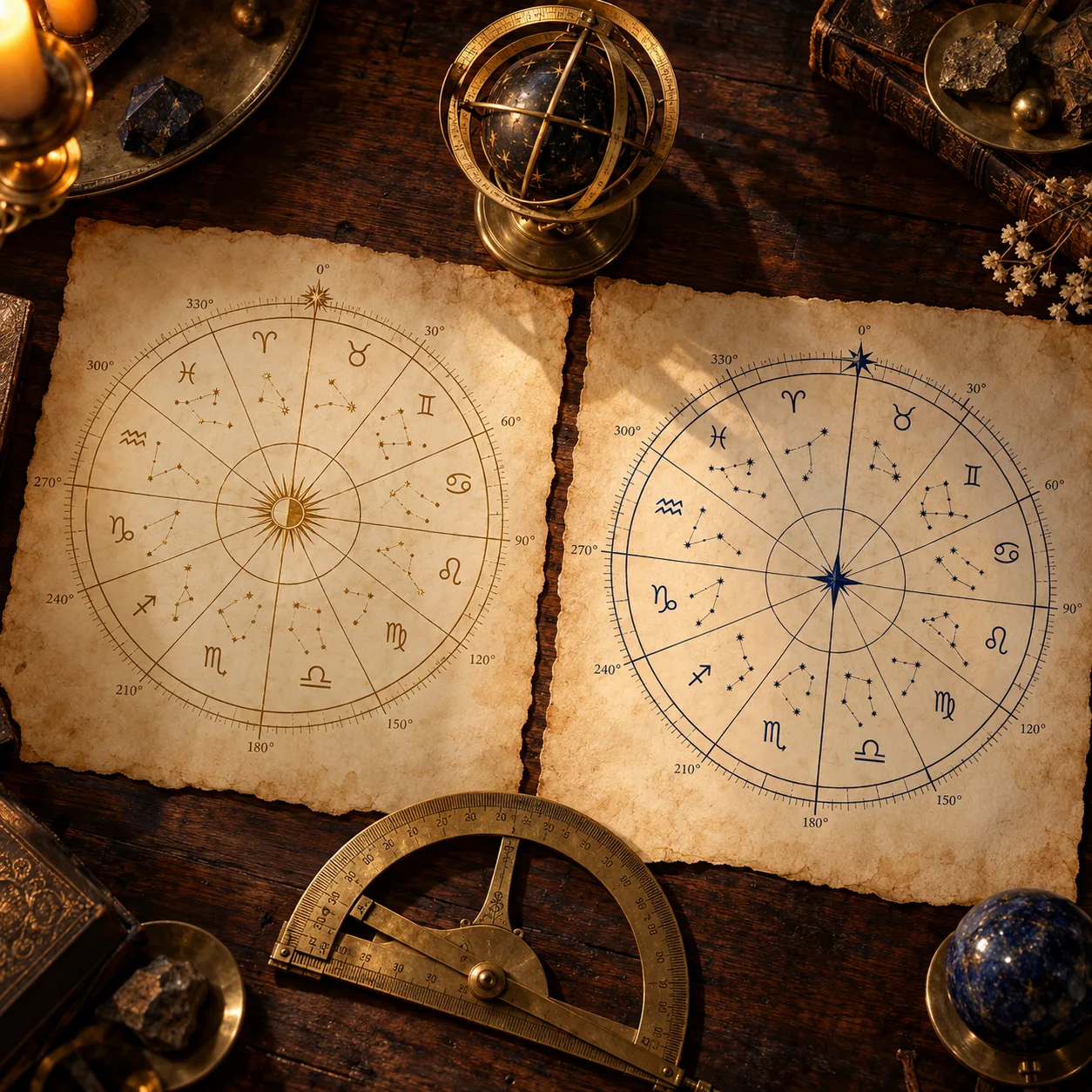
If planets are the actors and signs define the acting style, houses are the stages. There are twelve sectors on your chart, each linked to an area of life, from how you show up in the world to career, relationships and spiritual matters. The complete picture of all twelve divisions is in the 12 astrological houses and what each represents.
For beginners, the recommendation is to focus on the so-called angular houses: 1, 4, 7 and 10, considered the most powerful on a chart. The difference in weight between house types is explained in more detail in the article on angular, succedent and cadent houses.
- House 1: contains your Ascendant and covers the image you project at first meeting.
- House 4: speaks to origins, childhood, home and the emotional foundation you come from.
- House 7: shows how you see others, what you seek in partnerships and what attracts you in close bonds.
- House 10: concerns reputation, your image in society and what you aim to build professionally.
A technical detail explains why a planet sometimes appears in an unexpectedly positioned house: unlike signs, which always occupy 30 degrees, houses vary in size. The beginning of each house can fall at any degree within a sign, which means the celestial division isn't always even. That's why two people with the Sun in the same sign can have that planet in completely different houses.
What can wait
A common trap for beginners is trying to decode aspects (the lines connecting planets to each other, forming angles of tension or flow) right away. Aspects are a valuable layer of astrology, almost a dialogue between different sides of your personality. But they require you to already understand the isolated meaning of each planet before grasping this conversation between them. When you're ready to move into that layer, the guide on conjunction, opposition, trine and square explains the geometry behind these angles.
Similarly, analyzing the elements (fire, earth, air and water) and the dominant modalities in your chart is rewarding work, but it pays off much more once you already know the positions of your Sun, Moon, Ascendant and personal planets well. There's nothing wrong with saving these layers for a second or third look at your chart.
One reading, many revisits
Perhaps the main lesson for anyone starting to look at their birth chart is this: there's no need, and it's not advisable, to try to absorb everything at once. Your chart doesn't exhaust itself in a single consultation, and revisiting it months or years later, armed with more knowledge, usually reveals layers you missed before.
The sky at the moment you were born stays the same, but your ability to understand it grows with each new reading.
Treat this first approach as an invitation, not a test to pass. Start with your Ascendant, Sun and Moon, move quickly through the angular houses, observe your personal planets with care and save the rest for future meetings with this chart that, above all, belongs to you.
Frequently asked questions
Where should I start reading my birth chart for the first time?
Start with your Ascendant, then observe your Sun and Moon. Next, locate Mercury, Venus and Mars. Save Jupiter, Saturn and the slower-moving planets like Uranus, Neptune and Pluto for a later stage of study.
Do I need my exact birth time to read my chart?
Yes. Your birth time determines the house positions and your Ascendant, and a difference of just a few minutes can change your rising sign. If you're unsure, check your birth certificate or hospital records before interpreting your chart.
What's the difference between sun sign, Moon and Ascendant?
Your Sun represents your essence and vital energy, your Moon governs your emotional realm and inner responses, and your Ascendant shows the first impression you make and how you approach new situations. Together, they form the foundation of identity in your chart.
Why are some houses more important than others?
The angular houses (1, 4, 7 and 10) carry the most weight in interpretation, like your Ascendant in House 1 and career matters in House 10. This hierarchy is detailed in the article on angular, succedent and cadent houses.
When should I study aspects between planets?
Aspects (conjunction, opposition, trine and square) form a more advanced layer that requires you to already know what each planet means on its own. That's why they usually belong in a second or third chart reading, not your first.

Recomendado
Curso MAPA ASTRAL
CURSO DESTRAVE SUA VIDA COM MAPA ASTRAL EM ATÉ 08 SEMANAS!
Universo Astral Editorial Team · Birth charts and numerology
This article was produced by the Universo Astral editorial team, with AI tools assisting research and drafting and human review before publication. If you spot anything inaccurate or outdated, let us know at our contact email.