The 12 Astrological Houses: Where Life Unfolds
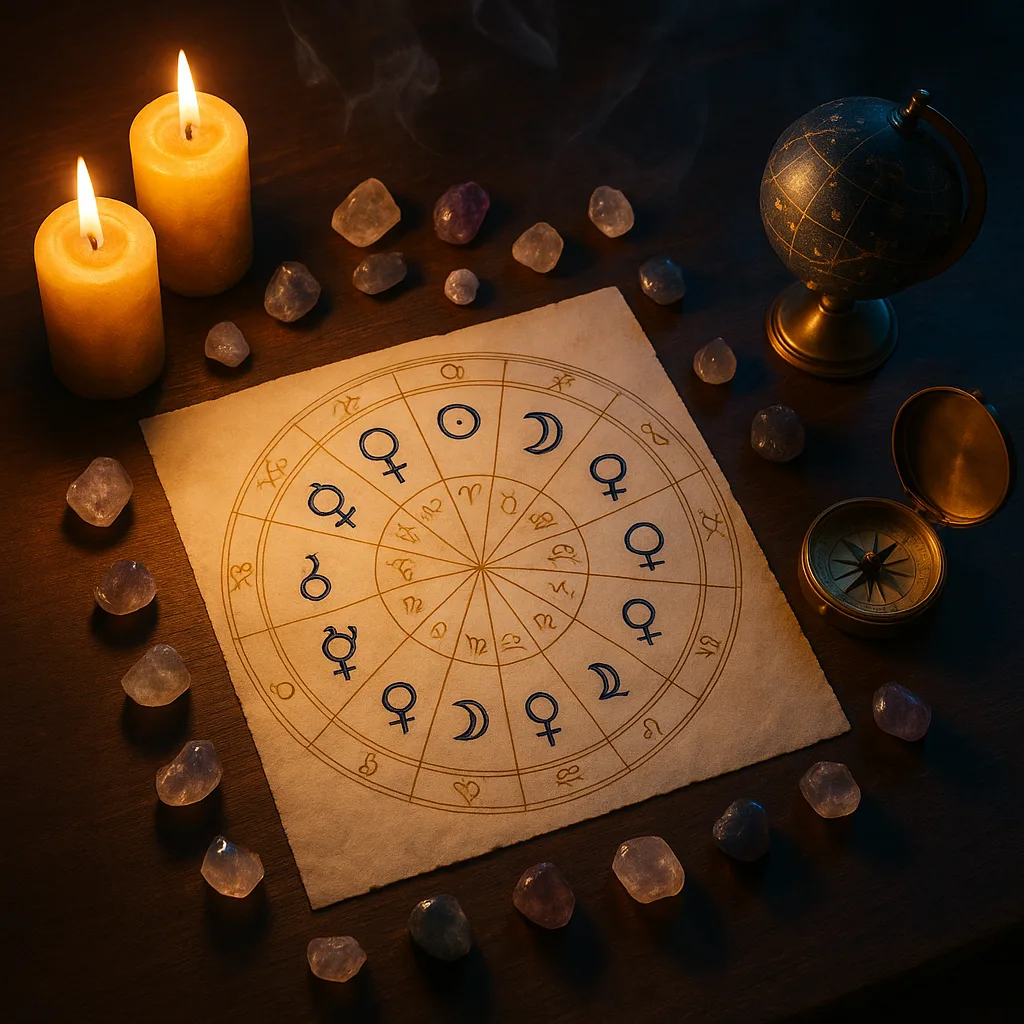
What are astrological houses, anyway?
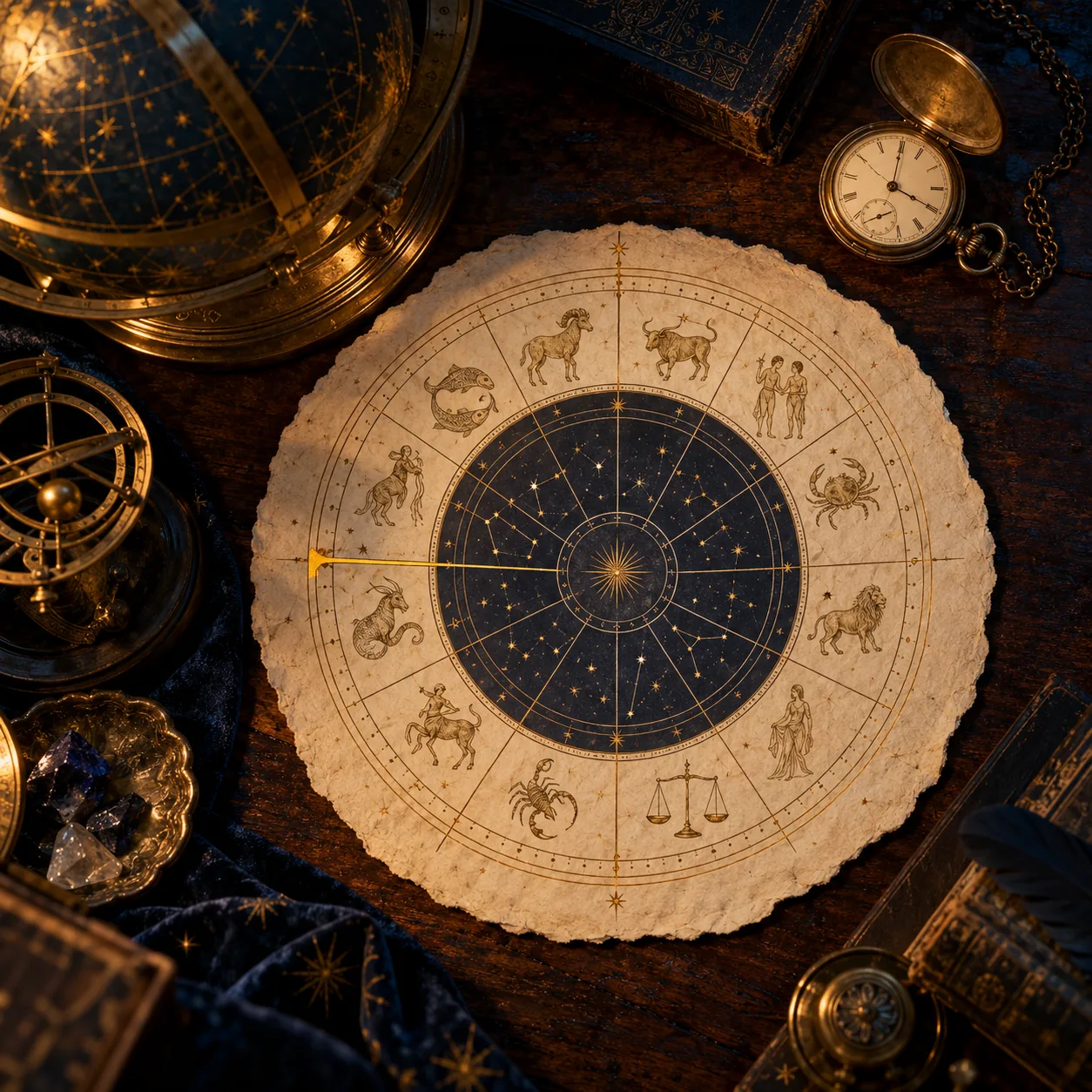
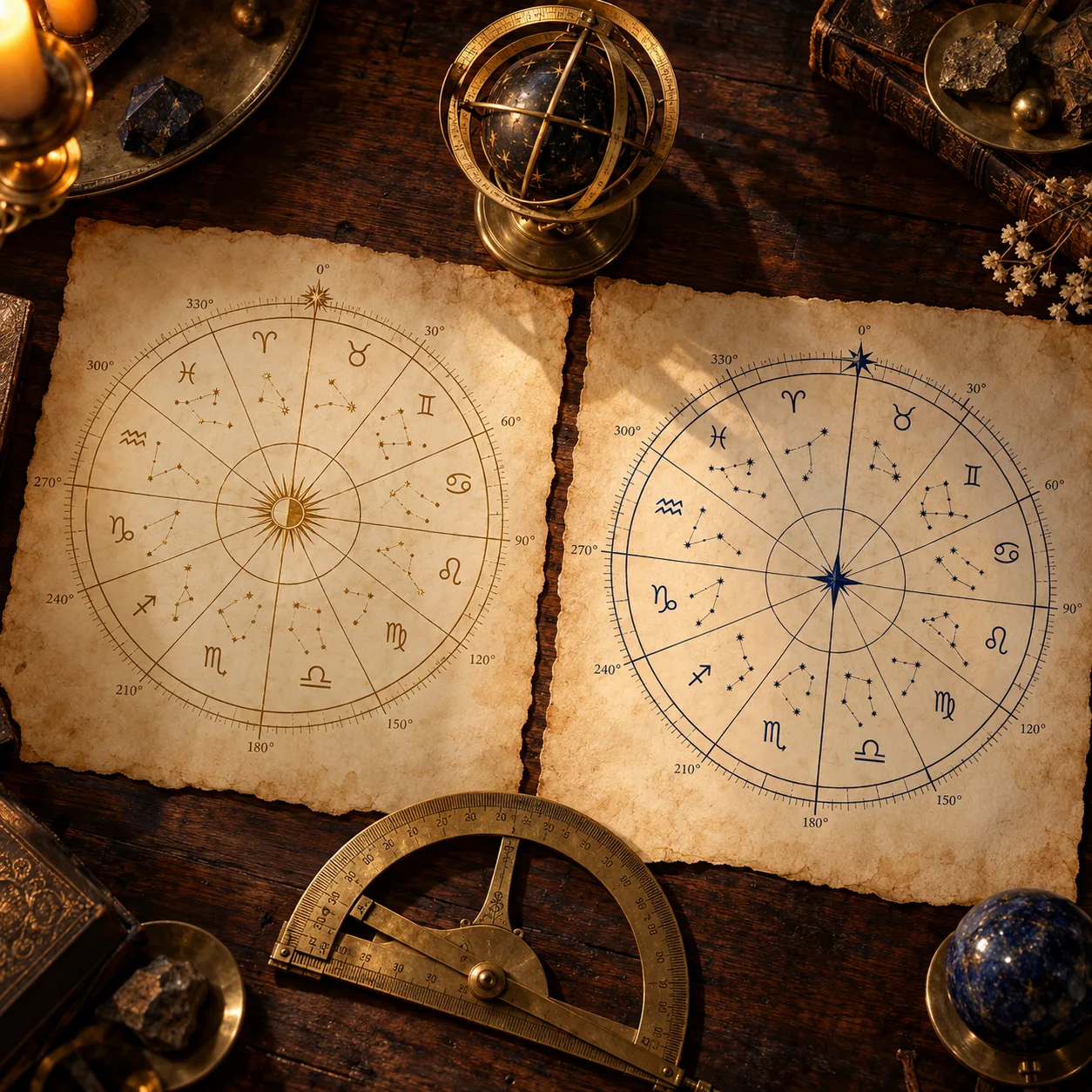
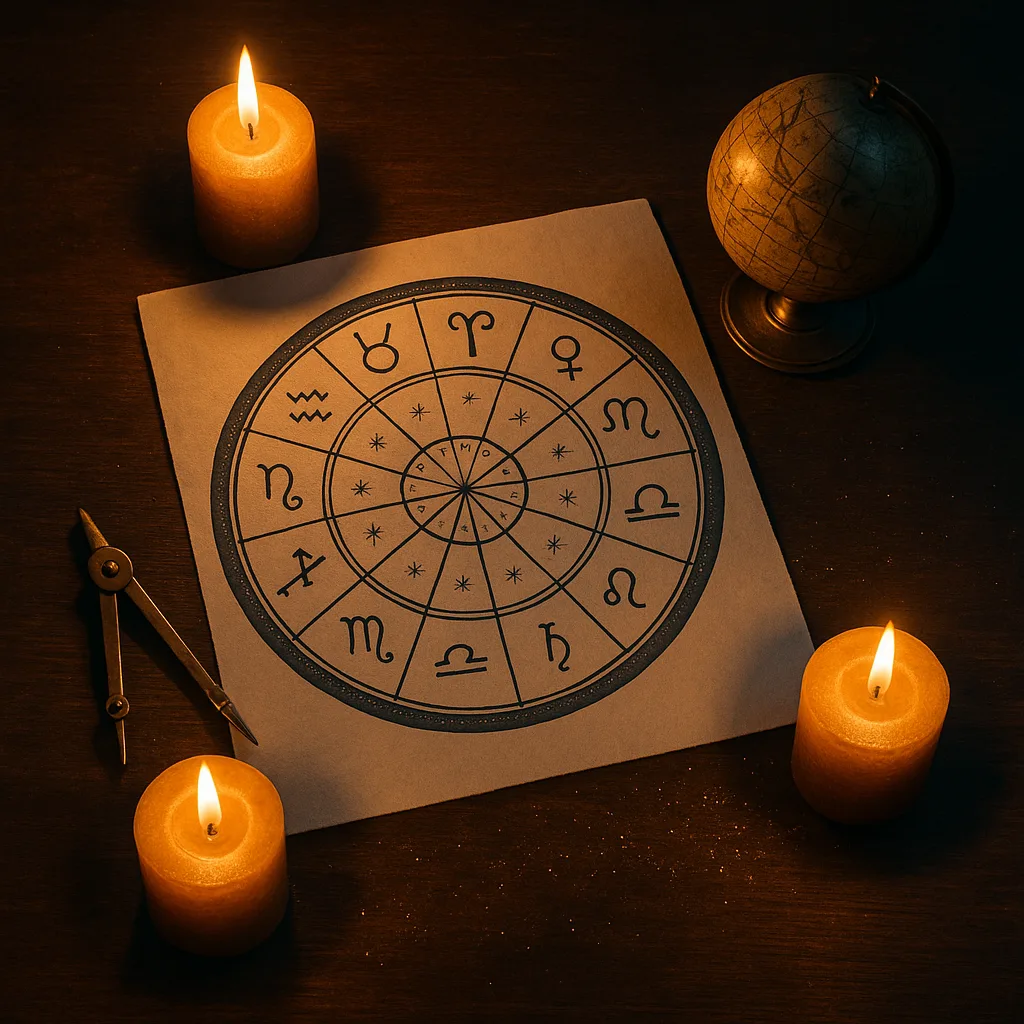
When you look at your birth chart, you see a circle divided into 12 sections. This division is one of astrology's most revealing elements: the astrological houses. They are the 12 parts of the sky around the Earth at the exact moment of birth, calculated from the time and place where a person was born. The Encyclopaedia Britannica records that this system of dividing the sky into houses traces back to Hellenistic astrology, developed from the meeting of Babylonian and Egyptian traditions, long before it took the form we know today.
The signs show how an energy expresses itself and the planets indicate what is at stake. The houses reveal where this happens in practical life. In a simple comparison: planets are actors, signs are each actor's style of performance (the way they speak, move, and react), and houses are the stage scenery, like the scenes of love, career, family, and dreams. The same actor behaves differently depending on the scenery they're playing in, which explains why every birth chart is unique.
This is why two people born on the same day, with the same signs and planets, can have very different life paths. If they were born at different times or in different cities, the houses reorganize and those same energies begin to act in different areas of life. Those wanting to understand this mechanism more deeply can check the guide on how to read your birth chart for the first time, which explains the chart's structure step by step.
The 12 houses, one by one
House 1, the Ascendant, the gateway to self
Here lies the 'I am'. House 1 deals with identity, appearance, temperament, and the first impression we make. It's the face with which we walk through life before saying a single word.
House 2, the value of what is yours
Linked to money, possessions, and talents, this house also holds a subtler layer: it speaks about what gives us security, whether a material good, a personal gift, or an emotional and spiritual value that we carry as our foundation.
House 3, words, exchange, and neighborhood
Communication, early learning, mental curiosity, siblings, and daily interaction live here. It's also the house of short trips and brief studies, things that expand the mind without demanding great journeys.
House 4, roots, home, and feeling
The Imum Coeli speaks of origin, ancestry, and the emotional ground where we rest. Traditionally associated with the father figure and, in contemporary interpretation, linked to maternal energy, this house also marks beginnings and endings. Not by chance, it's when the Sun passes through this region of the sky that a new beginning is symbolically celebrated.
House 5, creation, pleasure, and romance
Creativity, children, personal projects, passions, and the joy of living pulse through this house. It's the space where we allow ourselves to shine, create something of our own, and experience lighter forms of love.
House 6, routine, body, and care
Daily work, habits, organization, and also health, nutrition, and self-care (including animals who share our home) find their territory here.
House 7, the meeting with the other
The Descendant is the mirror of House 1: if there we speak of the self, here we speak of the we. Marriages, partnerships, joint ventures, and any agreement that requires sharing life with someone else have this house as their main stage.
House 8, depth, transformation, and mystery
Territory of taboos and truths we prefer not to face, this house speaks of symbolic death and rebirth, shared resources, power, and everything that transforms us when we learn to let go.
House 9, the search for meaning
Philosophy, spirituality, long journeys, exchanges, and higher education live here. It's the house that invites you to expand your horizons and ask yourself where you want to go with all you've learned.
House 10, the calling in the world
The Midheaven represents career, reputation, and the legacy we leave behind. It's the public mark we build, what we wish to be recognized for. This house often serves as the starting point for those looking at the birth chart for clues about career, since it brings together ambition, public image, and the visible fruits of effort.
House 11, community and collective ideals
Friendships, groups, social networks, and humanitarian causes are organized in this house. It's where individual dreams gain strength by connecting with the collective desire for a better world.
House 12, the veil between worlds
The most subtle and mysterious of all, associated with dreams, hidden fears, and deep spirituality. Often read as a territory of inner challenges, it can also be a space of healing: a refuge of introspection, meditation, and reconnection with the soul's quieter layers.
Angular, succedent, and cadent: the strength of each house
Beyond individual meaning, the houses organize into three groups according to the type of energy they carry. This division helps explain why certain planets seem to have more weight in the chart than others. The topic is explored more deeply in the article on angular, succedent, and cadent houses, which details why not every house in the birth chart carries equal weight.
The angular houses (1, 4, 7, and 10)
They are considered the pillars of the birth chart. Linked to cardinal signs (Aries, Cancer, Libra, and Capricorn), these houses concentrate the Ascendant, the Imum Coeli, the Descendant, and the Midheaven. A planet positioned in an angular house usually gains special prominence in a person's life: its energy becomes more active, more visible, and more decisive in the choices and directions taken.
The succedent houses (2, 5, 8, and 11)
They come right after the angular houses and carry the energy of fixed signs (Taurus, Leo, Scorpio, and Aquarius). These are houses of consolidation: they represent what we build, sustain, and deepen over time, whether in resources, creations, transformations, or collective bonds.
The cadent houses (3, 6, 9, and 12)
Associated with mutable signs (Gemini, Virgo, Sagittarius, and Pisces), these houses bring the energy of adaptation, learning, and transition. They are spaces of adjustment, processing, and preparation for the next cycle, which begins precisely in the next angular house. This logic of cardinal, fixed, and mutable also organizes the signs, as shown in the article on the three rhythms that move your birth chart.
This hierarchy does not mean one house is better than another. It simply means the intensity with which a planetary energy manifests changes depending on the type of soil it's planted in. An angular planet tends to express itself more directly; a cadent planet requires more time and more layers before it fully reveals itself.
To visualize this organization more directly, see the summary below with the 12 houses, their central themes, and the group they belong to:
| House | Central theme | Group |
|---|---|---|
| House 1 | Identity, Ascendant, first impression | Angular |
| House 2 | Money, possessions, values, and security | Succedent |
| House 3 | Communication, siblings, short journeys | Cadent |
| House 4 | Home, roots, Imum Coeli | Angular |
| House 5 | Creativity, children, romance | Succedent |
| House 6 | Routine, daily work, health | Cadent |
| House 7 | Partnerships, marriage, Descendant | Angular |
| House 8 | Transformation, shared resources, power | Succedent |
| House 9 | Philosophy, long journeys, higher education | Cadent |
| House 10 | Career, reputation, Midheaven | Angular |
| House 11 | Friendships, groups, collective ideals | Succedent |
| House 12 | Spirituality, dreams, introspection | Cadent |
Why it's worth looking at your own houses
Understanding astrological houses helps you look at your own life with deeper layers of meaning. It's not enough to know that Venus is in Taurus, for example: you need to ask which house Venus lives in on your chart. There is the stage where love, pleasure, and that person's values really take form. This logic becomes even clearer when you compare Sun, Moon, and Ascendant together, as shown in the article on the trio that reveals who you really are.
The houses do not determine a fixed destiny. They point to territories of life where certain energies tend to manifest with more strength, inviting each person to recognize patterns and possibilities.
Those who already know their Sun, Moon, and Ascendant can take the next step: look at the complete chart and identify which houses the planets are in. A practical way to do this is to follow a simple observation sequence:
- Locate the Ascendant (House 1) and observe which sign occupies this position, since it defines the starting point for counting the other houses.
- Identify which house holds your Sun and connect that life theme with the area it occupies, whether career, home, relationships, or creativity.
- Do the same with the Moon, noting whether it falls in an angular, succedent, or cadent house, which shows whether emotions tend to manifest more directly or more processedly.
- Observe planets in angular houses (1, 4, 7, and 10), since they usually concentrate the most visible and active themes of a person's life.
- Compare the cadent houses (3, 6, 9, and 12) to understand which areas need more time to mature before expressing themselves with clarity.
That's when astrology stops being a generic portrait of your sign and becomes a mirror of your own story, something the article on the birth chart as mirror explores more deeply.
Frequently asked questions
What's the difference between sign, planet, and astrological house?
The sign shows the style of expression of an energy, the planet indicates which energy is at play, and the house reveals in what area of practical life that energy manifests. This is why it's possible to have the same Venus in Taurus but in different houses, which completely changes how love and values appear in each person's daily life.
Why do people born on the same day have different birth charts?
Because the houses depend on the exact time and place of birth, not just the date. Changing the time or city changes the Ascendant, and with it the entire division of the 12 houses reorganizes, causing the same planets and signs to act in different areas of life.
What are angular, succedent, and cadent houses?
They are the three groups that organize the 12 houses: angular (1, 4, 7, 10) concentrate more active and visible energy, succedent (2, 5, 8, 11) represent consolidation and building, and cadent (3, 6, 9, 12) bring adaptation and learning. This classification helps explain why some planets seem to weigh more in the chart than others.
Do I need to know my birth time to calculate the houses?
Yes. Astrological houses are calculated from the exact time and place of birth, since this information defines the Ascendant and, from there, the position of the other 11 houses in the chart.

Recomendado
Astrologia, Simbolismo e Mapa das Personalidades
A astrologia acompanha a humanidade desde as primeiras grandes civilizações. A ideia de que a vida biológica na Terra pode ser influenciada pelos astros gerou e gera grande fascínio no homem.
Universo Astral Editorial Team · Birth charts and numerology
This article was produced by the Universo Astral editorial team, with AI tools assisting research and drafting and human review before publication. If you spot anything inaccurate or outdated, let us know at our contact email.