Sun, Moon, and Rising Sign: The Big Three That Reveal Who You Really Are
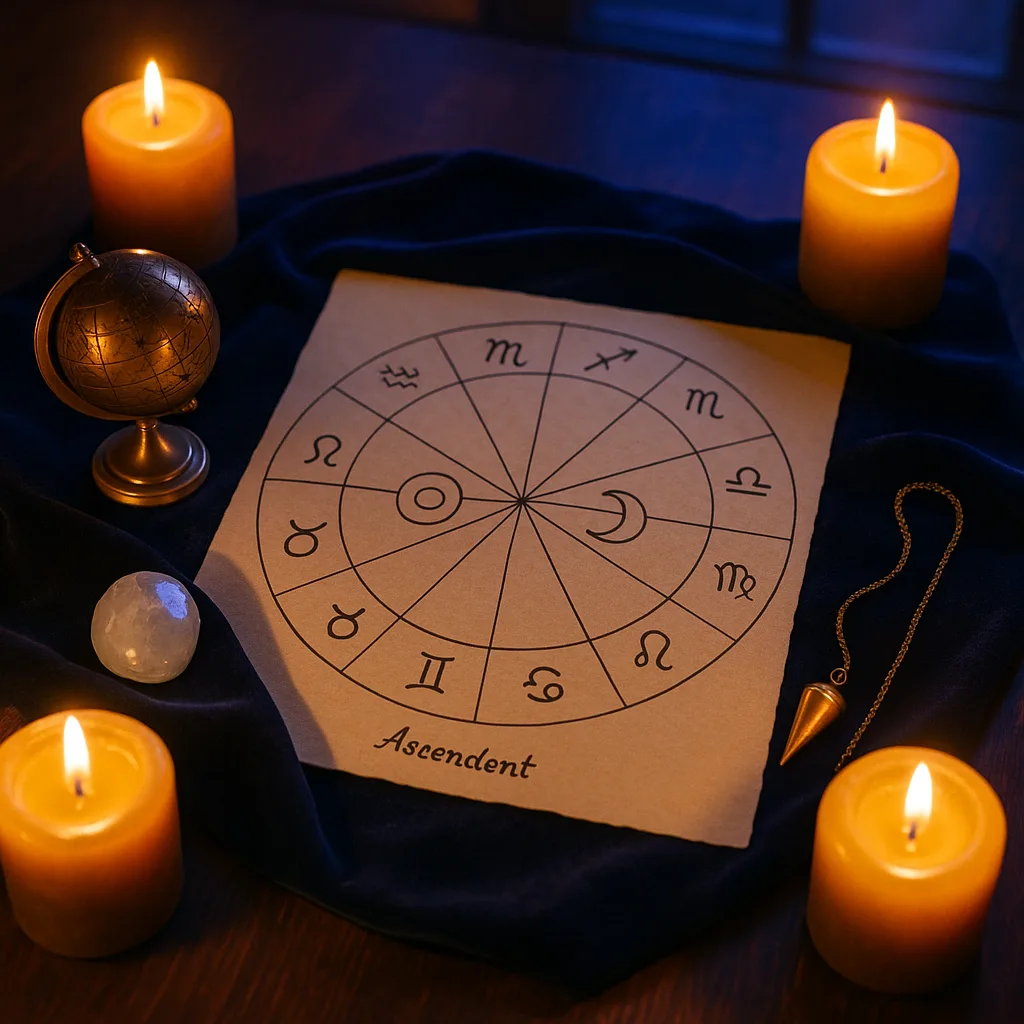
The sign everyone knows is only part of the story
Nearly everyone can rattle off their zodiac sign. But that quick answer hides an important limitation: it represents only one point in the sky at the moment you were born, while the rest of the heavens was in constant motion, with each planet occupying its own position. Among these points, three stand out and form what contemporary astrology calls the Big Three: the Sun, the Moon, and the Rising Sign. Together, they work as layers that build your identity: one shows your deepest nature, another speaks to your emotional world, and the third reveals how you present yourself to others. Understanding this difference changes how you read a birth chart and explains why two people with the same sign can have such distinct personalities. Those who want to dive deeper into a complete chart reading can check out the practical guide for beginners on how to read a birth chart, which details the next step after identifying your Big Three.
The Sun: the essence that guides your purpose
Your sun sign is the most recognized of all, the easiest to identify because you only need to know your birth date. The Sun stays in each sign for about a month, which is why so many people born around the same time carry the same solar symbol. It represents the most intimate core of who you are: the central characteristics of your way of being, the impulse that drives your life's purpose, the inner light you seek to manifest throughout your existence. In astrological tradition, the Sun also connects to the parental figure and the idea of authority, functioning as an internal compass about who you are becoming.
The Sun works like the cover of a book about yourself. It shows the main theme of the story, but by itself, it doesn't tell the complete plot.
The Moon: what you feel in private
While the Sun represents what stands out, the Moon holds the more reserved side of your birth chart. Its movement is much faster: it passes through all 12 signs in about four weeks, spending just over two days in each one. This means people born in the same week, or even on the same day, can have completely different moon signs, depending only on the exact time of birth. Those who want to track which sign the Moon is in on any given day can check the lunar phase calendar at timeanddate.com, which shows the Moon's position and ephemerides by city and date.
Your lunar position relates to your emotions, instincts, emotional memories, and behaviors that surface when you seek comfort. It's the symbolic link to the maternal figure, to your roots and past, and to what brings you security. There's a saying well-known among astrology students that sums this up directly: lunar impulses emerge when your defenses drop, or in more casual terms, after a few extra drinks. It's your most authentic and unguarded side, without any social performance. For those wanting to understand how the Moon also influences romantic life, it's worth exploring how lunar synastry explains emotional disconnects between two people, even when their Suns seem compatible.
Rising Sign: the first impression you make
Your Rising Sign is the zodiac sign that was on the eastern horizon at the exact moment of your birth. Unlike the Sun and Moon, it changes very quickly, roughly every two hours, which makes a precise birth time essential for accurate calculation. Without this information, normally found on your birth certificate, it's impossible to determine your Rising Sign reliably.
It's often called your social facade: it shapes how you present yourself to the world, the impression you make before you even speak, and how you're perceived on first contact. The Rising Sign also defines House 1 of your birth chart and organizes the placement of the other houses, serving as the entry point for any astrological reading. To understand why House 1 carries this special weight in interpretation, check out the explanation about angular, succedent, and cadent houses and why not every house weighs equally in your chart.
Why the speed of each celestial body matters
One practical way to understand the difference between these three elements is to observe how quickly each one travels through the zodiac. The table below summarizes this comparison:
| Element | Time in each sign | Information needed to calculate | What it reveals |
|---|---|---|---|
| Sun | About 1 month | Birth date | Essence, purpose, and core identity |
| Moon | About 2.5 days | Birth date and, preferably, time | Emotions, instincts, and emotional needs |
| Rising Sign | About 2 hours | Exact time and location of birth | First impression and how you present to the world |
The faster a point moves through the sky, the more sensitive the calculation is to small time variations, and the more precise your birth information needs to be for a reliable reading. This is why the Rising Sign is hardest to calculate without exact data, while the Sun is something almost everyone knows by heart.
Why people with the same sign can be so different
This is one of the most revealing points of the Big Three: two people with the same sun sign aren't necessarily alike in every way. The Sun might be identical, but the Moon defines how each person lives and reacts emotionally, and the Rising Sign determines how each one presents themselves socially. Two Taurus people, for example, might share a similar essence tied to seeking stability and pleasure, but if their Moons and Rising Signs differ, how each actually lives that out can be almost opposite.
This subtlety is why generic horoscopes based only on sun signs often don't match people's real lives. Sticking with just the Sun is like knowing only a book's cover: it hints at the theme but misses the plot details, the supporting characters, and how the story ends. This same logic appears when looking at behavior patterns that repeat throughout life: the full chart, not just the sun sign, usually points to where these cycles begin. There's more on this in the article about how your birth chart helps identify behavior patterns that repeat.
The Big Three on social media
In recent years, the question 'What's your Big Three?' has spread across platforms like TikTok and Instagram, becoming almost a form of introduction among younger generations. It's no coincidence this movement comes mainly from millennials and Gen Z, who turn to astrology less for predictions and more as a tool for self-understanding. Recent research in humanistic psychology points to this use of astrology as a symbolic vocabulary for expressing identity, a resource for naming internal sensations that are hard to translate into everyday words.
It's worth reinforcing that astrology works as a symbolic system for self-reflection, not as empirically proven science. Its value lies in that symbolic territory: as a mirror, not as a verdict.
How to calculate your Big Three
To identify your Sun, Moon, and Rising Sign accurately, you need three pieces of information, listed here in order of importance:
- Birth date: determines your sun sign, since the Sun changes signs only once a month.
- Exact birth location (city and state or country): necessary to calculate your Rising Sign, which depends on your geographic position at the moment of birth.
- Precise birth time, ideally from your birth certificate: essential for calculating both your Moon, which changes signs every two and a half days, and your Rising Sign, which changes every two hours.
With these three pieces of information in hand, you can create a complete birth chart showing this trio and the entire celestial view of that moment. After identifying your Big Three, the natural next step is a broader reading of your chart: the article on the 5-step roadmap for your first birth chart reading walks you through that sequence.
Discovering your Sun, Moon, and Rising Sign is like learning the cover, title, and subtitle of a story only you can write. None of the three alone tells the complete narrative, but together they form a portrait closer to who you are, what you feel, and how you show up in the world.
Sticking with just your sun sign is like reading the book's cover; discovering your Big Three is beginning to understand the plot.
Frequently asked questions
What's the difference between sun sign, moon sign, and rising sign?
Your sun sign shows your essence and central purpose, and it's the only one calculated with just your birth date. Your moon sign speaks to your emotional world and instincts, changing every two and a half days. Your Rising Sign shows how you present yourself to the world and changes every two hours, so it requires exact birth time and location.
Why can two people with the same sun sign be so different?
Because your Sun is just one of three layers of identity in the Big Three. Even with the same sun sign, each person's Moon and Rising Sign can be completely different, changing how each person experiences emotions and behaves socially.
Can I calculate my Big Three without knowing my exact birth time?
Your sun sign can be identified with just your birth date, and your moon sign can usually be calculated with good accuracy from the date alone. Your Rising Sign, however, requires exact time and location, because it changes signs roughly every two hours, so without that information there's no way to determine it reliably.
Where do I find my exact birth time?
The most reliable source is typically your birth certificate, which usually records the time along with date and location. This information is what allows you to calculate your Rising Sign and refine the exact position of your Moon at the moment of birth.

Recomendado
Manual Prático da Astrologia
O universo sempre exerceu um fascínio indescritível sobre a humanidade. De todas as suas maravilhas, a astrologia se destaca como uma antiga arte que tem intrigado e inspirado gerações.
Universo Astral Editorial Team · Birth charts and numerology
This article was produced by the Universo Astral editorial team, with AI tools assisting research and drafting and human review before publication. If you spot anything inaccurate or outdated, let us know at our contact email.