Birth Chart Basics: A 5-Step Guide to Your First Reading
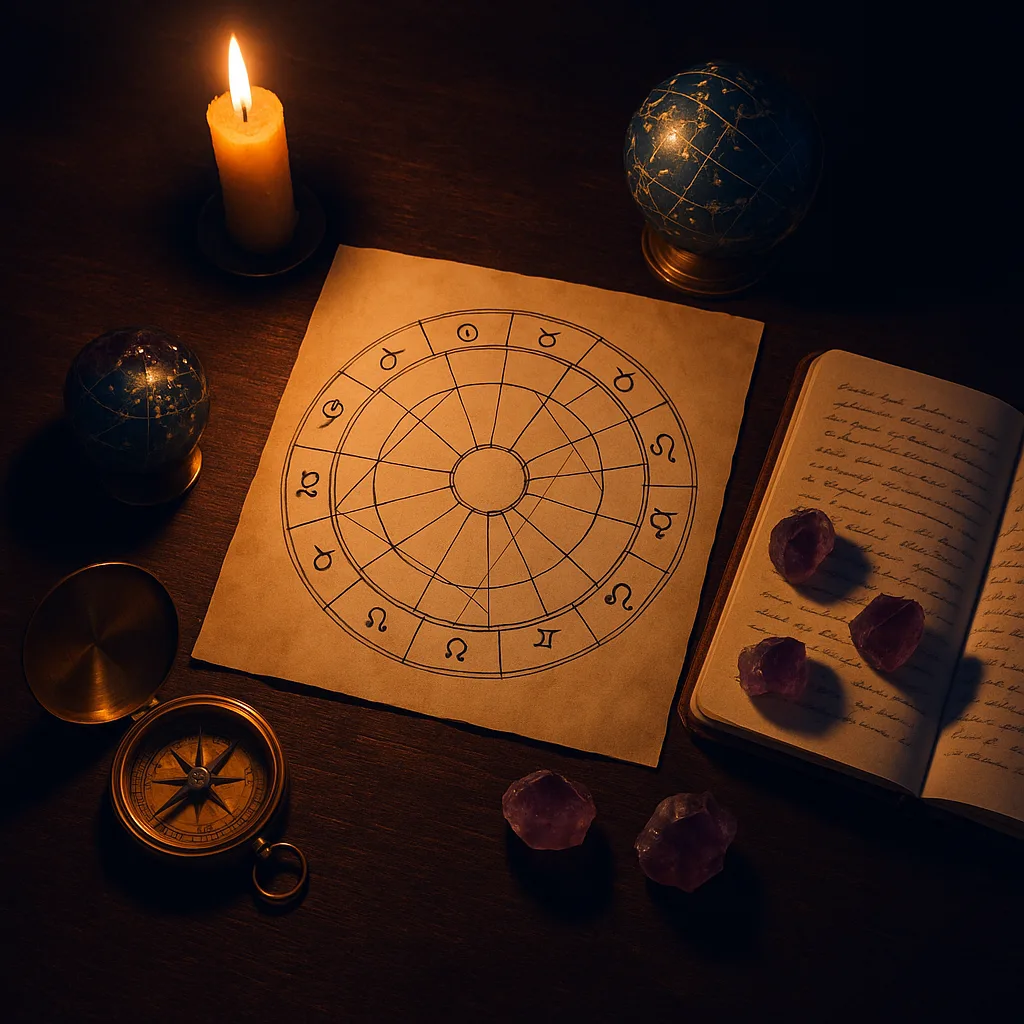
What the Sky Needs to Know About You
Every birth chart is built from three pieces of information: your date, your exact time, and your place of birth. That's all it takes for an astrologer to calculate where each planet stood in the sky the moment you were born. Without an accurate birth time, you can still learn which signs your Sun, Moon, and planets fall in, but your Ascendant and houses stay out of reach, since both depend on the precise moment and the horizon as seen from that exact location.
If you don't know your birth time, ask your parents or check your birth certificate before generating your chart on a website or app. That one detail is the difference between a complete reading and a partial one.
The Five-Step Roadmap for Your First Reading
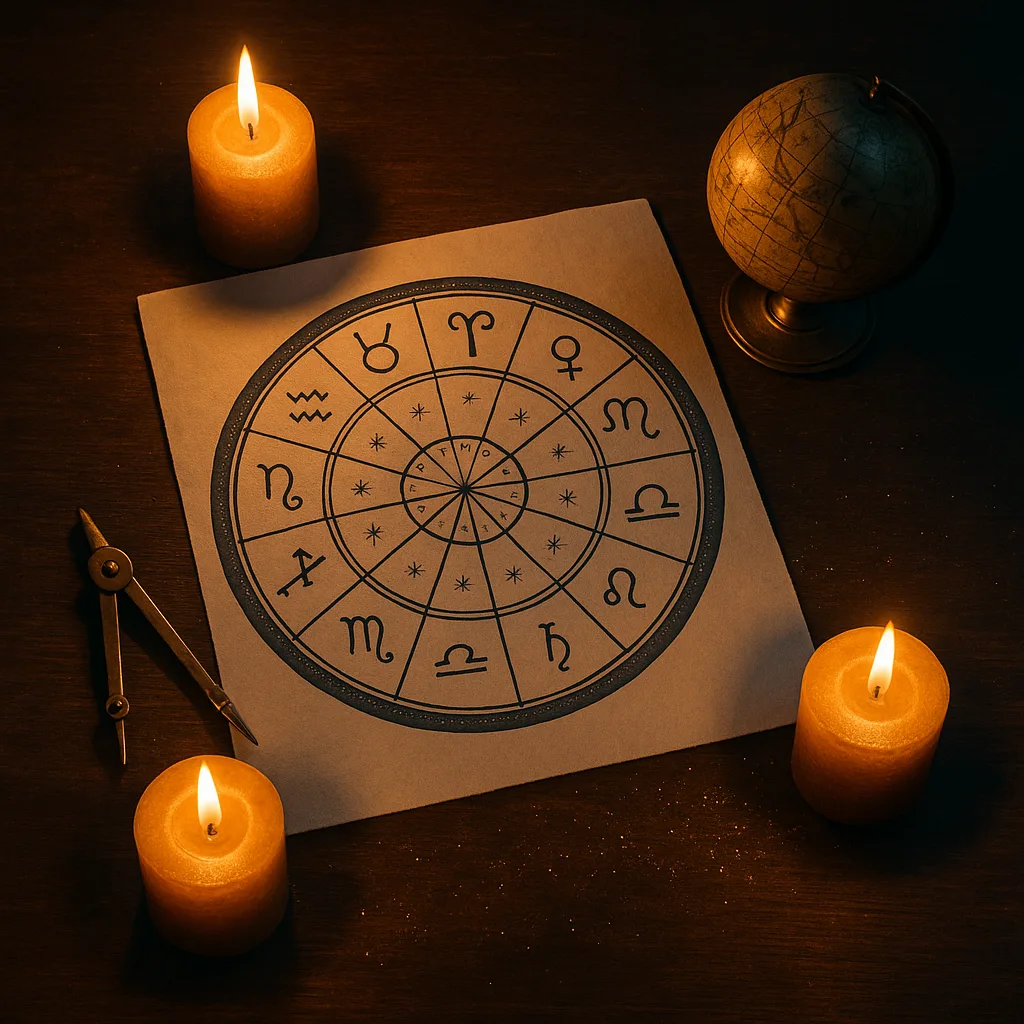
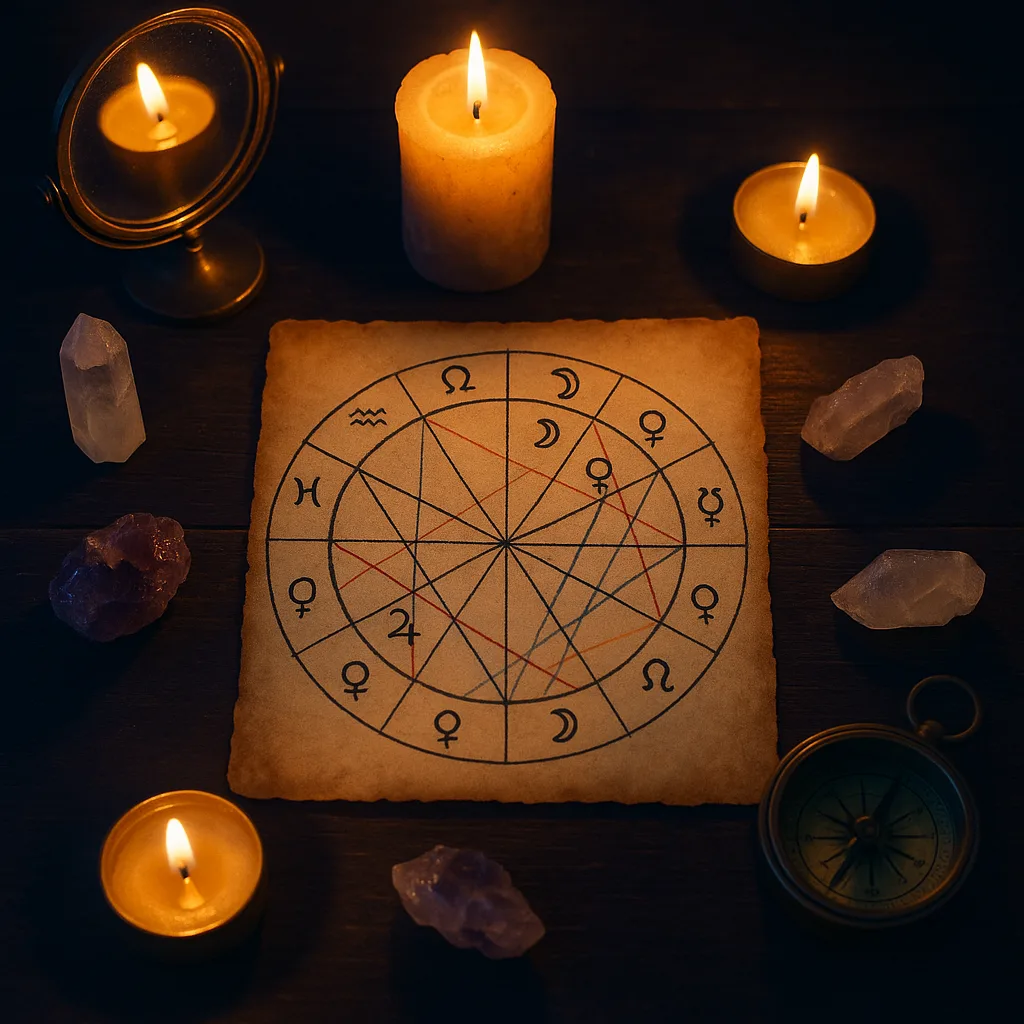
A birth chart can look overwhelming the first time you see one: symbols, circles, crossing lines, and numbers everywhere. Reading it in order, from the simplest layer to the more subtle ones, keeps things manageable.
- Step 1: Find your essential trio. Locate your Sun, Moon, and Ascendant. These form the backbone of your astrological identity: the Sun points to your core essence, the Moon to your emotional world, and the Ascendant to how you present yourself.
- Step 2: Check the sign and house of each planet. After the main trio, look at which signs Mercury, Venus, and Mars fall in, and which house each one occupies. The sign shows the style of expression; the house shows where in life that energy tends to show up.
- Step 3: Notice the most obvious aspects. Look for standout angles between planets, especially conjunctions, oppositions, and squares involving the Sun, Moon, and Ascendant. These point to where you experience tension or ease between different parts of yourself.
- Step 4: Find your Ascendant's ruling planet. Every rising sign has a ruling planet. Locating where that planet sits in your chart helps you understand the tone it sets for your personal path.
- Step 5: Save the technical layers for later. Retrograde planets at birth, lunar nodes, Chiron, and aspects between the slower-moving planets like Uranus, Neptune, and Pluto deserve patience. They carry real meaning, but make more sense once you're comfortable with the basics.
There's no rush. A birth chart can be revisited for years, and each reading tends to reveal new layers as you get better at reading the symbols.
Choosing the Right Tools to Generate and Study Your Chart
Generating a free, reliable birth chart is easy today. Platforms like Astro.com use internationally recognized reference calculations, which makes them a solid choice for anyone who wants precision. Sites like Astrolink work as a gentler entry point, built for people just discovering astrology who want to understand their chart without wading through technical jargon.
Mobile apps have matured a lot in recent years. Many now function like daily companions for self-discovery, so it makes sense to choose one based on what you're looking for:
- For a light, straightforward introduction: apps with casual language and short daily notifications help build the habit of watching the sky without overwhelming beginners.
- For those who value content written by human astrologers: some platforms skip auto-generated text entirely and use the whole-sign house system, delivering more personal, in-depth interpretations month after month.
- For a more psychology-driven reading: certain apps translate astrology into language focused on relationships and emotional growth, with less technical jargon.
- For those who want to go deep: some apps strike a good balance between technical depth and clarity, making them great for anyone looking to study astrology as a discipline.
There's no single best app for everyone, just the right tool for each person's moment and intent. Trying a few options before settling on a favorite is usually the most natural approach.
A Real Example: Practicing Transit Reading With the Current Sky
One of the best ways to learn how to read charts is to watch the sky in real time and compare it to your natal chart, what astrologers call a transit. In July 2026, for example, the sky offered plenty of movement to practice with: Mercury, which turned retrograde in late June, resumes direct motion this same month, usually a relief after a stretch of slower reflection, revision, and communication.
During the same period, Neptune begins a retrograde movement in Aries, a rare transit since the planet hadn't visited this sign in over a century and a half. Saturn also turns retrograde in July, while Pluto continues its long retrograde cycle in Aquarius, sustaining a quieter, more gradual season of transformation. The Moon keeps its usual rhythm, new to waxing, full to waning, setting the emotional tone of each week.
As you watch these movements and ask yourself which house each one falls in on your chart, you start to see firsthand how astrology connects the current sky to your personal story, not as an exact prediction, but as an invitation to reflect.
The Most Common Beginner Mistakes
A few mistakes are common for anyone reading their chart for the first time. Recognizing them ahead of time saves some frustration:
- Focusing only on the Sun sign: reducing your entire chart to 'my sign is such-and-such' leaves out a wealth of information hidden in the Moon, the Ascendant, and the houses.
- Ignoring which house system is used: different software can calculate houses in different ways, which sometimes creates small discrepancies between one app and another. That's not an error, just a different methodology.
- Treating tense aspects as a life sentence: a square or opposition in your chart points to challenges worth working through, not a sealed fate.
- Jumping straight to the advanced layers: trying to understand Chiron, the lunar nodes, or aspects between generational planets before mastering the basics tends to confuse more than it clarifies.
After Your First Reading, What's Next?
Once you can recognize your Sun, Moon, Ascendant, and the main planets in their signs and houses, the natural next step is to return to your chart now and then with fresh curiosity. Writing down insights, comparing them to major transits, and, if possible, booking a session with an experienced astrologer are all ways to go deeper.
A birth chart isn't a verdict on who you are. It's a symbolic mirror that invites self-discovery, and like any mirror, the longer and more closely you look, the more it reflects back.
Recomendado
Astro Reflexo
Descubra o que os astros revelam sobre quem você é. Em menos de um minuto, calculamos seu Sol, Lua e Ascendente com precisão astronômica e uma inteligência artificial escreve um resumo personalizado só para você.

Recomendado
Estátua Gato Bastet Egito Antigo
Inspiração Egípcia Autêntica Representa Bastet, a deusa egípcia da proteção, harmonia e energia feminina.
Universo Astral Editorial Team · Birth charts and numerology
This article was produced by the Universo Astral editorial team, with AI tools assisting research and drafting and human review before publication. If you spot anything inaccurate or outdated, let us know at our contact email.