Opposite Zodiac Signs: Why They Attract and How to Handle the Differences
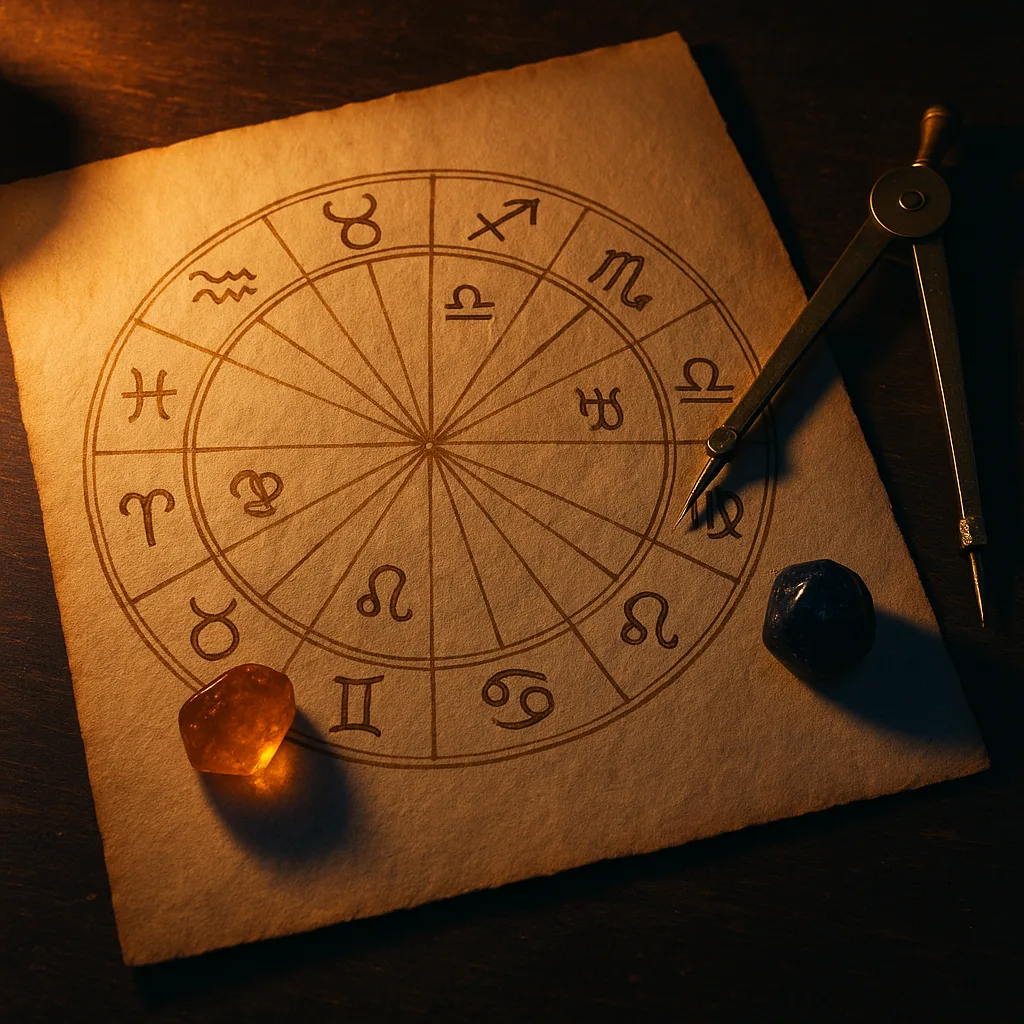
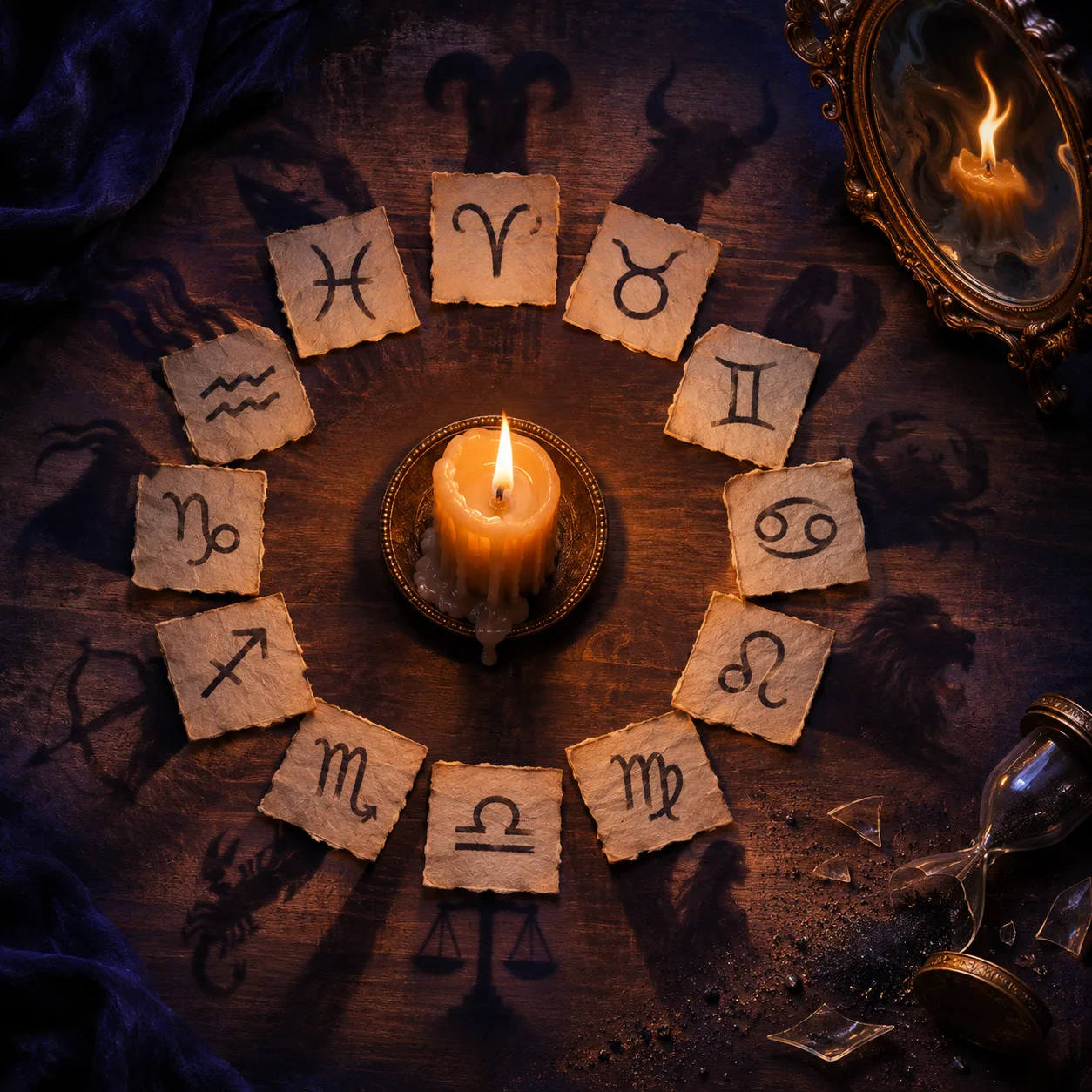
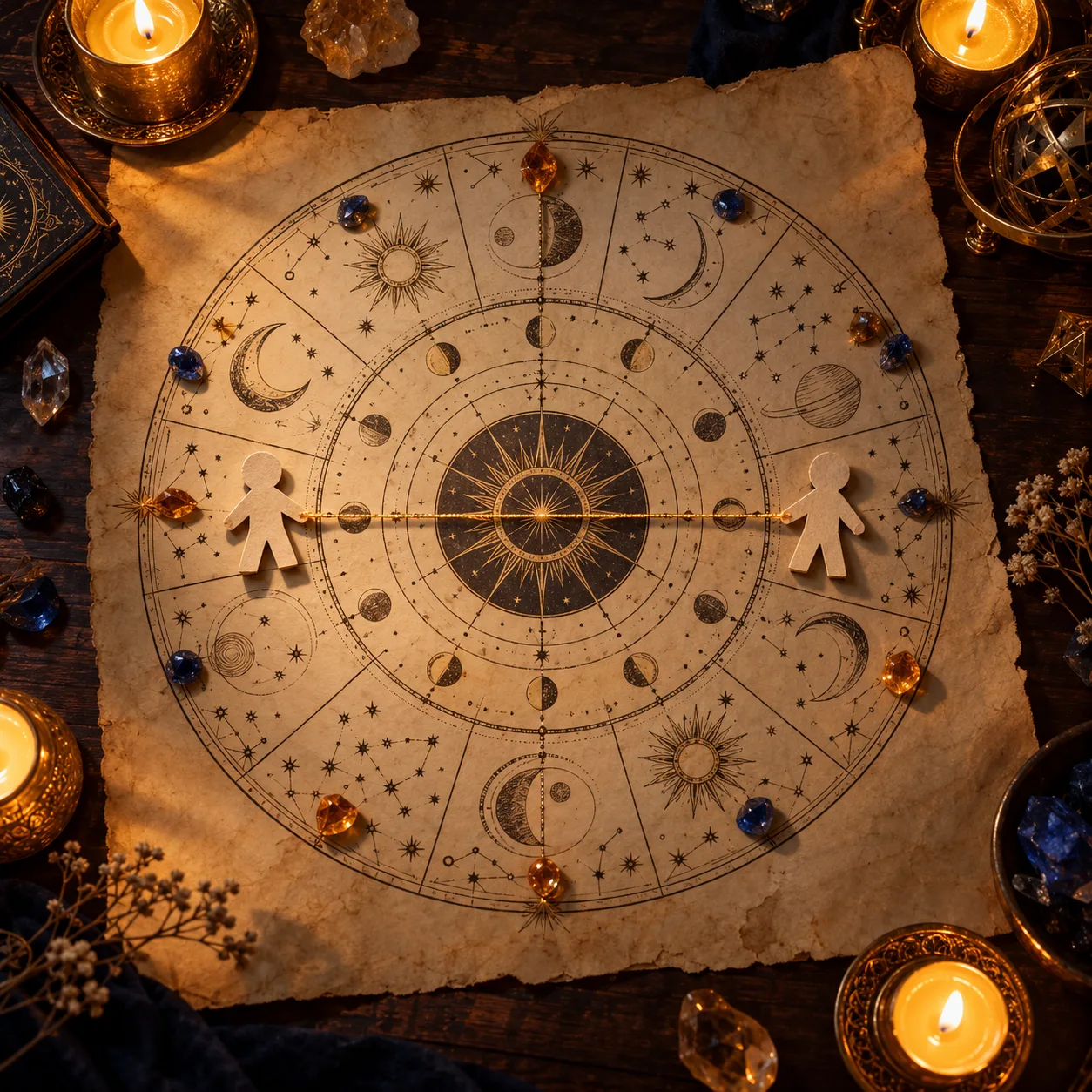
Every Full Moon is an opposition happening in the sky. The Sun sits in one sign, the Moon in the exact opposite sign, and the two face each other from opposite sides of the Earth, 180 degrees apart. That same mechanic, applied to the birth charts of two people, explains why certain sign pairs seem tied by an invisible thread: Aries and Libra, Taurus and Scorpio, Gemini and Sagittarius, Cancer and Capricorn, Leo and Aquarius, Virgo and Pisces.
What an opposite sign technically is
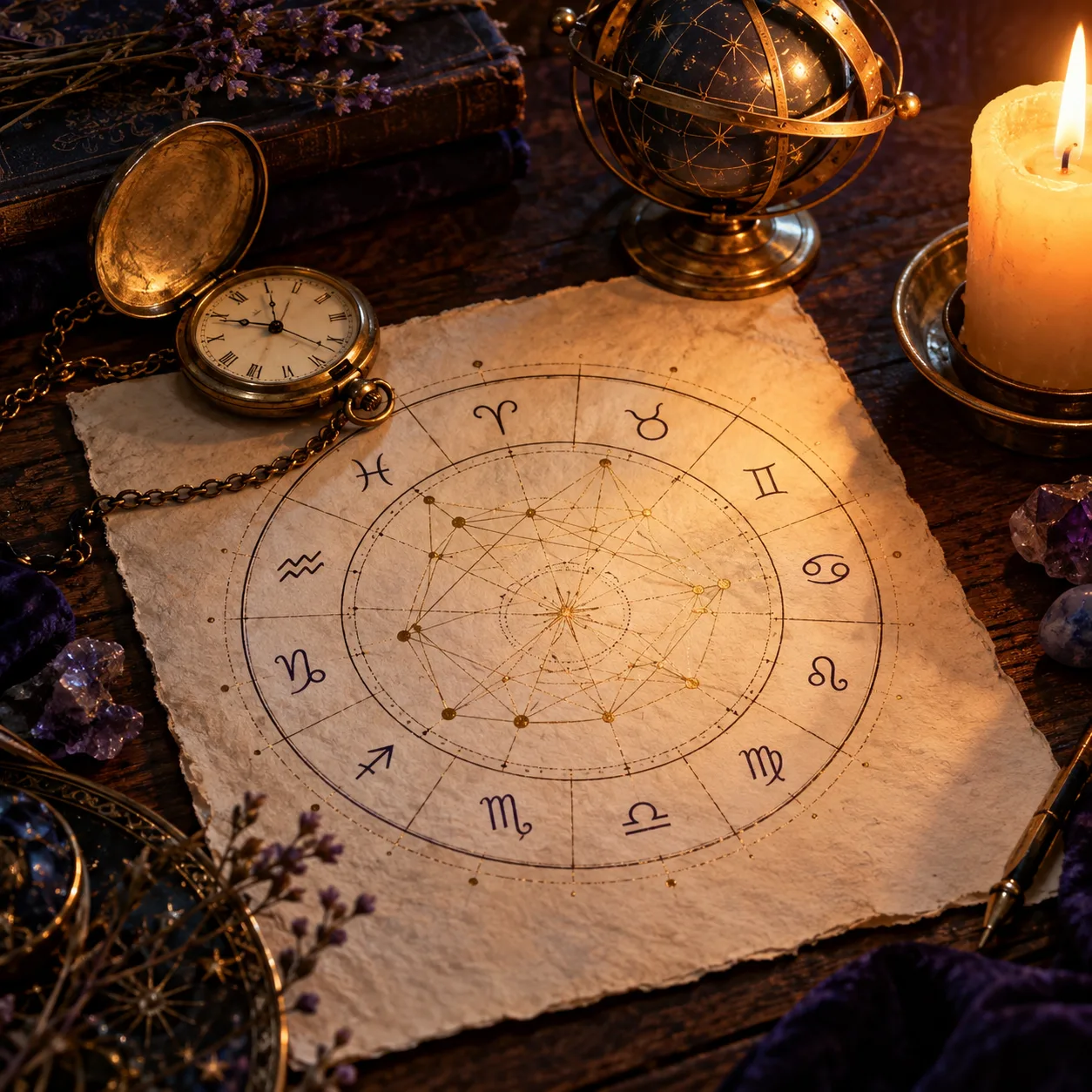
In astrology, opposition is the name given to the aspect formed by two points that sit 180 degrees apart on the zodiac wheel. Since each sign occupies exactly 30 degrees of the circle and the zodiac spans 360 degrees total, six signs of distance equals that 180-degree gap. The result is six fixed axes that never change: Aries-Libra, Taurus-Scorpio, Gemini-Sagittarius, Cancer-Capricorn, Leo-Aquarius and Virgo-Pisces.
This 12-sign system traces back to the zodiacal mapping done by the Babylonians around 450 BCE, as described by the Encyclopaedia Britannica in its account of the zodiac's history. The idea of opposition as an aspect with its own interpretive weight, though, was systematized later, in the 2nd century CE, by Claudius Ptolemy, the astronomer and astrologer from Alexandria, in his treatise Tetrabiblos (literally, a work in four books). Ptolemy recognized only four aspects as carrying real meaning: opposition, trine, square and sextile. The conjunction, so often cited today, was not even part of that classical list.
The important point is that the ancients did not treat opposition as synonymous with incompatibility. It was seen as tension between poles that recognize each other, which already supported, nearly two thousand years ago, the idea that opposites attract.
Why opposites attract: the geometry behind the feeling
There are two structural, almost mathematical mechanisms that explain why opposite pairs tend to be described as compatible rather than simply as rivals.
The first is shared modality. Signs are divided into three modalities (cardinal, fixed and mutable), and every opposite pair falls into the same modality: Aries and Libra are both cardinal, Taurus and Scorpio are both fixed, Gemini and Sagittarius are both mutable, and so on. This means that, despite everything, both sides of each axis process life at the same pace and with the same way of acting, just aimed at different targets.
The second mechanism is polarity. The zodiac alternates, sign by sign, between positive (or active) polarity and negative (or receptive) polarity: Aries is positive, Taurus is negative, Gemini is positive, and this alternation continues all the way to Pisces. Since twelve is an even number, a sign and the one 180 degrees away always fall on the same side of that alternation. Aries and Libra are both positive. Taurus and Scorpio are both negative. It is this structural coincidence, not chance, that makes both sides of an axis feel familiar to each other even while being opposite in element.
It's worth correcting a common misunderstanding here: negative polarity does not mean passivity or weakness. It means receptivity, a mode of acting just as active as the positive one, only through absorption rather than initiative. Scorpio, a negative-polarity sign, is traditionally described as one of the most strong-willed signs in the zodiac, which already dismantles the idea that it dominates a passive Taurus. Both are receptive, each in its own way.
The six opposition axes, side by side
Each axis joins elements traditionally considered complementary (fire with air, earth with water), something Hellenistic astrology already described as harmonic combinations between different triplicities.
| Axis | Elements | Modality | Houses | Central tension |
|---|---|---|---|---|
| Aries, Libra | Fire, Air | Cardinal, Cardinal | 1st, 7th | Asserting yourself alone versus building as a pair |
| Taurus, Scorpio | Earth, Water | Fixed, Fixed | 2nd, 8th | What is mine versus what is shared |
| Gemini, Sagittarius | Air, Fire | Mutable, Mutable | 3rd, 9th | Day-to-day information versus bigger meaning |
| Cancer, Capricorn | Water, Earth | Cardinal, Cardinal | 4th, 10th | Private life and home versus public life and career |
| Leo, Aquarius | Fire, Air | Fixed, Fixed | 5th, 11th | The individual versus the group |
| Virgo, Pisces | Earth, Water | Mutable, Mutable | 6th, 12th | Precision and detail versus dissolution and wholeness |
Two examples illustrate this logic well. In Aries-Libra, one sign represents impulse and self-assertion, the other represents the pursuit of harmony and balance between people: neither works fully without learning something from the other side of the axis. In Virgo-Pisces, tradition tends to describe Virgo as the one who tends to the body and practical detail, while Pisces tends to what escapes logic, the emotional and spiritual dimension of experience.
How to find your opposite sign, step by step
It's a simple calculation anyone can do without needing a full birth chart:
- Identify your sun sign, based on your birth date.
- Count six positions forward in the fixed zodiac sequence: Aries, Taurus, Gemini, Cancer, Leo, Virgo, Libra, Scorpio, Sagittarius, Capricorn, Aquarius, Pisces, looping back to the start if needed.
- The sign that lands exactly on the sixth position is your opposite, 180 degrees away.
- Worked example: starting from Gemini, count six signs forward (Cancer, Leo, Virgo, Libra, Scorpio, Sagittarius). The sixth is Sagittarius, which is indeed Gemini's fixed opposite.
- Shortcut: since the six axes never change, it's simpler to just memorize the table in the previous section instead of counting every time.
The element rule is also fixed: fire always opposes air, earth always opposes water. This makes it easy to work out, just from a sign's element, which element family sits on the other side of the axis.
The side rarely discussed: opposition is also a tension aspect
One point tends to get left out of popular lists of "opposite signs that match": in the traditional classification of aspects, opposition is considered a hard, challenging aspect, alongside the square. It is not automatically harmonious like the trine or sextile. This means attraction between opposite signs isn't synonymous with ease, it's synonymous with intensity, which is a different thing.
The mechanism described in synastry (the comparison between two birth charts) tends to work like this: opposition creates the sense of always facing the other person, seeing in them exactly what's missing in yourself. This generates fascination, because it feels like completion, but it also generates friction, because confronting your own lack through another person isn't comfortable. It differs from an aspect of joint action: opposition doesn't push two people to do something together, it forces them to see something in each other. It's an aspect of awareness, not of automatic movement.
The Taurus-Scorpio pair illustrates this well. Both are negative, receptive-polarity signs, which creates a deep affinity of temperament, but they express that receptivity through opposite elements: Taurus tends to see the stable, pleasurable side of life, Scorpio tends to see what needs transforming or fixing. The attraction between the two tends to be strong precisely because one shows the other the half of experience missing from their own worldview, and that's rarely comfortable all the time.
Anyone who has already read about the layers of element and modality knows compatibility doesn't come down to a single criterion. The article on how modality shapes compatibility between signs details how cardinal, fixed and mutable affect the rhythm of any relationship, including opposite pairs. And for anyone wanting to understand why the same pair of signs can work well as friends but stall as lovers, it's worth reading the analysis of why the same sign pair works in friendship but struggles in romance.
The real astronomy behind the symbol
It's worth separating what is verifiable astronomical mechanics from what is symbolic reading. In astronomical terms, an opposition occurs when two celestial bodies sit on opposite sides of the Earth, roughly 180 degrees apart in ecliptic longitude, and the best-known example of this is the Full Moon, when the Sun and Moon face each other head-on. The lunar phase calendar available at timeanddate.com shows, for example, full moons on January 3, May 1 and December 24, 2026, each with the Sun and Moon in exactly opposite signs at that moment.
This is the part with real astronomical grounding: the 180-degree distance genuinely exists in the sky, measured in degrees of ecliptic longitude. The reading that this determines romantic or friendship compatibility between two people, however, belongs to astrology's symbolic and cultural domain, not to a scientifically proven phenomenon. No space agency treats opposite signs as a category of factual prediction; the value of the topic lies in the interpretive tradition built since the Hellenistic period.
Applying the idea beyond romance
The dynamic of opposition isn't limited to couples. In friendships and partnerships, the same axis can work as useful complementarity: a Gemini curious about everyday information paired with a Sagittarius chasing bigger meaning, for example, tends to trade perspectives neither would reach alone. Anyone wanting to dig deeper into how synastry applies outside a romantic context can check the article on what the birth chart reveals about friendships and partnerships, which covers exactly this angle.
What generally changes is the intensity of the demands placed on each other. Among friends, the tension of an opposite axis tends to show up as a difference in style that fuels good conversations. In romantic relationships or close daily contact, the same difference tends to require more conscious adjustment, because daily contact amplifies both the fascination and the friction described in synastry.
Frequently Asked Questions
Do opposite signs really attract each other?
In astrological tradition, yes, there's a structural explanation for this attraction: opposite pairs share the same modality and the same polarity, creating a familiarity of temperament even with different elements. This isn't a scientifically proven fact, it's a symbolic reading based on centuries of astrological practice.
What sign is opposite mine?
Just count six positions forward in the zodiac sequence from your sun sign, or check the six fixed axes: Aries-Libra, Taurus-Scorpio, Gemini-Sagittarius, Cancer-Capricorn, Leo-Aquarius and Virgo-Pisces. These pairs never change.
Do Taurus and Scorpio work well as a couple?
Both share receptive polarity and fixed modality, which tends to create magnetic attraction and deep loyalty, but they express that receptivity through opposite elements (earth and water), which also creates friction when one sees stability and the other sees a need for transformation. Tradition describes this pair as intense, not as automatically easy.
Why are opposite zodiac signs described as complementary?
Because each axis joins elements traditionally considered harmonious with each other (fire with air, earth with water) and because both sides of the axis share the same modality and polarity. This combination makes one side seem to fill in what's missing in the other, within astrology's symbolic logic.
Do Aries and Libra work well together?
The Aries-Libra axis joins the drive for individual self-assertion with the search for balance and harmony between people, a theme that shows up often in this pair's synastry. Tradition describes this combination as fertile when both learn from each other's differences, but also as a source of friction when each side insists only on its own way of acting.

Recomendado
Astrologia, Simbolismo e Mapa das Personalidades
A astrologia acompanha a humanidade desde as primeiras grandes civilizações. A ideia de que a vida biológica na Terra pode ser influenciada pelos astros gerou e gera grande fascínio no homem.
Universo Astral Editorial Team · Zodiac signs and fun facts
This article was produced by the Universo Astral editorial team, with AI tools assisting research and drafting and human review before publication. If you spot anything inaccurate or outdated, let us know at our contact email.