Fire, Earth, Air and Water Signs: How Each Element Reacts in a Relationship
A couple's argument rarely starts with the thing it ends on. It begins with a dirty dish and turns into three days of silence, or it begins with someone running late and turns into a 2 a.m. conversation about the future. Astrological tradition has a specific way of explaining this difference in reaction: it doesn't look at what happened, but at the element that rules the most sensitive points in each person's chart. Fire, earth, air and water don't just describe tastes and personality. In this symbolic reading, they describe the entire circuit of a relationship crisis, from the moment discomfort appears to how a person tries to reconnect afterward.
This piece isn't about which signs are compatible with which (that's already covered in other articles in our zodiac compatibility guide). The goal here is different: to understand what happens inside each element when a relationship is under strain, from the first flicker of discomfort to the reaction in the body and in speech.
Where the idea of dividing the signs into four elements comes from
The division into four elements didn't start in astrology. It comes from Greek natural philosophy, specifically the pre-Socratic philosopher Empedocles of Acragas, who lived around 490 to 430 BCE. According to the Encyclopaedia Britannica entry on him, Empedocles argued that the entire material universe was made up of four basic ingredients (fire, air, water and earth) and that nothing is created or destroyed: everything transforms, depending on the proportion in which these substances combine. The full entry can be found on the Britannica page on Empedocles, which details how this four-element theory shaped centuries of Western thought about the nature of matter.
This theory only reached astrology centuries later, during the Hellenistic period. Starting in the 3rd century BCE, astrologers working within the Babylonian tradition began dividing the ecliptic (the Sun's apparent path across the sky) into 12 equal 30-degree sections, creating the 12 zodiac signs. It was within this 12-sign structure that the division into four groups of three (known as triplicities) took on practical weight: each triplicity came to be linked with one of Empedocles' four elements. The astrologer and astronomer Ptolemy, in the 2nd century CE, devoted an entire chapter of the Tetrabiblos to this logic, organizing the fire, earth, air and water signs into groups with geometric affinity (the three signs of each element form a triangle within the zodiac circle).
Worth stressing: this is a symbolic framework inherited from ancient culture, not a scientifically validated personality classification. Astrology is discussed here as a cultural and historical belief system, not as a predictive science.
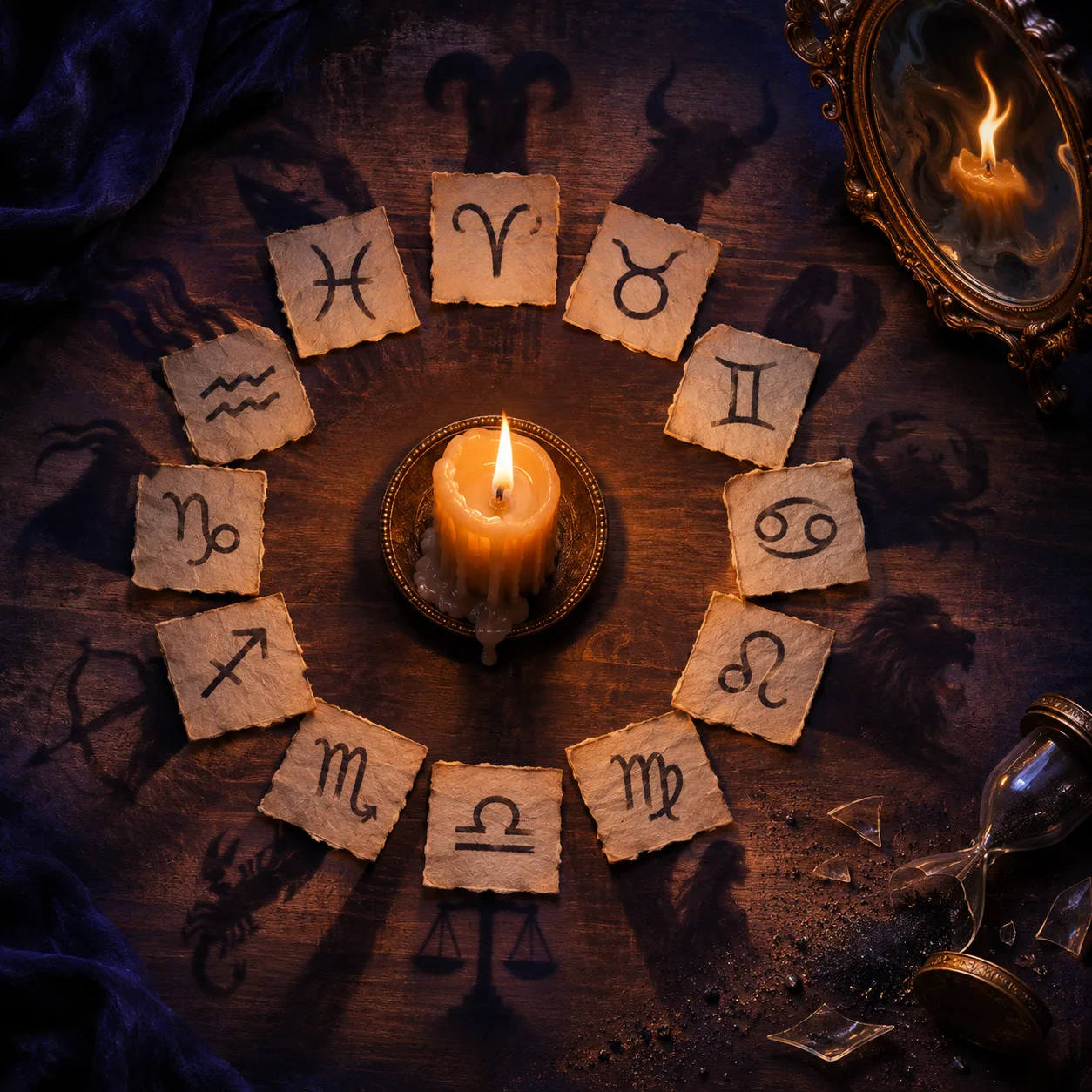
The 12 signs, the four elements and the three modalities
Each element groups together three signs, and each of those three signs also carries a modality (cardinal, fixed or mutable), which in tradition indicates whether that sign's energy tends to initiate, sustain or transform a situation. This combination of element and modality is what explains why Aries and Sagittarius, both fire signs, react so differently in the day-to-day life of a relationship.
| Element | Signs | Modality of each | Traditional theme |
|---|---|---|---|
| Fire | Aries, Leo, Sagittarius | Cardinal, Fixed, Mutable | Action, drive, initiative |
| Earth | Taurus, Virgo, Capricorn | Fixed, Mutable, Cardinal | Stability, groundedness, building |
| Air | Gemini, Libra, Aquarius | Mutable, Cardinal, Fixed | Communication, exchange, ideas |
| Water | Cancer, Scorpio, Pisces | Cardinal, Fixed, Mutable | Feeling, receptivity, emotional depth |
If you want to understand why two signs of the same element can behave so differently in relationships, that layer is explained in more detail in our article on cardinal, fixed and mutable modalities, which pairs directly with the table above.
How each element reacts when a relationship is under strain
Astrological tradition describes a reaction pattern for each element when facing friction, frustration or distance in a relationship. It's important to treat this as a symbolic, cultural lens useful for reflecting on behavior patterns, not as a fixed personality diagnosis.
Fire (Aries, Leo, Sagittarius): the reaction tends to be immediate and visible. In traditional readings, fire signs tend to express discomfort as soon as it arises, whether through direct confrontation or a sudden outburst that dissipates quickly. The risk interpretation manuals point to is impulsiveness: saying something in the heat of the moment that doesn't reflect the underlying feeling. What sustains this element in a relationship tends to be intensity and novelty, not the repetition of routine.
Earth (Taurus, Virgo, Capricorn): here the reaction tends to be slow and practical. Rather than putting discomfort into words right away, tradition describes this element processing a crisis through concrete action: taking on a task, organizing something, physically stepping away to think. The difficulty tends to be naming the feeling in words, since the earth element tends to trust what can be touched and sustained over time more than the conversation itself.
Air (Gemini, Libra, Aquarius): the characteristic reaction is intellectualizing. Faced with discomfort, this element tends to search for a logical explanation, debate, or mental distance, sometimes appearing cold at the exact moment a partner expects emotional comfort. Tradition links this group to a need for space and autonomy within the relationship, and to being able to talk through the problem as a way of processing it.
Water (Cancer, Scorpio, Pisces): the reaction tends to be introspective and deep. According to interpretation manuals, this element absorbs the emotional weight of a relationship, sometimes holding onto hurt longer than it voices it, with strong intuition about what a partner feels even when nothing is said. The core need tends to be emotional safety: feeling that the bond holds even after conflict.
These four patterns aren't sealed compartments. How someone actually behaves in love depends on a larger set of factors in the chart, especially Venus (how a person loves and desires), Mars (how they react under tension or conflict) and the Moon (how they process emotion internally). That's why two fire-sign people can react in completely different ways during an argument, depending on where these other planets fall.
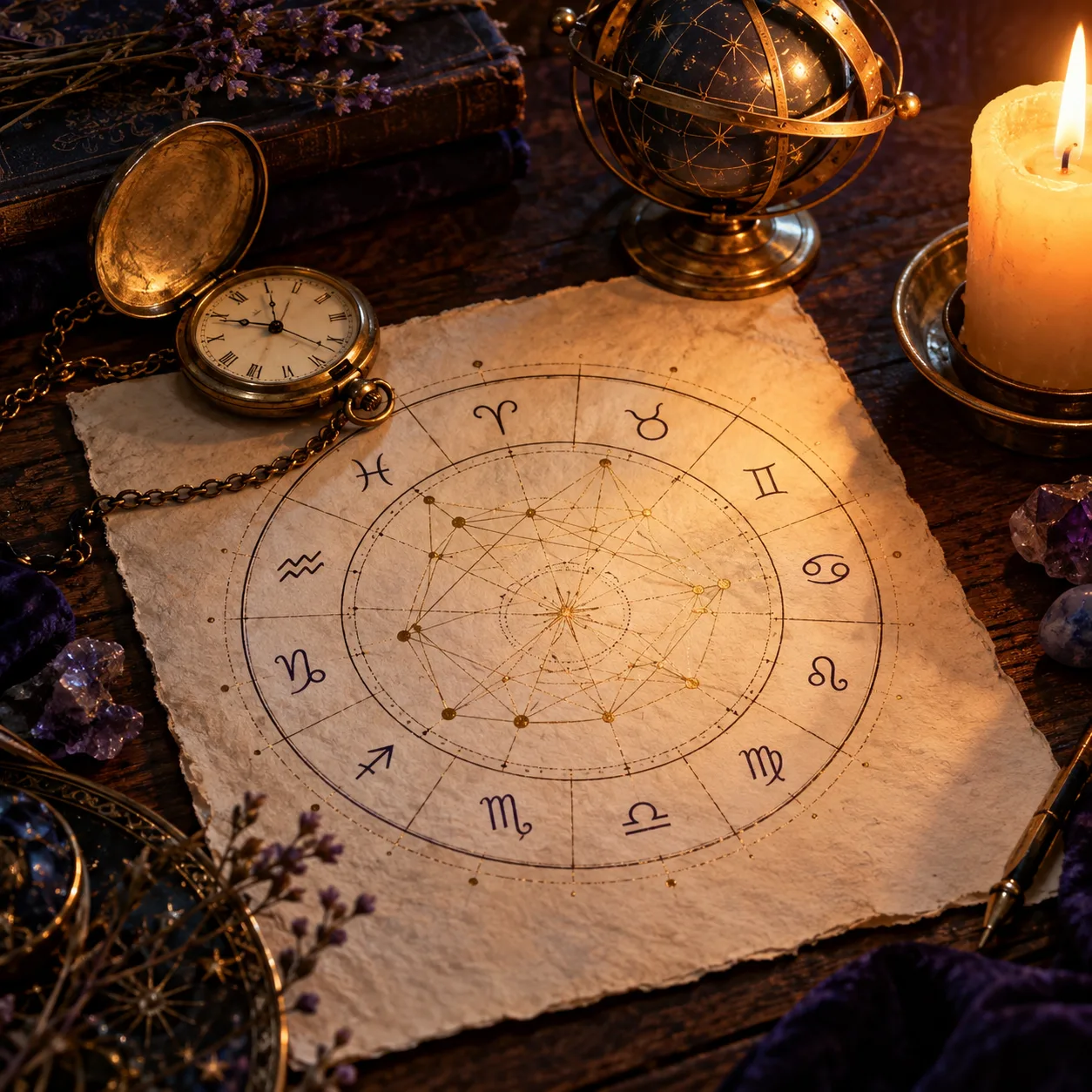
How to calculate a chart's elemental signature (step by step)
Looking only at the sun sign explains little about day-to-day emotional reactions. Astrological tradition recommends a more complete process for understanding how someone actually behaves in a relationship:
- Gather the exact birth date, time and location. Without the birth time, it's not possible to calculate the Ascendant or place the planets accurately.
- In the birth chart, identify the element of six points considered central to romantic temperament: Sun, Moon, Mercury, Venus, Mars and Ascendant.
- Count how many of these six points fall into each of the four elements (fire, earth, air, water).
- The element with the most points among the six is called the dominant element. If an element doesn't appear in any of the six points, tradition calls this a missing element, used to explain specific difficulties (for example, a lack of water linked to trouble naming feelings).
- To understand the dynamic of a couple specifically, compare each person's Venus and Mars elements: tradition uses this cross-reference, more than either person's sun sign, to describe how the two react under emotional stress.
A practical example: imagine someone with Sun in Taurus, Moon in Scorpio, Mercury in Aries, Venus in Pisces, Mars in Capricorn and Ascendant in Virgo. Counting the elements, three fall under earth (Taurus, Capricorn and Virgo), two under water (Scorpio and Pisces) and one under fire (Aries). Earth dominates: this person likely processes conflict in a practical, slow way, even with a Scorpio Moon that feels everything intensely on the inside. Anyone who wants to dig deeper into this calculation, including how to handle a missing element, can find the full step-by-step process in our article on the missing element in a birth chart.
What happens when different elements meet in love
Fire and air tend to get along easily in traditional readings, since both are considered more expansive and active elements: one feeds the other's energy. Earth and water also tend to form a combination described as stable, since water gives emotional meaning to what earth builds in practical terms. The meeting of fire and water, or earth and air, usually calls for more adjustment: fire's intense, immediate rhythm can overwhelm water's sensitivity, while earth's need for concrete security can clash with air's attachment to freedom and variety.
This doesn't mean a fixed fate. It means that, in this symbolic language, each combination of elements calls for a different kind of emotional translation effort: the fire person learning to give the water person room to process, the earth person learning to put more into words for the air person, and so on. Venus, the planet traditionally linked to how we love, changes signs every three or four weeks and can soften this underlying pattern over time, as shown in our article on Venus transits in relationships.
Frequently asked questions
How do I know which element rules my way of loving?
The sun sign is just the starting point. To really understand your emotional pattern, tradition recommends looking at the element of Venus (how you love), Mars (how you react under tension) and the Moon (how you process feeling), along with the Ascendant and Mercury.
Does a fire sign work with a water sign in love?
In traditional readings, fire and water need more mutual adjustment because they move at opposite rhythms: fire tends to act fast and expressively, while water processes internally, more slowly and deeply. This doesn't rule out the relationship, but it usually calls for patience on both sides.
Why do two people of the same element react differently in a fight?
Because the sun sign's element is just one of several factors in a chart. A sign's modality (cardinal, fixed or mutable) and the positions of Venus, Mars and the Moon strongly shape individual reactions, even between people who share the same element.
What does a missing element in a birth chart mean for a relationship?
When none of the personal planets (Sun, Moon, Mercury, Venus, Mars and Ascendant) fall into a given element, interpretation manuals call this a missing element, traditionally used to explain a specific difficulty, such as trouble expressing feelings when water is absent.

Recomendado
MAPA ASTRAL E NUMEROLÓGICO PERSONALIZADO
Mapa Astral + Numerologia Um mergulho profundo na sua essência. E se tudo o que você procura… já estivesse dentro de você - esperando para ser revelado?
Universo Astral Editorial Team · Zodiac signs and fun facts
This article was produced by the Universo Astral editorial team, with AI tools assisting research and drafting and human review before publication. If you spot anything inaccurate or outdated, let us know at our contact email.