Don't Relate to Your Sun Sign? How Astrology Explains This
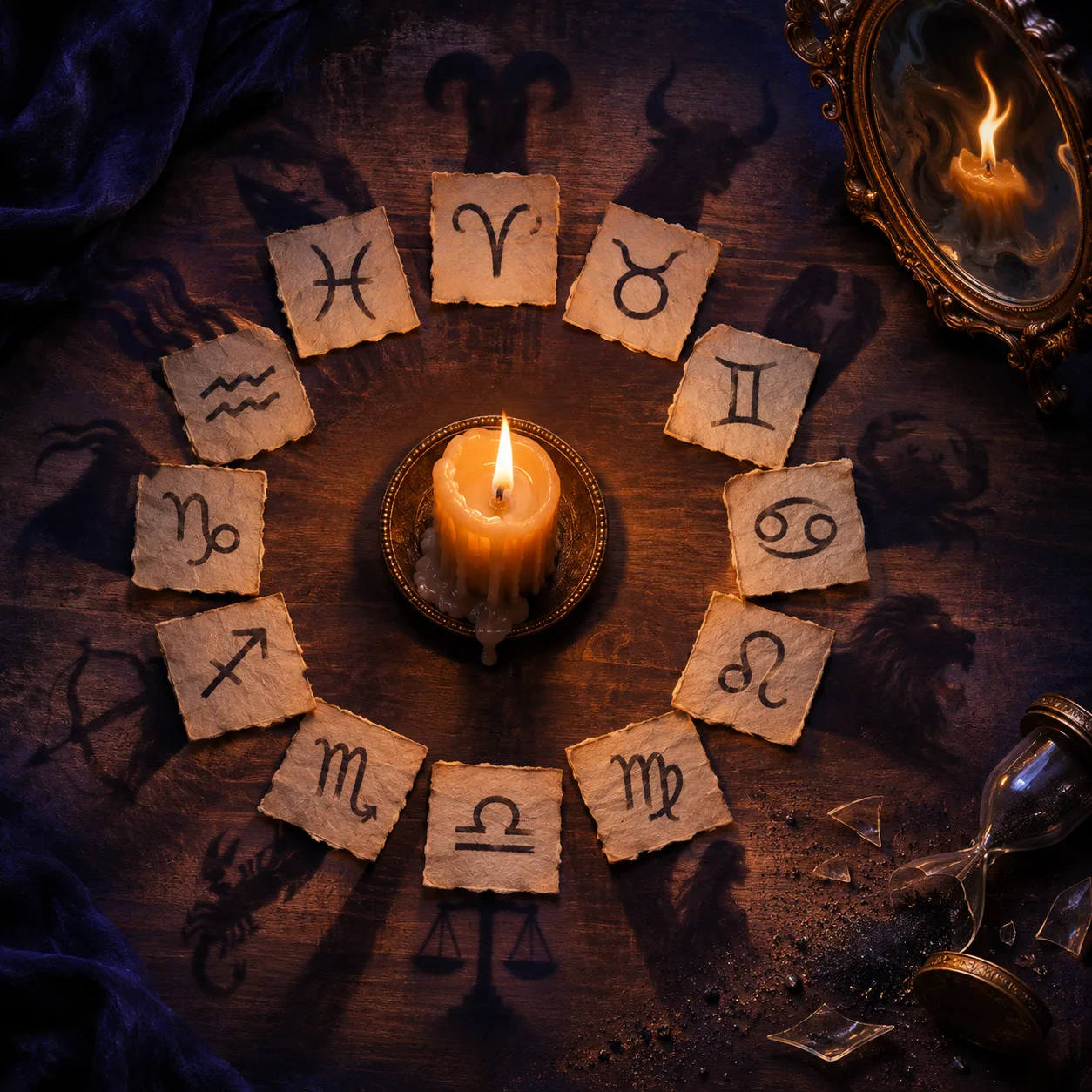
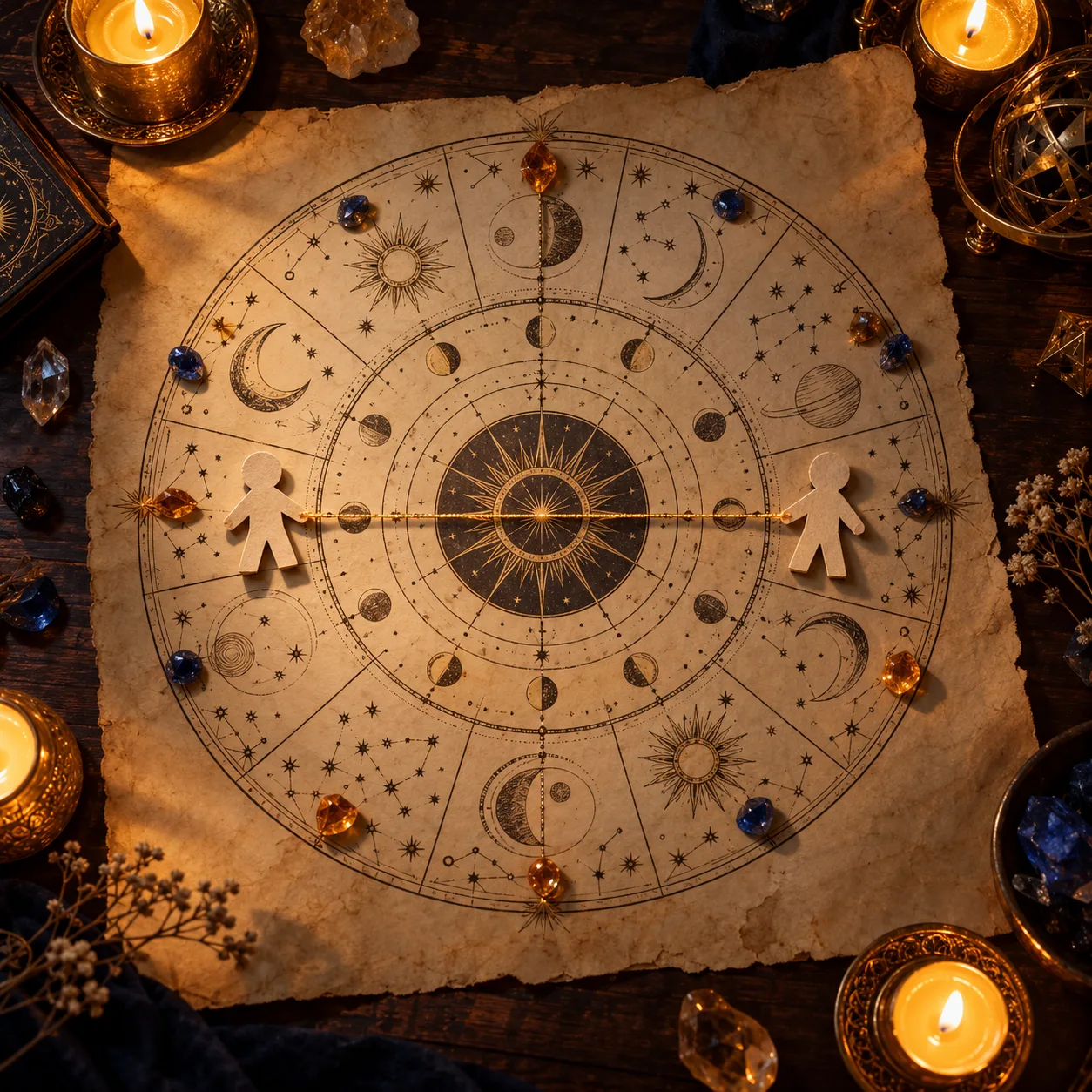
Sharing a birthday doesn't mean sharing the same way of acting or feeling. For astrology, a description based only on the sun sign leaves out a large part of the birth chart. It considers only the Sun's position in the zodiac, while a full reading includes the Moon, the other planets, the Ascendant, the houses, and the angular relationships between these elements. These associations belong to astrological interpretation and don't constitute a scientific explanation of personality.
The reading that brings these components together has ancient roots. Horoscopic astrology took shape in the Hellenistic world, roughly between the late 2nd century and early 1st century BCE. In that setting, Babylonian knowledge combined with Egyptian traditions, including the decans, following Alexander's conquests. Claudius Ptolemy, who lived around 90 to 168 CE, is a key reference from that period. His Tetrabiblos systematized concepts that remained part of the astrological tradition ever since.
Sun, Moon and Ascendant: what makes up the Big 3
The components of the so-called Big 3 move at very different speeds. The Sun's apparent path takes about a month to cross each sign. The Moon crosses that same stretch in roughly two and a half days. The Ascendant, meanwhile, shifts signs in an average of two hours, with variations depending on location and time of year. So a gap of just a few hours between two births can produce charts sharing the same sun sign but with entirely different Ascendants.
Big 3 is an informal name for this trio. In astrological interpretation, the Sun relates to identity and personal goals; the Moon, to emotional needs and instinctive responses; the Ascendant, to how a person approaches situations and presents themselves. Someone may recognize their emotional habits in the Moon's description and find little correspondence in the Sun's description alone.
The Ascendant: posture and first impressions
The Ascendant corresponds to the point on the ecliptic crossing the eastern horizon at the moment of birth. The sign containing that point is called the rising sign. In many house systems, it marks the start of the first house. In astrological language, its interpretation involves appearance, gestures, initial reactions, and the way someone makes first contact with their surroundings.
Near sunrise, the Sun's position sits close to the Ascendant. As the Earth rotates, other stretches of the zodiac pass over the eastern horizon. This movement makes recording the exact birth time especially important: the average of two hours per sign isn't a fixed, identical interval throughout the day. An accurate calculation also requires knowing the birthplace.
The idea that the Ascendant only starts to take over around age 30 isn't a general rule in natal chart interpretation. In this system, it's already part of the reading from birth. Noticing certain behaviors more clearly with age is different from claiming this point gets activated at a specific point in life.
The Moon: emotional needs and inner reactions
In astrology, the Moon tends to be linked to the search for security, memories, emotional habits, and experiences of care, including the relationship with a mother figure. The solar reading focuses on other themes, such as identity and personal direction. Because of this, the descriptions tied to these two components can highlight quite different traits.
Since the Moon moves quickly through the zodiac, births in the same week can fall under different lunar signs. Even two people born on the same date can have this difference, if the Moon changed signs between their birth times. In chart interpretation, a Sun linked to expansiveness can coexist with a Moon associated with reserve. This contrast helps explain why someone recognizes one disposition in their goals and another in their emotional responses.
Houses: where the chart's themes show up in life
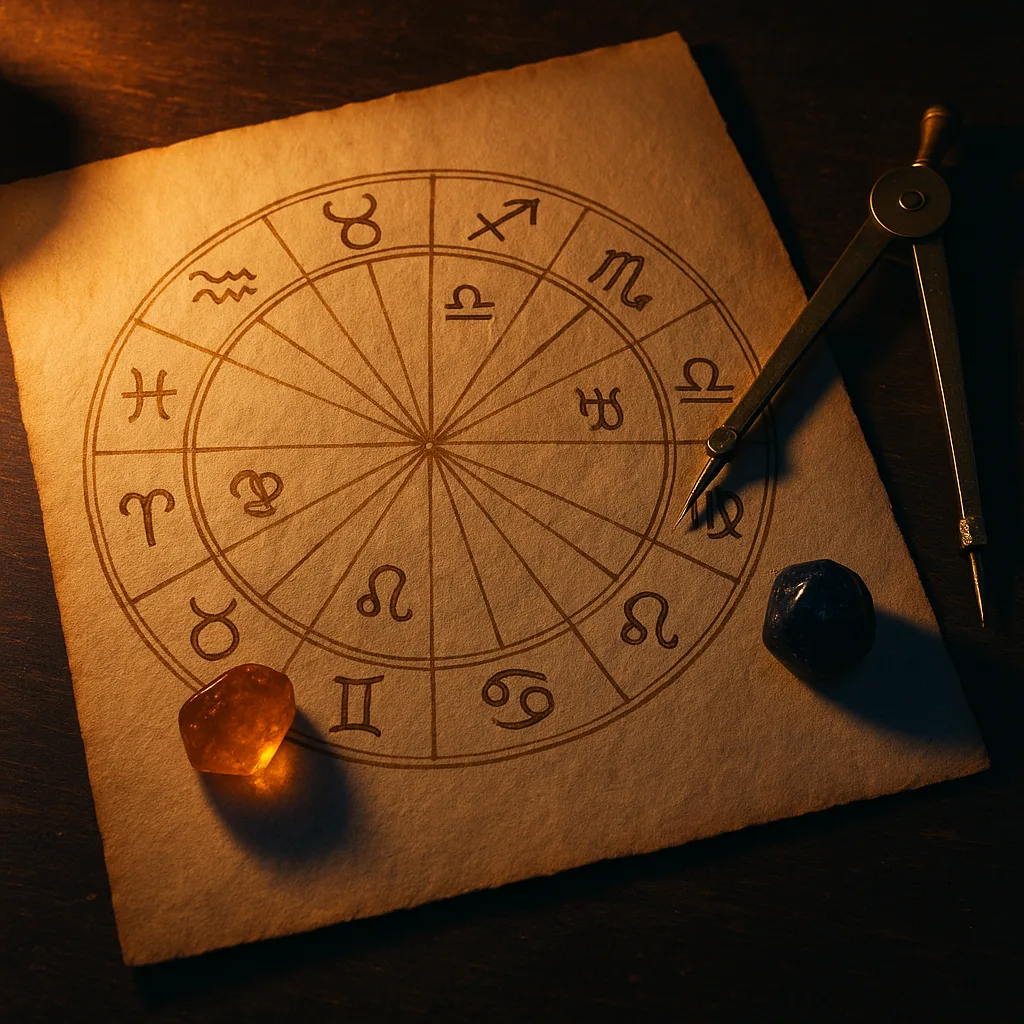
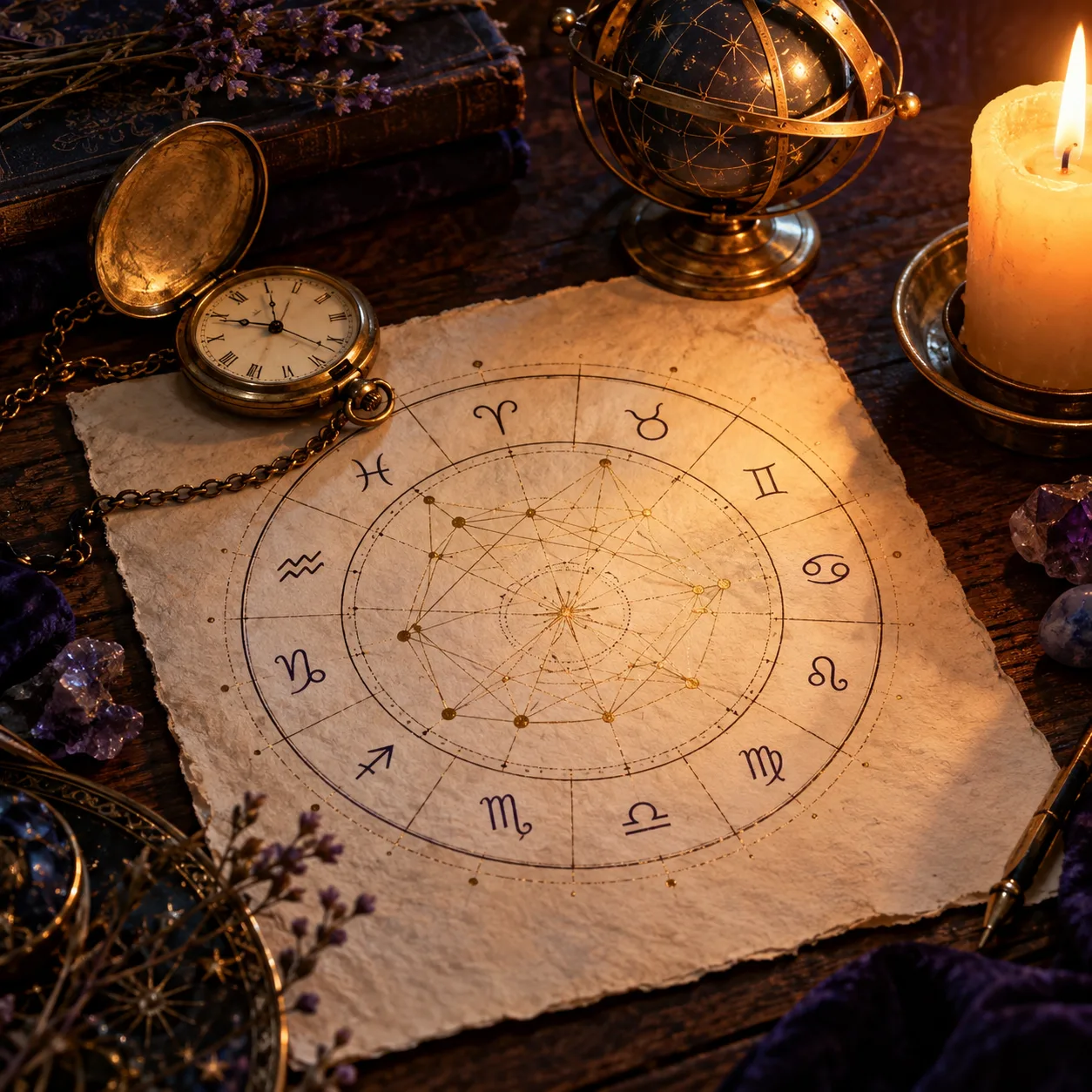
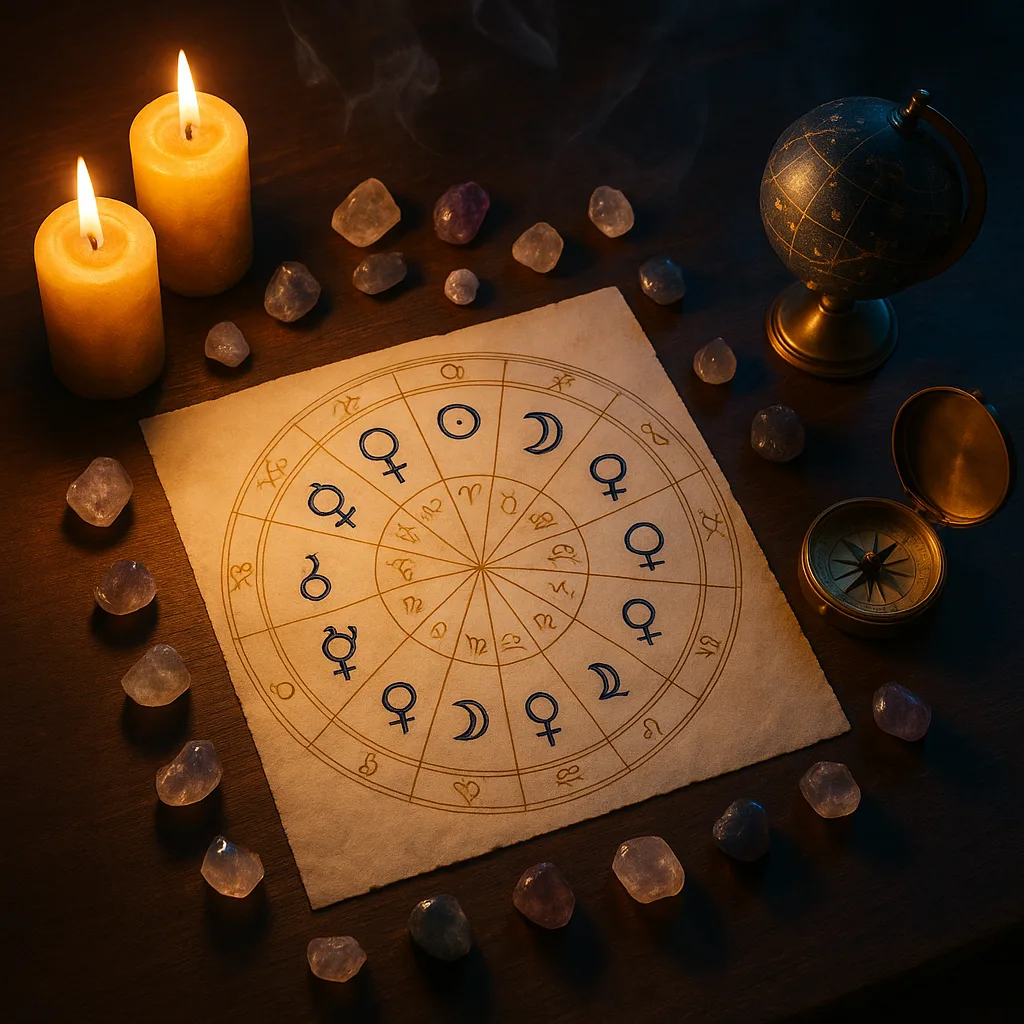
The twelve houses organize the interpretation into areas such as identity, relationships, work, and spirituality. Their calculation depends on the system used and the birth data. Numbering runs counterclockwise in the standard chart layout, starting from the first house. In many methods, its cusp matches the Ascendant; in the whole-sign system, the first house covers the entire rising sign.
The Sun in the first house, for example, is read in terms of personal expression and how someone occupies space. In the tenth house, career themes and public recognition take center stage. So even when the sun sign matches, the house adds a different layer of context. This also helps individualize readings involving slow-moving planets like Saturn, Uranus, Neptune, and Pluto, whose sign positions are shared by many people of similar age.
There's more than one way to set house boundaries. The whole-sign method, among the oldest known, assigns a full sign to each house. Placidus, Topocentric, and Equal House follow different criteria. In the Topocentric system, the Ascendant and Descendant mark the start of houses 1 and 7, while the other cusps depend on the method's own calculations. The choice of house system can shift how planets fall across the houses and explain differences between charts built from the same birth data.
Aspects: how chart positions relate to each other
Solar interpretation also factors in the angular distance between the Sun and other chart elements. These relationships are called aspects. The tradition tied to Ptolemy's Tetrabiblos helped shape this field. In astrological practice, conjunction, sextile, square, trine, and opposition form the group generally known as the major aspects.
| Aspect | Exact Angle | Symbolic Meaning | Orbs Used in Some Approaches |
|---|---|---|---|
| Conjunction | 0° | Blends the functions of the elements involved; interpretation depends on the planets and context. | Up to 10° |
| Sextile | 60° | Opportunities for cooperation and ease. | Up to 5° |
| Square | 90° | Conflict or need for adjustment. | 7° to 10° |
| Trine | 120° | Compatibility and spontaneous expression. | 7° to 10° |
| Opposition | 180° | Polarities and the need to reconcile opposing tendencies. | Up to 10° |
This margin is called an orb, and it varies between schools, aspects, and the bodies involved. The reference angles correspond to overlapping positions or simple divisions of the 360-degree circle. In astrological interpretation, squares between the Sun and Saturn or Pluto can add themes of pressure, restriction, or tension. Trines can suggest more natural ease of expression. A generic sign description doesn't account for any of these combinations.
The tropical zodiac and constellations follow different reference points
A separate issue is the relationship between signs and constellations. The tropical zodiac, used by many Western astrological traditions, is based on the cycle of equinoxes and solstices. The International Astronomical Union explains that constellations are defined regions of the sky. The precession of the equinoxes shifts their alignment with the tropical zodiac over time. This astronomical difference doesn't call for a revision of astrological conventions. So not relating to a sun sign description doesn't mean someone's actual sign has changed.
How to find your Moon sign and Ascendant
To get a natal chart, gather your birth date, time, and city. The accuracy of your birth time has a direct effect on the Ascendant and the houses. It can also determine the lunar sign when birth happened close to the Moon shifting into a new sign.
- Look for the time on the birth certificate. If the document doesn't include it, check other available records and ask family members, keeping in mind memory isn't always precise.
- Identify the city and state or country of birth. The calculation needs to account for geographic location.
- Enter this information into a birth chart calculator or service.
- Find the label ASC, used for the Ascendant, and check the Moon's position.
- Read the interpretations of these elements alongside the sun sign description, paying attention to the themes assigned to each.
Learning about the first astrological house and its connection to the Ascendant deepens the themes tied to personal presentation. Comparing the traits assigned to the twelve zodiac signs helps place the Sun's reading in context. None of these descriptions, taken on its own, adds up to the interpretation of a full chart.
Astronomical data helps track the sky's apparent movements hour by hour and day by day. For a natal calculation, though, the conventions of the chosen astrological system still need to be applied. Location, birth time, and house system all shape the final result.
Frequently Asked Questions
Why don't I recognize myself in my sign's description?
In astrology, a sun sign description only covers part of the chart. The Moon, Ascendant, houses, and aspects add other layers to the interpretation. Beyond that, general sign descriptions were never meant to be individual personality assessments.
Does the Ascendant matter more than the Sun?
The reading assigns different roles to each. The Ascendant tends to relate to initial behavior and first impressions in encounters with others. The Sun is tied to identity and goals. How much weight each carries depends on the context of the interpretation.
Do I need to learn the calculations to find my Moon and Ascendant?
A birth chart service can calculate these from your birth date, time, and location. The quality of that data matters a lot, especially for pinning down the Ascendant and the houses.
How does astrology explain differences between people who share a sign?
It treats a shared sun sign as just one point of similarity. The other placements, their distribution across the houses, and the aspects between them can all vary widely. Because of this, the system doesn't assume identical behavior among everyone born under the same sign.
Does not relating to my sign mean there's an error in my chart?
That feeling alone doesn't tell you anything about the accuracy of the calculation. To double-check your sun sign, verify your birth data and which zodiac system was used, especially if your birthday falls close to a sign change. Within astrological reading, other components also shape the overall interpretation.
Recomendado
Astro Reflexo
Descubra o que os astros revelam sobre quem você é. Em menos de um minuto, calculamos seu Sol, Lua e Ascendente com precisão astronômica e uma inteligência artificial escreve um resumo personalizado só para você.
Universo Astral Editorial Team · Zodiac signs and fun facts
This article was produced by the Universo Astral editorial team, with AI tools assisting research and drafting and human review before publication. If you spot anything inaccurate or outdated, let us know at our contact email.