Numerology Compatibility for Couples: The Error Creating False Incompatibilities
The question every numerology couple asks wrong
"Do our numbers match?" is the most common question from people who turn to numerology after exhausting their couple's birth chart. The problem is that this question, the way it's usually asked, has no reliable answer. In practice, people compare numbers that were never meant to be measured against each other. One partner calculates their Destiny Number from their birth date, the other pulls an Expression Number from a website calculated by name, and they place them side by side as if they were the same measure. The result is a sense of incompatibility that, technically, was never actually measured.
This article doesn't cover what each number means on its own, that should be explored elsewhere (anyone who hasn't yet calculated their own chart can start with the step-by-step guide to calculating your Life Path). It covers the moment when two charts meet: how to compare correctly, which pairs of numbers make sense to place together, and what to do when numerology seems to point to friction.
Basic rule: compare numbers of the same type
The most basic principle of numerology compatibility is also the most overlooked: a Destiny Number should only be compared with another person's Destiny Number. A Soul Number makes sense only alongside a partner's Soul Number. Mixing categories is like comparing someone's height to another person's weight and drawing conclusions about who is "bigger."
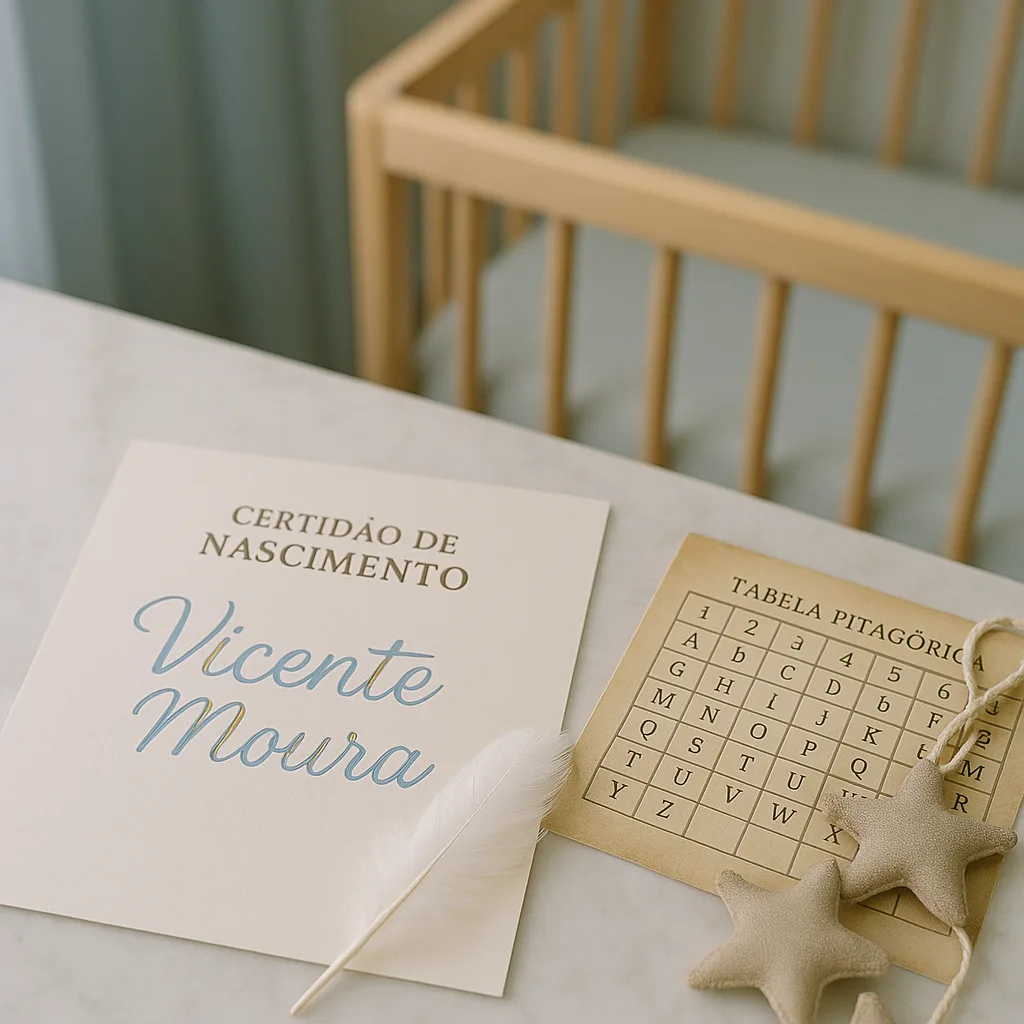
It's worth noting that the names of these numbers vary from school to school, which confuses beginners. What one site calls a Destiny Number, another calls a Life Path or Personal Number, and the calculation behind it changes depending on whether you use birth date or full name. This is one reason to understand the differences between personal number, destiny number, and soul number before trying to compare your chart with someone else's.
In practice, this means setting up three separate comparisons, not just one:
- Destiny with Destiny: shows whether the life paths of the two tend to support each other or compete for space.
- Soul with Soul: shows whether each person's deepest desires feel recognized by the other.
- Expression with Expression: indicates whether day-to-day personalities, the way of acting, communicating and reacting, tend to fit together or create constant friction.
A couple can have high affinity at the Soul level and some tension at the Destiny level. This is not a contradiction: they are two different questions receiving different answers.
How to calculate the comparison in practice
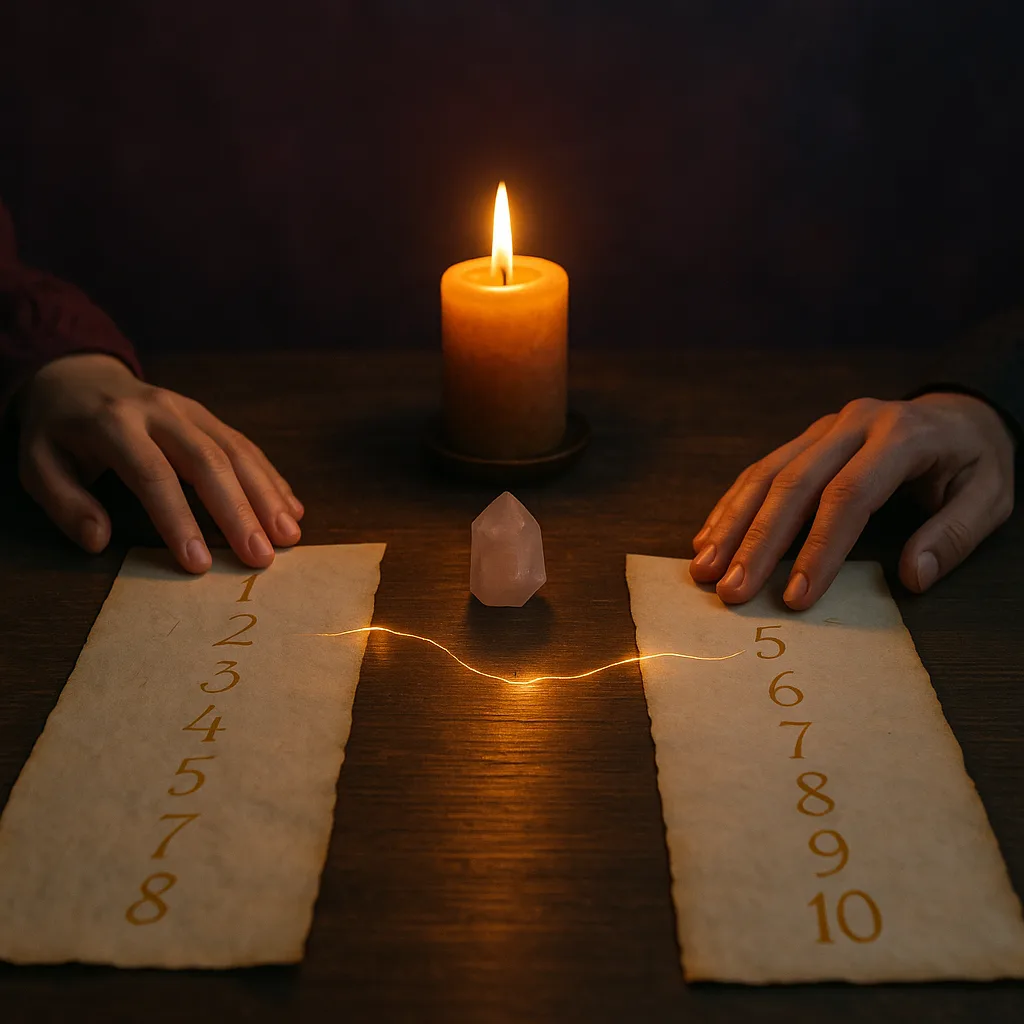
After calculating each number for both partners separately, the most common method is to add the two reduced values and reduce again to a single digit. If person A has Destiny 5 and person B has Destiny 7, you add 5+7=12 and reduce to 3. This synthesis number doesn't replace the two original numbers: it's read as a third piece of information, a portrait of what emerges from the meeting of the two paths.
The full step-by-step goes like this:
- Calculate each partner's Destiny Number from their birth date, reducing until you reach a single digit (or keeping 11, 22, and 33 unreduced if they appear).
- Calculate each partner's Soul Number by adding the numerical values of the vowels in their full name.
- Calculate each partner's Expression Number by adding all the letters in their full name.
- Compare each pair separately (Destiny with Destiny, Soul with Soul, Expression with Expression), never crossing different categories.
- Add the two numbers from each pair and reduce the result to a single digit, getting the synthesis number for that specific layer.
- Read the meaning of each synthesis number as a tendency to connect, not as a final verdict on the relationship.
Reference guide: what each combination tends to indicate
There is no firm consensus on which number combinations are "good" or "bad" together, and any serious numerologist distrusts tables that promise a definitive answer. But there are repeated tendencies in the Pythagorean tradition that serve as a starting point, never as law. The table below organizes these tendencies by combination type:
| Combination type | Example | Tendency observed in Pythagorean tradition |
|---|---|---|
| Identical numbers | 4 and 4 | Immediate recognition, but risk of stagnation, since both see the world the same way and may lack what they need most from each other: contrast |
| Complementary numbers | 1 and 8, 2 and 6 | Productive tension, where differences work as an engine instead of an obstacle |
| Master number with common number | 11 and 5, 22 and 7 | Usually requires more patience, because the intensity on one side may seem out of proportion to the other person's expectations |
| Two master numbers | 22 and 33 | Rare combination that tends to amplify both harmony and strain, requiring more conversation about expectations than other pairings |
To better understand why 11, 22, and 33 work differently than other numbers, see the controversial origin of master numbers, including why not every numerology school agrees on treating them as a separate category.
When the result seems to point to incompatibility
Here's the point that separates a useful reading from an alarmist one: no numerology combination, by itself, condemns a relationship. What it can do is name a type of recurring friction, and naming it is already half the work of any couple.
A couple with numerically "tense" Destinies is not destined to fail. They're being warned about the kind of conversation they'll need to have more often than other couples.
Compatibility numerology was born as a tool for mutual self-knowledge, not as an instrument of judgment. Using it to decide whether a relationship is "worth it" twists its original purpose. The most productive approach is to use it as a script of questions: where do the two tend to understand each other without effort, and where will they need to translate for each other with more care.
The very logic of assigning numbers to letters and dates traces back to the Pythagorean tradition, which treated number as the organizing principle of the world, not as a forecasting tool. The Encyclopaedia Britannica explains in its entry on the history of astrology and related symbolic systems how these ancient traditions associated numerical and celestial patterns with human characteristics, reasoning that modern numerology has inherited and adapted. The full entry at britannica.com is worth reading for anyone wanting the historical context behind this kind of symbolic system.
An exercise to do as a couple
Before any comparison, calculate the three numbers for each of you separately (Destiny, Soul, and Expression), then sit down together to place side by side only the matching pairs. Resist the urge to quickly find a final compatibility score: move through each layer slowly, asking each other whether what the number describes feels true.
If one partner's Soul Number reveals a desire that's never been put into words before, it's worth exploring that carefully: the article on why success doesn't guarantee feeling fulfilled goes deeper into this specific number and helps explain why it tends to spark the most revealing conversations in this exercise.
In the end, the value of this exercise isn't in getting a number that sums up the relationship, but in using numbers as a reason for a conversation the couple might not have had otherwise, about trajectory, desire, and the everyday way of being together.
Frequently asked questions
Which numerology number should I compare with my partner's?
It depends on which layer you want to evaluate: compare Destiny Number with Destiny Number, Soul Number with Soul Number, and Expression Number with Expression Number. Never compare numbers from different categories, because they measure distinct aspects of a person and the result loses meaning.
Does a low compatibility number mean the relationship won't work?
No. Compatibility numerology was born as a tool for mutual self-knowledge, not as a verdict on the relationship's future. A numerically tense combination usually points to a type of recurring friction the couple can discuss openly, not a sentence of failure.
How do I calculate the synthesis number for compatibility between two numbers?
Add the two already-reduced numbers from each partner and reduce the result again to a single digit. For example, Destiny 5 from one side and Destiny 7 from the other add to 12, which reduces to 3. This synthesis number is read as additional information, not as a replacement for the two original numbers.
Do master numbers like 11, 22, and 33 change how we read compatibility?
Yes, they tend to require more patience when paired with common numbers, since the intensity of someone with a master number may seem out of proportion to the partner's expectations. Pairings of two master numbers are rare and usually amplify both harmony and strain.

Recomendado
Mapa Astral Kármico
Você já sentiu que certos padrões se repetem em sua vida? Relacionamentos que seguem o mesmo roteiro, desafios que parecem voltar ou talentos que surgem naturalmente? Nada disso é por acaso.
Universo Astral Editorial Team · Birth charts and numerology
This article was produced by the Universo Astral editorial team, with AI tools assisting research and drafting and human review before publication. If you spot anything inaccurate or outdated, let us know at our contact email.