Master Number 11 in Numerology: Intuition, Purpose, and Heightened Sensitivity
Among the master numbers in numerology, 11 is the one most likely to show up in a calculation, and at the same time the one most associated with a specific kind of emotional wear: the sense of carrying an antenna that's switched on at all times. Before explaining why that happens, it's worth understanding precisely what sets this number apart from the others and how it actually appears in a numerology chart.
The rule that 11 breaks (and why)
In Pythagorean numerology, the standard rule is simple: any number reduces to a single digit, from 1 to 9, by repeatedly adding its digits together. The number 11 is one of the exceptions to that rule. When a calculation produces 11 partway through, numerology tradition says not to reduce it further to 2 (1+1), because it's treated as carrying a more intense vibration than its simple equivalent.
That's why 11 is said to operate on two frequencies at once: the frequency of 11 itself, tied to intuition, inspiration and heightened sensitivity, and the frequency of 2, its reduction, tied to cooperation, diplomacy and sensitivity in everyday relationships. In practice, this means anyone with 11 in their chart carries both layers: the calling to perceive and guide, and the more basic need to relate well to other people.
How to calculate and spot the 11 in your Life Path
The most commonly cited calculation for finding the 11 is the Life Path number, worked out from your full birth date. The process follows this sequence:
- Reduce the day of birth to a single digit (keeping 11, 22 or 33 if they appear at this stage).
- Reduce the month of birth the same way.
- Reduce the year of birth by adding up all of its digits.
- Add the three results together.
- Reduce that final sum to a single digit, but keep it unreduced if, before that last step, the result is 11, 22 or 33.
Here's a worked example: for the date 11/05/1985, the day reduces to 1+1=2, the month is 0+5=5, and the year 1+9+8+5=23, which reduces to 5. Adding 2+5+5 gives 12, which reduces to 3. In this specific case, the Life Path is 3, not 11, because 11 never showed up as an intermediate result before the final reduction. For 11 to actually show up as a Life Path number, the total sum of the date's digits (before the last reduction) needs to be exactly 11, 29 or 38.
Another example: someone born on November 7, 2000, adding up the digits of that date, arrives at a result of 11. In that case, since the result is already a master number, it isn't added again or reduced to 2.
One honest caveat is worth mentioning: different schools and numerology calculators disagree on how to do this addition. Some add up all the digits of the date at once, others add them in separate groups (day, month, year) before summing the totals. Depending on which method is used, the same date may or may not reveal an 11 in the final result. This discrepancy is well known in numerology literature, and it explains why two online calculators sometimes give different answers for the same person.
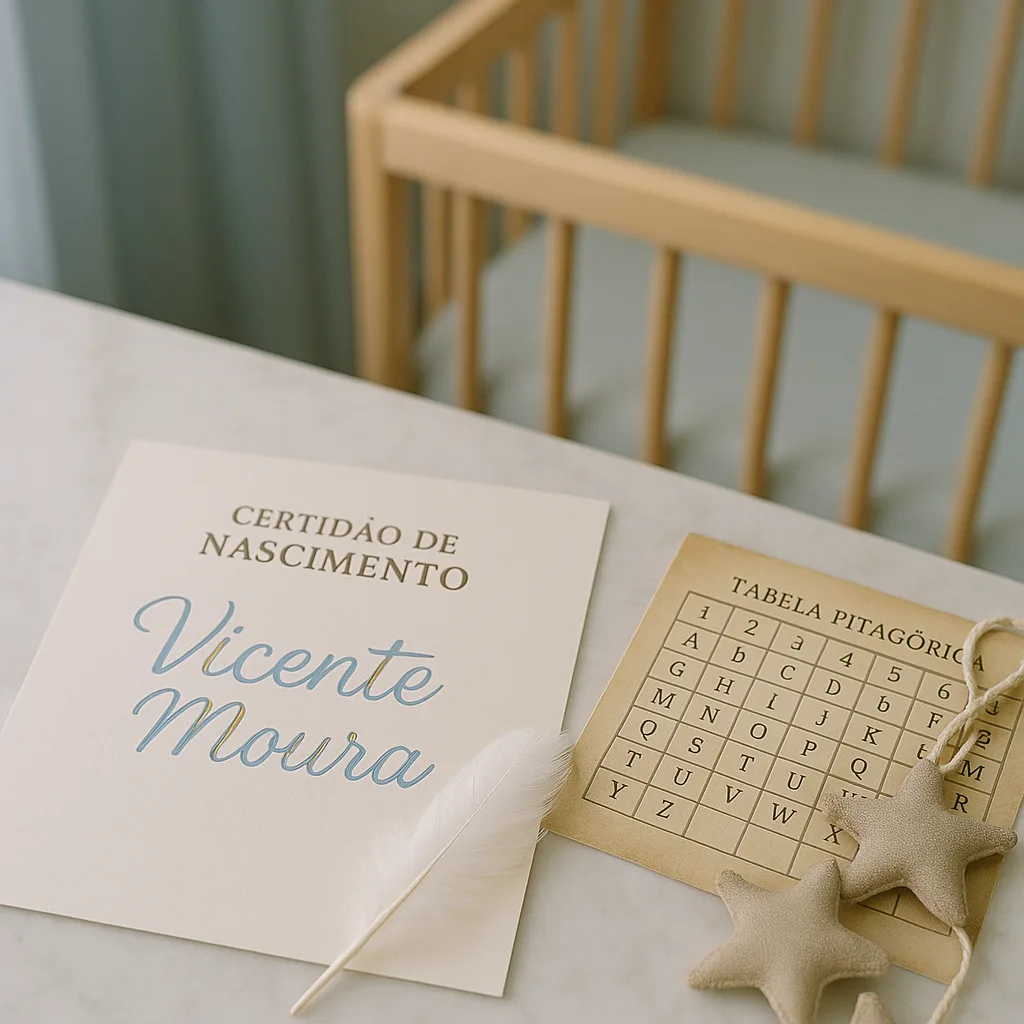
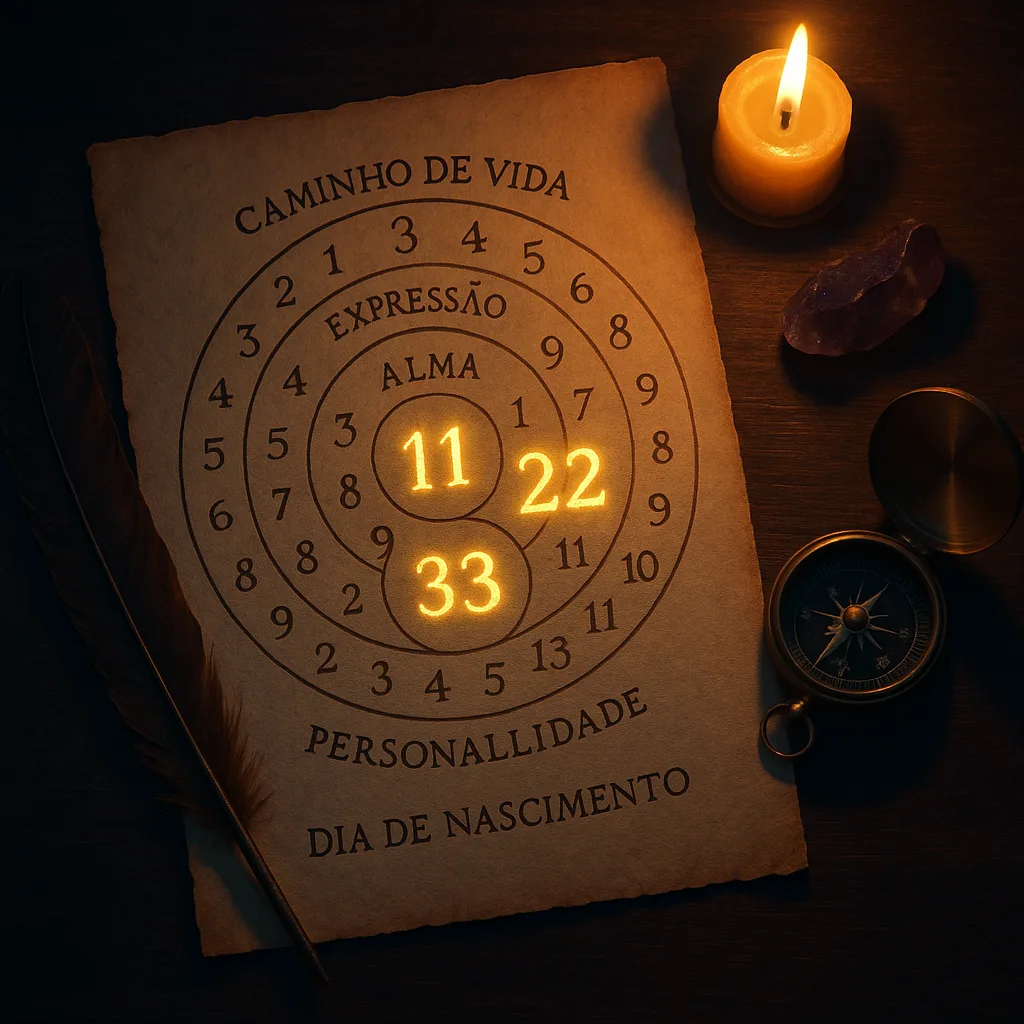
The number 11 can also show up in other numbers on the chart, not just the Life Path: in the Expression Number (calculated from the full name, converting letters into numeric values) and in the Soul Urge Number. Anyone who wants to understand these other placements in more depth can check the article on where else 11, 22 and 33 can show up in a numerology chart.
What sets 11 apart from the other master numbers
Formally, master numbers are those formed by two matching digits, like 11, 22 and 33, and numerology tradition treats them as carrying higher vibrational frequencies, with symbolically broader meanings than the reduced numbers from 1 to 9. Within this group, each master number is usually linked to a different area of life: 11 to mastery in the mental and intuitive realm, 22 to mastery in the material and practical realm, and 33 to mastery in the spiritual and emotional realm.
The table below sums up this difference and places 11 in relation to the number it derives from (2) and to another master number (22), for comparison:
| Element | Number 11 (Master) | Number 2 (11's reduction) | Number 22 (another Master) |
|---|---|---|---|
| Area of influence | Mental and intuitive | Everyday emotional and relational life | Material and practical |
| Core energy | Intuition, inspiration, heightened sensitivity, a calling to guide others | Cooperation, diplomacy, partnership | Large-scale building, concrete achievement |
| Most cited challenge | Anxiety, perfectionism, self-criticism | Emotional dependency, indecision | Overload from the weight of big projects |
| What happens when the tension isn't sustained | The energy drops to 2: nervousness, scattered focus | , | The energy drops to 4: rigidity, stagnation |
Anyone who wants to understand all three master numbers read together, rather than in isolation, will find a deeper look in the article on the triangle formed by 11, 22 and 33 in numerology.
How 11's intuition shows up, according to numerology tradition
Popular numerology literature describes 11 as the number of sharpened perception. People with a prominent 11 in their chart are described as someone who often knows something without being able to explain how they got there, who picks up on the energy of places and people around them, and who tends to trust that perception when making decisions. Both 11 and its reduction, 2, are described as numbers of heightened sensitivity and empathy, with an ease for stepping into someone else's shoes and understanding their motives.
That said, the most responsible reading of this trait is also the simplest one: 11 points to a potential for refined sensitivity and perception, with the capacity to inspire others. That potential, however, needs inner structure to turn into something concrete. It isn't an automatic gift or a guarantee of constant clarity. It's a tendency that can be managed well or poorly over the course of a life.
Why 11 is linked to anxiety and self-pressure
This is the point where different numerology sources agree most consistently: alongside sharpened sensitivity, 11 carries a described predisposition toward anxiety, fear of exposure, and a sense of carrying invisible weight. The recurring explanation follows a three-step logic. First, heightened perception means the person picks up more intensely on the emotional cues of their surroundings and the people in them. Second, that intake combines with an inner self-demand, often tied to a sense of having a bigger mission to fulfill. Third, when that intensity isn't managed, the result tends to surface as anxiety, self-criticism and perfectionism.
Numerology describes this mechanism as the master number's tension falling back into its reduced digit: when the vibration of 11 isn't sustained, the energy drops to 2, showing up as nervousness, scattered focus and emotional overload. Perfectionism appears as a specific mechanism within this pattern: a constant pursuit of high standards, which leads to harsh self-criticism whenever those standards aren't met. Some descriptions also frame 11's shadow side as prone to overthinking, excessive self-awareness, and vulnerability to stress.
It's worth drawing a clear line here: numerology isn't a diagnostic tool. The link between the number 11 and anxiety, as framed by numerology tradition, is symbolic and interpretive, not a clinical claim. It doesn't grant supernatural gifts, doesn't predict the future, and doesn't replace medical or psychological care. Having 11 in your chart doesn't make anyone superior or destined for success. It simply describes a tendency in how someone perceives and reacts to the world, one that can be worked with more or less awareness. Anyone who feels this number weighs them down more than it helps day to day may want to read further on when master numbers turn into a burden instead of a gift.
Where the idea of master numbers comes from
Western numerology traces its roots to the philosophical tradition attributed to the Pythagoreans, a group formed around Pythagoras, the Greek thinker from the sixth century BC. According to the Britannica encyclopedia's definition, numerology is the use of numbers to interpret a person's character or attempt to predict the future, and its philosophical basis comes from the Pythagorean idea that all things can be expressed in numerical terms, since they are, ultimately, reducible to numbers (source: britannica.com).
An important historical caveat belongs here: very little is known for certain about the real life of Pythagoras, and it's possible he is a composite figure, to whom followers attributed discoveries made by different people over time, as Britannica itself notes in its entry on Pythagoreanism (britannica.com/number-symbolism). The specific concept of master numbers, under that name and with the exact selection of 11, 22 and 33 used today, has no documented basis in academic sources as a practice from Ancient Greece. It's a system that took shape within twentieth-century popular numerology, drawing on the broader Pythagorean idea of number as the organizing principle of the universe, but going well beyond what can be historically credited to that original tradition. Anyone curious about this disputed origin can find a dedicated article on it: the contested origin of master numbers.
A curious tarot connection to the number 11
Outside of numerology, the number 11 also shows up in a notable way in tarot, though with a meaning assigned by a separate esoteric tradition, not as proof of what numerological 11 represents. In the Tarot de Marseille, the historic French deck, card number XI is Strength. In the Golden Dawn system and the Waite-Smith deck, widely used today, Strength sits at position eight instead of eleven, because the positions of Strength and Justice were swapped relative to the Tarot de Marseille for reasons tied to astrological correspondences internal to those systems. This is simply a point of comparative interest: it shows how different esoteric traditions assign distinct roles to the same number, without one validating the other.
Frequently asked questions
What does it mean to have the number 11 in numerology?
According to numerology tradition, it means carrying a vibration tied to sharp intuition, heightened sensitivity, and a leaning toward perceiving and inspiring others. This potential coexists with challenges like anxiety and self-pressure, which surface when the intensity of that perception isn't well managed.
Is the number 11 in numerology good or bad?
No master number is described as simply good or bad on its own. The 11 represents an energetic tendency with both potentials (intuition, sensitivity) and challenges (anxiety, perfectionism) that depend on how the person handles that intensity over the course of their life.
How do I know if I have master number 11 in my chart?
The most common way is to calculate your Life Path number from your birth date, reducing day, month and year separately and adding the results, without reducing further if the intermediate total is 11, 29 or 38. The number 11 can also show up in the Expression Number, calculated from the full name, or in the Soul Urge Number.
Why is the number 11 linked to anxiety?
Numerology tradition explains this link through a sequence: 11's heightened sensitivity means the person picks up intensely on external emotional cues, and this combines with an internal self-demand. When that intensity isn't organized, the result tends to show up as anxiety, self-criticism and perfectionism.
Is the number 11 different from the number 2 in numerology?
Yes. The 2 is the mathematical reduction of 11, but 11 is treated as a more intense vibration, one that combines 11's own energy of perception and inspiration with 2's energy of cooperation and relational sensitivity. When 11's tension isn't sustained, tradition describes the energy as dropping to the simpler pattern of 2.

Recomendado
MAPA ASTRAL E NUMEROLÓGICO PERSONALIZADO
Mapa Astral + Numerologia Um mergulho profundo na sua essência. E se tudo o que você procura… já estivesse dentro de você - esperando para ser revelado?
Universo Astral Editorial Team · Birth charts and numerology
This article was produced by the Universo Astral editorial team, with AI tools assisting research and drafting and human review before publication. If you spot anything inaccurate or outdated, let us know at our contact email.