Baby Name Numerology: What the Personality Number Reveals
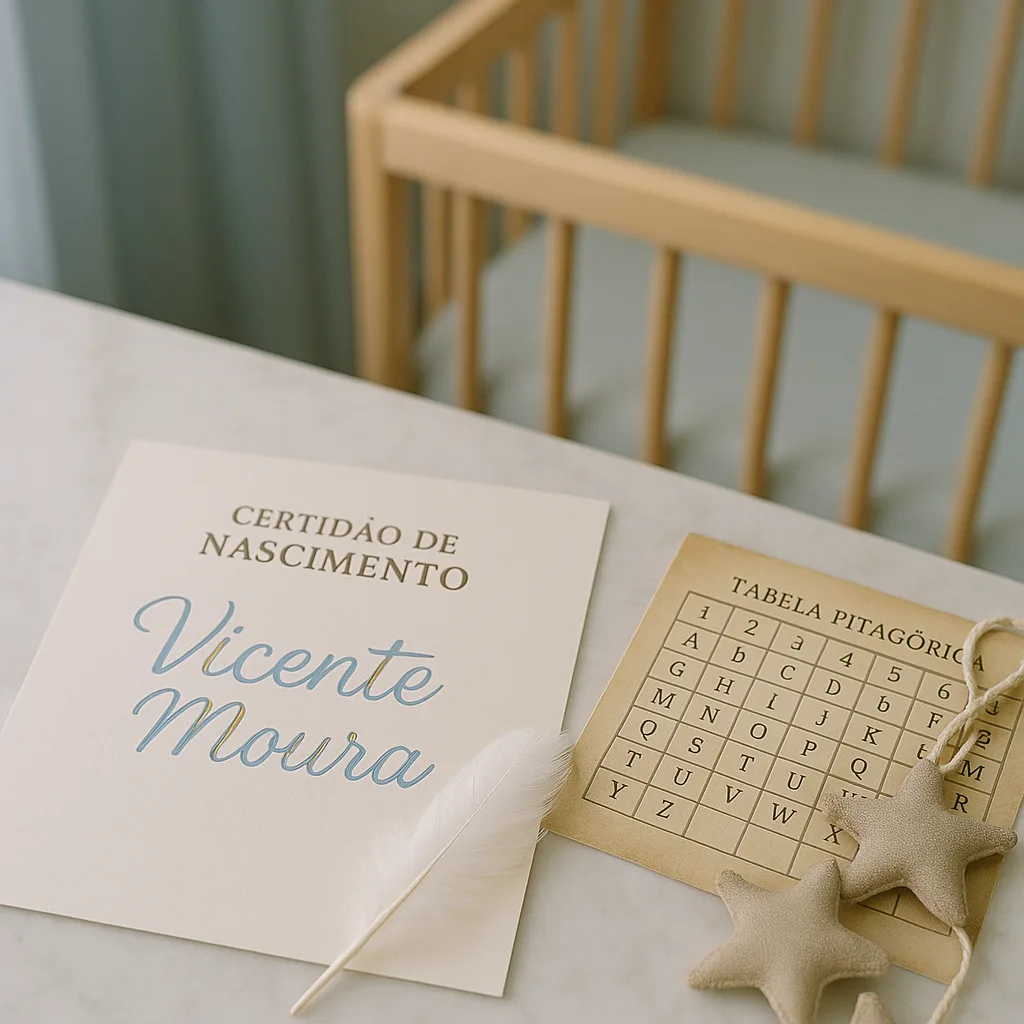
Choosing a baby's name usually involves researching its meaning, honoring family members, and informally testing whether it fits the surname. What almost no one checks before heading to the registry office is the numerology of the chosen combination, specifically the personality number, which comes from the consonants in the full name and indicates the first impression that person will make on others throughout life.
Unlike the soul number (which uses vowels and speaks to inner desire) or the destiny number (which uses the entire name and points to vocation), the personality number works only with the consonantal half of the name. It is the most surface layer, almost a social label: how teachers, coworkers, and acquaintances will perceive this child before actually getting to know them. For those who want to understand how these three numbers relate to each other, it's worth checking the difference between personal number, destiny number, and soul number, which tends to create confusion even among those who have been studying the subject for some time.
Why this matters when choosing a name
A name follows a person in situations she does not choose: being called on in class, in a job interview, presenting in front of a group. The personality number, calculated from consonants, tries to capture what kind of energy that set of letters projects before any real interaction happens.
This does not replace more important criteria, such as how it sounds, ease of pronunciation, or emotional meaning. But for parents who already enjoy looking at symbolic details when choosing a name, it is one more layer of information, and one that usually goes unnoticed because most baby name numerology guides focus only on the destiny number.
The numerology used here follows the Pythagorean system, which assigns numerical values to letters of the Western alphabet. This system is traditionally attributed to Pythagoras and the school that formed around him in ancient Greece, though the practice of linking letters to numbers and extracting symbolic meaning from them has roots in various ancient cultures. The Encyclopaedia Britannica documents how systems of belief linked to stars, numbers, and symbols developed over centuries in different traditions, which helps place numerology as part of a broader symbolic lineage, not as a recent invention.
How to calculate it quickly
The Pythagorean system assigns values of 1 to 9 to the letters of the alphabet:
- 1: A, J, S
- 2: B, K, T
- 3: C, L, U
- 4: D, M, V
- 5: E, N, W
- 6: F, O, X
- 7: G, P, Y
- 8: H, Q, Z
- 9: I, R
For the personality number, ignore the vowels (A, E, I, O, U) and add only the values of the consonants in the full name that will appear on the birth certificate, including surnames from both parents if applicable. Reduce the total by adding the digits together until a single digit remains.
See the step-by-step applied to a real example, using the name Rafael Costa:
- List the consonants in the full name: R, F, L, C, S, T.
- Assign the value of each by the Pythagorean table: R = 9, F = 6, L = 3, C = 3, S = 1, T = 2.
- Add all values: 9 + 6 + 3 + 3 + 1 + 2 = 24.
- Reduce the result to a single digit by adding the digits: 2 + 4 = 6.
- The personality number for Rafael Costa, in this spelling, is 6.
If parents are deciding between Rafael Costa and Rafael Vieira Costa, the result changes, because the second name adds the consonants V, R (from Vieira) to the sum, altering the total before reduction. That is why it is important to calculate the exact version that goes to the civil registry, not an abbreviated version the family plans to use in daily life.
What each number suggests about the impression the name will make
The table below summarizes what each result typically projects socially, according to the Pythagorean numerological tradition:
| Number | Suggested social impression | Example of common perception |
|---|---|---|
| 1 | Natural leadership | Child called to give orders during play |
| 2 | Conciliation | Peer sought when there is conflict in the group |
| 3 | Immediate likability | Makes friends easily |
| 4 | Early responsibility | Teachers describe as trustworthy |
| 5 | Restlessness and curiosity | Asks constantly, cannot sit still |
| 6 | Care for others | Remembered as one who protects younger classmates |
| 7 | Reserve and observation | Takes time to open up with new people |
| 8 | Strong presence and ambition | Ambition that shows through even in child's play |
| 9 | Mature generosity | Sounds more mature than age suggests |
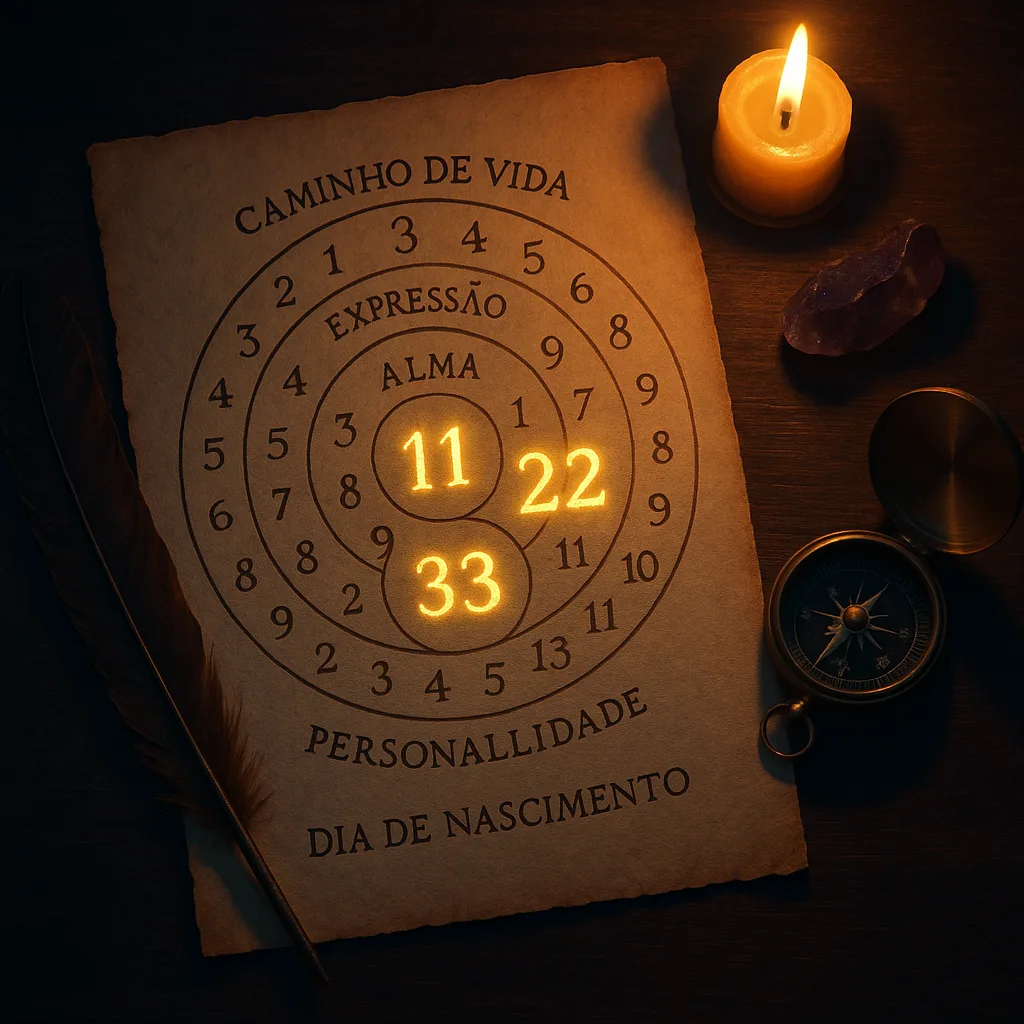
It is worth noting that none of these nine reduced results passes through the master numbers 11, 22, or 33, which in numerology follow their own rule and are not reduced to a single digit. Those interested in understanding why these numbers escape the final sum can see how this exception works in the controversial origin of master numbers, including cases where a baby name sums to exactly 11 or 22 before the final reduction.
Details that change the result
Small spelling choices alter the final number. Choosing Karina instead of Carina, or including both parents' surnames versus registering only one, changes which consonants enter the sum. If the family is in the stage of deciding the exact spelling of the name, this is a good time to test variations and see which combination of numbers makes the most sense for what the parents want to project.
This sensitivity to small spelling variations also appears in other numerological calculations, like the life path number based on birth date. If parents want to compare the baby's personality number with their own life path number, the calculation process is detailed in how to calculate your life path, which uses the birth date instead of the name.
A word of caution: this calculation does not predict the child's actual temperament, which will form through upbringing, environment, and countless factors that no numerological table captures. It speaks only of the symbolic facade the name carries, useful as additional curiosity in the list of criteria, not as a definitive decision about who that person will become.
Frequently asked questions
Does the personality number change if I use a nickname instead of the full name?
Yes. The calculation must use exactly the spelling that will appear on the birth certificate, including surnames. A nickname or shortened version of the name generates different consonants and therefore a different result from the official version registered at the registry office.
What is the difference between a baby's personality number and destiny number?
The personality number uses only the consonants in the name and represents the first social impression the person makes. The destiny number uses the full name, vowels and consonants, and points to a broader vocation or purpose throughout life.
Is there a personality number considered better for a baby's name?
No. Each number from 1 to 9 describes a different type of social impression, not a quality scale. The choice of name should prioritize sound, emotional meaning, and practicality, using numerology as an additional symbolic layer, not as a deciding factor.
Do both parents' surnames enter the personality number calculation?
They should, if that is the full name going into the civil registry. Since the calculation adds all the consonants of the official name, including or not including the mother's and father's surnames directly alters the final result.
Recomendado
Astro Reflexo
Descubra o que os astros revelam sobre quem você é. Em menos de um minuto, calculamos seu Sol, Lua e Ascendente com precisão astronômica e uma inteligência artificial escreve um resumo personalizado só para você.
Universo Astral Editorial Team · Birth charts and numerology
This article was produced by the Universo Astral editorial team, with AI tools assisting research and drafting and human review before publication. If you spot anything inaccurate or outdated, let us know at our contact email.