Soul Number vs Destiny Number: Why You Might Want One Thing But Be Destined for Another
Someone calculates two numbers from their own name and discovers something uncomfortable: they don't match. The soul number speaks of harmony and connection. The destiny number points toward ambition and individual achievement. Which one is right? That question, asked by anyone starting to study numerology seriously, rests on a flawed premise: that only one of the two numbers can be valid. In practice, both coexist, pull in different directions, and according to numerology's own logic, it's exactly that friction that carries meaning.
What each number actually measures (and where the confusion starts)
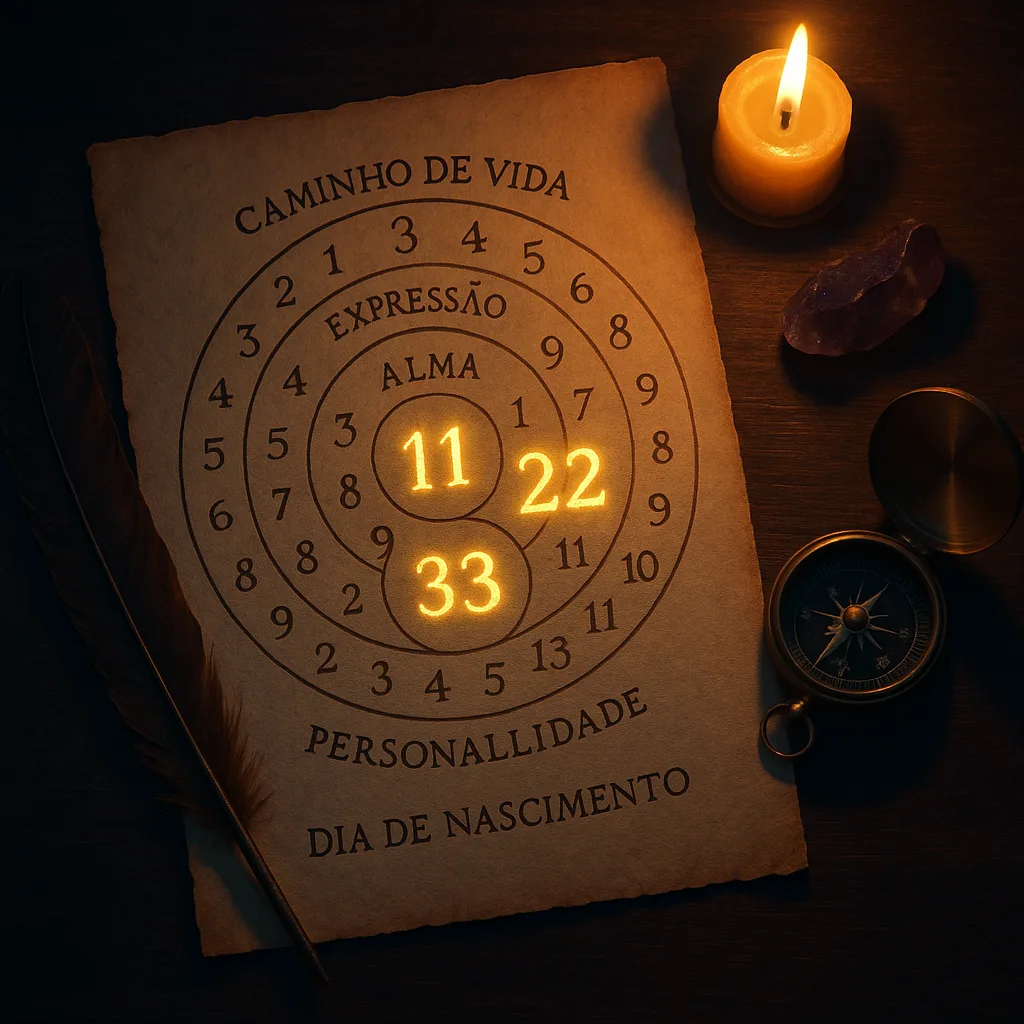
The soul number, also called the Soul Urge or Heart's Desire number, is calculated using only the vowels in a person's full birth name. It describes the motivation underneath someone's choices, what they truly want, even when that want never surfaces in their everyday behavior.
The destiny number, in the Pythagorean tradition most commonly used in Western self-knowledge circles, is calculated from every letter in the full name, vowels and consonants combined. That's why it's described as the complete expression of the name: it represents the talents a person already arrived with, ready to develop, and the direction life naturally pushes them toward.
Here's where a lot of confusion creeps into searches on this topic: in some sources, destiny number gets treated as a synonym for what English-language numerology usually calls the Life Path Number (calculated from the birth date, not the name). In this article, we follow the more common definition used in Pythagorean numerology applied to personal growth: destiny and expression come from the full name. When the calculation uses the birth date instead, the result is the Life Path Number, a topic already covered in detail in our article on how to calculate your life path number.
How to calculate both numbers, step by step
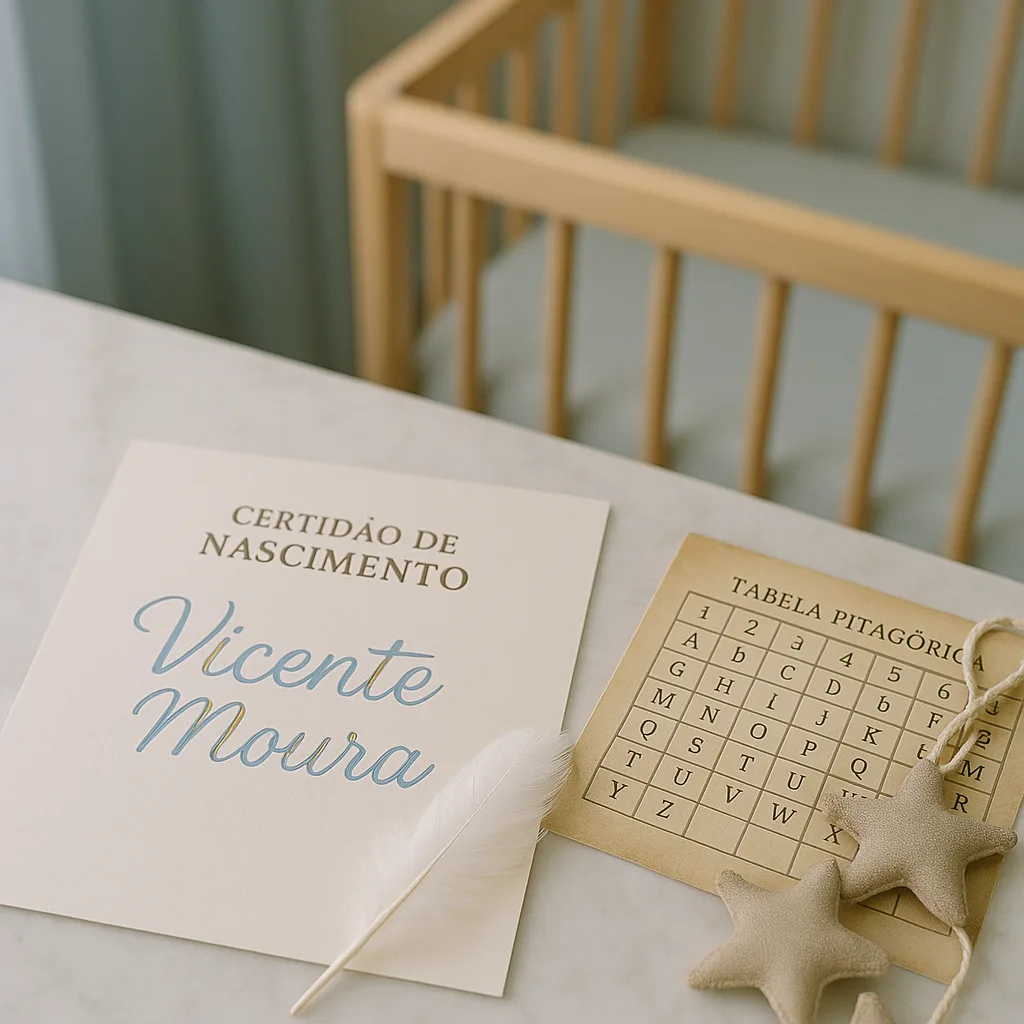
Both calculations use the same letter-to-number conversion chart from the standard Pythagorean system:
| Number | Corresponding letters |
|---|---|
| 1 | A, J, S |
| 2 | B, K, T |
| 3 | C, L, U |
| 4 | D, M, V |
| 5 | E, N, W |
| 6 | F, O, X |
| 7 | G, P, Y |
| 8 | H, Q, Z |
| 9 | I, R |
For the destiny number, you add up the values of every letter in the name and reduce the result to a single digit, keeping 11, 22 or 33 intact if they appear along the way. Here's a worked example using the name John Smith:
- J(1) + O(6) + H(8) + N(5) = 20 (surname John)
- S(1) + M(4) + I(9) + T(2) + H(8) = 24 (surname Smith)
- 20 + 24 = 44
- 4 + 4 = 8, resulting in a Destiny Number 8
For the soul number, you use only the vowels, with A=1, E=5, I=9, O=6, U=3. Here's a worked example using the name Elizabeth Anne Taylor:
- ELIZABETH: E(5) + I(9) + A(1) + E(5) = 20, reduced to 2
- ANNE: A(1) + E(5) = 6
- TAYLOR: A(1) + O(6) = 7
- 2 + 6 + 7 = 15, reduced to 6, resulting in a Soul Urge 6
A Soul Urge 6 points, in this tradition, to a deep longing to nurture, create harmony and take responsibility for the people you love. If that same person's Destiny number pointed to 8, oriented toward material success and authority, the conflict would be obvious: the heart pulls toward caretaking, while the outward expression pulls toward command.
Comparison table: what each number answers
| Number | Calculation basis | What it describes | Question it answers |
|---|---|---|---|
| Soul Number | Only the vowels in the full name | Inner motivations and emotional needs, even ones the person doesn't consciously recognize | What do I actually want? |
| Destiny Number | Every letter in the full name | Talents to develop and the direction life naturally points toward | What am I equipped to do? |
| Personal Number (Personal Year) | Birth day and month added to the current year | A temporary cycle, not a fixed trait, showing the dominant energy of that specific year | What does this year ask of me? |
It's worth noting that the personal number, in the most common interpretation among numerologists, isn't a third personality trait competing with the soul and destiny numbers: it's a cycle that renews each year, as explained in our article on how to calculate your personal year and the 9-year cycle. Mixing up these three concepts is a common beginner mistake.
When soul and destiny point in opposite directions
Numerology tradition typically frames the difference this way: the destiny number is the talent someone carries ready to use, while the soul number is the direction the heart runs toward, even when that direction brings no money, recognition or status.
Someone with a Soul Urge 2, marked by a need for connection and partnership, paired with a Destiny 8, geared toward ambition and authority, tends to feel a specific kind of tension: the professional world rewards individual advancement, but what truly satisfies them is collaborating and belonging to something collective. Meanwhile, someone with a Soul Urge 9, tied to service and a sense of universal belonging, combined with a Destiny 1, oriented toward independence and self-direction, may feel torn between the urge to care for others and the need to walk their own path without depending on anyone.
A common mistake, according to this same body of thought, is assuming the soul number IS someone's destiny, as if it were a fixed sentence dictating who they must become. The Soul Urge reveals motivation, not a predetermined path. Treating it as prophecy is the kind of fatalistic reading that numerology itself, as a symbolic system of self-knowledge, doesn't actually support.
How to handle the mismatch in practice
Numerology literature commonly suggests using both numbers not as strict rules to follow, but as prompts for self-reflection. A few practical approaches that come up often:
- Use the Destiny number as a roadmap of skills to develop at work and in public life, without abandoning what the Soul Urge asks for in terms of emotional fulfillment.
- Notice which areas of life the conflict shows up most strongly, whether career, relationships or daily routine, and treat that as a map of where to adjust smaller choices.
- Recognize that tension between the two numbers usually points to where the greatest room for growth lies, not a calculation error to be fixed.
Anyone who feels their Soul Urge pulling one way while their current routine leaves no room for it, say a Soul 3 (creativity) stuck in repetitive work, tends to report feelings of burnout or disconnection. In that case, the number doesn't solve the problem on its own, but it helps name where the discomfort comes from. This kind of reading echoes what's already been discussed in our article on the soul number and the difference between success and a sense of fulfillment.
It's worth noting where this system comes from: Pythagorean numerology traces back to Pythagoras, the Greek philosopher from the 6th century BCE about whom little is known with certainty, and has roots in isopsephy, a practice that assigned numerical values to letters and words during the Hellenistic period. The modern format of the life path number and expression number as we know them today, however, is much more recent: it was consolidated in the late 19th century by L. Dow Balliett, who combined Pythagorean ideas with biblical references and the New Thought movement. The International Astronomical Union and other scientific bodies don't recognize numerology as a discipline with empirical grounding, and the Encyclopaedia Britannica entry on numerology describes this very history as a symbolic and cultural practice, not a science.
Frequently Asked Questions
Can the soul number and destiny number be the same number?
Yes, this happens when the sum of the vowels and the sum of all the letters in the name reduce to the same final digit. When that occurs, numerology tradition describes a life with less friction between inner motivation and outward talent, but it isn't the general rule.
What should you do when your soul number and destiny number are very different?
The most common advice is not to pick one over the other, but to use the destiny number as guidance for skills to develop and the soul urge as a compass for what brings emotional satisfaction. The conflict between the two usually points to the area of life that needs the most attention and adjustment.
Is the destiny number the same thing as the life path number?
No, though many people mix up the two. The destiny number is calculated from the full birth name, while the life path number comes from adding up the birth date. They're different calculations, built on different foundations, and can even point to different numbers for the same person.
Which number matters more, the soul number or the destiny number?
Numerology literature doesn't rank one above the other: they're described as different layers of the same map. The destiny number speaks to what a person is equipped to do, the soul number speaks to what they truly want, and understanding both together usually brings more clarity than picking just one.

Recomendado
MAPA ASTRAL E NUMEROLÓGICO PERSONALIZADO
Mapa Astral + Numerologia Um mergulho profundo na sua essência. E se tudo o que você procura… já estivesse dentro de você - esperando para ser revelado?
Universo Astral Editorial Team · Birth charts and numerology
This article was produced by the Universo Astral editorial team, with AI tools assisting research and drafting and human review before publication. If you spot anything inaccurate or outdated, let us know at our contact email.