Life Path Number in Numerology: How to Calculate Your Number
A sum that fits in the palm of your hand
Take your complete birth date, add all the digits together, and reduce the result to a single number. It's a straightforward calculation, the kind any elementary school student can solve, and this simple gesture has been at the heart of Pythagorean numerology for centuries. The number left over at the end of this process is called, in most popular sources, the Life Path Number, also known as the Destiny Number. This article focuses on just that.
Pythagorean numerology traces back to the school founded by Pythagoras in Ancient Greece, which associated numbers with qualities and patterns of the universe. The encyclopedia Britannica contains entries on the history of astrology and the zodiac that help place how ancient symbolic systems, based on observation of cycles and numerical correspondences, influenced self-knowledge practices that persist today, including numerology.
Before going further, an important clarification is needed: the term personal number is used in two different ways within numerology, which confuses even those who have studied the subject for some time. There is the fixed number, calculated only once using your complete birth date, which is the focus of this article. And there is the Personal Year, which changes every year and follows a cycle of nine phases. These are distinct concepts, with different calculations and purposes. For those wanting to understand this difference in detail, it's worth reading the article comparing personal number, destiny number, and soul number. We'll detail the first one here and explain, at the end, how it relates to the second.
What the Life Path Number claims to reveal
In popular numerology sources, the Life Path Number is treated as the most influential number in your numerological chart, something like the backbone of your personality. The promise is broad: it would indicate your natural talents, the challenges you tend to face as you mature, the most favorable moments to act, and how you typically relate to others. It's symbolic and motivational discourse, in the style of self-knowledge systems, not a formula of scientific precision. Keep this in mind when interpreting any result.
A numerologist cited in reports on the subject sums up this caution well: the Life Path Number doesn't change over a lifetime, but the way each person lives out that energy shifts year after year. Numerology in this sense works less like a sealed prophecy and more like an invitation to observe patterns, a tool for guidance rather than automatic prediction.
Step by step: how to calculate yours
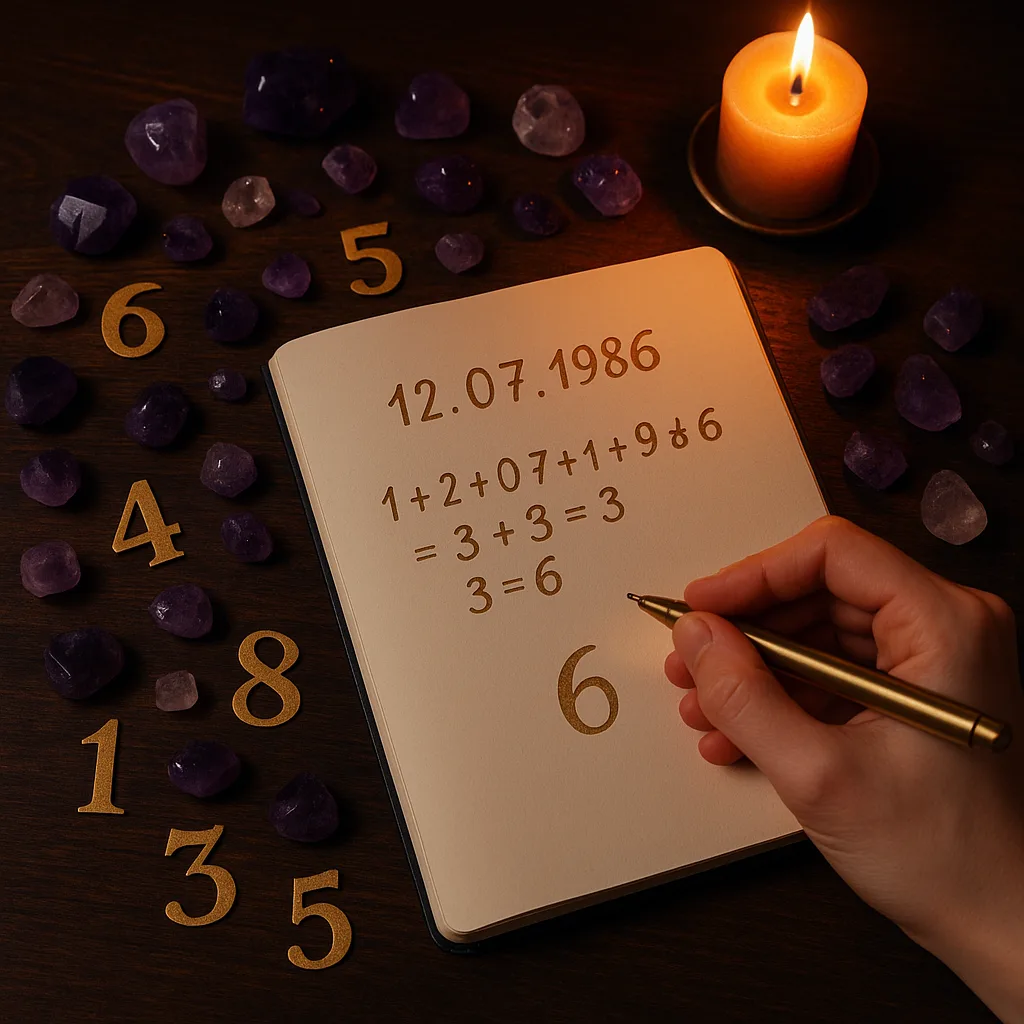
The traditional method, also called Pythagorean, follows a fixed sequence of steps. See the complete walkthrough, with a worked example:
- Write your complete birth date in day, month, and year format. Example: April 23, 1981, or 23/04/1981.
- Add all the digits one by one, without separating day, month, or year: 2+3+0+4+1+9+8+1 = 28.
- If the result has more than one digit, add those digits again: 28 becomes 2+8 = 10.
- Repeat the process until you reach a number between 1 and 9, or until you find 11, 22, or 33: 10 becomes 1+0 = 1.
- The final result is that person's Life Path Number. In the example, the Life Path Number is 1.
There is also a more elaborate variant, called by some schools the Three Cycles Method. In it, the day, month, and year of birth are each reduced separately to a single number (or master number), and only then are the three partial results added together and reduced again to the final number. It's a longer path that usually arrives at the same destination, but some numerologists prefer this method because it also allows them to observe the three life cycles (youth, maturity, and old age) separately.
The numbers that break the rules: 11, 22, and 33
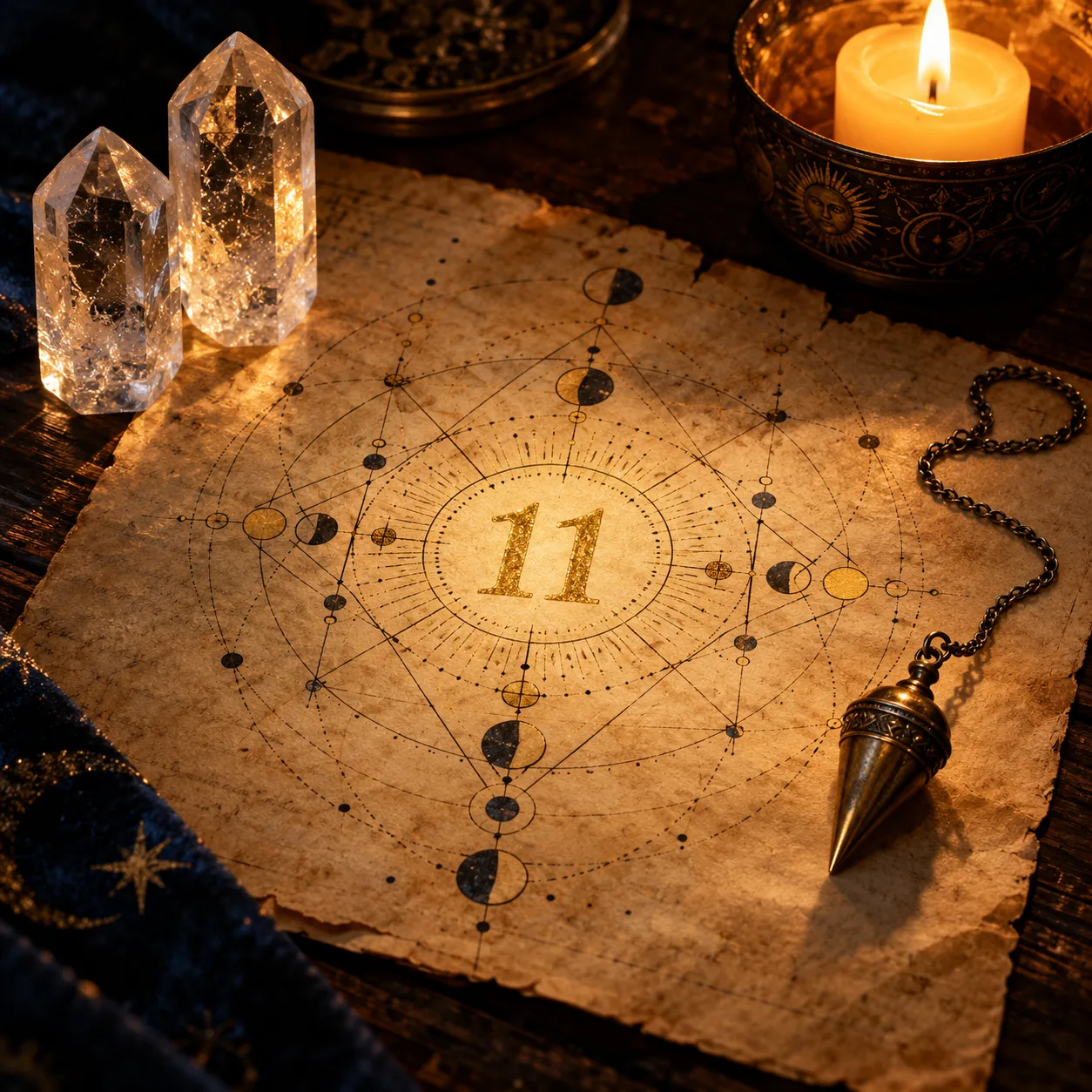
There is an important exception in this reduction process: when the sum, at any point in the calculation, results in 11, 22, or 33, most numerology schools recommend not reducing these numbers to a single digit. They are called master numbers and carry, according to tradition, a more intense and also more challenging spiritual significance: 11 associated with intuition and amplified sensitivity, 22 with the potential to build something of great practical reach, and 33 with a calling for care and service to others. The article about the controversial origins of master numbers details where this divergence between traditions comes from.
A note: not all schools agree on all three. Some calculators and numerology systems, like Astro-Seek, recognize only 11 and 22 as master numbers, leaving 33 out or treating it as less consensual. If you calculate your number and get one of these values in one version and a simple number in another, it's not an error: it's just a reflection of different schools within the same field of study. Anyone with a master number in their Life Path and feels that energy weighs more than helps can find another perspective in the article about the heavy side of master numbers.
A quick overview of each number
Each result between 1 and 9 (plus the master numbers) carries, in numerology literature, a summary of temperament and purpose. The table below organizes these associations in condensed form:
| Number | Central Theme | Associated Characteristics |
|---|---|---|
| 1 | Initiative | Independence, energy of breaking new ground |
| 2 | Cooperation | Sensitivity, talent for mediating and building bridges |
| 3 | Expression | Creativity, communication that seeks to inspire those around you |
| 4 | Structure | Discipline, calling to build something solid and lasting |
| 5 | Movement | Freedom, curiosity that rarely settles down |
| 6 | Care | Emotional responsibility, strong connection to family and community |
| 7 | Introspection | Search for meaning, inclination toward deep analysis |
| 8 | Ambition | Personal power, talent for dealing with material and management matters |
| 9 | Generosity | Broad vision, calling to close cycles and serve the collective |
| 11 | Master Number | Intuition and amplified sensitivity |
| 22 | Master Number | Potential to build something of great practical reach |
| 33 | Master Number | Calling for care and service to others |
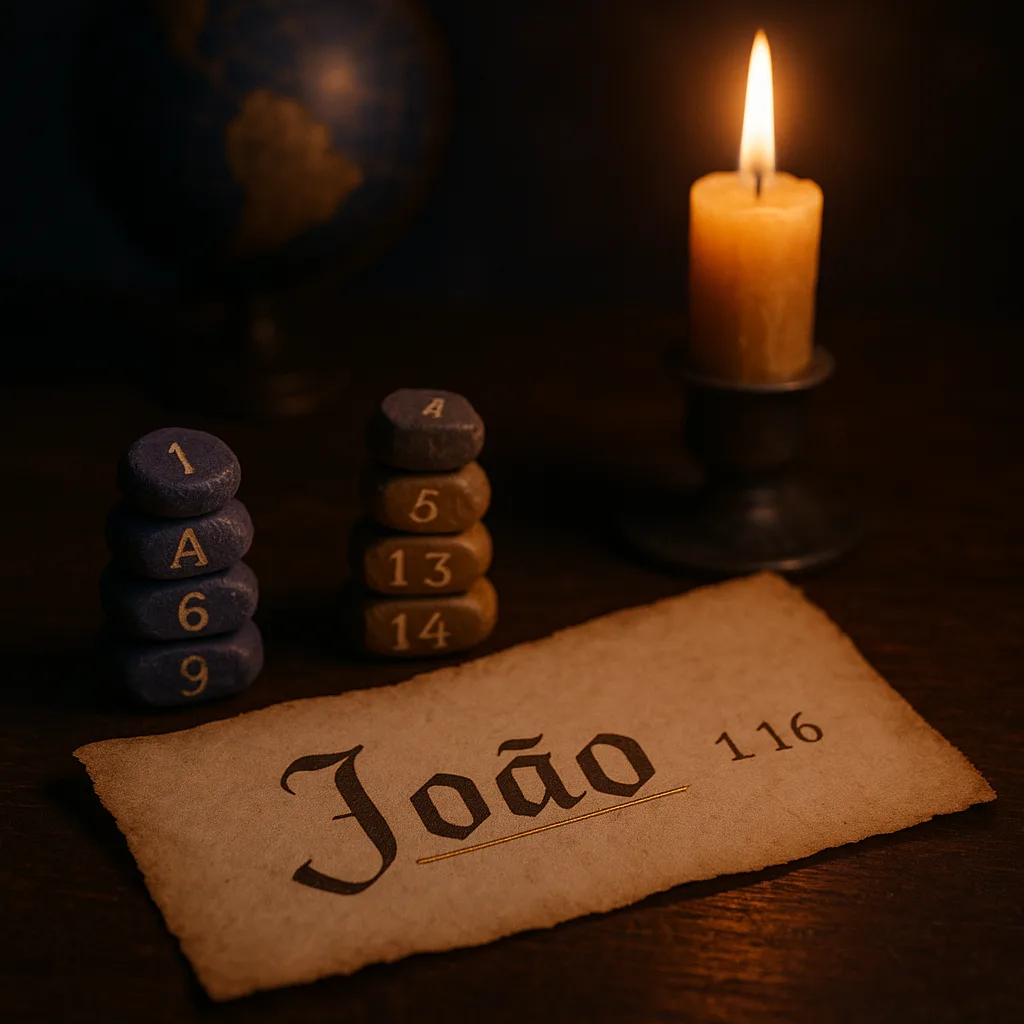
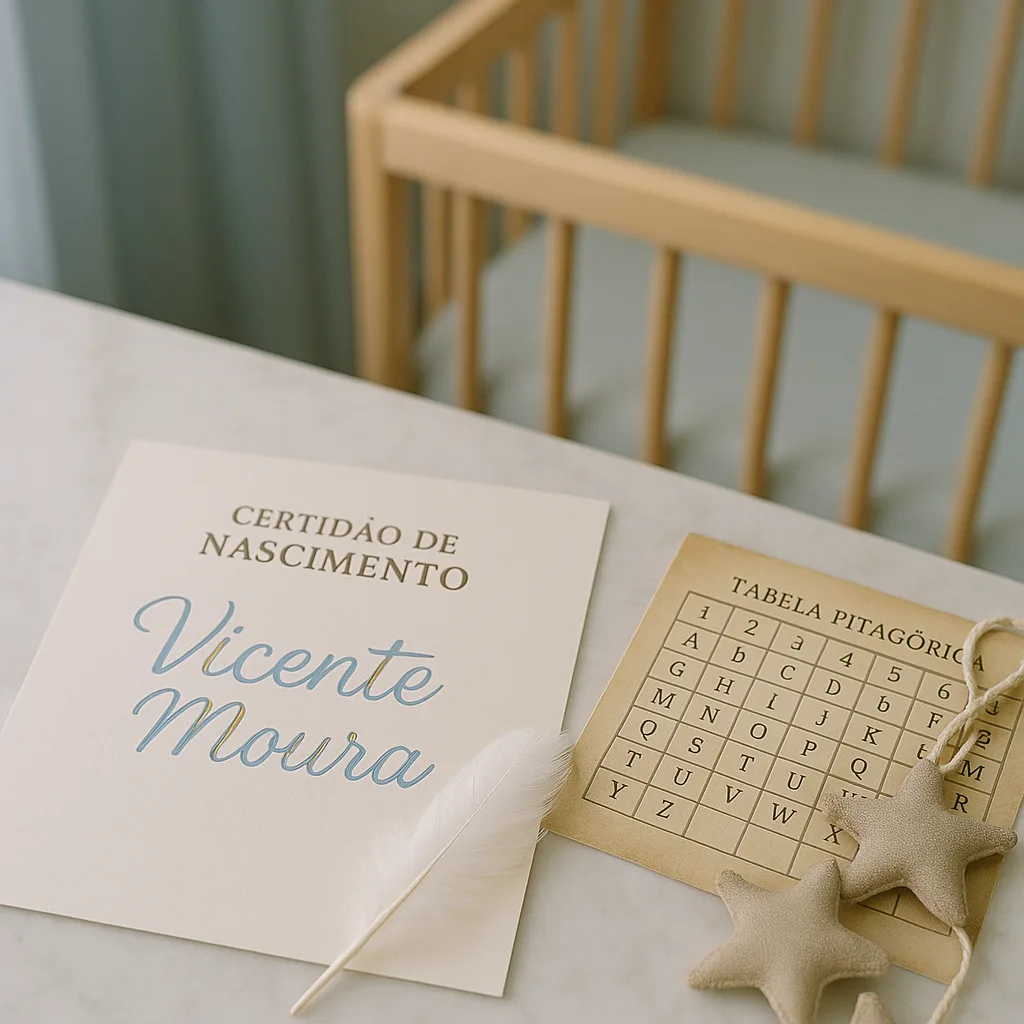
These descriptions function as a starting point, not as a closed verdict. The interpretation gains depth when crossed with other elements of your numerological chart, such as your name number, calculated from the values assigned to each letter by the Pythagorean table, and your soul number, which deals more with your inner desire than your external calling, a topic explored in the article about the soul number.
Why not confuse it with your Personal Year
Unlike the Life Path Number, calculated only once and permanent for your entire life, the Personal Year changes every year and follows a cycle of nine phases that repeats continuously. It's calculated by adding your birth day and month to the current year. For example, someone born on March 8 would, for the year 2026, add 8 (day) + 3 (month) + 10 (the result of 2+0+2+6), arriving at 21, then 2+1, resulting in 3.
One more note: numerologists disagree on when this cycle actually begins. One school of thought holds that the Personal Year only takes effect starting from your birthday; someone with a May birthday, for example, would still be under the energy of the previous year until that date. Another school prefers to follow the calendar year, from January to December, aligning the calculation with the so-called Universal Year, a number that governs the collective during that year and is also obtained by summing the digits of the calendar year. There is no closed consensus on which approach is correct: it's a difference in method between schools, not a calculation error. Anyone wanting to dive deeper into the detailed calculation of this nine-phase cycle can consult the article on discovering where you are in the 9-year cycle.
What to do with this number in practice
Having the calculation result in hand is just the beginning. The value of this tool lies in observing, over time, whether the characteristics associated with your number speak to your own experiences: the moments when the courage of 1 showed up, or when the introspection of 7 demanded space. Many practitioners recommend noting these observations over several months before drawing conclusions, treating the number less as a fixed label and more as a recurring invitation to self-examination. This more patient and less anxious use of numerology tends to bring the most interesting discoveries, not the search for an immediate answer, but the habit of revisiting your number at different phases of life and noticing what it still has to tell you.
Frequently asked questions
What's the difference between Life Path Number and Destiny Number?
In most popular numerology sources, they are the same number: both terms refer to the result obtained by adding all the digits of your complete birth date, reduced to a single digit (or a master number). The difference is only in the name used by each author or school.
Does the Life Path Number change over time?
No. The Life Path Number is calculated only once, from your birth date, and stays the same throughout your entire life. What changes every year is your Personal Year, which follows its own cycle of nine phases and is a different calculation made by adding your birth day and month to the current year.
Why aren't 11, 22, and 33 reduced like other numbers?
Because most numerology schools treat them as master numbers, considered to carry a more intense and more challenging spiritual significance than the numbers 1 through 9. It's worth noting that not all traditions agree on all three: some recognize only 11 and 22 as master numbers, leaving 33 out.
Is it possible to have more than one Life Path Number over your lifetime?
No, because the calculation uses your complete birth date, which doesn't change. What can vary is how you live out that energy at different stages, something that, according to numerological tradition, is more tied to your Personal Year than to your Life Path Number itself.
Recomendado
Astro Reflexo
Descubra o que os astros revelam sobre quem você é. Em menos de um minuto, calculamos seu Sol, Lua e Ascendente com precisão astronômica e uma inteligência artificial escreve um resumo personalizado só para você.
Universo Astral Editorial Team · Birth charts and numerology
This article was produced by the Universo Astral editorial team, with AI tools assisting research and drafting and human review before publication. If you spot anything inaccurate or outdated, let us know at our contact email.