Dasha Mahadasha: How to Calculate the Great Planetary Cycles That Rule Your Life
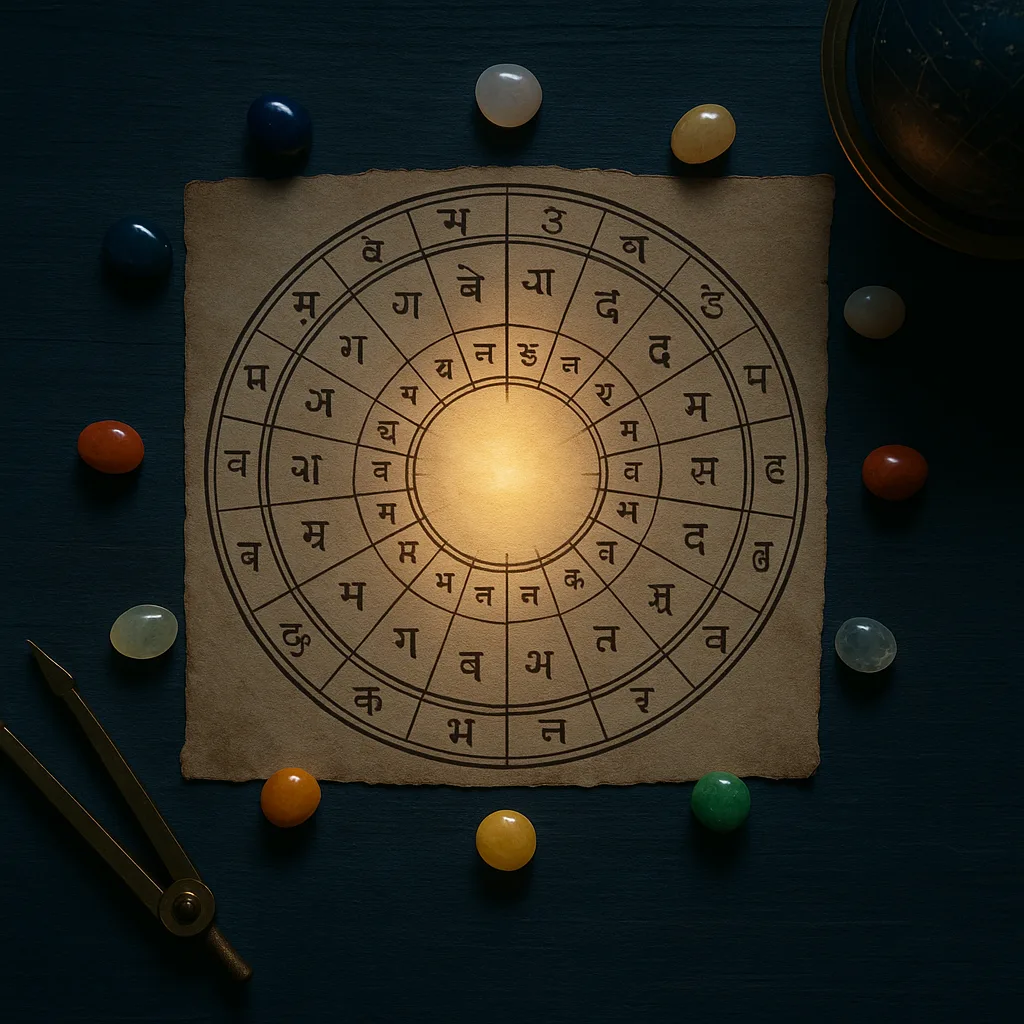
Every Vedic chart carries a hidden timeline inside it. It starts ticking the instant you're born and is divided into blocks of years, each ruled by a different planet, in an order that never changes. This system is called Vimshottari Dasha, and it's probably the most widely used tool among Jyotish astrologers for answering a simple question: what phase of life am I in right now, and which planet is running the show?
Unlike planetary transits in Western astrology, which look at where the planets are today in the sky, Mahadasha looks at a single fixed moment: the position of the Moon at the exact instant you were born. From there, the tradition projects a sequence of periods that theoretically covers the full 120 years of a lifetime. This article walks through the formula used to work out that sequence and pinpoint which Mahadasha is active in your life right now.
Where the Vimshottari system comes from
Astrological tradition credits the sage Parashara with systematizing this method, and it appears described in the Brihat Parashara Hora Shastra, one of the most cited classical texts of Jyotish. There's no academic consensus on the exact dating of this text in its current form, but tradition treats it as the original source of the dasha system still used today.
The word Vimshottari means, in Sanskrit, something like one hundred twenty, a direct reference to the total length of the cycle: 120 years, which tradition considers the ideal span of a human life in the Kali Yuga. According to Britannica, Indian astrologers expanded the already complex methodology inherited from Hellenistic astrology by making nakshatras central to their calculations, and by developing dozens of different dasha systems and sub-periods known as antardashas. This blend of influences is no accident: ideas from Mesopotamian omen astrology reached India as early as the 5th century BCE, and Greek astrology spread through the subcontinent in the 2nd and 3rd centuries CE, where it was adapted to the local nakshatra system and the nine celestial bodies called navagrahas.
The result is a hybrid system, but one with an extremely precise, almost mathematical internal logic, which is exactly what allows anyone's Mahadasha to be calculated with accuracy, as long as you have the right starting data.
The nine planets and the fixed length of each Mahadasha
The 120-year cycle is split among nine rulers: the seven classical planets (Sun, Moon, Mars, Mercury, Jupiter, Venus and Saturn) plus the two lunar nodes, Rahu and Ketu, which in Jyotish function as mathematical points carrying their own planetary weight. If you're not yet familiar with what these nodes represent in the chart, it's worth reading about Ketu and Rahu in Vedic astrology before moving forward.
The order of these nine rulers is always the same, never reversed and never skipping a planet. What changes from person to person isn't the sequence or the length of each block, but the exact point at which the timeline starts running at each individual's birth.
| Planet | Mahadasha Length |
|---|---|
| Ketu | 7 years |
| Venus | 20 years |
| Sun | 6 years |
| Moon | 10 years |
| Mars | 7 years |
| Rahu | 18 years |
| Jupiter | 16 years |
| Saturn | 19 years |
| Mercury | 17 years |
Added together, these nine blocks total exactly 120 years. If someone were to live longer, the cycle would simply restart at Ketu, repeating the whole sequence from the beginning.
The formula: how the Moon's nakshatra sets your first Mahadasha
Here's the technical core of the system. The sidereal zodiac used in Jyotish is divided into 27 nakshatras, each spanning exactly 13°20' of arc. Every nakshatra has a fixed planetary ruler, and this sequence of nine rulers repeats three times across the 27 divisions (27 divided by 9 gives exactly three full rounds). The first nine nakshatras already show the pattern: Ashwini belongs to Ketu, Bharani to Venus, Krittika to the Sun, Rohini to the Moon, Mrigashira to Mars, Ardra to Rahu, Punarvasu to Jupiter, Pushya to Saturn and Ashlesha to Mercury. At the tenth nakshatra, Magha, the cycle starts over and Ketu rules again.
The rule is straightforward: the planet ruling the nakshatra where the Moon sat at the exact moment of birth is the planet that opens that person's first Mahadasha. If you don't yet know your lunar nakshatra, the article on the 27 lunar constellations used by Jyotish explains in detail how each one is defined.
But there's a detail most content on this topic overlooks: to find the right nakshatra, you need the sidereal longitude of the Moon, not the tropical one. The gap between the two zodiacs is called the ayanamsa, and it exists because sidereal astrology corrects for the precession of the equinoxes, something the tropical zodiac used in the West doesn't account for. The ayanamsa most widely adopted in Jyotish is the Lahiri, also called Chitrapaksha, made official by the Indian government in the 1950s. Today the gap between the two zodiacs sits at around 24 degrees, which already explains why many people find a different sun sign when they calculate their chart using the Vedic system. If this topic interests you, it's worth reading further on why your sign changes in Vedic astrology.
Step-by-step: calculating your current Mahadasha
With the concepts above in place, the calculation follows a logical sequence. Here's the full process, from your birth data to today's date.
- Get the exact sidereal position of the Moon at birth. This requires an accurate birth time and software or an ephemeris that applies the ayanamsa (preferably Lahiri), not a standard tropical astrology app.
- Find which of the 27 nakshatras that Moon fell into. Simply divide the Moon's sidereal longitude (from 0° to 360°) by 13°20' to locate which of the 27 slices of the zodiac it lands in.
- Identify the ruling planet of that nakshatra using the fixed sequence described above. That planet is the Mahadasha that opens the person's timeline.
- Calculate the balance of the first Mahadasha. Since it's rare for anyone to be born exactly at the start of a nakshatra, a fraction of that first period was already symbolically used up before birth. You calculate how many arc-minutes the Moon had already traveled within the current nakshatra, divide by the total of 800 arc-minutes (equivalent to 13°20'), and multiply that fraction by the ruling planet's total years. The result is the balance, in years, months and days, remaining of that first Mahadasha from birth onward.
- Add the following periods in the fixed order of the nine planets, always using each one's full length, starting from the end of the first Mahadasha's balance.
- Locate today's date within that timeline by adding up the birth date, the initial balance and the subsequent complete Mahadashas, until you find the interval that today's date falls into. The planet ruling that interval is the current Mahadasha.
A worked example
Imagine someone's natal Moon was at 5° within the nakshatra Rohini, ruled by the Moon (Rohini spans from 40° to 53°20' in the sidereal zodiac, so 5° into it means a total sidereal longitude of 45°). Since Rohini is ruled by the Moon, this person's opening Mahadasha is the Moon's, with a total length of 10 years. Since the person had already covered 5° of the nakshatra's 13°20', there are 8°20' left, equal to 500 of the 800 total arc-minutes, or 62.5% of the nakshatra still remaining. Applying that fraction to the Moon Mahadasha's 10 years leaves 6 years and 3 months of Moon remaining from birth. After that balance runs out, the sequence moves straight to Mars (7 years), then Rahu (18 years), Jupiter (16 years), and so on, always in the fixed order, until the full 120 years are accounted for.
What Mahadasha isn't (and where it connects to other Vedic calculations)
It's worth keeping the concepts separate: Mahadasha is the larger period, but within it sits the antardasha, a sub-period ruled by another planet, and within the antardasha sits an even finer subdivision called the pratyantardasha. This article deals exclusively with calculating the Mahadasha; the details of how to calculate the sub-periods are covered in the article on antardasha in Vedic astrology, worth reading next if you already know your current Mahadasha and want to understand the finer layer within it.
Another important point: figuring out the start and end date of a Mahadasha is an objective calculation, based on simple geometry and arithmetic. Interpreting what that period actually means, though, depends on how the ruling planet sits in the person's natal chart, meaning which house it occupies, what aspects it forms with other planets, and whether it's strengthened or weakened. That's why Jyotish tradition never treats Mahadasha as a fixed sentence, but as a thematic window governed by that specific planet.
Vimshottari isn't the only dasha system used in Jyotish, just the most widespread. The table below places two other systems often cited by Vedic astrologers, for context.
| Dasha System | Total Cycle Length | Calculation Basis |
|---|---|---|
| Vimshottari Dasha | 120 years | Natal lunar nakshatra, 9 rulers |
| Yogini Dasha | 36 years | Also derived from the lunar nakshatra, with 8 distinct rulers (Yoginis) |
| Char Dasha (Jaimini tradition) | Variable, no fixed 120-year total | Strength and position of the signs (rashis) in the natal chart |
Vimshottari is considered the universal system, used as the standard reference by Jyotish practitioners, while the others show up more in regional lineages or for addressing specific chart questions.
An exercise using a real astronomical event
To make the calculation more concrete, it helps to use a verifiable astronomical event as a teaching reference. The Full Moon of September 2026, according to NASA's ephemeris catalog, peaks in illumination at 4:49 PM UTC on September 26, 2026, making it the Full Moon closest to the autumn equinox in the northern hemisphere, which earns it the traditional nickname Harvest Moon, as described on NASA's science website. At that exact instant, the Moon will also be positioned in a specific sidereal nakshatra. Technically, for anyone born at that precise minute, that nakshatra would determine the planet opening their first Mahadasha of life. This isn't a prediction about anyone in particular, just a way of showing that every lunar event, however popular in the Western calendar, also carries a parallel reading within the Vedic sidereal system.
Frequently Asked Questions
How do I calculate my current Mahadasha?
You need to know the exact sidereal position of the Moon at birth (with the Lahiri ayanamsa applied), identify the corresponding nakshatra, find its ruling planet and calculate the balance of the first Mahadasha based on the fraction of the nakshatra already covered. From there, you add the following Mahadashas in fixed order until reaching today's date.
What is the order of the Mahadashas in Vedic astrology?
The fixed order of the Vimshottari cycle is: Ketu, Venus, Sun, Moon, Mars, Rahu, Jupiter, Saturn and Mercury, with lengths that add up to exactly 120 years. This sequence never changes, no matter which planet opens a given person's cycle.
How long does each Mahadasha last?
Each planet has a fixed length within the total cycle: Ketu 7 years, Venus 20, Sun 6, Moon 10, Mars 7, Rahu 18, Jupiter 16, Saturn 19 and Mercury 17. These lengths are the same for everyone; what changes is only the entry point into the cycle.
Why do I need my exact birth time to calculate my Mahadasha?
Because the Moon moves quickly through the zodiac, about 13 degrees a day, which is almost an entire nakshatra. An error of just a few hours in birth time can place the Moon in a different nakshatra and completely change the ruling planet of the first Mahadasha.
What's the difference between Mahadasha and Antardasha?
Mahadasha is the larger period, ruled by a single planet over several years. Antardasha is a sub-period within it, ruled by another planet in the sequence, adding nuance to that larger phase. The specific calculation for sub-periods is covered in the site's article on antardasha.
Recomendado
Astro Reflexo
Descubra o que os astros revelam sobre quem você é. Em menos de um minuto, calculamos seu Sol, Lua e Ascendente com precisão astronômica e uma inteligência artificial escreve um resumo personalizado só para você.
Universo Astral Editorial Team · Birth charts and numerology
This article was produced by the Universo Astral editorial team, with AI tools assisting research and drafting and human review before publication. If you spot anything inaccurate or outdated, let us know at our contact email.