Juno in the Birth Chart: The Asteroid That Reveals Your Commitment Pattern
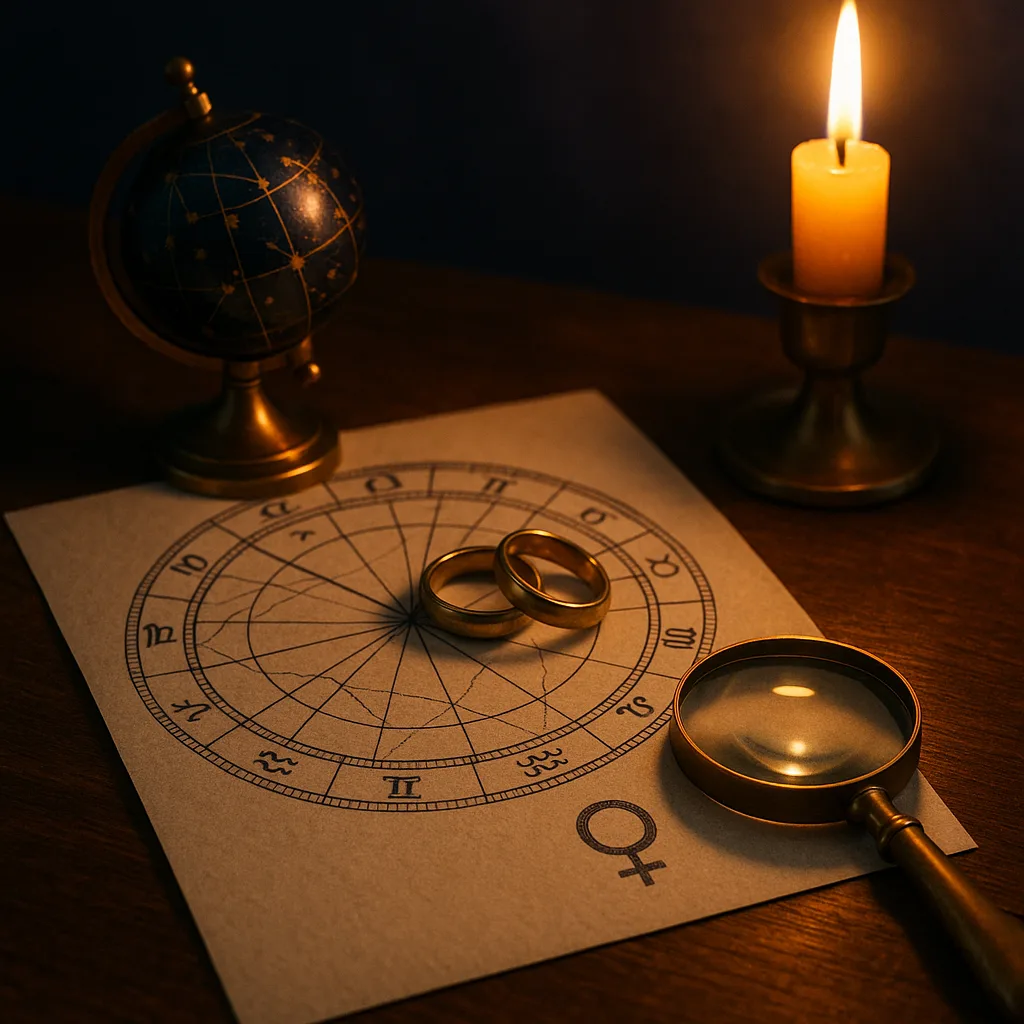
On July 26, 2026, the asteroid (3) Juno reaches opposition with the Sun, becoming visible in the constellation Aquila, the Eagle. It is a real astronomical event, tracked by observatories, but the Juno that matters to astrology is not the rock orbiting in the asteroid belt between Mars and Jupiter. It is the symbol that carries her name: the Roman goddess of marriage, built into the birth chart as an indicator of how each person lives, understands and sustains a commitment.
While other articles on love and astrology have already explored the roles of Venus, the North Node and synastry between two charts, Juno occupies her own specific territory: she doesn't speak about attraction or karmic lessons, she speaks about the contract. About what makes someone feel treated as an equal, or the opposite, within a relationship meant to last.
Who Juno is and why she became a symbol of marriage
Juno was the third asteroid ever discovered, identified in 1804 by German astronomer Karl Harding at the Lilienthal observatory. She joined a select group: Ceres (1801), Pallas (1802), Juno (1804) and Vesta (1807) were, for decades, the only known asteroids, until new discoveries began multiplying after 1845. Orbitally, Juno is a sizable rocky body, taking roughly 4.37 years to complete one trip around the Sun, according to data compiled by the ephemeris site in-the-sky.org, which also lists the 2026 opposition as an observable event.
The name wasn't chosen at random. In Roman mythology, Juno was the supreme goddess, wife of Jupiter and the direct counterpart of the Greek Hera. According to the Encyclopaedia Britannica, Juno was connected to nearly every aspect of women's lives, with special emphasis on married life. The World History Encyclopedia reinforces this role: she protected the Roman nation as a whole, but also watched closely over marriage, blessing it and, symbolically, legitimizing it (source: worldhistory.org).
It's this mythological layer that astrology draws on. The point isn't to predict an actual marriage, but to use the image of the goddess who presided over unions to name a well-defined psychological territory: what each person understands as fair commitment, and what makes them feel respected or betrayed within it.
The difference between Venus and Juno (and why it changes your chart reading)
It's common to mix the two up, since both come up in discussions about love. But they answer different questions. Venus shows how a person feels attraction, what they value aesthetically, how they flirt and express affection. If you've read about your Venus sign and its role in how you love, you know it speaks to the beginning, the spark.
Juno comes in afterward. She explains what sustains the relationship once the initial excitement has worn off: what a person needs to feel in order to consider a bond fair, reciprocal and worth staying in. Where Venus explains why two people come together, Juno explains what keeps them together, or what makes one of them feel like a secondary piece in the partnership.
An important editorial note: Juno is not a classical significator of spouse in the Hellenistic tradition. The use of asteroids in astrology is a recent development, from the 20th century, not an ancient technique. That doesn't make the reading less interesting, but it does mean it should be treated as a modern symbolic layer, not as proof that a marriage will or won't happen.
Where Juno fits among the astrological factors of love
This site has already covered several chart points tied to relationships, and each one answers a different question. The table below organizes these layers to show exactly where Juno fits:
| Astrological factor | What it reveals about love | Nature of the point |
|---|---|---|
| Venus (natal sign) | How a person loves, their style of affection and aesthetic values | Classical planet |
| North Node | The direction a person's romantic growth is invited to take | Mathematical point, not a physical body |
| Descendant / 7th House | What kind of partner a person attracts and the other's role in the chart | Chart angle |
| Juno | Specific pattern of commitment, loyalty and what is sought in a lifelong partnership | Asteroid, discovered in 1804 |
Anyone who has already compared two charts using the method described in astrological compatibility and synastry can add Juno as another layer: contacts between one person's Juno and another's Sun, Moon, Venus or Descendant show up, according to the consolidated reading among asteroid astrologers, fairly often in charts of couples who committed long term. That's no guarantee of anything, just one more thread in the symbolic weave.
How to calculate Juno's position in your birth chart
Juno doesn't appear in charts generated with just a birth date, without time and location, because her position shifts fast enough to change degree, and sometimes sign, within a few days. The process is simple, but requires some care:
- Gather the exact date, time and city of birth. Without a precise time, the house where Juno falls can be wrong.
- Use a birth chart program that includes asteroids as an extra option. Most free online generators already offer Juno (symbol ⚵), since she has appeared in ephemerides since 1973.
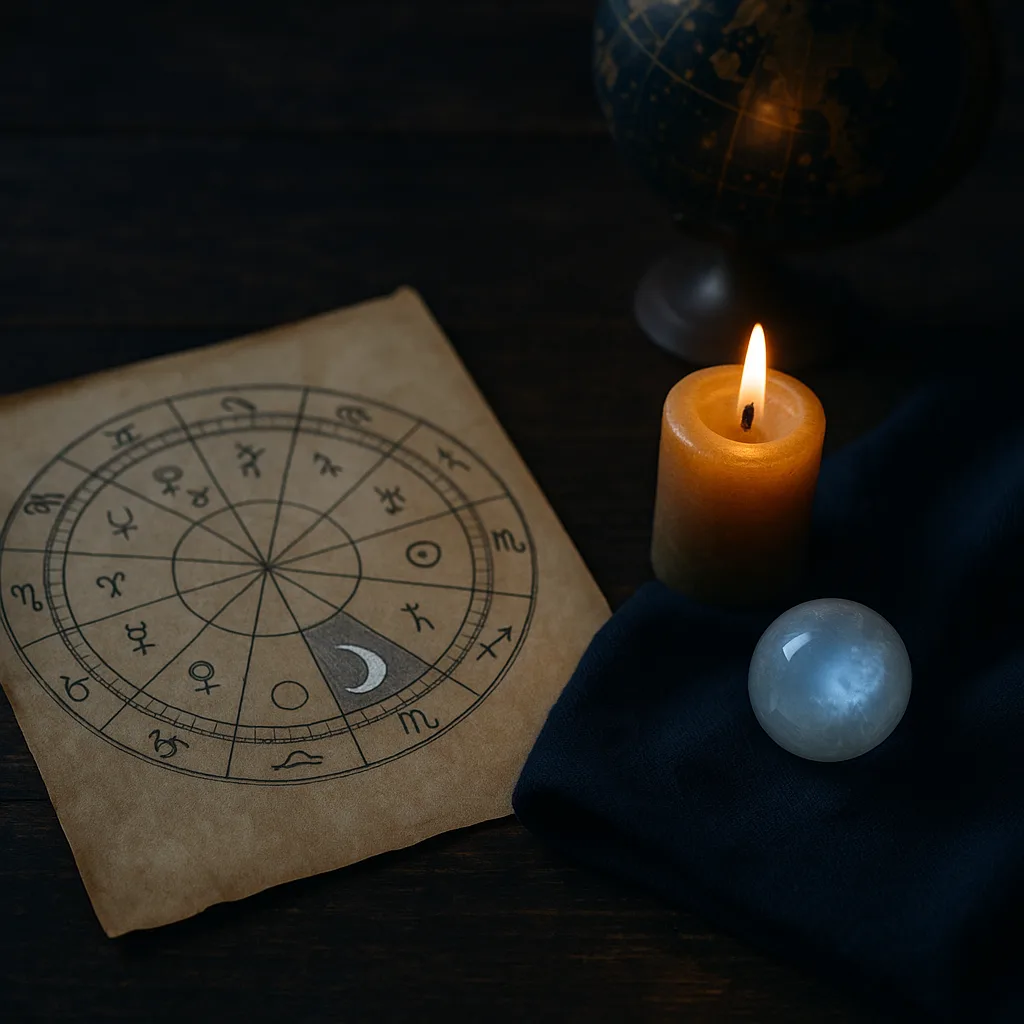
- Locate Juno's sign and degree on the chart wheel, exactly as you would with any planet.
- Check whether Juno was retrograde at the moment of birth. This is usually read as a pattern of commitment that gets revised or repeated throughout life, similar to how natal retrograde Venus is interpreted.
- Look at the aspects between Juno and the Sun, Moon, Venus and the Descendant. Conjunctions, trines and oppositions tend to be the most discussed in this analysis.
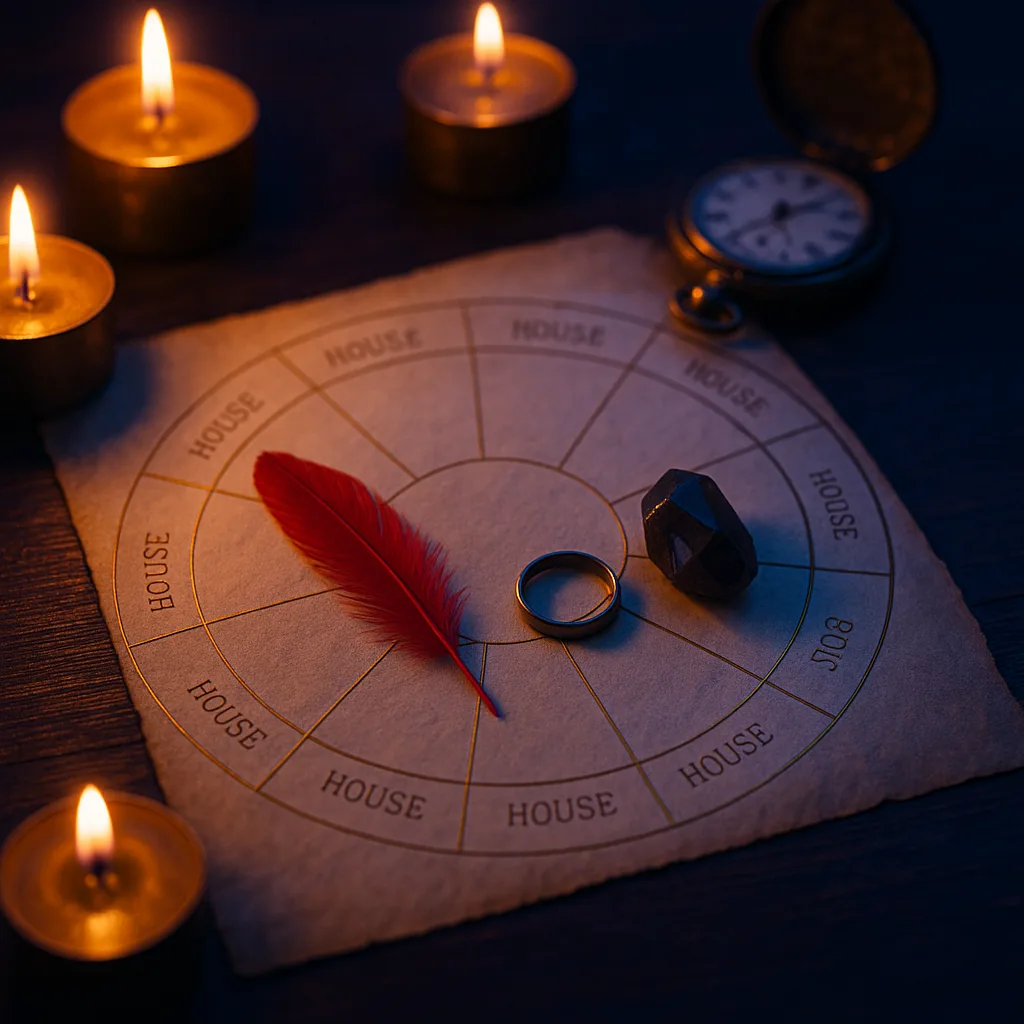
- Note the house where Juno sits: that's where the theme of commitment tends to show up most strongly.
For example: Juno in the 1st House suggests commitment gets tangled up with a person's own identity, requiring them to maintain individuality even within partnership. Juno in the 2nd House links commitment to financial stability and material trust. Juno in the 5th House connects the theme to romance, creativity and, often, the experience of parenthood.
Juno in the 12 signs: what each position looks for in a partnership
According to the consensus among contemporary astrologers who work with asteroids (there's no unified historical source for this point, just consolidated practice), Juno's sign indicates the kind of quality a person seeks, consciously or not, to consider a relationship fair and lasting:
- Aries: an independent, passionate partner, with room for freedom within the bond.
- Taurus: stability, loyalty and material security as the foundation of the union.
- Gemini: constant communication and intellectual stimulation as the glue of the relationship.
- Cancer: emotional security and building a shared home.
- Leo: mutual admiration, unwavering loyalty and the spotlight shared equally.
- Virgo: practical usefulness, everyday care and concrete reliability.
- Libra: a strong desire for equality in the partnership and a diplomatic, sociable companion.
- Scorpio: emotional intensity, absolute fidelity and willingness for mutual transformation.
- Sagittarius: freedom within commitment and shared growth.
- Capricorn: serious commitment, clear structure and shared ambition.
- Aquarius: an equal partnership, room for individuality and friendship as the foundation.
- Pisces: deep emotional connection and unconditional acceptance.
Retrograde Juno in 2026: dates and what changes in how you approach commitment
Like Venus, Juno also goes through retrograde phases, read symbolically as moments for reviewing old commitment patterns. In 2026, the sequence is concrete and worth noting: Juno enters Aquarius around March 13 to 30, stations retrograde at 11° Aquarius between June 5 and 6, slips back into Capricorn on August 11 (a day before a new moon eclipse in Leo), turns direct at 25° Capricorn between September 16 and 17, and re-enters Aquarius around October 23 to 24.
Anyone following the calendar at the time this article is published finds Juno moving direct, still in Capricorn, about to re-enter Aquarius. In practical consultation, this is read as a period that favors revisiting commitments through a more realistic, less idealized lens, typical of Capricorn, before reopening the theme under the more equal and independent lens of Aquarius.
In the popular reading among transit astrologers, the 2026 retrograde directly opposes the Leo axis, which tends to make reciprocity imbalances visible in existing relationships: the feeling of giving more than you receive, for instance. And when retrograde Juno returns to Capricorn in August, some describe it as the moment when old connections, or commitments considered closed, come back to the table for renegotiation. The same caveat applies here as with any transit: it's a symbolic reading, not a guaranteed forecast, and repetitive patterns in relationships deserve to be examined beyond the sky too, as already discussed in how the birth chart helps identify behavioral cycles.
Where the use of Juno in modern astrology comes from
Before 1973, no astrologer had easy access to the exact position of Juno, Ceres, Pallas or Vesta in a birth chart, because calculating the orbit of such irregular bodies without computers was an enormous task. That changed when New York astrologer Eleanor Bach published Ephemerides of the Asteroids: Ceres, Pallas, Juno, Vesta, 1900-2000, released by Celestial Communications in 1973, after she convinced an astronomer to calculate these complex orbits by hand. The work gained traction later with the publication of Asteroid Goddesses by Demetria George in 1986, which helped cement the symbolic reading of these four bodies among a wider astrological audience.
The context is worth noting: this ephemeris emerged during the feminist movement of the 1970s, at a time when part of the astrological community was looking for feminine symbols to balance a repertoire until then dominated by figures like the Sun, Mars and Saturn. Juno, Ceres, Pallas and Vesta have since formed the most cited group of feminine asteroids in contemporary astrological practice, with Juno specifically tied to marriage and committed partnership.
Frequently Asked Questions
What does Juno in the birth chart mean?
Juno is the asteroid associated with your personal commitment pattern: what you need to feel in order to consider a relationship fair, loyal and lasting. Unlike Venus, which speaks to attraction, Juno speaks to what sustains the bond after the initial rush of passion fades.
How do I find my Juno sign?
You need to generate a full birth chart, with exact date, time and place of birth, using a program that includes asteroids as an option. Juno appears with the symbol ⚵ in a specific sign, degree and house, just like a planet.
What's the difference between Venus and Juno in astrology?
Venus shows how a person falls in love, what attracts them and how they show affection early in a relationship. Juno shows what keeps two people together once the initial spark fades, revealing the pattern of loyalty, reciprocity and the kind of commitment the person considers honest.
Does retrograde Juno in 2026 change anything about love?
Juno is retrograde between June 5 and September 16, 2026, moving through Aquarius and Capricorn. Symbolically, this period is associated with reviewing commitment patterns, which can bring imbalances in existing relationships to the surface or reopen old partnership themes, without this amounting to a guaranteed prediction of any event.
Is Juno a planet?
No. Juno is a main-belt asteroid, discovered in 1804 by German astronomer Karl Harding. Its use in astrology is relatively recent, dating to 1973, when the first asteroid ephemeris was published, and it isn't part of classical or Hellenistic astrology.

Recomendado
MAPA ASTRAL E NUMEROLÓGICO PERSONALIZADO
Mapa Astral + Numerologia Um mergulho profundo na sua essência. E se tudo o que você procura… já estivesse dentro de você - esperando para ser revelado?
Universo Astral Editorial Team · Tarot and moon transits
This article was produced by the Universo Astral editorial team, with AI tools assisting research and drafting and human review before publication. If you spot anything inaccurate or outdated, let us know at our contact email.