Astrological Compatibility: How to Compare Your Birth Chart with Theirs
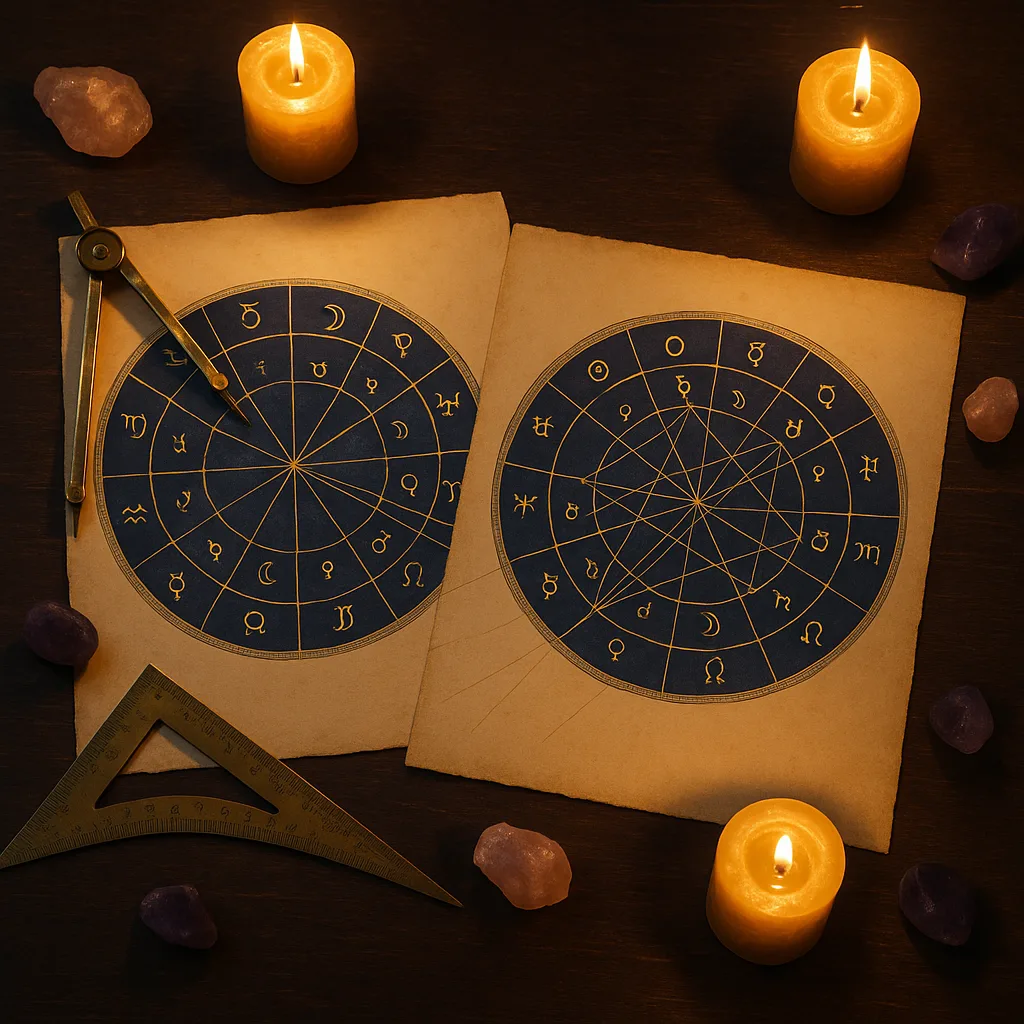
Two people born under Taurus do not have the same birth chart. It sounds obvious, but this confusion is exactly what fuels most of the compatibility horoscopes floating around: a generic table crossing twelve sun signs, as if birth time and place did not exist. The technique astrologers actually use to compare two people is called synastry, and it works with dozens of points from each chart, not a single isolated sign.
What synastry is and why it goes beyond the sun sign
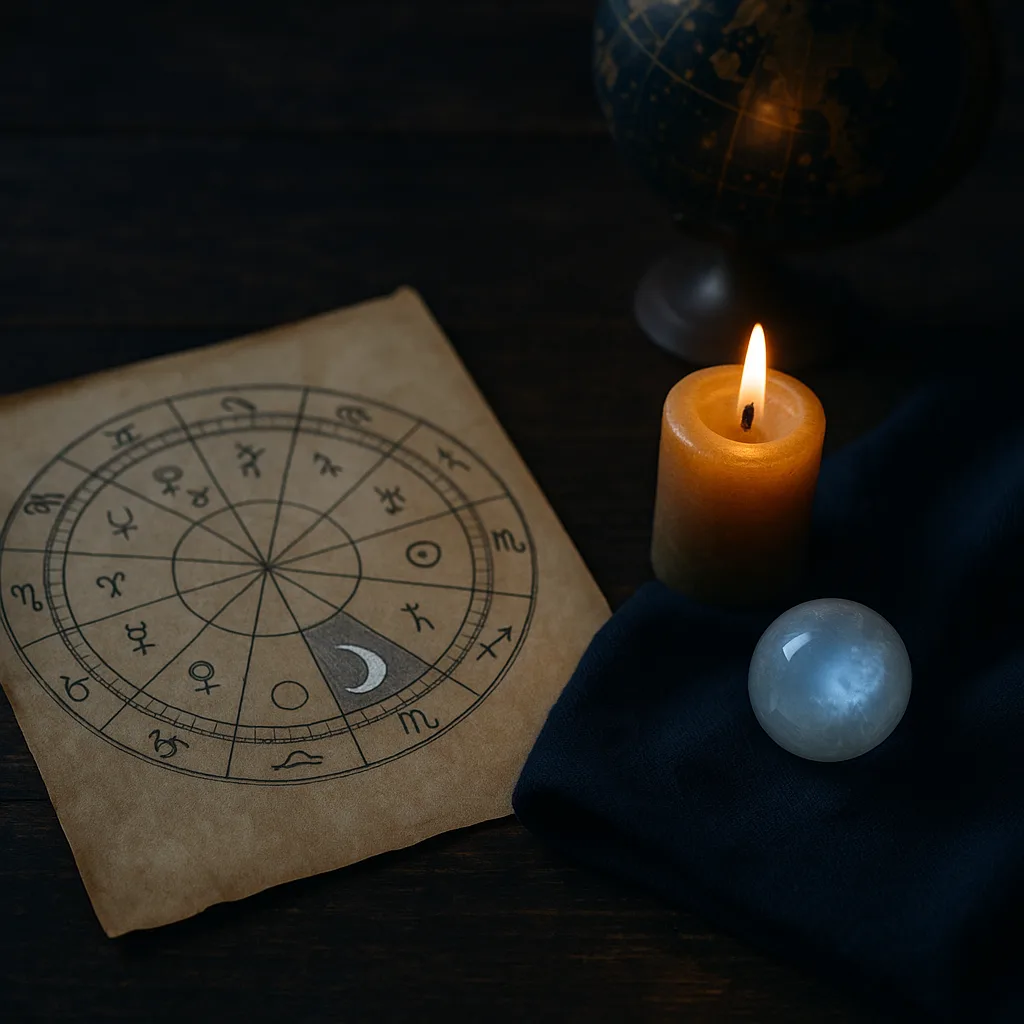
Synastry is the technical term for overlaying two complete birth charts to understand the dynamic between two people: where there is ease, where there is friction, and which areas of life this relationship concentrates its energy on. The difference from a newspaper horoscope is one of method, not just depth. Britannica describes the popular horoscope as a form of generalized advice, written based only on the twelve birth signs, without accounting for time, place or the other planets in a person's chart. Synastry takes the opposite path: it starts from the entire birth chart, with Sun, Moon, all the planets, Ascendant, Midheaven and the house cusps, and only then compares the two full sets against each other.
Worth stating plainly: astrology is treated here as a symbolic and cultural system, not as science. Britannica itself classifies astrology as a divinatory practice widely considered a pseudoscience by modern science, even as it continues to attract millions of people who find meaning in it. That does not erase the value of the exercise: understanding your own emotional patterns through a symbolic system is different from treating predictions as certainties about a relationship's future.
Where this way of reading the sky comes from
The technical foundation of synastry (comparing planetary positions and calculating angles between them) has roots in Hellenistic astrology, between the 2nd century BCE and the early centuries of the common era. According to Britannica, as early as the 3rd century BCE, or perhaps a bit before, Babylonian astrologers tracked planetary positions at the moment of birth (retrogrades, latitudes, positions relative to the horizon) in an attempt to forecast the course of a person's life, a process that developed alongside genethlialogy, the construction of birth charts in Hellenistic Egypt.
This same period also gave us an element essential to synastry today: the house system. Hellenistic horoscopic astrology earned that name precisely because it began using the Ascendant (horoskopos, the hour-marker in Greek) and the twelve houses derived from it, something earlier traditions did not do. It is this house system that allows us today to overlay one person's chart onto another's and see which sector of life this relationship settles into most strongly.
A point of historical honesty: there is no solid record of ancient astrologers systematically comparing two birth charts specifically to assess romantic compatibility. Synastry as a couples' practice is a modern development that uses ancient tools (aspects, houses, planets) to answer a question antiquity did not quite ask in this form.
Aspects: the metric behind every synastry reading
The central element of any chart comparison is the aspect: the angle formed between a planet in one person's chart and a planet (or point, such as the Ascendant) in the other's. These angles are measured along the ecliptic, the band of sky the Sun appears to travel through over the year. Technically, the zodiac extends about nine degrees to either side of that line and is divided, by convention, into twelve thirty-degree signs, even though the actual constellations are nowhere near proportional to one another.
Each aspect has an exact angle and a tolerance margin called an orb. The table below summarizes the five major aspects used in synastry practice:
| Aspect | Exact angle | Common orb | Synastry reading |
|---|---|---|---|
| Conjunction | 0° | about 6° to 8° | Intense fusion of the two planets involved, which can feel easy or tense depending on which planets are conjunct |
| Sextile | 60° | about 4° to 6° | Ease of collaboration, but one that needs to be activated by both people's effort |
| Square | 90° | about 6° to 8° | Recurring friction that generates both tension and attraction; not synonymous with a problem |
| Trine | 120° | about 6° to 8° | Natural, fluid affinity, with a risk of slipping into complacency in the relationship |
| Opposition | 180° | about 6° to 8° | Attraction through complementarity, requiring constant negotiation between both people |
Notice that no aspect is inherently good or bad. Squares and oppositions, traditionally labeled tense, also fuel attraction and motivation to grow together. Trines and sextiles, the so-called harmonious aspects, bring ease but can hide complacency.
Step by step: comparing two charts in practice
Here is the process an astrologer follows when building a full synastry reading:
- Gather the exact birth date, time and city for both people. Without a precise time, the Ascendant and houses become imprecise or impossible to calculate.
- Generate each person's individual birth chart, with the positions of Sun, Moon, Mercury, Venus, Mars, Jupiter, Saturn, Uranus, Neptune, Pluto, plus Ascendant, Midheaven and Lunar Nodes.
- Build a synastry grid, placing the zodiac degree of every planet and point from both charts side by side.
- Calculate the angular distance between each planet in person A's chart and each planet or point in person B's chart, checking whether the difference falls within the orb of any aspect from the table above.
- Give priority to interaspects between personal planets (Sun, Moon, Venus, Mars, Mercury and Ascendant), since these speak most directly to identity, emotion, affection, desire and communication.
- Look at the social and generational planets (Jupiter, Saturn, Uranus, Neptune, Pluto) touching the partner's personal planets, which point to growth, commitment or long-term transformation.
- Do a house overlay: place one person's planets within the other's house system, and vice versa, to see which life areas this presence concentrates in (romance in the 5th and 7th houses, home in the 4th, communication in the 3rd, intimacy in the 8th).
- Optionally, calculate a composite chart or a Davison chart to read the relationship as its own entity, beyond the point-by-point comparison.
- Weigh the whole picture: a single tense aspect decides nothing; what matters is the pattern that repeats across both people's personal planets.
Anyone who has already studied angular, succedent and cadent houses has an advantage at this overlay stage, since not every house activated by a partner carries the same weight.
Which contacts really matter in a lasting relationship
Not every aspect between two charts deserves equal weight. Some contacts show up repeatedly as significant in traditional synastry readings:
- One person's Sun to the other's Moon: links identity (Sun) with emotional need (Moon), considered one of the most relevant contacts for mutual understanding.
- Moon to Moon: emotional resonance, when both people seem to speak the same feeling-language without needing to translate anything.
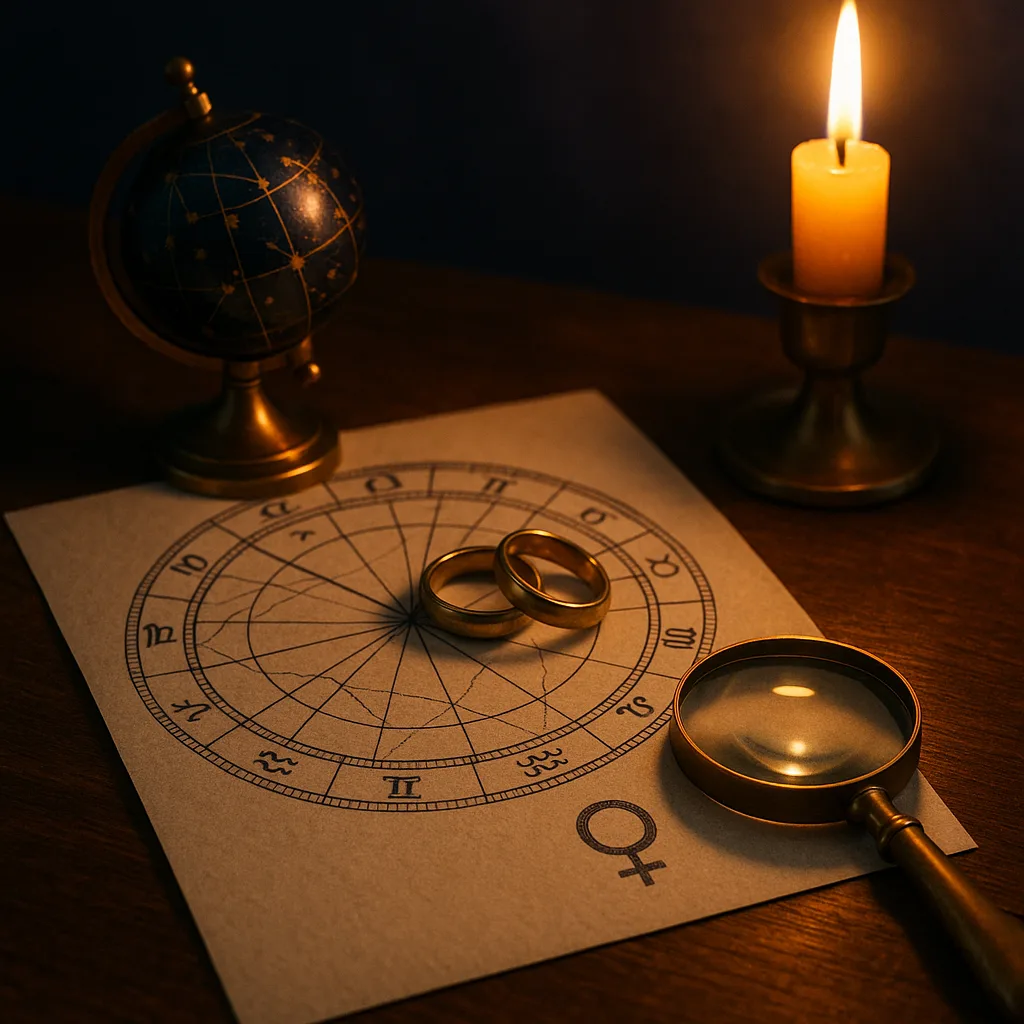
- Venus to Mars: the classic axis of affection and desire, most often cited as an indicator of romantic chemistry and physical attraction.
- Saturn touching a partner's Sun, Moon or Venus: traditionally linked to commitment and structure; in a harmonious aspect it suggests stability, in a tense one it demands maturity to sustain the bond over time.
- Ascendant to Descendant: contacts here are usually read as an immediate sense of recognition, that impression of already knowing the person.
Anyone who has already read about the Venus sign in an individual chart has a useful foundation here: it is exactly this Venus that comes into play in synastry interaspects, revealing how each person values and approaches the other within the relationship.
Synastry, composite chart and Davison chart: three tools, three different questions
Synastry is the starting point, but it is not the only technique available for reading a relationship through the sky. The table below compares the three approaches most used in contemporary relationship astrology:
| Technique | How it is calculated | What it reveals |
|---|---|---|
| Synastry | Direct overlay of the two birth charts, with planet-by-planet interaspect calculations | The chemistry between the two people: attraction, tension and points of affinity |
| Composite chart | Midpoint between each planet and point across both charts, generating a single symbolic chart | The relationship as a third entity, with its own identity and purpose |
| Davison chart | A synthetic birth moment, created from the real midpoint of both people's birth date, time and place, used to build a full natal chart with its own Ascendant and houses | The relationship's trajectory over time, including the timing of phases through transits over this chart |
In practice, synastry usually comes first, since it is more intuitive and speaks directly to the dynamic between the individuals. The composite and Davison charts come afterward, for those who want to understand the bond as something that exists beyond the two people separately.
Worth remembering that repeated patterns between two charts can also echo themes that already existed before the relationship began. Anyone who has looked into how the birth chart helps identify behavioral cycles will recognize, in synastry, aspects that simply reinforce or challenge something that was already present in the individual chart.
For anyone wanting to dig deeper into the technical calculation of planetary positions and transit dates, the astronomy calendar at timeanddate.com gathers ephemerides and moon phases that serve as a reliable reference for placing any chart in the real time of the sky.
Frequently Asked Questions
Are synastry and a composite chart the same thing?
No. Synastry compares the two birth charts side by side, planet against planet. A composite chart merges both charts into a single third chart, calculated from the midpoint between each planet across the two people, and is read as if it were the chart of the relationship itself.
Do I need to know the exact birth time to do a synastry reading?
Yes, if you want to include the Ascendant, Midheaven and house system in the analysis, which are central to understanding which area of life the relationship concentrates on. Without an exact time, you can still compare the planets to each other, but the reading stays incomplete.
Do tense aspects between two charts mean the relationship won't work?
Not necessarily. Squares and oppositions create friction, but they also fuel attraction and motivation for both people to grow together. Traditional readings treat these aspects as a challenge, not a sentence, and usually weigh the overall pattern more heavily than any single isolated contact.
Can you do a synastry reading using only both people's sun signs?
You can, but it's a very simplified version, similar to a generic newspaper horoscope. A complete synastry reading requires both people's full birth charts, including Moon, Venus, Mars and the houses, since that's where the more specific contacts about affection, desire and commitment show up.
Recomendado
Astro Reflexo
Descubra o que os astros revelam sobre quem você é. Em menos de um minuto, calculamos seu Sol, Lua e Ascendente com precisão astronômica e uma inteligência artificial escreve um resumo personalizado só para você.
Universo Astral Editorial Team · Tarot and moon transits
This article was produced by the Universo Astral editorial team, with AI tools assisting research and drafting and human review before publication. If you spot anything inaccurate or outdated, let us know at our contact email.