Hand Shape Reveals Your Element: Earth, Air, Fire, or Water
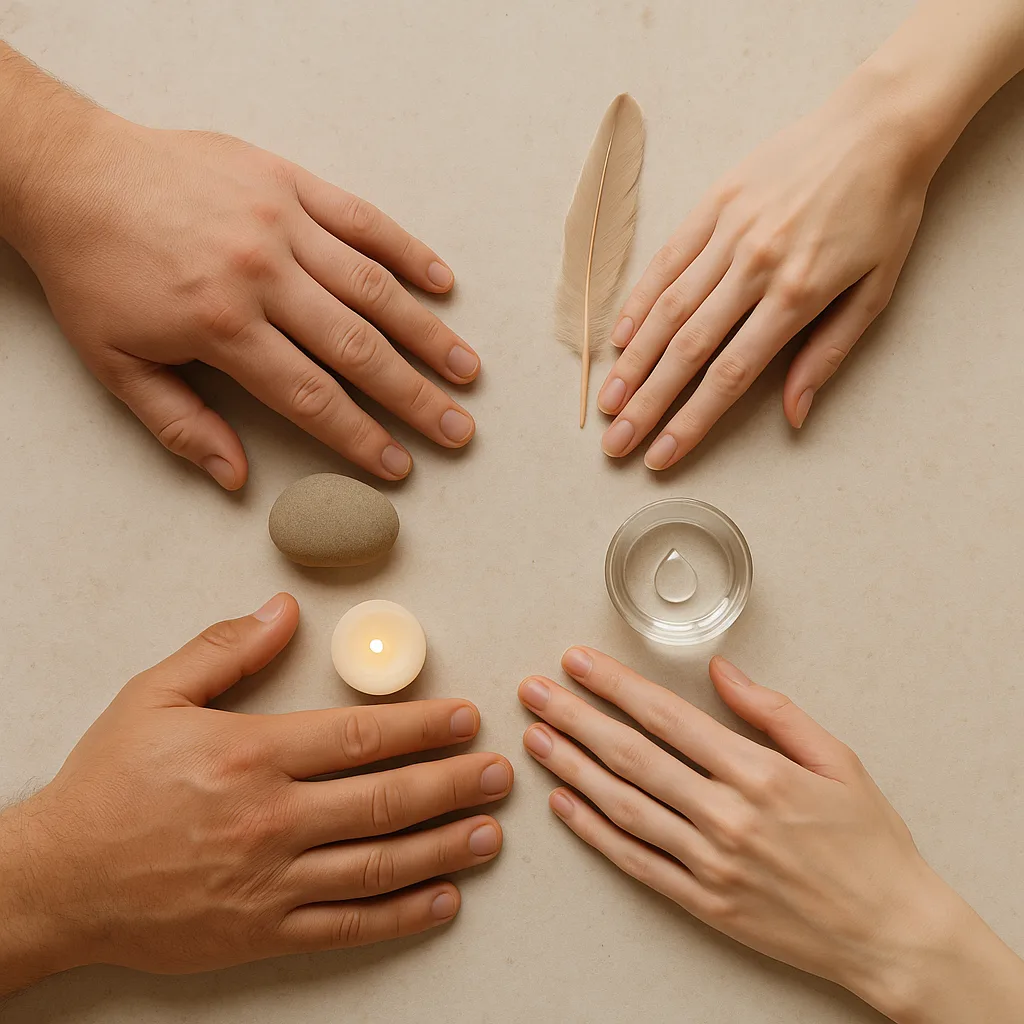
The test you can do right now, looking at your own hand
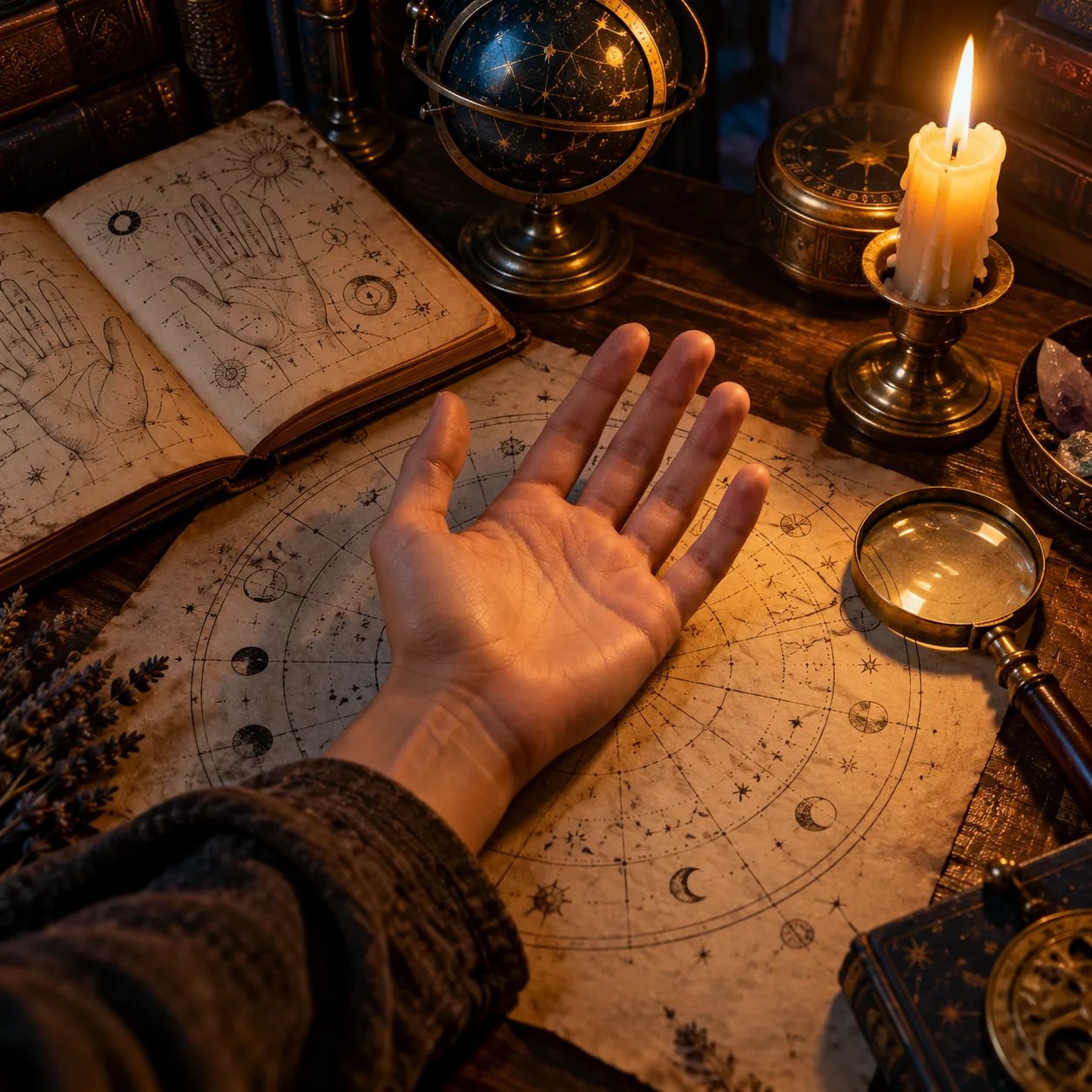
Before any lines, mounts, or dramatic predictions, hand reading begins with something simpler: shape. Elemental chirology, a practice that speaks directly to astrology's four elements, proposes that you only need to observe the proportion between your palm and fingers to identify one of four hand types: Earth, Air, Fire, or Water. No need to memorize secondary lines or planetary mount names. It's a quick exercise anyone can perform on themselves in less than a minute.
The connection between four elements and human temperament did not originate in hand reading. It comes from astrology itself, which since ancient times has organized the twelve signs into four groups of three (Earth, Air, Fire, and Water), each linked to a set of psychological qualities. The encyclopedia Britannica documents how this division into four elements has spanned centuries of thought about the zodiac and personality, serving as the foundation for symbolic systems that later migrated into other divination practices, including chirology. For those wanting to understand how this classification reached the present day, it's worth exploring the origins of astrology and how ancient peoples read the sky.
To take the test, open your dominant hand and observe two things: the shape of your palm (square, long, rectangular, or rounded) and the size of your fingers relative to that palm (short or long). This simple combination defines, according to tradition, the predominant element and, from there, a set of personality traits that many people recognize immediately. The table below summarizes the four types before exploring each in detail.
| Element | Palm Shape | Fingers | Central Trait |
|---|---|---|---|
| Earth | Square or rectangular, thick skin | Short | Practicality and stability |
| Air | Square | Long and slender | Communication and curiosity |
| Fire | Long and rectangular | Short | Impulse and leadership |
| Water | Long and narrow | Long and slender | Sensitivity and intuition |
Earth hand: the square palm of someone with feet on the ground
If your palm is square or slightly rectangular, with short fingers and thicker skin to the touch, you probably have an Earth hand. It's the type most associated with practicality: people with this shape tend to value routine, financial stability, and concrete results over any abstract ideal. It's not the hand of the impulsive dreamer; it's the hand of someone who builds slowly and dislikes changing course midway.
The shadow side of this type, according to those who study the classification, is excessive resistance to change and some distrust toward anything that cannot be touched, measured, or proven. Earth hands tend to thrive in professions requiring consistency, such as administration, agriculture, engineering, and manual trades.
Air hand: long fingers, square palm, and a mind always in motion
Square palm but with noticeably long, slender fingers: that's the signature of an Air hand. If your thumb and index finger seem disproportionately long compared to the rest of your palm, this is probably your type. Traditional reading associates this shape with communication, intellectual curiosity, and an almost physical need for variety in daily life.
People with Air hands tend to get bored quickly with repetitive tasks and excel in areas involving exchanges, ideas, and connections, such as journalism, sales, technology, and mediation. The caution is scattered focus: the same mental agility that generates good ideas can make it harder to finish what you start.
Fire hand: long palm, short fingers, energy that never stops
Here the proportion reverses: elongated and rectangular palm, relatively short fingers. The Fire hand is described as the most impulsive of the four, belonging to people who decide quickly, act quickly, and become enthusiastic with the same speed they become frustrated. It's the type most associated with spontaneous leadership, that person who steps forward in a group without being asked.
Tradition also points to a recurring risk in this shape: impatience. Fire hands tend to abandon projects midway when boredom sets in and benefit from learning, over time, to sustain their own enthusiasm beyond the first impulse.
No hand classification replaces self-knowledge built over time. It works best as an initial mirror, not as a verdict.
Water hand: the long, sensitive palm that feels before it thinks
Long and narrow palm, equally long and slender fingers, generally more delicate skin texture: that's the portrait of a Water hand. It's the type most connected to emotional sensitivity and intuition, belonging to people who tend to sense the environment and the emotions of those around them before they can even explain why.
This shape appears frequently in people who work with art, therapy, caring for others, or any activity requiring empathy as a working tool. The counterpoint is excessive permeability: without clear boundaries, those with Water hands absorb the emotional weight of others more easily than they'd like.
How to apply the test step by step
To avoid misreading, follow the sequence below on your dominant hand, preferably under natural light:
- Observe your palm alone, without counting your fingers: is it wider (square) or longer (rectangular)?
- Visually measure your middle finger against your palm's height: if the finger appears nearly the same size as your palm or longer, your fingers are long; if it's clearly shorter, your fingers are short.
- Cross the two observations on the reference table: square palm with short fingers points to Earth, square palm with long fingers points to Air, long palm with short fingers points to Fire, long palm with long fingers points to Water.
- Repeat the observation on your other hand: it's common to find small differences between the two, which already indicates a combination of elements rather than one single, fixed type.
What if your hand doesn't fit perfectly into any single type?
An honest heads-up: few real hands are purely one element. It's common to find square palms with medium-length fingers, or proportions that sit exactly on the border between two types. When this happens, traditional reading suggests observing which element appears most frequently in your fingers compared to your palm, and accepting that, like in a birth chart, most people carry a combination rather than one isolated, absolute type.
This logic of combination is not unique to hand reading: astrology itself works with the idea that no one is just one element, since the birth chart distributes planets across different signs and elements at the same time. Those wanting to deepen the connection between hand and symbolism can also explore what the marks on your palm reveal about your personal history, including lines, mounts, and other details that go beyond the general shape discussed here.
The value of this test lies not in labeling someone definitively, but in offering a concrete, visual starting point for a conversation that might otherwise stay purely in the realm of abstract words. After all, it's much easier to look at your own hand than to describe your own temperament out loud. And just as the glyphs used to represent planets and signs carry centuries of symbolism compressed into a single stroke, as shown in the text about the origins of glyphs and why astrology's symbols look the way they do, hand shape also functions as a quick visual symbol to read, even without any prior technical knowledge.
Frequently asked questions
Does elemental chirology have scientific proof?
No. Chirology is a symbolic and traditional system with no backing from medical science or comparative anatomy. It works as a tool for self-reflection, not as a personality diagnosis with proven predictive value.
Can you have characteristics of more than one element in your hand?
Yes, and it's the most common case. The article itself explains that few hands are purely one type, and it's frequent to find palms on the border between two shapes or left and right hands with slightly different proportions.
What's the difference between the hand shape test and reading the lines on the palm?
The shape test looks only at the proportion between palm and fingers, without analyzing lines, mounts, or specific marks. Line reading is a different and more detailed branch of hand reading, covered in another article about what palm marks reveal.
Does this hand test relate to your zodiac sign?
The logic of the four elements (Earth, Air, Fire, and Water) originally comes from astrology, where each sign belongs to one of these groups. Elemental chirology uses the same symbolic division but applies it to the physical shape of the hand, not to the person's birth chart.
Recomendado
Astro Reflexo
Descubra o que os astros revelam sobre quem você é. Em menos de um minuto, calculamos seu Sol, Lua e Ascendente com precisão astronômica e uma inteligência artificial escreve um resumo personalizado só para você.
Universo Astral Editorial Team · Zodiac signs and fun facts
This article was produced by the Universo Astral editorial team, with AI tools assisting research and drafting and human review before publication. If you spot anything inaccurate or outdated, let us know at our contact email.