Venus Transit: How the Planet of Love Changes Your Relationship Every Month
Venus moves fast by the sky's standards. While Saturn takes almost thirty years to circle the zodiac, Venus changes signs every three or four weeks, which makes it one of the easiest transits to feel in everyday life. Before getting into what this means for your relationship, it helps to separate two things that often get mixed up when people search for this topic.
Two different things with the same name
There's the astronomical transit of Venus, an extremely rare event in which the planet literally crosses in front of the Sun's disk, visible from Earth as a small dark dot. That happened in 2004 and 2012, and won't happen again until December 11, 2117, since these transits occur in pairs separated by more than a century. That's not what this article is about.
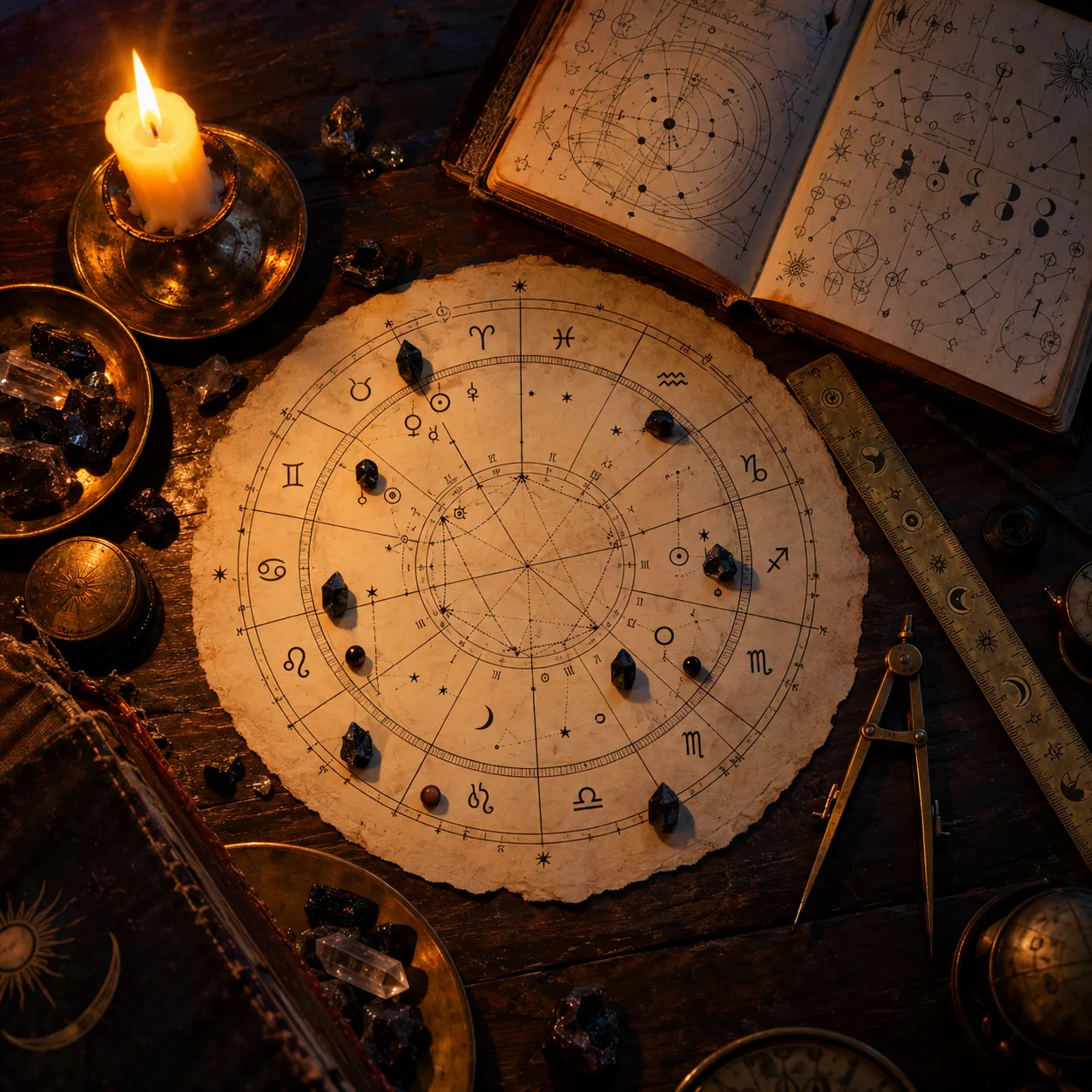
The astrological transit of Venus, which is what matters here, is something else entirely: the planet's continuous movement through the twelve zodiac signs, the kind of thing people mean when they say Venus has entered a certain sign, or that Venus has gone retrograde. It's a movement that repeats all year long, forming the astrological backdrop for how we experience affection, desire and money during each period.
Why Venus moves so fast (and why it sometimes stalls)
The answer lies in the planet's orbit. According to NASA's Venus fact sheet, a Venusian year lasts 224.7 days, considerably shorter than Earth's 365 days (see the data at solarsystem.nasa.gov). Since the two planets orbit at different speeds, Earth periodically overtakes Venus (or the other way around, depending on your frame of reference), creating the optical illusion that it's moving backward across the sky. This apparent motion is what astrology calls Venus retrograde.
The interval between one Earth-Venus alignment and the next, called the synodic period, is 583.92 days, according to the same NASA data. There's an interesting detail in this math: five synodic cycles of Venus add up to about 2,920 days, almost exactly eight Earth years. This means Venus returns to very similar positions in the zodiac every eight years, a pattern that traces out a kind of five-pointed shape in the sky over that span, sometimes called the Venus pentagram. It's one of the few planetary rhythms with such precise geometric regularity.
Another curious fact recorded by NASA: Venus rotates in the opposite direction from most planets in the solar system, and so slowly that its day (one full rotation on its axis) lasts longer than its year. It's the only planet with this trait, which reinforces Venus's reputation as a celestial body that follows its own logic, symbolically included.
How long Venus stays in each sign
For most of the year, Venus stays in each sign for 20 to 30 days, which supports the idea that the emotional climate shifts almost every month. But that's not a fixed rule: during retrograde phases, including the shadow period that comes before and after, Venus can spend months revisiting the same two signs.
That's exactly what happens in 2026. The shadow of that retrograde cycle begins on August 31 and doesn't end until December 15, meaning Venus spends roughly three and a half months circling back and forth between Scorpio and Libra, far longer than the typical month-long stay seen the rest of the year.
Venus retrograde: what changes and when it happens in 2026 and 2027
Venus doesn't go retrograde every year. The cycle repeats roughly every eighteen months, so in some calendar years there's no retrograde at all. The table below organizes the confirmed dates for the period closest to this article's publication.
| Event | Start | End | Signs involved |
|---|---|---|---|
| Venus retrograde (1st cycle of 2026) | April 21, 2026 | June 4, 2026 | Taurus |
| Venus retrograde (2nd cycle of 2026) | October 3, 2026 | November 13, 2026 | Starts in Scorpio, ends in Libra |
| Venus retrograde in 2027 | does not occur | , | next cycle not until May 10, 2028, in Gemini |
The October-November 2026 cycle is the most closely tracked in astrological calendars: it begins on October 3 at 4:16 AM (Brasília time), with Venus at 8°29' Scorpio, and ends on November 13 at 9:28 PM, at 22°51' Libra, for a total of about 42 days of retrograde motion. Between October 3 and 24, while Venus is still in Scorpio, the tone tends to lean toward emotional depth: revisiting deep bonds, issues of power, intimacy and dependency surfacing, and already-strained relationships losing steam more easily. Starting October 25, when Venus slips back into Libra, the focus shifts to agreements, partnerships and diplomacy, a better moment for rebalancing conversations than for making a final break.
This transit tends to weigh more heavily on people with Sun, Moon or Rising sign in Scorpio, Taurus, Leo or Aquarius. In 2026 the reading carries extra intensity because Venus forms three squares with Pluto in Aquarius during the year, on September 15, October 20 and December 9, which tends to bring issues of control, jealousy and power to the surface within relationships.
Venus also rules money, values and self-worth, not just romance. That's why the retrograde period usually comes with the standard advice to avoid big purchases, renegotiate contracts slowly, and review prices and investments carefully before closing any deal, since decisions made during this phase tend to get revisited later.
Venus in each sign: how it changes a relationship's tone
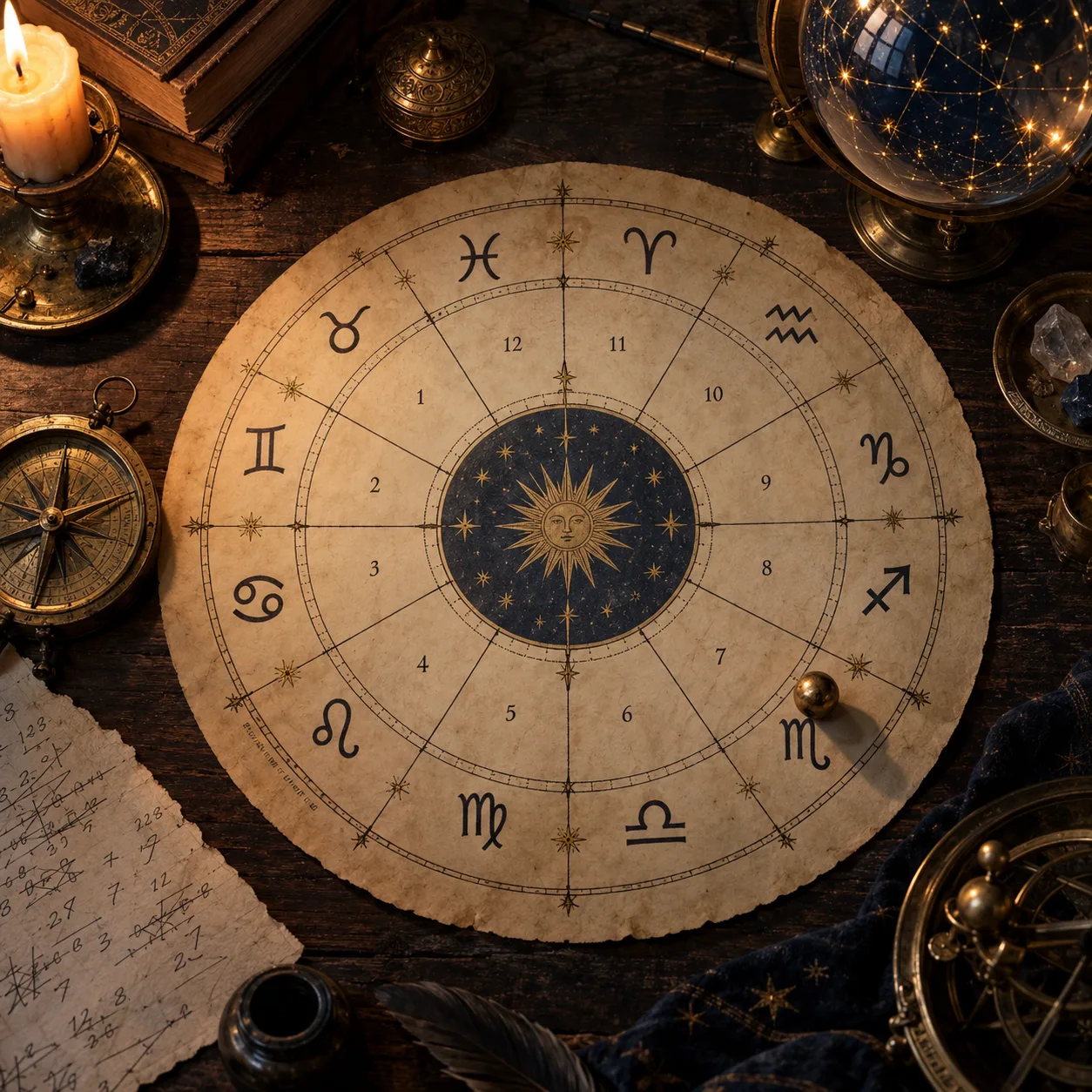
Reading each transit starts with the idea of rulership: Venus rules Taurus and Libra, and governs the second and seventh houses of the birth chart, the areas tied to personal value, possessions and partnerships. This dual rulership comes from an old and very concrete observation: since Venus never strays more than two signs away from the Sun in the sky, ancient astrologers assigned it the sign right before and right after the Sun's own domicile, Taurus and Libra. Venus is also exalted in Pisces, where its expression becomes more idealized and surrendering, and falls into detriment in Scorpio and Aries, the signs opposite its own rulerships, where love tends to arrive with more intensity, jealousy or urgency than harmony.
| Venus in... | General tone of the transit |
|---|---|
| Taurus | Affection moves slower, steadier and more sensory; values loyalty, comfort and material security |
| Gemini | Curiosity drives social and romantic life; exchanges, conversation and variety take center stage |
| Cancer | A more emotional, receptive tone; affection seeks familiarity and protection |
| Libra | Venus at home; the focus turns to partnership, balance and agreements |
| Scorpio | A dive into deep bonds; themes of power, intimacy and dependency surface strongly |
| Virgo | A more practical view of relationships; demands clarity about who actually shows up and cares |
Where the name Venus comes from: the Mesopotamian origin of the planet of love
The link between this planet and love deities is far older than Rome. According to the Encyclopaedia Britannica entry on Ishtar, the Akkadian goddess was, in large part, an astral deity directly tied to the planet Venus, inheriting that role from the Sumerian Inanna (see britannica.com). The oldest known records of Venus observation date back to 1700 to 1600 BCE, the so-called Ammisaduqa tablets, making this one of the celestial bodies humans have tracked systematically for the longest stretch of history. Ishtar carried an interesting duality: she was simultaneously a goddess of fertility and of war, which seems to match the two faces Venus shows in the sky, appearing at times as the morning star and at times as the evening star. The Greeks equated Ishtar with Aphrodite, and the Romans, in turn, gave that same goddess the name Venus, goddess of love and beauty, naming the planet we still recognize today at dusk or at dawn.
How to find out which Venus transit is affecting you right now
There's a simple path you can follow to read Venus's current position within your own chart.
- Identify your Sun sign and, if possible, check your full birth chart, including your Rising sign and houses.
- Check which sign Venus is currently transiting, keeping in mind that this position changes every 20 to 30 days while in direct motion.
- Check whether Venus is direct or retrograde: direct motion tends to bring fresh energy, while retrograde tends to reopen past themes and connections.
- Match the sign Venus is in with the house in your natal chart ruled by that sign, to see whether the transit weighs more on romance, money, friendships or work.
- Watch for other aspects happening at the same time, like the Venus-Pluto squares in 2026, which tend to intensify whatever the transit already suggests.
To better understand the general logic behind this kind of reading, the article How to Read a Planetary Transit: the Method Behind Today's Sky breaks down the mechanism of planet, natal point and aspect that applies to any transit, Venus included. And anyone who's felt the strange pull of running into someone from the past during a retrograde period may recognize a similar pattern explored in Why Your Ex Always Shows Up During Mercury Retrograde, since both Mercury and Venus retrogrades tend to bring unfinished business back around.
Frequently Asked Questions
What does a Venus transit mean in astrology?
It's the passage of the planet Venus through the twelve zodiac signs, as seen from Earth, which shifts every 20 to 30 days for most of the year. Each sign gives a different tone to matters of affection, attraction, money and self-worth while Venus stays there.
When does Venus go retrograde in 2026?
Venus goes retrograde twice in 2026: from April 21 to June 4, in Taurus, and from October 3 to November 13, starting in Scorpio and ending in Libra. There's no Venus retrograde in 2027; the next cycle doesn't begin until May 2028.
What should you avoid doing during Venus retrograde?
The most common advice is to avoid big purchases, signing contracts, and major financial decisions made in a hurry, since this period tends to lead to later revisions. On the emotional side, it's also usually a time to rethink relationships before making final calls, like getting back together or breaking things off.
How long does Venus stay in each zodiac sign?
In direct motion, Venus stays in each sign for 20 to 30 days. During retrograde periods and their shadow phases, that stretch can extend to months, since the planet revisits the same patch of sky more than once.
Do Venus in Taurus and Venus in Libra mean the same thing, since the planet rules both?
No. Although Venus rules both Taurus and Libra, the tone shifts depending on the sign's element: in Taurus the focus is sensory and material, centered on stability and possession, while in Libra the focus becomes balance in relationships and the search for agreement between both sides.
Recomendado
Astro Reflexo
Descubra o que os astros revelam sobre quem você é. Em menos de um minuto, calculamos seu Sol, Lua e Ascendente com precisão astronômica e uma inteligência artificial escreve um resumo personalizado só para você.
Universo Astral Editorial Team · Tarot and moon transits
This article was produced by the Universo Astral editorial team, with AI tools assisting research and drafting and human review before publication. If you spot anything inaccurate or outdated, let us know at our contact email.