Astrology Myths Explained: The 13th Sign, Astral Chaos, and More
The sky has many voices, but not all of them tell the truth
Anyone interested in astrology, whether for years or just weeks, has likely stumbled across information too strange to be true, yet spreads quickly across social media anyway. Astrology deals with powerful symbols: everyone has an opinion about it, but not everyone has dedicated themselves to studying it in depth. This article gathers some of the most common misunderstandings about the zodiac, explains where they come from, and what astrological tradition actually says about each one. For those who want to understand the historical roots of these rumors, there is also a specific article about where the myths of the 13th sign, Mercury retrograde, and the full moon come from.
The 13th sign rumor: did NASA change your birth chart?
From time to time, news circulates that NASA created or revealed a new sign called Ophiuchus, disrupting the known zodiacal logic. The rumor usually comes with alarming graphics, as if everyone needed to discover a new sign overnight. This story has repeated for more than ten years and remains a distortion.
NASA does not work with astrology. The agency is dedicated to astronomy, which studies celestial bodies in physical and observational ways, without any commitment to the symbolic reading that astrology proposes. What does exist is a constellation called Ophiuchus, which the Sun passes through in its apparent path across the sky. The International Astronomical Union, the body responsible for officially defining the boundaries and names of the 88 constellations recognized by astronomy, confirms the existence of Ophiuchus as one of these constellations, information that can be verified on the IAU website. The Babylonians, who created the zodiac we use today, already knew this constellation, but chose not to include it because they wanted a system of twelve divisions, matching the twelve-month calendar.
This choice was neither error nor oversight: it was a decision to create an organized and symmetrical model. And here is an important detail: constellations have very different sizes and shapes. The Sun remains about forty-five days in the Virgo region, but passes only seven days in the Scorpio area. If the zodiac were based on physical constellations, the signs would have unequal and chaotic durations.
This is why the zodiac in your birth chart is not a faithful slice of the starry sky, but a geometric projection created from the relationship between Earth and Sun throughout the year. The name of each sign, like Taurus, Pisces, or Leo, is a tribute to the constellations, not an exact copy of them. Constellations move slowly across the sky; the signs, in the tropical zodiac used by most Western astrologers, remain fixed as symbolic reference points. Your sign has not changed, and no space agency has the power to alter that. The difference between astronomy's and astrology's views of the same sky is the subject of another article, which explores why Pluto remains a planet for astrology even after being demoted by astronomy.
Tropical vs. sidereal zodiac: why two different skies exist
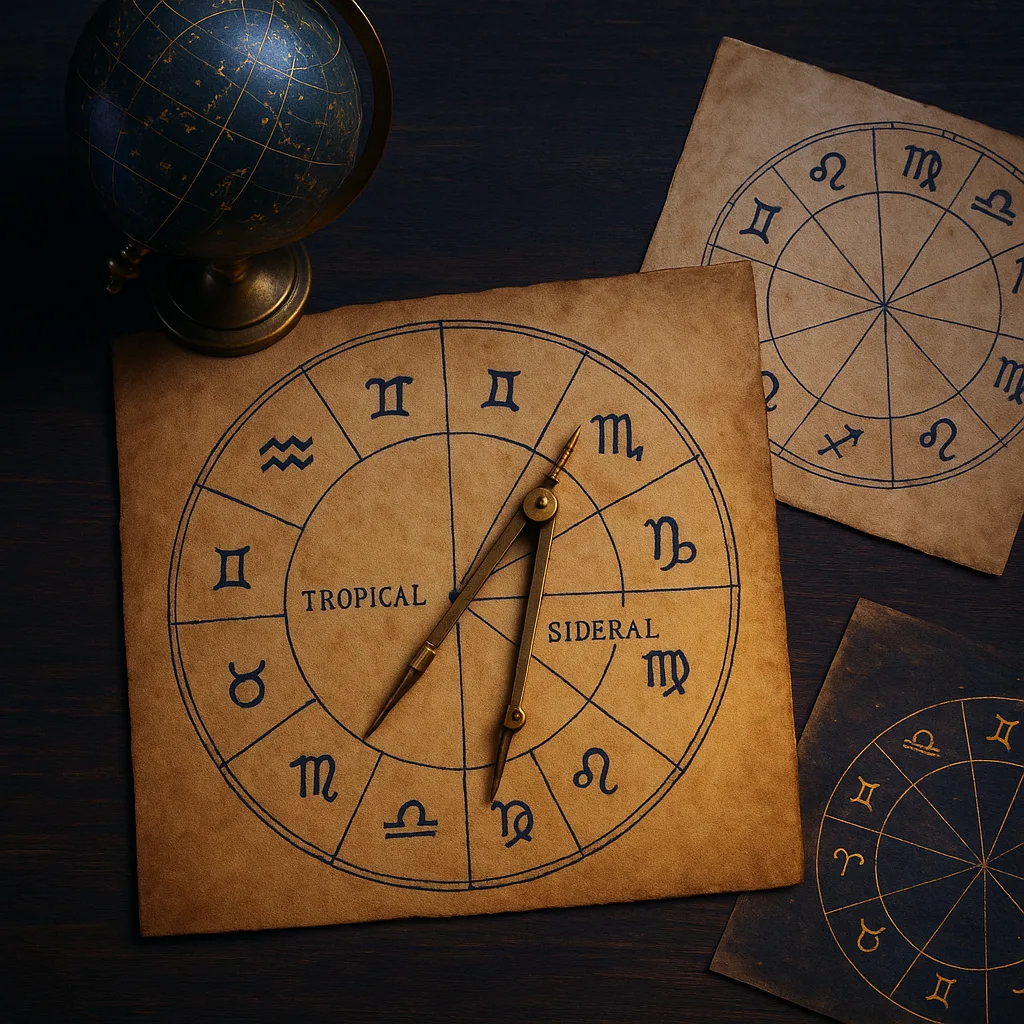
One root of this confusion is the existence of two distinct systems of zodiacal counting: tropical and sidereal. Understanding this difference helps clarify much of the confusion.
The tropical zodiac, more commonly used in the West and Brazil, takes the spring equinox as its starting point, the moment when the Sun crosses the celestial equator, and divides the zodiacal circle into twelve equal parts of thirty degrees, like a symbolic and seasonal calendar. The sidereal zodiac, a strong tradition in Vedic astrology, uses the actual position of the fixed stars in the sky as its reference.
Because Earth undergoes a slow wobble in its rotation axis, a phenomenon called precession of the equinoxes, the two systems have drifted apart over centuries. Today the difference between them totals about twenty-four degrees, enough for someone with the Sun in Leo in the tropical zodiac to appear as Sun in Cancer in the sidereal one. This shift is slow: the equinoxes move about one degree every seventy-two years, completing a full cycle in roughly twenty-five thousand eight hundred years. Anyone wanting to understand this calculation in detail can consult the article about the ayanamsha and why the solar sign changes in Vedic astrology.
Neither of the two systems is right or wrong: they are different languages for reading the sky, each with its own internal coherence.
For most Brazilian astrologers, who use the tropical system, this difference is not a problem to fix, just a different way of reading. The tropical zodiac speaks to the seasons of the year and to archetypes linked to that cycle; the sidereal speaks to the actual position of the stars. Comparing the two is like comparing the Gregorian calendar, with months of unequal duration, to a system of twelve equal slices: both organize time, but from different logic.
The table below summarizes the main differences between the two systems:
| Criterion | Tropical Zodiac | Sidereal Zodiac |
|---|---|---|
| Starting point | Spring equinox (Sun-Earth position) | Actual position of fixed stars |
| Predominant use | Western astrology, including Brazil | Vedic astrology (Jyotish) |
| Division of circle | 12 equal parts of 30 degrees | 12 parts based on actual constellations |
| Accumulated difference today | Reference of 0 degrees | About 24 degrees of offset (ayanamsha) |
| Speed of precession | - | Approximately 1 degree every 72 years |
You don't have just one sign: you are the whole zodiac
One of the oldest misunderstandings is the idea that a person can be reduced to a single sign. It exists because it was born from a practical simplification: discovering the solar sign requires no complex calculation, just a birth date.
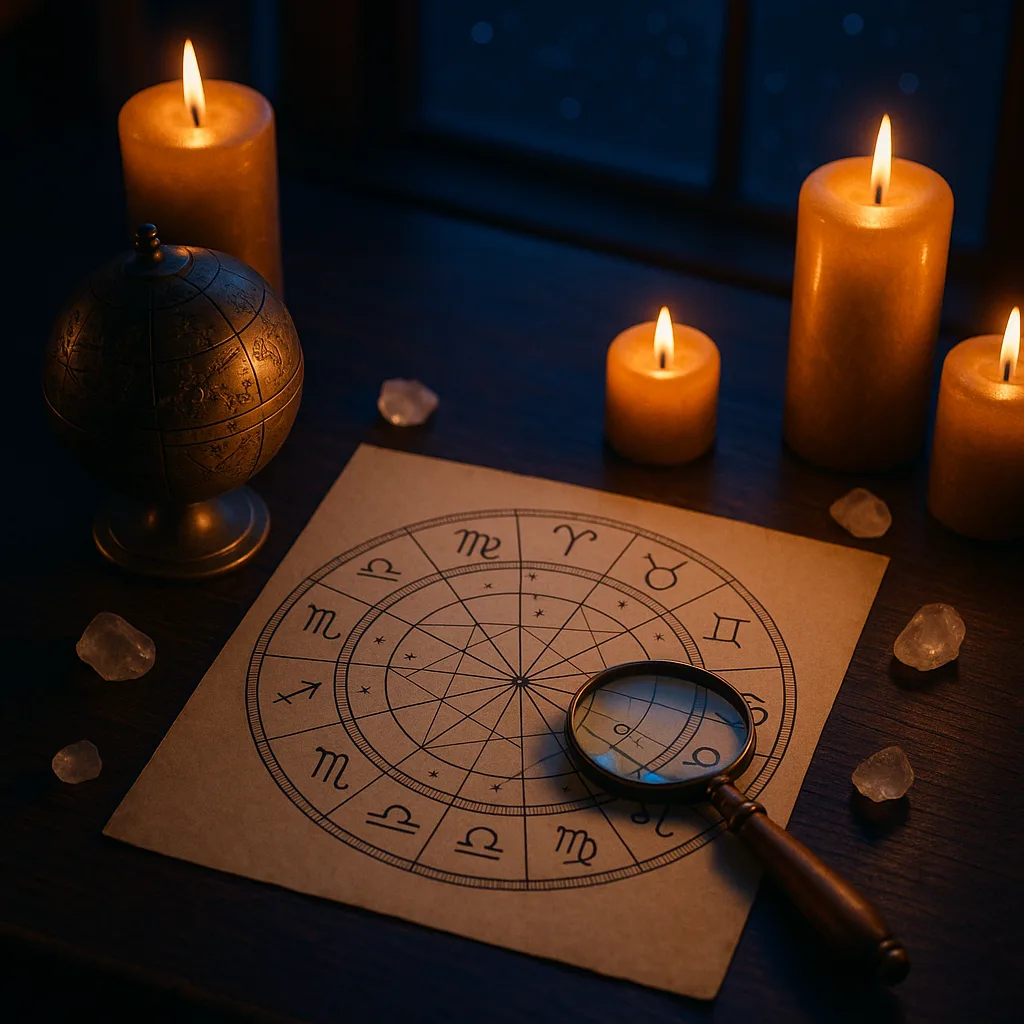
The complete birth chart, the circular map that represents the sky at the exact moment of birth, shows that all twelve signs are present, each occupied by a different planet, point, or astrological house. The solar sign, which you probably already know by heart, only shows where the Sun was at that moment. It speaks of your essence, your vitality, the brightness you seek to express to the world, but it does not tell the whole story.
The Moon, for example, can be in a water sign, revealing deep emotional sensitivity even if the Sun is in a more rational air sign. The rising sign, calculated from the exact birth time, shapes how a person presents themselves to the world. Venus, Mercury, Mars, and other planets occupy their own positions, forming a combination far more complex than any zodiac stereotype suggests.
This is why two people with the same solar sign can be so different: astrology never worked with twelve fixed categories, but with practically infinite combinations. You do not need to fit a single magazine-style description to recognize yourself in the sky. The steps below summarize how to read a chart beyond the solar sign:
- Identify the solar sign, which indicates the birth date and represents essence and vitality.
- Locate the Moon in the chart, which shows the emotional world and can be in a very different sign from the Sun.
- Calculate the rising sign from the exact birth time, as it defines how a person presents themselves to the world.
- Observe the positions of Venus, Mercury, and Mars, which detail affection, communication, and action.
- Read the set of twelve astrological houses, which show which areas of life these energies manifest most strongly.
This last step is explored in depth in the article about how astrological houses reveal more about romantic life than the solar sign alone.
Does astral chaos really exist?
Another phrase that has taken on a life of its own in Brazilian popular culture is astral chaos: that month before your birthday which, according to popular belief, would be marked by confusion, delays, and upheaval. The idea has no established origin in classical astrological tradition.
What does exist is a symbolic period of cycle closure: in the weeks before the solar return, the Sun returns to the exact position it held on the day of birth. This movement, called the solar return, symbolically marks the end of a twelve-month cycle and can bring a stronger sense of introspection, reflection, and life review, but that is quite different from a guaranteed sentence of chaos.
Many astrologers prefer to describe this phase as an invitation to pause and reflection, not as an automatic curse. Viewing this period as a time to look back, understand what flourished and what needs to be released tends to be more useful than fearing it in advance. The sky rarely works in terms of punishment: it works in cycles, invitations, and lessons.
Looking at the sky with more curiosity and less fear
Clarifying these myths does not diminish the wonder of astrology; on the contrary, it restores the depth it deserves. Understanding that the zodiac is a symbolic language, that the birth chart is far richer than a single sign, and that no phase of life is condemned in advance are important steps toward a more mature relationship with the sky.
Frequently asked questions
Is Ophiuchus a real 13th sign?
Ophiuchus is a real constellation that the Sun passes through in the sky, but the Babylonians decided not to include it in the twelve-sign zodiac to maintain an organized system compatible with the calendar. NASA does not create or recognize signs, as it works with astronomy, not astrology.
What is the difference between tropical and sidereal zodiac?
The tropical zodiac uses the spring equinox as a reference and is the system most used in the West, while the sidereal is based on the actual position of fixed stars and is characteristic of Vedic astrology. The difference between the two today totals about 24 degrees because of the precession of the equinoxes.
Why are two people of the same solar sign so different?
Because the solar sign shows only the position of the Sun at the moment of birth, while the complete birth chart includes the Moon, the rising sign, and all other planets, each in a different sign and house. This combination creates practically infinite variations among people of the same sign.
Is astral chaos a belief from traditional astrology?
There is no established origin for this term in classical astrological tradition. What does exist is the solar return, a symbolic period that precedes the birthday and is usually interpreted as a phase of cycle closure and introspection, not as a guarantee of problems.
Does Vedic astrology use the same zodiac as Western astrology?
No. Vedic astrology, or Jyotish, uses the sidereal zodiac, based on the actual position of the stars, while Western astrology uses the tropical zodiac, based on the seasons. This is why the solar sign of the same person can change from one system to the other.

Recomendado
Astrologia, Simbolismo e Mapa das Personalidades
A astrologia acompanha a humanidade desde as primeiras grandes civilizações. A ideia de que a vida biológica na Terra pode ser influenciada pelos astros gerou e gera grande fascínio no homem.
Universo Astral Editorial Team · Zodiac signs and fun facts
This article was produced by the Universo Astral editorial team, with AI tools assisting research and drafting and human review before publication. If you spot anything inaccurate or outdated, let us know at our contact email.