Repeating Patterns: How Your Birth Chart Reveals Behavioral Cycles
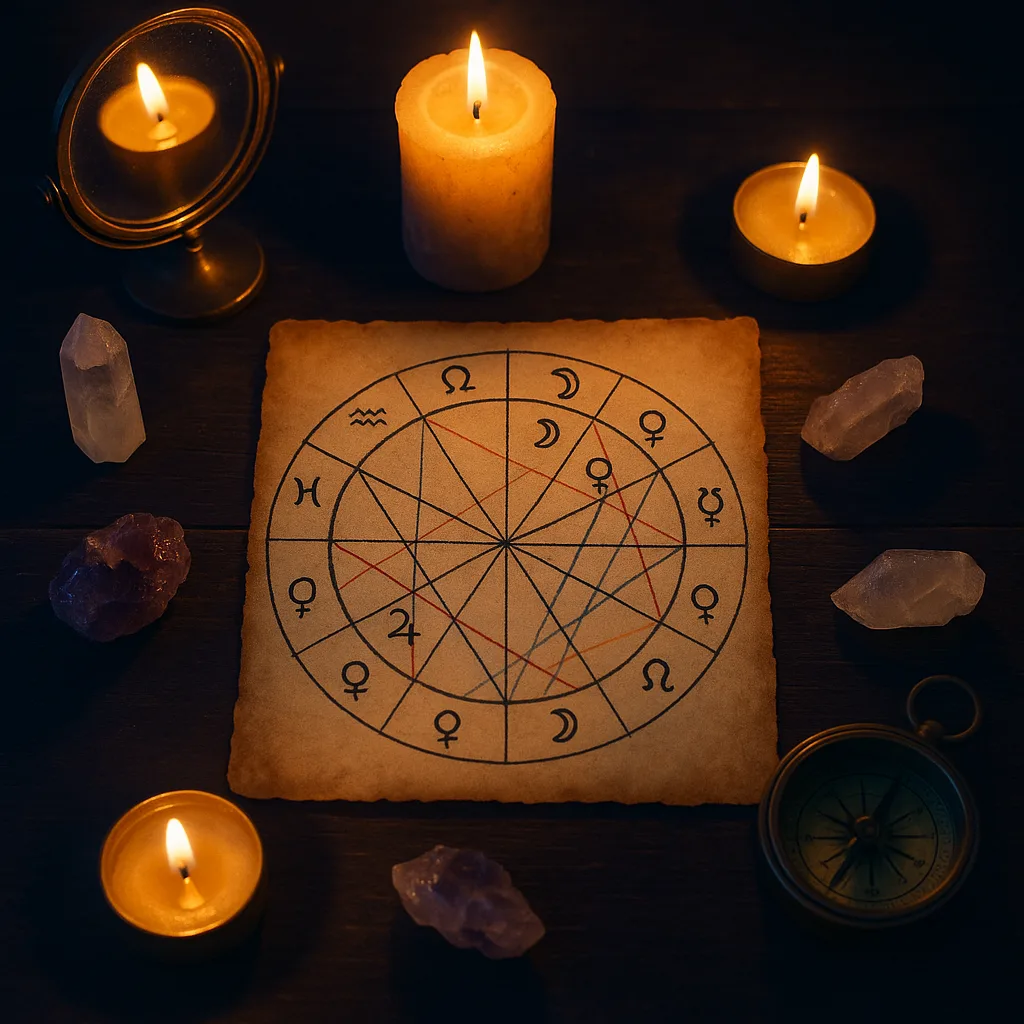
Today, September 8, 2026, the Moon moves out of its waning phase in Leo and into a New Moon forming a Solar Eclipse, peaking at 2:45 PM (Brasília time), right in the sign of the heart and self-expression. It is one of those moments when the sky seems to say: stop carrying what no longer serves you. Dates like this tend to bring into the open something many people had already sensed intuitively for a while but avoided facing. And that is exactly the mechanism, a pattern that keeps resurfacing until it is confronted, that a birth chart can name with a precision no generic horoscope can match.
Your birth chart does not describe your day, it describes your knots
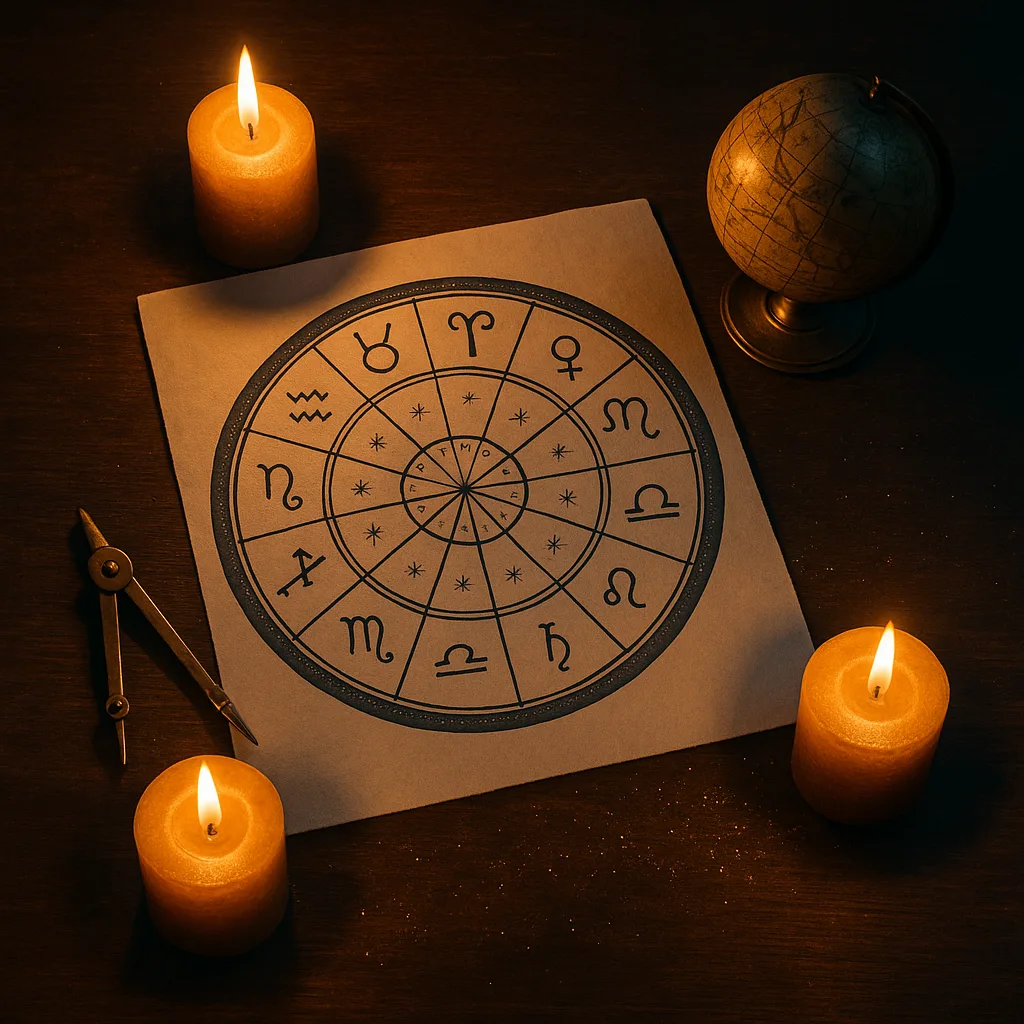
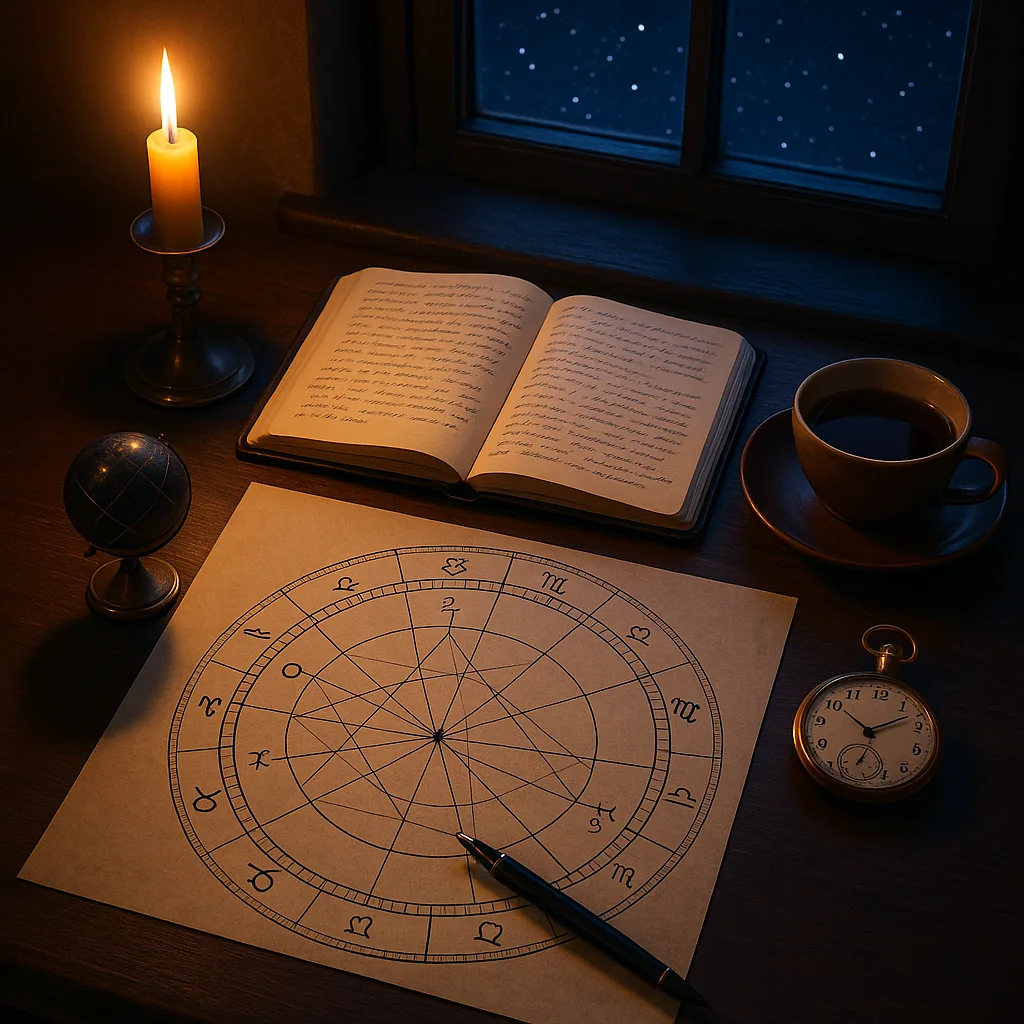
A daily horoscope speaks to general trends for anyone born under the same sun sign, which covers millions of people with completely different life stories. A birth chart is something else entirely: it is a snapshot of the exact sky at the moment you were born, factoring in not just the Sun but also the Moon, Mercury, Venus, Mars and the other planets, spread across signs, houses and the aspects they form with one another. That combination is what explains why two people with the same sun sign can react in opposite ways to the same situation.
It is precisely within that specific combination that repeating patterns live. A planet that forms the same kind of tense aspect with several other points in the chart, or a house that concentrates multiple planetary placements, works like a theme life keeps bringing back, dressed differently each time, until the person decides to deal with it head on.
Where to look: aspects, houses and planets that repeat
There are a few signs in a chart that tend to point to where these cycles live:
- Square aspects (planets 90 degrees apart) tend to mark internal tensions that call for ongoing action and adjustment, not a single, final fix.
- Houses with a cluster of planets (three or more in the same sector) usually point to an area of life, whether relationships, work, family or communication, that demands recurring attention and where the same lessons tend to repeat in new forms.
- Ruling planets placed in challenging positions, such as the Ascendant ruler forming tense aspects with Saturn or Pluto, often signal patterns tied to self-image or fear that resurface across different stages of life.
None of these signs work as a verdict. They simply show where it is worth looking more closely, not what is bound to happen.
Mercury retrograde as a temporary magnifying glass on your own patterns
In 2026, Mercury goes retrograde three times: from February 26 to March 20, from June 30 to July 23 (in Cancer), and from October 24 to November 13 (in Scorpio), adding up to 68 days in the year, nearly 19% of the calendar. From an astronomical standpoint, it is an optical effect: Mercury orbits the Sun in just 88 Earth days, and when Earth overtakes it in speed, the planet appears to move backward across the sky, even though it keeps moving forward on its normal path around the Sun.
The interesting symbolic use of this period is not blaming Mercury for lost messages or broken plans. It is noticing this: when the same kind of misunderstanding, the same forgetfulness, the same doubt about self-confidence keeps resurfacing during these cycles, it usually points to a personal pattern that already existed in the birth chart and that the retrograde simply brings into sharper focus for a limited time. It is a short, recurring window that works almost like a reminder: this issue still has not been resolved.
The backdrop of 2026: Saturn and Neptune in conjunction
Some link 2026 to a collective moment of revisiting old structures, marked by the conjunction of Saturn and Neptune in Aries. Saturn represents limits, responsibility and what has already been built; Neptune symbolizes dissolution, uncertainty and the wearing out of forms that no longer make sense. When the two meet in the sign that opens the zodiac, tied to action and fresh starts, the symbolic reading is that old structures, whether personal or collective, stop holding themselves up on their own.
It is worth treating this as symbolic and cultural material, not as astronomical fact with a proven effect. But as a tool for reflection, this backdrop helps explain why so many people report, this year, the sense that something needs to change at the root, not just on the surface. If your birth chart already showed tensions involving Saturn, Neptune or the Aries-Libra axis, this is a period when those issues tend to become more visible.
A simple exercise to start mapping your own cycles
You do not need to master technical astrology to start noticing your own patterns using the chart as a guide. Here is one way to go about it:
- List three situations that have repeated in your life over the past few years, changing context but keeping the same underlying feeling (the same sense of not being heard, the same fear of commitment, the same difficulty asking for help).
- Look at your birth chart to see which house and which planets show up connected to that theme (communication usually points to the 3rd house and Mercury, for example; self-image, to the Ascendant and the Sun).
- Check whether those points form tense aspects with each other. That alone will not explain everything, but it tends to offer clues about why that specific pattern keeps coming back.
The value of this exercise is not in finding a final answer, but in gaining a more precise vocabulary to name what used to feel like just a vague sense of deja vu.
Self-knowledge is not about erasing the pattern, it is about recognizing it sooner
Interestingly, digital engagement data (such as figures released by the app Co-Star in 2024) shows that content about Mercury retrograde generates up to three times more interest than any other astrological topic. That suggests the real appeal of popular astrology is not the prediction itself, but the relief of realizing that what you are going through has a name, a shape, a recognizable pattern.
Using a birth chart as a tool for self-knowledge, in that sense, does not mean waiting for a pattern to vanish for good. It means training yourself to spot it earlier, with less suffering and more clarity about what to do differently the next time it shows up at your door.

Recomendado
Mapa Astral Kármico
Você já sentiu que certos padrões se repetem em sua vida? Relacionamentos que seguem o mesmo roteiro, desafios que parecem voltar ou talentos que surgem naturalmente? Nada disso é por acaso.

Recomendado
MAPA ASTRAL E NUMEROLÓGICO PERSONALIZADO
Mapa Astral + Numerologia Um mergulho profundo na sua essência. E se tudo o que você procura… já estivesse dentro de você - esperando para ser revelado?
Recomendado
Astro Reflexo
Descubra o que os astros revelam sobre quem você é. Em menos de um minuto, calculamos seu Sol, Lua e Ascendente com precisão astronômica e uma inteligência artificial escreve um resumo personalizado só para você.
Universo Astral Editorial Team · Birth charts and numerology
This article was produced by the Universo Astral editorial team, with AI tools assisting research and drafting and human review before publication. If you spot anything inaccurate or outdated, let us know at our contact email.