Three-Card Tarot for Self-Discovery: A Step-by-Step Guide
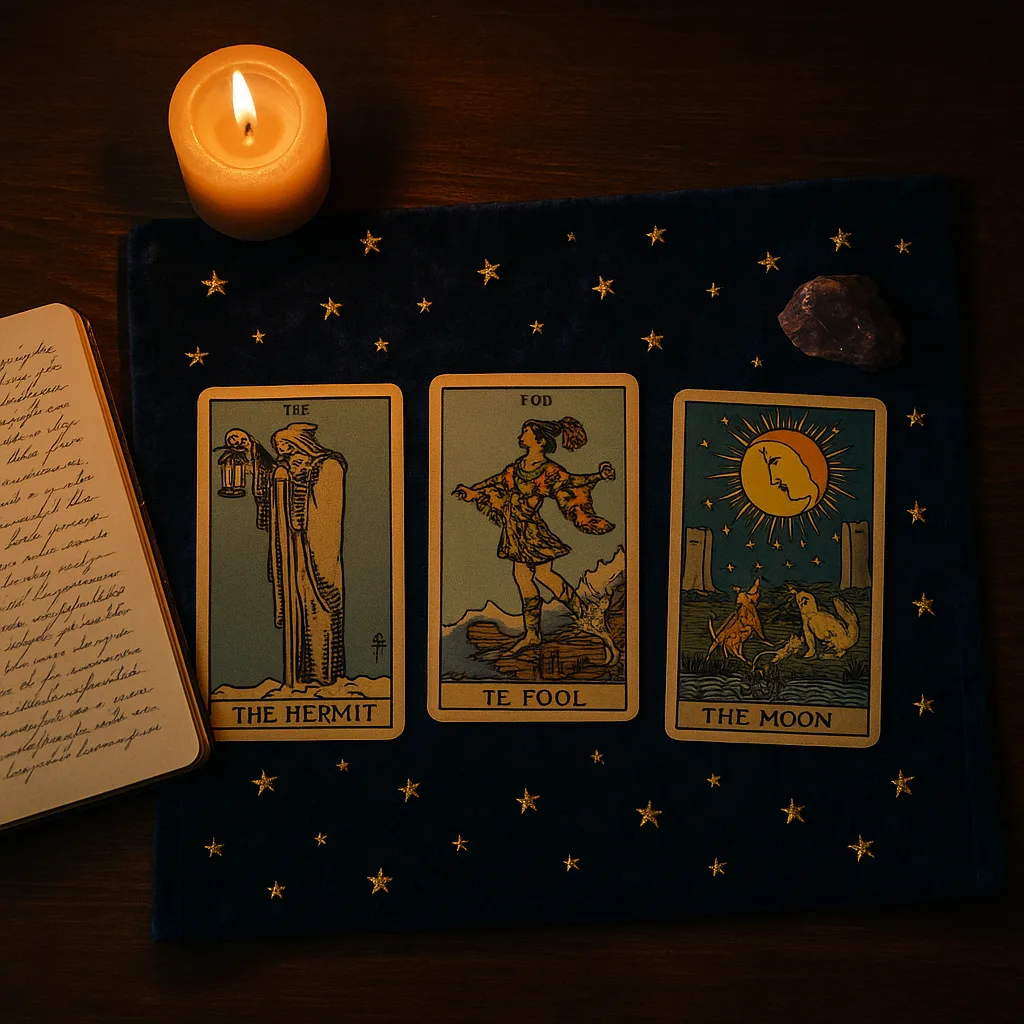
Three cards on the table, a question inside you
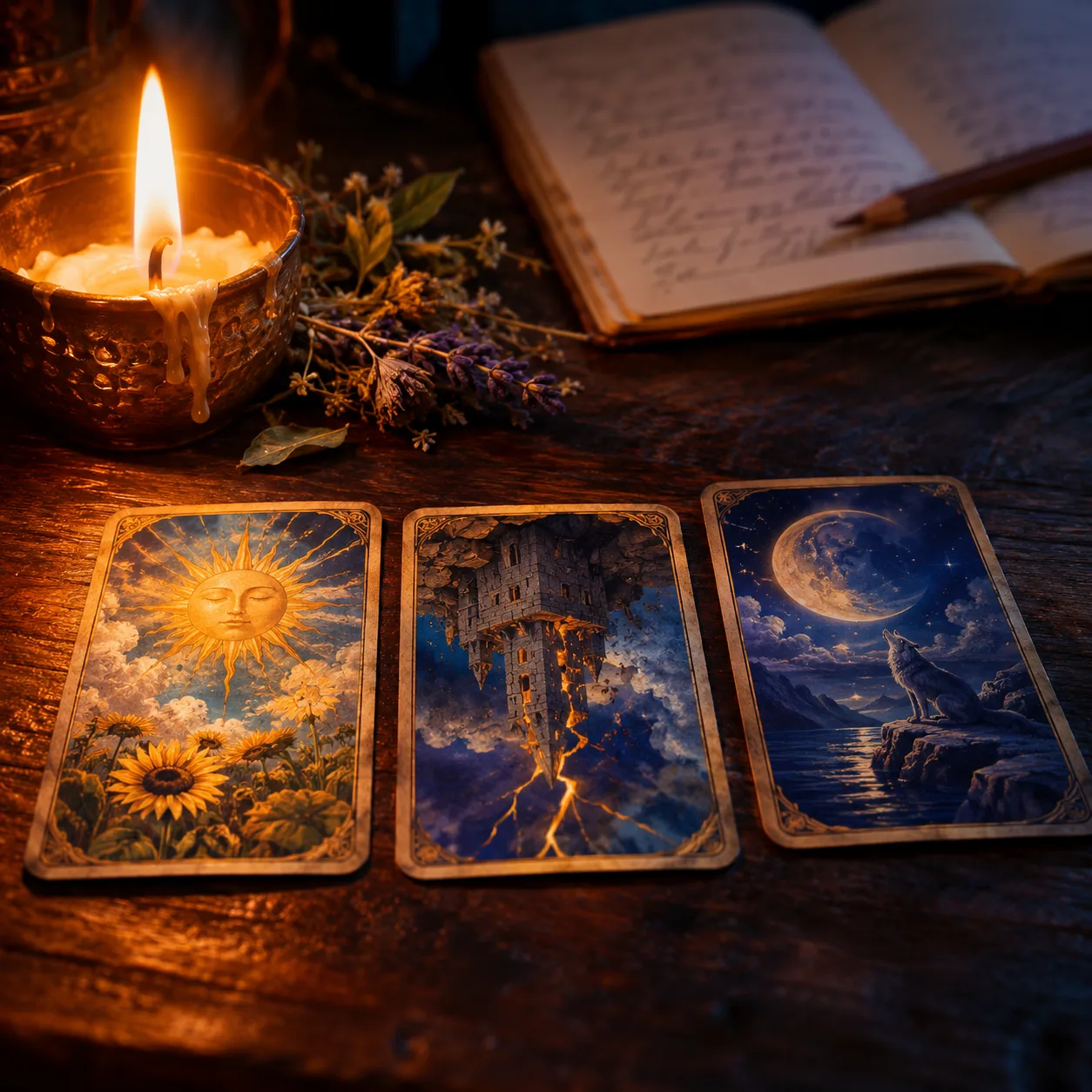
Shuffling the deck alone, in silence, and laying down three cards on the table is an exercise unlike any consultation with a professional tarot reader. There is no one on the other side handing you a ready-made answer: there is you, the images, and the willingness to listen to what daily routine usually drowns out. It is in this solitary encounter with the deck that the three-card spread shows its real strength. It does not promise to predict the future with precision, but it works as a mirror for observing how you think, feel, and react to life right now.
Before you begin, one point deserves attention: tarot is a symbolic tool for reflection and self-discovery, not a substitute for medical diagnosis, legal advice, or financial decision-making. For those areas, the path is to combine the reading with guidance from qualified professionals. What the deck offers is something else: an invitation to look inward with more honesty.
The three-card format detailed in this article is the same exercise presented more concisely in Three-Card Tarot: A Step-by-Step Guide to Knowing Yourself Better, if you want an even more direct outline before diving into layout variations.
Why exactly three cards
A single card is revealing but limited: it shows one piece, without context. Five cards or more, on the other hand, tend to confuse those still learning to relate different positions. Three is the minimum number in which a story begins to exist: there is a beginning, a middle, and an end, a cause, a situation, and an outcome. The brain naturally recognizes three-part structures as narrative, and that is why this spread works for both complete beginners and experienced readers seeking a quick answer in their daily lives.
The central point for self-discovery is this: the three cards should not be read separately, as if they were three isolated answers. They form a sentence, a line of reasoning. The middle card changes meaning depending on what came before it; the last card carries different weight based on what precedes it. Reading tarot for self-discovery is, first and foremost, learning to follow that narrative thread without cutting it into pieces.
Preparing the environment and mind before shuffling
Before even touching the cards, there is invisible work that makes a difference: quieting the body and mind. The richest reading does not come from the intellect trying to decipher each symbol like a puzzle, but from a state of quieter listening, where intuition has room to emerge. Set aside a few minutes without your phone nearby, perhaps with a candle lit or slower breathing, and only then begin.
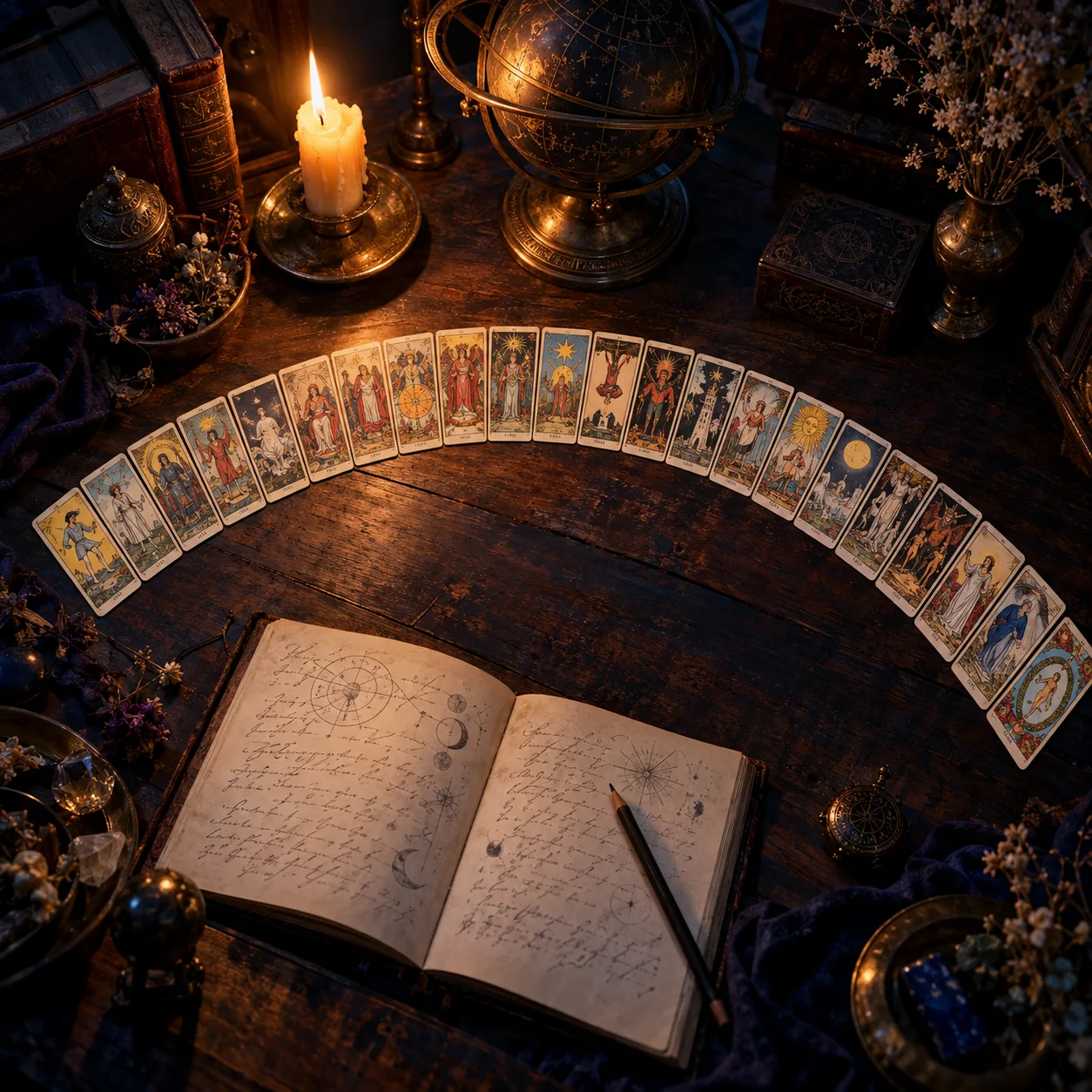
Choose a deck with which you truly connect: the images need to speak to you, so it is worth browsing a few before deciding. The diversity of visual styles among tarot decks is nothing new: the Bibliothèque Nationale de France maintains a digitized collection of historical tarot decks, showing how the images on each card have been represented in very different ways throughout the centuries, long before the modern decks in circulation today. You do not need to memorize all seventy-eight meanings by color. Knowing the basics of the major and minor arcana is enough to practice with the three-card spread, which is exactly the structure ideal for those starting out. Anyone wanting to review those basics before continuing can consult the guide on Introduction to Tarot: Major Arcana and How to Begin Your Study.
The question matters more than the technique
This is perhaps the most overlooked point in any self-discovery reading: the question you ask before shuffling is what directs the spread. Yes-or-no questions tend to empty tarot of its reflective potential. The invitation is to trade 'what will happen to me?' for something like 'what inner issue is behind the conflict I am living through?' or 'what do I need to see about myself right now?'.
This shift in focus, from external (what will happen) to internal (what is in me), transforms a simple spread into genuine self-discovery work. The intention behind your question activates the kind of answer the cards will return.
Choosing the structure of the three positions
After defining your question, choose the layout that matches the type of reflection you seek. The table below summarizes the five variations described in this guide, what each position represents, and for what type of question it works best:
| Layout | 1st Card | 2nd Card | 3rd Card | When to Use |
|---|---|---|---|---|
| Past, Present, and Future | Influences and patterns that shaped the situation | Energy of the present moment | Likely direction if nothing changes | Understanding a life pattern over time |
| Body, Mind, and Spirit | External plane: actions, environment, how others perceive you | Internal emotional state | Deeper needs | Checking your balance in the present moment |
| Situation, Action, and Result | Central challenge | Suggested attitude | Likely outcome | Concrete decisions, like a work impasse |
| Strengths, Weaknesses, and Counsel | Available internal resources | Points of attention | Suggested path of action | Career questions and personal development |
| Keep, Release, and Embrace | What is worth continuing to carry | What can already be let go | What is asking for space to enter | Times of transition and change |
For those wanting a guide dedicated to choosing among these and other combinations based on your life moment, check out Three Cards, Three Mirrors: How to Choose the Right Tarot Spread for Your Moment in Life. Those seeking the body-mind-spirit layout in depth can find a deeper exploration in Body, Mind, and Spirit: The Three-Card Spread That Exposes Your Inner Conflicts.
Step-by-step spread process
With your question defined and layout chosen, follow this sequence to perform your reading:
- Set aside a few minutes in silence, with no phone nearby, and breathe more slowly until your mind feels quieter.
- State your self-discovery question out loud or mentally, avoiding closed yes-or-no questions.
- Shuffle the cards while focusing on the intention of the reading, without rushing.
- Cut the deck into three piles or draw directly from the top, based on your preference.
- Draw three cards and lay them in a row from left to right, in the order of the positions you chose (for example, past, present, and future).
- Observe the story the three cards form together, before consulting any reference guide.
- Record in your journal what you felt, the words and images that resonated most, and the connections you made to your real life.
The moment of the spread
There is no hurry here: some people prefer to cut the deck into three piles before drawing one card from each, others draw directly from the top. The method matters less than the attention given to the gesture.
Reading the story, not isolated words
With the three cards revealed, resist the urge to rush to a reference guide and read each card as a dictionary definition. The real exercise is asking: what sentence do these three images form together? How does the first card explain the second? How does the second lead into the third?
Beyond the traditional meaning of each arcana, it is worth observing the visual details that jump out at you: the dominant colors, the gestures of the figures, the objects present in the scene, where the characters are looking. These symbolic elements often carry more truth about your moment than any manual interpretation. It is there, in what the image awakens specifically in you, that the most personal layer of the reading lives. If the question motivating the reading involves a relationship, it can help to also look at what each suit typically indicates in Tarot Suits in Love: How Cups, Coins, Swords, and Wands Appear in a Relationship.
After the reading: the journal as part of the process
A step often overlooked is recording your reading. After interpreting the three cards, spend a few minutes writing in a journal what you felt, which words or images resonated most, and what connections you made to your real life. This habit transforms one reading into an ongoing process of self-discovery: over time, rereading these notes reveals patterns that a single spread would never show alone, such as which cards keep appearing, what themes repeat, and what direction you have been moving in.
The practice of tarot for self-discovery requires no special gift, only the willingness to sit with your own questions and listen to what emerges. Each three-card spread is a small conversation with yourself, and like any good conversation, it grows deeper through repetition, not through rushing toward final answers.
Frequently Asked Questions
Do I need to know the meaning of all 78 cards to do this reading?
No. The article explains that knowing the basics of the major and minor arcana is enough to practice the three-card spread, which is precisely recommended for beginners. Deepening your knowledge of the meanings can come over time as you repeat the exercise.
What is the difference between the past-present-future spread and body-mind-spirit?
The first organizes the reading along a timeline, showing what shaped the situation, the present moment, and a likely direction. The second functions as a check-in on your present balance, crossing the external plane, emotional state, and deeper needs, without necessarily speaking about time.
Can I do this reading alone, without a tarot reader?
Yes, and that is exactly the point of this article: the three-card spread is described here as a solitary exercise, done without anyone handing you a ready-made answer. The work of interpretation, including journaling, is done by the person who shuffles the cards.
What should I do if I do not understand what the cards are saying?
The text suggests observing the visual details of the card first (colors, gestures, objects, where the characters are looking) before turning to a reference guide. If the reading still does not make sense, jot it down in your journal and revisit those cards later, since patterns tend to appear with repeated practice.
Can tarot replace professional guidance on important decisions?
No. The article is clear that tarot is a symbolic tool for reflection and self-discovery, and that medical, legal, or financial questions require guidance from qualified professionals, not just reading the cards.

Recomendado
Incensário Cascata Refluxo Cerâmica
Efeito cascata hipnotizante A fumaça desce como uma cachoeira, criando um visual relaxante perfeito para momentos de calma e foco
Universo Astral Editorial Team · Tarot and moon transits
This article was produced by the Universo Astral editorial team, with AI tools assisting research and drafting and human review before publication. If you spot anything inaccurate or outdated, let us know at our contact email.