Mercury Retrograde in Practice: Why It Scares Us and What to Do
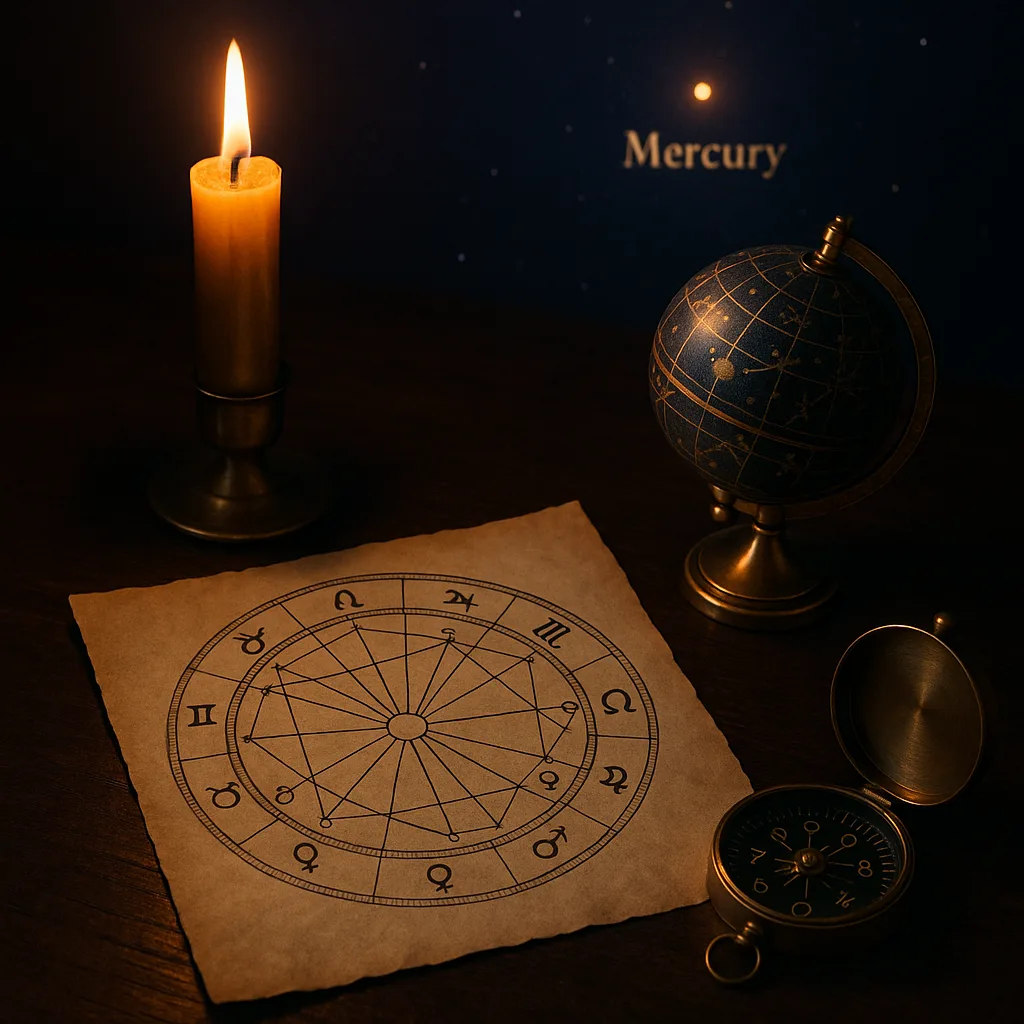
A car passing another on the highway
Picture two lanes on a highway, both moving in the same direction. You're in a faster car and pass a slower one. For a moment, looking in the rearview mirror, it seems the other car is moving backward, even though it's still going forward, just more slowly. This is how a scientist from Johns Hopkins University's Applied Physics Laboratory, affiliated with NASA, described the phenomenon we know as Mercury retrograde. The planet doesn't change direction: it's Earth, spinning faster around the Sun, that creates this optical illusion as it passes Mercury in its orbit.
This explanation removes much of the drama around the topic, but it doesn't erase why it continues to fascinate and frighten so many people. Two layers of truth are happening in parallel: one astronomical, measurable and straightforward, and another symbolic, built over centuries of watching the sky as a mirror of human experience. This article explores both without confusing one with the other. For those wanting to understand the general mechanism behind these movements, see how to read a planetary transit and decode today's sky.
What actually happens up there
Mercury is the fastest planet in the Solar System: its year lasts only 88 Earth days. Because it orbits at such a different pace than ours, this apparent retrograde effect as seen from Earth happens from time to time. This occurs three to four times a year, and each window lasts roughly three weeks. It's not a rare event or dramatic in a cosmic sense: it's a predictable orbital pattern, calculated with precision by astronomers for centuries. To track the exact dates of each retrograde period, ephemeris calendars like timeanddate.com publish the precise start and end period of each cycle, city by city, which helps place the phenomenon on the calendar without relying solely on collective memory.
Mercury isn't alone in this optical movement. Venus retrogrades every two years for about 45 days, Mars every two and a half years for approximately two and a half months, and distant planets like Saturn, Uranus, Neptune and Pluto spend much of the year in apparent retrograde motion. But because they move more slowly and get less attention, they rarely become family group chat topics.
Why the belief caught on so strongly
From a scientific standpoint, there is no causal relationship between Mercury's position and setbacks like lost emails, relationship arguments or computer crashes. Astronomers tend to be categorical: the phenomenon is real as an apparent movement, but there's no physical mechanism explaining impacts on human behavior or technology.
Psychology helps explain why the idea seems so convincing in practice. It's called confirmation bias: when someone already believes Mercury retrograde brings confusion, they tend to notice and remember exactly the disruptions that happened during that period, ignoring the smooth days in that same phase and problems that arise at any other time of year with no planet involved.
The cultural origin of this modern reputation also helps explain the phenomenon: in April 1979, the American newspaper The Baltimore Sun published an alarmist warning suggesting nobody should start important projects while Mercury was retrograde, even mentioning magnetic storms. The idea gained traction in newspapers and popular horoscopes that decade and picked up again from 2009 onward, when social media turned the topic into a recurring joke whenever something went wrong. This same bias partly explains why generic sun sign horoscopes rarely hit the mark: they ignore each person's complete birth chart.
What astrology sees in this movement
Here comes the second layer, the symbolic one, which doesn't compete with science but simply speaks another language. In astrological tradition, Mercury governs communication, reasoning, studies, travel, negotiations and the use of technology. When it appears to move backward, the symbolic reading isn't one of danger, but of invitation to pause: the mental and communicative functions that normally spin outward now spin inward.
It's as if the gears of daily life lose some external velocity to gain internal depth: time to review contracts, reread messages before sending, pick up conversations left unfinished, reorganize your schedule or reconsider rushed decisions. Astrologer Alexey Dodsworth from the Personare platform reminds us that a sign itself doesn't retrograde: the planet passing through it does. That's why the phrase Mercury retrograde in Aries, for example, suggests that the impulsive and immediate energy of that sign passes through the filter of Mercury's revision, calling for more caution before acting or speaking on impulse.
The specific area of life most affected by this phase varies depending on the astrological house in each person's chart where Mercury is passing at that moment. That's why two people can experience the same transit in completely different ways, one feeling more impact at work, another in relationships or finances. It's not uncommon for someone from your past to reappear precisely during this interval: the article on why exes always show up during Mercury retrograde explores that reading in detail.
The shadow period: the detail most people explain poorly
One of the most interesting, and least known aspects outside deeper study circles, is the so-called shadow period. About two days before the retrograde begins and two days after it ends, Mercury becomes stationary: it seems to pause in the sky, neither advancing nor retreating, as if hesitating before changing direction.
In traditional reading, it's precisely in this transition interval that effects tend to announce themselves most strongly, often before the planet officially enters retrograde, and still lingering a bit after it returns to direct motion. That's why those who track ephemerides carefully prefer to extend the window of caution, rather than treat the start and end of retrograde like an on-off switch.
How the phase behaves throughout the cycle
The table below organizes what's already been described about the rhythm of this phenomenon, from the start of the shadow through the end of apparent movement:
| Stage | Approximate duration | What tends to happen |
|---|---|---|
| Entering shadow period | 2 days before the start | First signs of friction, planet stationary in the sky |
| Retrograde motion itself | About 3 weeks | Peak of apparent backward movement, focus on review |
| Exiting shadow period | 2 days after the end | Residual effects before full return to direct motion |
| Annual frequency | 3 to 4 times per year | Each complete window lasts roughly three weeks |
How to navigate this phase without drama
Regardless of each reader's beliefs about cause and effect, astrological tradition has accumulated over time a practical list of precautions that make sense even by pure common sense:
- Reread before sending: emails, messages and important proposals deserve a second look before going out. It costs nothing and prevents most of the misunderstandings typically blamed on the transit.
- Back up your devices: technical failures happen all year, but using this period as a reminder to save files and update systems is pure practical care.
- Confirm times and commitments: rescheduling, delays and plan changes get a reputation for being more common during this phase. Checking everything twice reduces friction.
- Avoid signing contracts in a rush: if possible, review clauses carefully, looking for small print errors that would slip by at other times. A more detailed guide is in Mercury retrograde at work: meetings, contracts and emails.
- Use the time to review, not to debut: revisiting a shelved project, rereading a book, reconnecting with someone from your past or reconsidering a decision tends to flow better than launching something brand new.
Treating Mercury retrograde as a cosmic villain is giving it a power that the astrological tradition itself never intended to grant. The richer reading isn't the one that promises catastrophe, but the one that suggests pause: review before reacting, confirm before committing, and use these three weeks, three or four times a year, as a recurring invitation to slow down in a world that rarely offers that chance.
Frequently asked questions
Does Mercury retrograde really cause problems in daily life?
According to science, there is no physical mechanism linking Mercury's position to computer failures or arguments. What exists is confirmation bias: people remember more the disruptions that happen during this period and forget the problems that arise at any other time of year with no planet involved.
How many times a year does Mercury go retrograde?
The phenomenon happens three to four times a year, and each window lasts roughly three weeks. Ephemeris calendars, like the one available on timeanddate.com, provide the exact dates of each cycle.
What is the Mercury retrograde shadow period?
It's the interval of about two days before the retrograde begins and two days after it ends, when the planet becomes stationary in the sky. In traditional astrological reading, effects tend to announce themselves during this interval and linger a bit after the retrograde officially ends.
Is it true you shouldn't sign contracts during Mercury retrograde?
There's no formal prohibition, but astrological tradition recommends extra caution: review clauses carefully and avoid rushed decisions, since this is the symbolic period for review, not debuts.
Why do people believe so much in Mercury retrograde despite no scientific proof?
Modern fame traces back to an alarmist warning published in 1979 by The Baltimore Sun, which gained traction in popular horoscopes of that era and surged again from 2009 onward with social media, turning the topic into a running joke whenever something went wrong.

Recomendado
Astro Reflexo
Descubra o que os astros revelam sobre quem você é. Em menos de um minuto, calculamos seu Sol, Lua e Ascendente com precisão astronômica e uma inteligência artificial escreve um resumo personalizado só para você.
Universo Astral Editorial Team · Tarot and moon transits
This article was produced by the Universo Astral editorial team, with AI tools assisting research and drafting and human review before publication. If you spot anything inaccurate or outdated, let us know at our contact email.