How to Read a Planetary Transit: The Method Behind Today's Sky
Some days everything goes smoothly. Others feel like every conversation needs a translator. When this happens in a pattern, always near the end of the month or around the same dates, the cause might not be your mood. It could be the sky moving. Astrologers call this a planetary transit, and understanding the mechanics behind it changes how you read your own calendar.
What actually happens when a planet transits
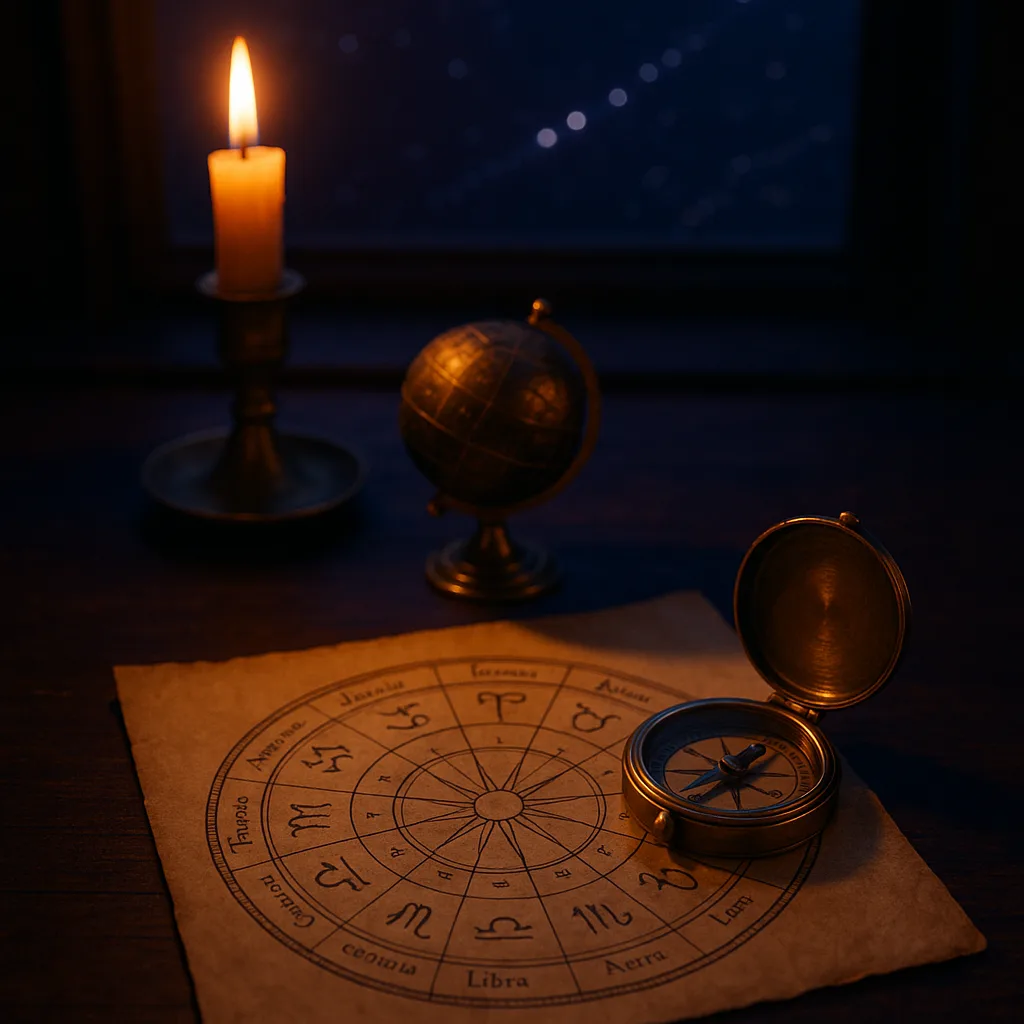
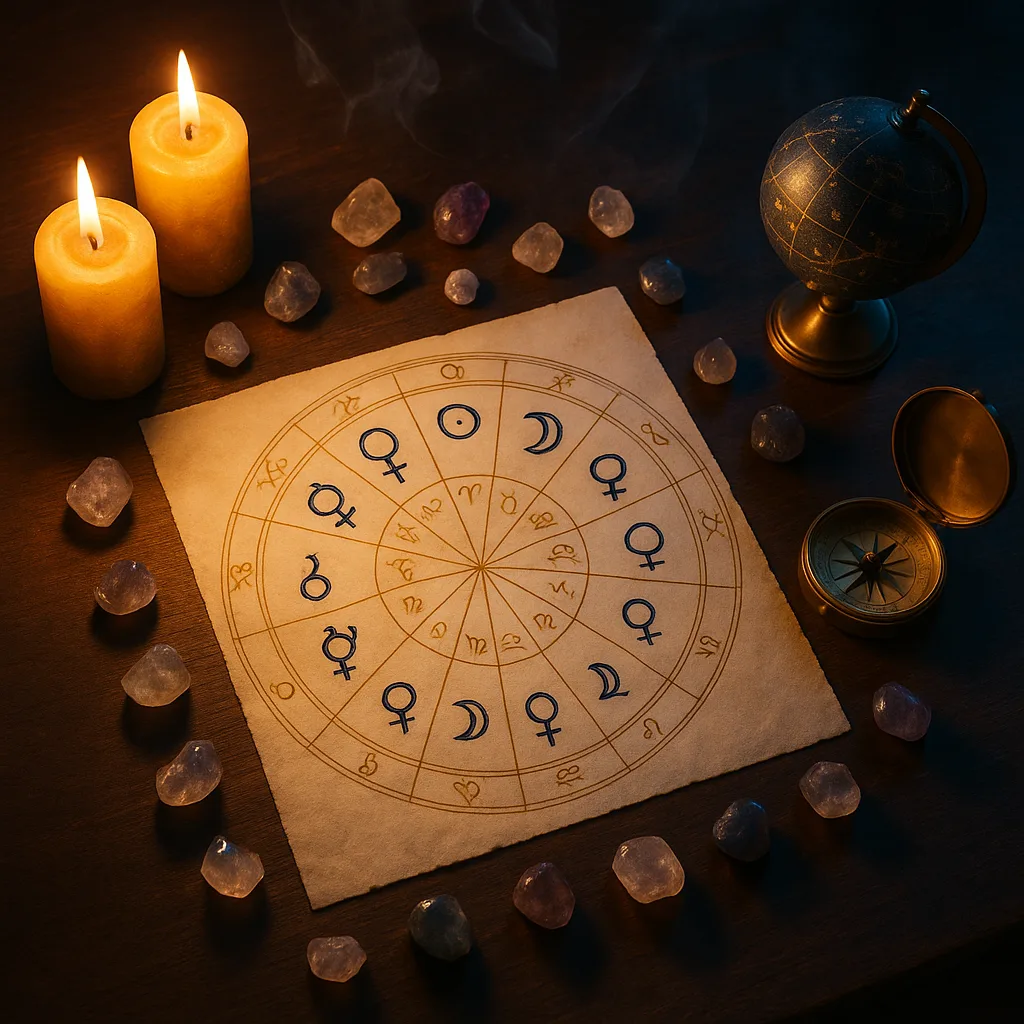
Transit is the technical term for the actual movement of planets across the sky, compared to their positions at the exact moment you were born, your birth chart. The birth chart is a fixed snapshot of the sky at the instant of your first breath. Transits are the ongoing movie: the Sun, the Moon, Mercury, and the other planets keep moving through the signs, forming new angles with the fixed points of your chart.
Every time a moving planet symbolically touches a planet or point in your natal chart, something gets activated. A feeling can surface out of nowhere, news can change the week's plans, or you might feel a sudden urge to start something over. Tracking these movements is one of astrology's oldest and most widely used techniques for understanding when things tend to shift, not to predict the future as a fixed sentence, but to recognize tendencies.
The three ingredients of every transit reading
Before any interpretation, there's a simple formula every astrologer applies, often without thinking about it directly: which planet is transiting, which point of the natal chart it touches, and what kind of aspect (angle) the two form with each other.
- The transiting planet defines the nature of the matter at hand: Venus relates to affection and money, Mars to action and conflict, Saturn to structure and limits.
- The activated natal point shows which area of life it affects. If the transit touches the Sun, the effect is more central and tied to identity. If it touches the Moon, it stirs the emotional realm directly.
- The aspect formed, the geometric angle between the two, indicates whether the energy flows easily or meets resistance. Trines and sextiles tend to open doors with ease. Squares and oppositions call for effort, adjustment, sometimes real friction.
This combination of three variables, not any single factor alone, is why the same transiting planet can produce completely different effects in two people born on different days.
Fast or slow transit: the difference is duration, not just intensity
Not every transit lasts the same amount of time. The Sun, Moon, Mercury, Venus, and Mars are considered fast-moving planets. They cross the zodiac in days, weeks, or a few months, which is why they're behind everyday ups and downs: a passing bad mood, a burst of productivity, a week when relationships suddenly feel easier to navigate.
Jupiter, Saturn, Uranus, Neptune, and Pluto move slowly, and their transits last months or years. Jupiter, for example, takes about twelve years to complete its full journey around the zodiac, a period that tends to bring phases of expansion and open doors when it touches important points in the chart. Saturn is even slower. Its cycle takes roughly twenty nine and a half years, and that pace is exactly what produces the well known Saturn Return, around age 29 to 30, a maturing milestone many people feel without even being able to name it.
This speed difference matters in practice: a fast transit that creates tension on your chart usually passes like a cloud, uncomfortable, but temporary. A slow transit forming that same aspect tends to reorganize parts of your life for months, calling for more lasting decisions.
Houses as the stage: where the transit's energy settles
If the transiting planet defines the subject, the astrological house it passes through sets the stage where the story plays out. The twelve houses represent areas of life, including work, relationships, health, and family, and a planet moving through one of them lends its tone to that specific sector.
A classic example: when Venus transits the seventh house, traditionally linked to partnerships and marriage, relationships often feel lighter, dialogue becomes more affectionate, and people feel more willing to grow close to someone. A Jupiter transit through the tenth house, associated with career and reputation, often coincides with professional recognition, an unexpected offer, or the sense that your work is finally being noticed. In both cases, the effect isn't random. It comes from the meeting between the planet's nature and the territory of the house it's visiting.
When the transit is too slow to go unnoticed: the case of 2026
Some transits are rare enough to serve as a good example of how a long cycle unfolds. In February 2026, Saturn and Neptune form an exact conjunction in Aries, planets that haven't met in this sign since the nineteenth century. It's the kind of event that happens only once every several decades, and it tends to coincide with sweeping, almost generational reorganizations in how leadership and identity are built collectively.
Even so, a point worth making clear: even a transit with an exact date and time doesn't work like a switch that flips on a new reality overnight. What usually happens is the consolidation of a process that had already been taking shape for a while. The conjunction simply marks the point where that process becomes visible and harder to ignore. Those with planets in the early degrees of the cardinal signs (Aries, Cancer, Libra, Capricorn) tend to feel this call more directly, but that doesn't mean the rest of the chart is untouched by the overall climate of the period.
A weather forecast, not a life sentence
The most honest comparison for transits is a weather forecast. It warns that it might rain, suggests bringing an umbrella, and points to a tendency based on real calculations, in astrology's case, precise mathematical and astronomical calculations about where each planet sits in the sky. But deciding whether to leave the house, what to wear, and how to react to the rain is still up to you.
That's why twin siblings, born minutes apart, can go through the same transit in very different ways: each person's natal chart reacts differently to that day's sky. Following transits isn't about handing your decisions over to the stars. It's about having a map of context to understand why certain days call for more caution and others seem to open the way on their own, and using that information for your own clarity.

Recomendado
Curso MAPA ASTRAL
CURSO DESTRAVE SUA VIDA COM MAPA ASTRAL EM ATÉ 08 SEMANAS!

Recomendado
Manual Prático da Astrologia
O universo sempre exerceu um fascínio indescritível sobre a humanidade. De todas as suas maravilhas, a astrologia se destaca como uma antiga arte que tem intrigado e inspirado gerações.
Recomendado
Astro Reflexo
Descubra o que os astros revelam sobre quem você é. Em menos de um minuto, calculamos seu Sol, Lua e Ascendente com precisão astronômica e uma inteligência artificial escreve um resumo personalizado só para você.
Universo Astral Editorial Team · Tarot and moon transits
This article was produced by the Universo Astral editorial team, with AI tools assisting research and drafting and human review before publication. If you spot anything inaccurate or outdated, let us know at our contact email.