Planetary Transits Explained: How to Read the Sky's Current Moves
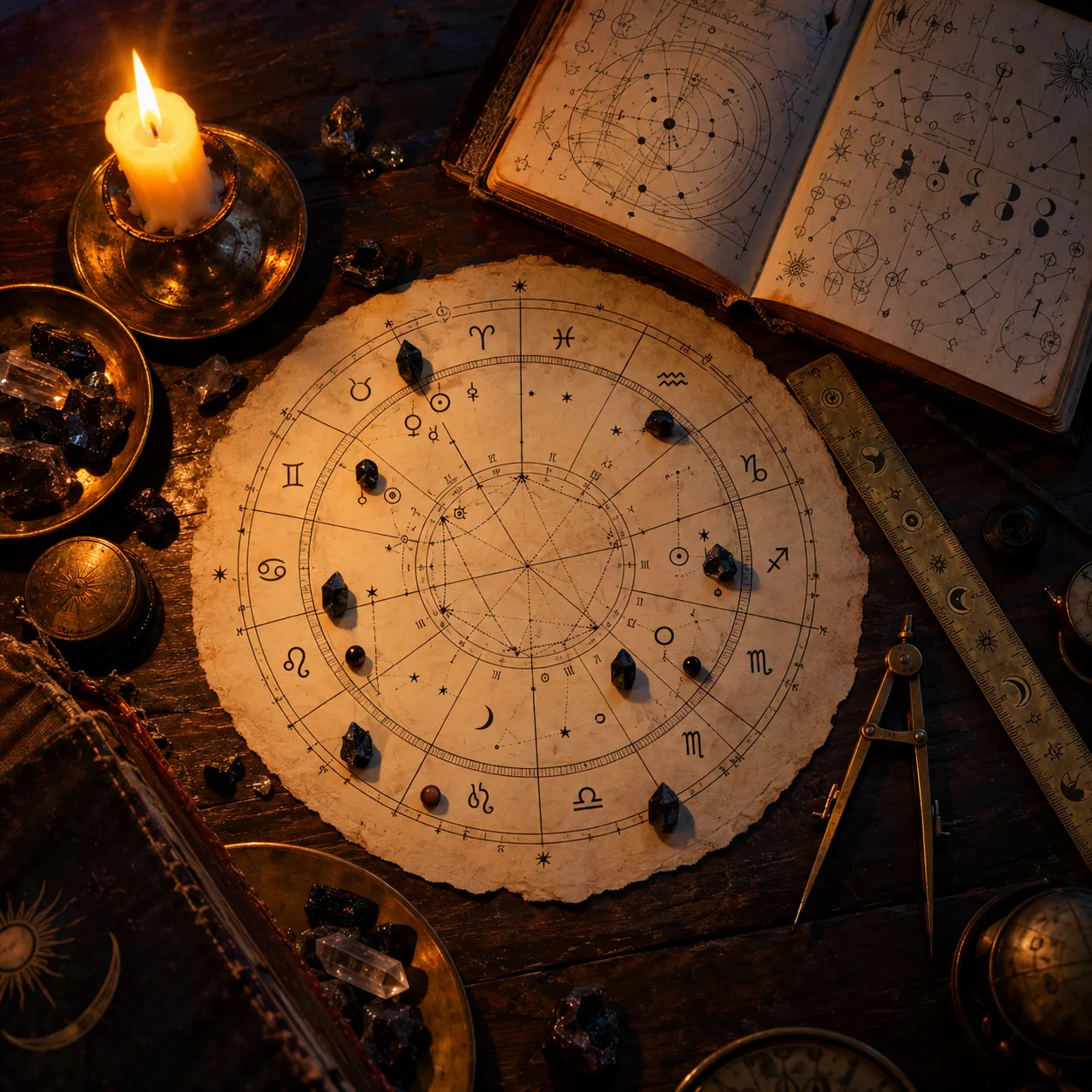
In this last week of October 2026, the sky is unusually busy: Mercury retrograde in Scorpio, Venus also retrograde (heading back into Libra), Saturn, Uranus and Neptune all in apparent backward motion, and a waning Moon passing through Gemini. It is a fitting moment to understand, in practical terms, what a planetary transit is and why it keeps coming up in astrology conversations right now.
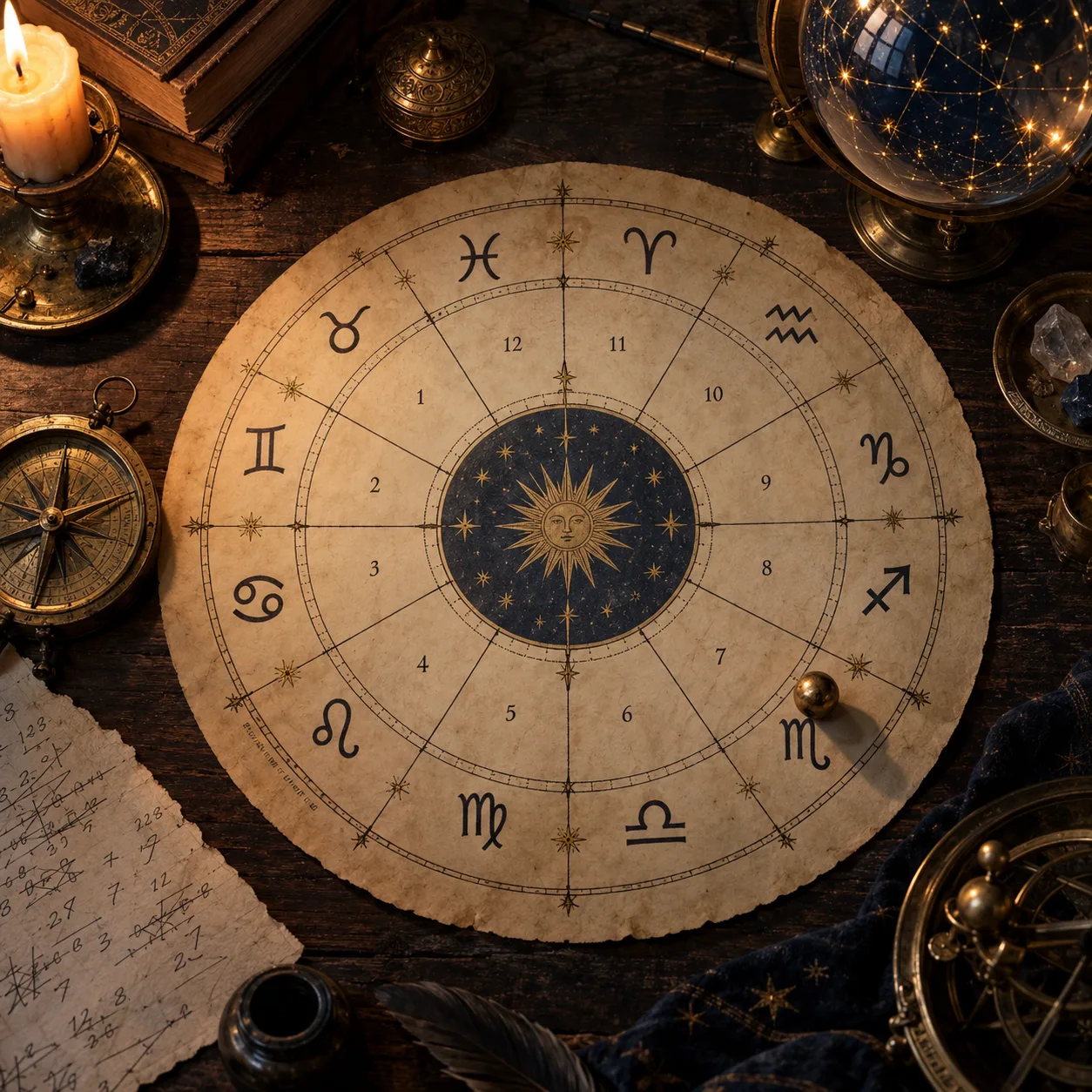
A transit, in astrology, is simply the current position of a planet in the sky compared to the positions it and the other planets held at the moment you were born. While the natal chart is a fixed snapshot, the transit is the ongoing movie: every day the planets shift a little across the zodiac, and each shift activates, for a limited time, some specific theme in your chart.
What's happening in the sky right now, planet by planet
To set the stage, it helps to describe this week's astrological snapshot. The Sun is in Scorpio, around 6°37', marking the season of emotional intensity and depth typically associated with the sign. Mercury, also in Scorpio (18°35'), has been retrograde since October 24, a motion that only clears on November 13. Venus, retrograde since October 3, has already moved back into Libra (27°16') after backing through Scorpio, and resumes direct motion on November 14. Mars continues direct in Leo, near 17°37'.
The Moon, which changes signs every two or three days, is in its waning phase in Gemini, which tends to mark a moment of closing cycles rather than starting new ones. Besides the two retrogrades already mentioned, Saturn, Uranus and Neptune are also in apparent retrograde motion right now, which is fairly common since these planets spend several months a year in that state, without carrying the same symbolic weight traditionally given to Mercury and Venus.
A rare detail about this October: Mercury and Venus are retrograde at the same time, and both turn direct on the very same day, November 13. Traditional readings rarely treat that as coincidence: communication (Mercury) and affection/values (Venus) being revisited in parallel tend to reinforce one another.
Why each planet changes pace: the logic behind transits
How fast a transit moves depends directly on how long the planet takes to complete its orbit around the Sun. Mercury and Venus never stray far from the Sun as seen from Earth (Mercury by at most about 28 degrees, Venus about 47 degrees), which is why they change signs quickly and go retrograde often. The more distant planets, by contrast, mark much longer cycles and carry generational rather than daily, personal weight.
The table below summarizes the average time each planet spends in each sign, calculated from its orbital period divided by twelve:
| Planet | Orbital period | Average time per sign | Traditional symbolic theme |
|---|---|---|---|
| Mercury | ~88 days (geocentrically, varies widely) | 2 to 4 weeks | communication, thought, agreements |
| Venus | ~225 days | 3 to 5 weeks | affection, values, money, aesthetics |
| Mars | 686 days (1.8 Earth years) | 6 to 8 weeks | action, desire, conflict |
| Jupiter | 11.86 Earth years | about 1 year | expansion, belief, opportunity |
| Saturn | 29.4 Earth years | about 2.5 years | structure, limits, maturity |
| Uranus | 84 Earth years | about 7 years | rupture, innovation |
| Neptune | 164.8 Earth years | about 14 years | dreams, dissolution, spirituality |
This difference in pace explains why a Mercury transit feels like a passing scare, while a Saturn transit is usually described as an entire life phase. NASA's fact sheet on the planet notes that Saturn completes one orbit around the Sun in about 29.4 Earth years, equivalent to 10,756 days, which helps explain why this planet is linked to long term cycles of maturity (according to NASA).
How to read today's transit on your chart, no app required
You can track transits without relying on any software, using only an ephemeris (a table of planetary positions, available in astrology books or specialized sites) and your natal chart. The process has six steps:
- Note today's transit. Check an ephemeris and identify which sign and degree each planet occupies today. For example: this week, Mercury sits at 18°35' of Scorpio.
- Find your Ascendant. This is the sign that was rising on the eastern horizon at the exact moment you were born, found on your natal chart.
- Count the houses from your Ascendant. Your Ascendant sign corresponds to house 1; the next sign, to house 2; and so on until you complete all 12 houses.
- See which house the transiting planet falls into. If your Ascendant is Taurus, for instance, Scorpio falls in house 7 (relationships). A Mercury transit there tends to touch conversations and agreements within partnerships.
- Watch the aspects to your natal planets. The classic angles are conjunction (0°), sextile (60°), square (90°), trine (120°) and opposition (180°). One real example from this month: on October 1, 2026, at 8 PM, Venus at 20°58' of Scorpio formed a square with Mars at 18°16' of Leo, a configuration traditionally read as tension between desire and affection.
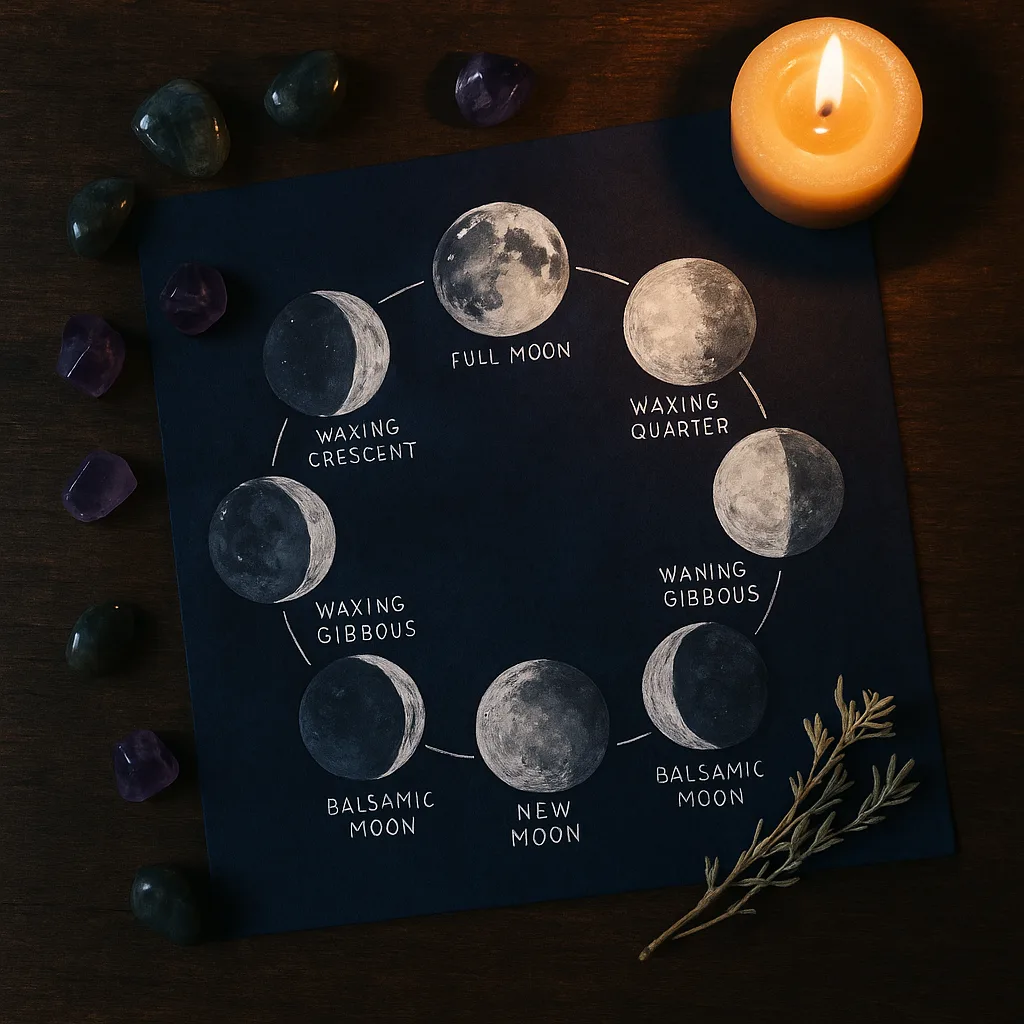
- Cross everything with the Moon's phase for the day. A waxing Moon is usually read as opening and beginnings; a waning Moon, as closure and review, which serves as the emotional backdrop for any planetary transit in progress.
For a clearer sense of the difference between your Sun sign and the Ascendant used in this calculation, it helps to review how the first astrological house and the role of the Ascendant work in organizing the entire chart.
The transits worth paying attention to right now
A few planetary movements across October and November 2026 are drawing extra attention, since they combine rare frequency with sensitive themes:
| Transit | Period | Cycle frequency | Traditional theme |
|---|---|---|---|
| Mercury retrograde in Scorpio | October 24 to November 13, 2026 | 3 times a year | review of communication, contracts and decisions |
| Venus retrograde (Scorpio → Libra) | October 3 to November 14, 2026 | about once every 18 months | review of relationships, values and finances |
| Jupiter-Mars conjunction in Leo | starting October 20, 2026 | every 12 years (Jupiter's orbital period) | expansion of action and courage |
| Saturn in opposition to the Sun | October 4, 2026 | once a year | structure and peak visibility of the cycle |
Venus retrograde is a special case: it happens on average once every 18 months, making it the most spaced out retrograde among the inner planets, which is why it's usually read as a deeper review of relationships and self-worth rather than a quick bump in the road. Mercury retrograde, meanwhile, has a pre-shadow and post-shadow zone: its effects start to be felt from October 4 (well before the official start date of October 24) and only fully fade by November 30, adding up to a 57 day cycle. For a breakdown of how this specific transit affects each sign, see Mercury Retrograde in Each Sign.
One technical note worth making: Saturn's opposition is a real astronomical event, not just a symbolic one. The site in-the-sky.org records that Saturn reached opposition on October 4, 2026, visible all night and at its closest point to Earth for the year, positioned in the constellation Cetus (according to the ephemeris calendar). It's worth not confusing this with Saturn's astrological position in the tropical zodiac (Pisces): actual constellations and tropical zodiac signs are different reference systems that aligned centuries ago but have since drifted apart due to the precession of the equinoxes.
Moon phases and the emotional tone of the coming days
Beyond the planetary transits themselves, the Moon's phase works as a daily backdrop for any reading. The lunar calendar for October and November 2026 runs as follows: last quarter on October 3, new moon on October 10 (in Libra), first quarter on October 18, full moon on October 26 (the so called Hunter's Moon, in Taurus), last quarter again on November 1, new moon on November 9 (in Scorpio), first quarter on November 17, and full moon on November 24 (the Beaver Moon, in Gemini). These dates appear on timeanddate.com's lunar phase calendar, which also lets you adjust times for your own city.
In practice, this means that anyone going through Mercury and Venus retrograde in November will also feel the symbolic closing of the waning moon on November 1 before the opening of a new cycle with the new moon in Scorpio on the 9th. Cross-referencing the planetary transit with the day's lunar phase is what gives a reading its finer emotional tone, on top of the specific house and aspect involved.
Frequently Asked Questions
How do I know which planets are retrograde today?
Just check a current ephemeris, printed or online. In the last week of October 2026, for example, Mercury, Venus, Saturn, Uranus and Neptune were all in retrograde motion at the same time, though the effects attributed to each carry different weight in astrological tradition.
What should I avoid during Mercury retrograde in October 2026?
Astrological tradition links this period, from October 24 to November 13, 2026, to extra caution with contracts, travel and important communications, recommending a second look before signing or sending anything. This is symbolic reading, not a rule with proven effect on real-world outcomes.
How do I calculate my personal transit without an app?
You need to know your Ascendant, check an ephemeris for the current position of the planets, and count the houses from your rising sign to find which area of life is being activated, as described in the step by step guide in this article.
What sign is the November 2026 full moon in?
The November 2026 full moon falls on November 24, in Gemini, and is traditionally called the Beaver Moon in the popular North American calendar recorded by sources like timeanddate.com.
Are planetary transits scientifically proven?
The planetary movements themselves are real, measurable astronomical events, like Saturn's opposition or Mercury's apparent retrograde motion. The interpretation that these movements influence personal life events, however, is a symbolic and cultural system with no scientific backing, and should be treated as a tool for reflection, not a guaranteed forecast.

Recomendado
MAPA ASTRAL E NUMEROLÓGICO PERSONALIZADO
Mapa Astral + Numerologia Um mergulho profundo na sua essência. E se tudo o que você procura… já estivesse dentro de você - esperando para ser revelado?
Universo Astral Editorial Team · Tarot and moon transits
This article was produced by the Universo Astral editorial team, with AI tools assisting research and drafting and human review before publication. If you spot anything inaccurate or outdated, let us know at our contact email.