Master Numbers 11, 22, and 33: What They Really Mean in Numerology
An exception that breaks the game
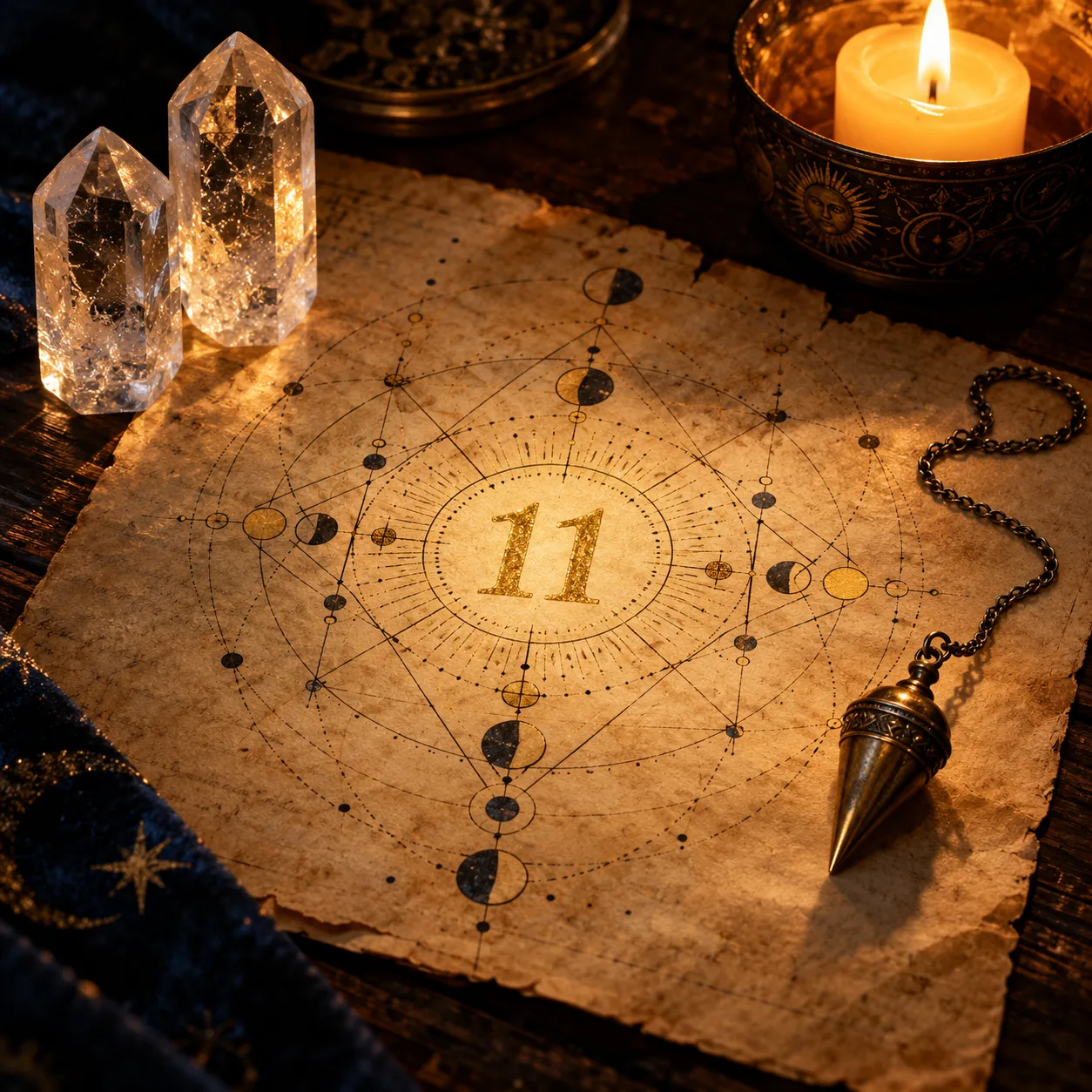
In numerology, almost everything resolves by reducing numbers to a single digit, from 1 to 9. A birth date, a name, an address: you add it all up until one digit remains. But three combinations exist that tradition refuses to reduce: 11, 22, and 33. When a calculation reaches one of these numbers, it stops there, not because someone decided arbitrarily, but because these numbers are understood as carriers of a more intense frequency, something that would be lost if simplified to the end.
These three are called master numbers and appear most frequently in calculating the Life Path (the complete sum of a birth date), but they can also emerge in the Expression Number, Soul Number, Personality Number, or simply in your birthday itself: anyone born on the 11th or 22nd already carries this vibration just from the day number. For those wanting to understand where else, beyond the Life Path, these numbers typically appear on a chart, there is an article on master numbers beyond the Life Path.
The doubled frequency
A simple way to understand master numbers is to think of them as living in two frequencies at once. The 11, for example, is 11, but also 2 (because 1+1=2). The 22 is 22, but also 4. The 33 is 33, but also 6. This means that someone with a master number in their chart does not abandon the qualities of the corresponding simple number: they live those qualities at higher voltage, with more intensity, more potential, and according to much of tradition, also more pressure and more internal demand.
This is why many numerologists describe these numbers as a doubling: 11 is 1 doubled, 22 is 2 doubled, 33 is 3 doubled. The root remains there, just amplified, as if the same instrument were being played at a higher volume.
Be careful with the word master
This is where many people stumble. Calling something a master number makes it seem hierarchically superior, as if someone with 11, 22, or 33 on their chart were more spiritually evolved, more talented, or more special than someone with only simple digits. That is not the most responsible reading of the symbol. Having a master number does not make anyone better; it makes the experience more charged, in the literal sense of electrical voltage: more energy circulating, more potential to be worked with, and often harder lessons to digest throughout life. This difference between having a gift and carrying a burden is discussed in more depth in the article on the heavy side of master numbers.
There is even an alternative reading of the name, defended by numerologists like Hans Decoz: 11, 22, and 33 would not be masters for having two repeated digits, but because those digits are precisely 1, 2, and 3, the first three numbers, linked to origin, creation, and the beginning of everything. Having these qualities in double dose, combined with the value of the final sum, is what makes these numbers stand out from the rest.
How a master number appears in calculation
The procedure is the same as any numerological calculation, with one exception at the point of reduction. You add all the numbers from the birth date until you get a result, but if at any point that result is 11, 22, or 33, the sum does not continue. Those who do not yet know the complete step-by-step of the calculation can consult the guide on how to calculate your Life Path.
An example helps visualize this: someone born on August 29, 1990 would add 2+9+0+8+1+9+9+0, reaching 38. Reducing again, 3+8 gives 11. Since the result is a master number, the calculation stops there: this person carries 11 as their Life Path, not the 2 that would come if the sum continued.
The complete step-by-step of this kind of calculation can be summarized like this:
- Write your complete birth date, separating day, month, and year.
- Add all the digits of the date, one by one, without separating by day, month, and year.
- Reduce the result by adding its digits until one or two digits remain.
- If at any stage of the reduction the partial result is 11, 22, or 33, stop the sum: this is the master number of your Life Path.
- If the result is not 11, 22, or 33, continue reducing until you reach a single digit, from 1 to 9.
The Triangle of Illumination: vision, construction, and service
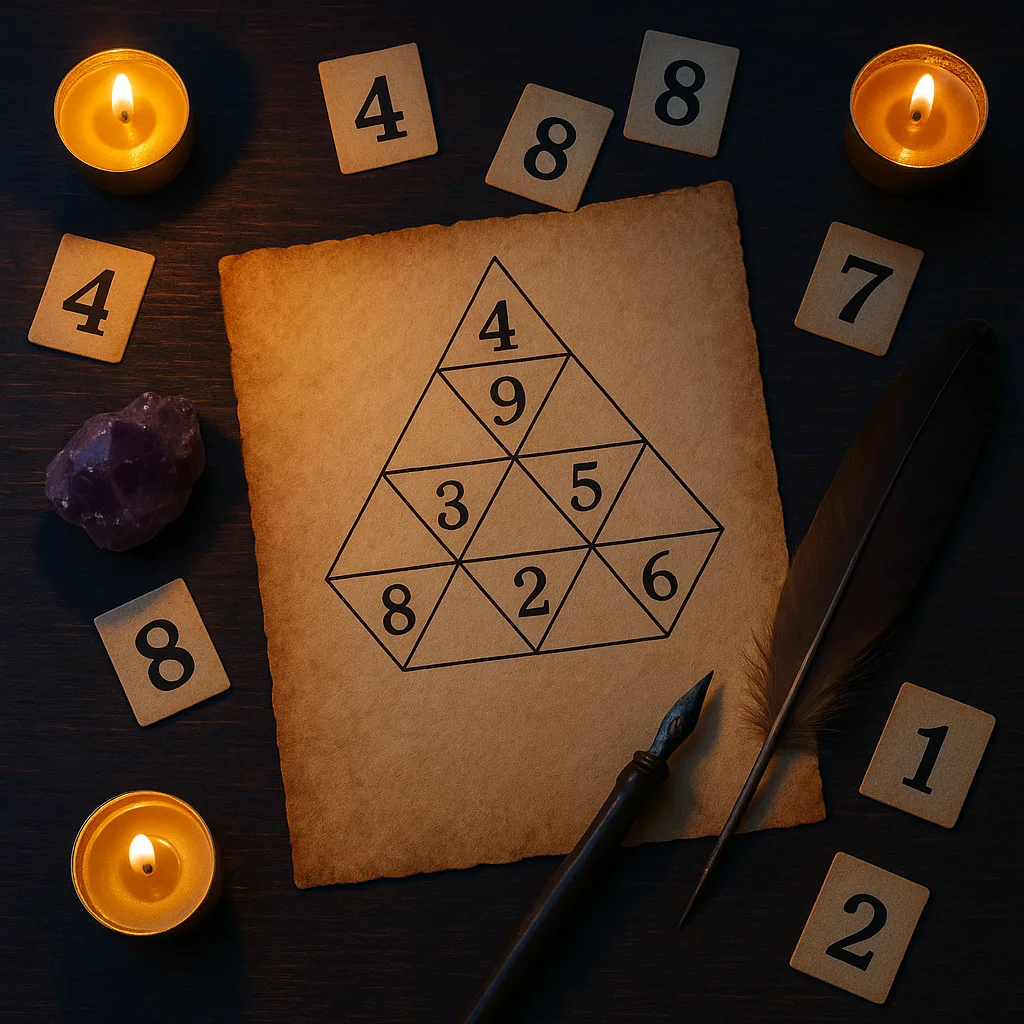
One of the most beautiful images in numerology brings 11, 22, and 33 together in a single diagram, called by some traditions the Triangle of Illumination. The logic is one of progression: 11 conceives a vision, 22 transforms that vision into something concrete, and 33 teaches and cares for what was built. Mind, matter, and spirit, in that order, as three stages of the same creative process that only completes when it passes through all three. This connection between the three numbers is explored in more detail in the article on the Triangle of Illumination in numerology.
The table below summarizes the main characteristics of each of the three master numbers:
| Master number | Root (simple reduction) | Traditional name | Central quality | Point of attention |
|---|---|---|---|---|
| 11 | 2 | Psychic Master | Intuition, vision, inspiration | Difficulty organizing what you perceive |
| 22 | 4 | Master Builder | Capacity for large-scale practical achievement | Emotional instability and mood swings |
| 33 | 6 | Master Teacher | Care, teaching, service to the collective | Little room to care for yourself |
11: the Psychic Master
The 11 is first in the lineup and is linked to intuition in its raw state. Someone who carries this number tends to pick up information before they can explain it rationally: hunches, insights, a sensitivity that works almost like an antenna. It is described as a number of inspiration and spiritual leadership, someone who points out paths for others before often being able to organize their own. The doubled vibration of 1 (which is already synonymous with beginning and individuality) explains part of this intensity: the 11 not only starts things, it also sees what has not yet begun.
22: the Master Builder
If 11 sees, 22 builds. It is the number associated with large practical achievements, ambition on a large scale, and the rare combination of spirituality and management ability. Traditionally, it connects to architects, engineers, and planners, people capable of taking an idea off paper and raising it concretely in the material world. At the same time, some lines of numerology point to an emotional instability characteristic of 22: the same intensity that sustains great projects can translate into sharp mood swings, capable of affecting those around you. It is the price of high voltage applied to practical life.
33: the Master Teacher
The 33 closes the triangle with the energy of care. It is described as compassionate, a healer, dedicated to serving and teaching, the sum of everything that 11 and 22 built, now offered for the good of the collective. Unconditional love and emotional generosity appear as its most cited marks, alongside a natural calling to guide and support other people in their journeys.
The controversy around 33
It is worth noting something that few popular texts mention: not all numerological tradition recognizes 33 as a master number. The oldest currents (Pythagorean, Kabbalistic, and Chaldean) work only with 11 and 22; 33 is a more recent addition to the system. The Pythagorean tradition, incidentally, is treated by the Encyclopaedia Britannica as one of the historical foundations of Western thought on number and cosmos, which helps explain why older schools of numerology are more conservative in accepting 33 as master. This does not make 33 wrong, but explains why some more classical readings treat this number simply as its root number, 6, and why it is considerably rarer to appear in charts than the other two. In practice, you need a quite specific combination of day, month, and year for the sum to stop exactly at 33. This dispute of origin is detailed in the article on the controversial origin of master numbers.
What to do with this information
Finding a master number on your own chart is not reason to feel chosen, nor to feel overwhelmed. It is, above all, an invitation to observe where your own energy tends to weigh more: if your mind runs faster than your capacity to act (11), if the ambition to build something great comes with internal instability (22), or if the impulse to care for others leaves little room to care for yourself (33). In that sense, numerology works less like a trophy and more like a high-resolution mirror: it shows with more clarity both the potential and the points that demand extra attention.
Frequently asked questions
Why are 11, 22, and 33 not reduced like other numbers?
Because numerological tradition holds that these three numbers carry a more intense frequency that would be lost if simplified to a single digit. This is why the calculation stops when it reaches one of them, rather than continuing to reduce normally.
Does having a master number mean a person is spiritually more evolved?
No. That is a common and mistaken reading of the symbol. Having 11, 22, or 33 on your chart indicates more intensity and more potential to work with, not superiority over someone with only simple digits.
What is the difference between 11, 22, and 33?
The 11 is linked to intuition and vision (Psychic Master), 22 to the capacity to build something concrete on a large scale (Master Builder), and 33 to care and teaching aimed at the collective (Master Teacher). Together, they form what some traditions call the Triangle of Illumination.
Is 33 recognized as a master number by all schools of numerology?
No. The older currents, such as Pythagorean, Kabbalistic, and Chaldean, work only with 11 and 22. The 33 is a more recent addition to the system, and some more classical schools still treat this value only as the root number 6.
How do I know if my Life Path is a master number?
You need to add all the digits of your birth date and reduce the result until one digit remains, stopping immediately if at any point in the sum the partial result is 11, 22, or 33.

Recomendado
Estátua Gato Bastet Egito Antigo
Inspiração Egípcia Autêntica Representa Bastet, a deusa egípcia da proteção, harmonia e energia feminina.
Universo Astral Editorial Team · Birth charts and numerology
This article was produced by the Universo Astral editorial team, with AI tools assisting research and drafting and human review before publication. If you spot anything inaccurate or outdated, let us know at our contact email.