Crystals and Moon Phases: How to Time Your Crystal's Energy Work
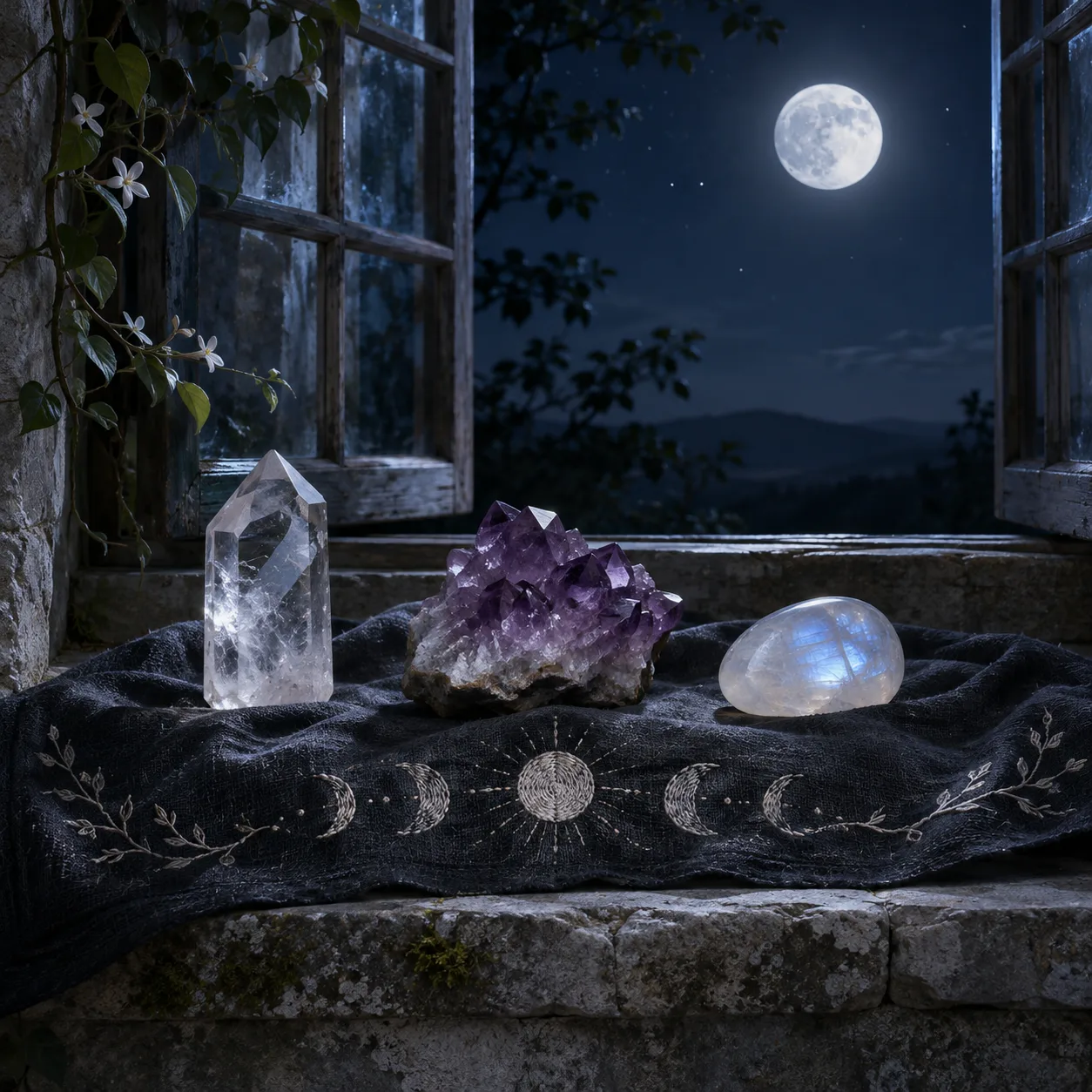
A quartz crystal sitting in a drawer doesn't change its chemical makeup depending on the day. But practitioners of crystal healing within the astrological tradition aren't working with mineralogy alone. They're working with a symbolic system that links stone to the Moon's cycle, echoing an association between moonlight and mineral matter that spans centuries of material culture, from Egyptian jewelry to rock crystal spheres from imperial China.
This article explains how this practice works within popular wellness convention: when to charge a crystal, when to cleanse it, and why tradition divides the lunar month into different windows of use. One thing should be clear from the start: there is no scientific evidence that moonlight alters a stone's energy. What does exist is a consistent symbolic logic, practiced by crystal healing and astrology communities for a long time, worth knowing for its cultural and ritual value, not as verified fact.
The lunar cycle behind the practice
The time frame practitioners use is the synodic month, the interval between one new moon and the next. According to data compiled by observatories and ephemeris sites, this cycle lasts an average of 29.53 days, roughly 29 days, 12 hours and about 44 minutes. It's this span of just over four weeks that tradition uses to map out a calendar of intentions: start something at the new moon, build on it during the waxing phase, celebrate the peak at full moon, and wind down during the waning phase.
Within this 29.5-day cycle, the Moon passes through eight recognized phases: new, waxing crescent, first quarter, waxing gibbous, full, waning gibbous, last quarter, and waning crescent. The four main ones (new, first quarter, full, and last quarter) are considered primary phases, and each marks, in tradition, a shift in intention for those working with crystals.
What tradition associates with each phase
The logic behind the practice is simple enough to follow, even if it isn't scientifically proven: the waxing phase (when the Moon's illuminated portion grows) is associated with attracting and building, while the waning phase (when illumination shrinks) is associated with releasing and clearing. This is the same waxing/waning distinction used by astronomical calendars, just applied symbolically.
At the new moon, with 0% visible illumination, practitioners often hold the crystal in their hands and mentally set a brief intention for the new cycle beginning. At the full moon, when the Moon's visible face is roughly 100% illuminated, tradition popularizes what's known as charging: leaving the crystal exposed to direct moonlight, usually on a windowsill or outdoor ledge, for a full night or part of one. It's the moment most often cited in wellness communities as the month's energetic peak.
Between these two points, the waxing moon (moving from 0% toward 50% and then close to 100%) is seen as the phase for attracting: stones tied to abundance, courage, and new beginnings are placed near a window during the growing nights. The waning moon, on its way back down to 0%, is used to clear crystals that have picked up unwanted energy, or to close out the use of a stone before starting a new purpose.
Table: phase by phase, start to finish
| Moon Phase | Approximate Illumination | Position in the 29.5-Day Cycle | Traditional Crystal Use |
|---|---|---|---|
| New Moon | 0% | Day 1 (primary phase) | Set intention, reset the stone |
| Waxing Crescent / First Quarter | ~50%, growing | Days 7 to 8 | Attract, start new projects |
| Waxing Gibbous | 50% to 99%, growing | Days 8 to 14 | Reinforce an intention already set |
| Full Moon | ~100% | Day 15 (peak) | Charge the crystal under moonlight |
| Waning Gibbous / Last Quarter | 99% to 0%, shrinking | Days 16 to 29.5 | Cleanse, release, let the stone rest |
A practical step-by-step to sync your crystal with the Moon
Here's a simple routine, described here as cultural convention within crystal healing, not as a procedure with proven effectiveness:
- On the day of the new moon, hold the crystal in your hands for a few minutes and mentally set a short, specific intention for the cycle ahead.
- During the waxing nights (from first quarter through the night before full moon), keep the crystal near a window facing the night sky, letting it symbolically track the growing light.
- On the night of the full moon, expose the crystal to direct moonlight, on an outdoor surface or windowsill, for a few hours (many practitioners leave it out all night). This is considered the point of maximum charge.
- As the waning moon begins, pull the crystal back from constant exposure and set it somewhere neutral, a symbolic way of letting it rest and release what it has absorbed.
- At the next new moon, restart the cycle with a fresh intention, closing out the roughly 29.5-day period.
One point astrologers repeat often: tradition recommends avoiding crystal charging during eclipses, seen as unstable lunations within this symbolism. In 2026, for example, NASA's calendar lists a total lunar eclipse on March 3 and a partial lunar eclipse on August 28, plus two solar eclipses, on February 17 and August 12, according to NASA's eclipse catalog. Those who follow this convention prefer to wait for the next full or new moon outside the eclipse window before charging.
Real dates to plan your next charging
For anyone who wants to follow the routine above without doing manual calculations, here are the next catalogued lunar phases, in UTC (it's worth checking your local time zone before planning around these):
| Event | Date (UTC) |
|---|---|
| New Moon | November 9, 2026, 7:02 AM |
| First Quarter | November 17, 2026, 11:47 AM |
| Full Moon | November 24, 2026 |
| Last Quarter | December 1, 2026 |
| New Moon | December 8, 2026 |
| Full Moon (Supermoon) | December 24, 2026, 1:28 AM |
| Last Quarter | December 30, 2026, 6:59 PM |
These dates follow the phase calendar published by timeanddate.com, which updates new moon, first quarter, full moon, and last quarter times by time zone. Worth noting: the full moon on December 24, 2026 coincides with a supermoon, when the Moon is at its closest point to Earth in its orbit, making it appear noticeably larger and brighter in the sky.
Where this link between the Moon and stones comes from
The idea of assigning symbolic meaning to the Moon isn't new, nor is it exclusive to contemporary crystal healing. In the Hellenistic astrological system, as far back as Ancient Greece, the Moon (Selene) was one of seven celestial bodies considered most significant for reading the sky, alongside the Sun and the five planets visible to the naked eye. This tradition of assigning symbolic weight to phases and cycles is the historical ground from which, centuries later, the popular practice of charging objects under moonlight eventually grew.
The cultural link between crystals and the night sky also has old material evidence: the Metropolitan Museum holds an Egyptian rock crystal bead dating back to around 1802 to 1450 BCE, along with rock crystal spheres from China's Qing dynasty (18th and 19th centuries) and European moonstone necklaces from the 19th and 20th centuries. These pieces don't prove any lunar charging ritual, but they do show that human fascination with crystals and moonlight predates by far the social media that popularized the term crystal healing today.
Anyone who has already decided which stone matches their zodiac sign can use this lunar calendar as the next layer of practice: the article on crystals for each zodiac sign explains the logic of element, ruling planet, and color behind choosing a stone, while this piece focuses on when to use it during the month. For those interested in going deeper into manifesting intentions by moon phase, it's also worth reading the comparison between waxing moon and full moon for manifesting goals, which breaks down the symbolic difference between the two phases most used in rituals.
Frequently Asked Questions
How do you charge a crystal on the full moon?
The most common practice is leaving the crystal exposed to direct moonlight, on a windowsill, balcony, or outdoor spot, during the night of the full moon. Some practitioners leave it out for a few hours, others prefer the whole night. There's no scientific evidence this changes any physical property of the stone: it's a symbolic ritual of renewal.
Which moon phase is best for cleansing a crystal?
The waning moon is the phase most associated, in tradition, with cleansing and release. It's the period when the Moon's visible illumination decreases, from the full moon peak down to the next new moon, which is why it's typically chosen for clearing crystals that have seen heavy use.
How long should you leave a crystal in moonlight?
There's no standard duration among practitioners: some leave the crystal out for just an hour or two on the night of the full moon, others prefer dusk to dawn. What tradition values is exposure during the night of peak illumination, not any specific minimum length of time.
Can you charge a crystal during an eclipse?
The convention most astrologers repeat is to avoid charging during eclipses, seen as unstable lunations within this symbolism. Those who follow this approach prefer to wait for the next full or new moon outside the eclipse window to resume the ritual.
Does the lunar cycle actually affect a crystal's energy?
There's no scientific evidence that moonlight changes a crystal's physical or energetic properties. The practice of linking moon phases to stone use is a cultural and symbolic convention, cultivated by wellness and astrology communities, and should be understood as such, not as established fact.

Recomendado
Incensário Cascata Refluxo Cerâmica
Efeito cascata hipnotizante A fumaça desce como uma cachoeira, criando um visual relaxante perfeito para momentos de calma e foco
Lucas Moises · Zodiac signs and fun facts · Universo Astral Editorial Team
This article was produced by the Universo Astral editorial team, with AI tools for research and drafting, and went through automated checks of structure, links and sources before going live. If you spot anything inaccurate or outdated, let us know at our contact email.