Chinese Zodiac vs Western Zodiac: How Two Systems Read the Same Person Differently
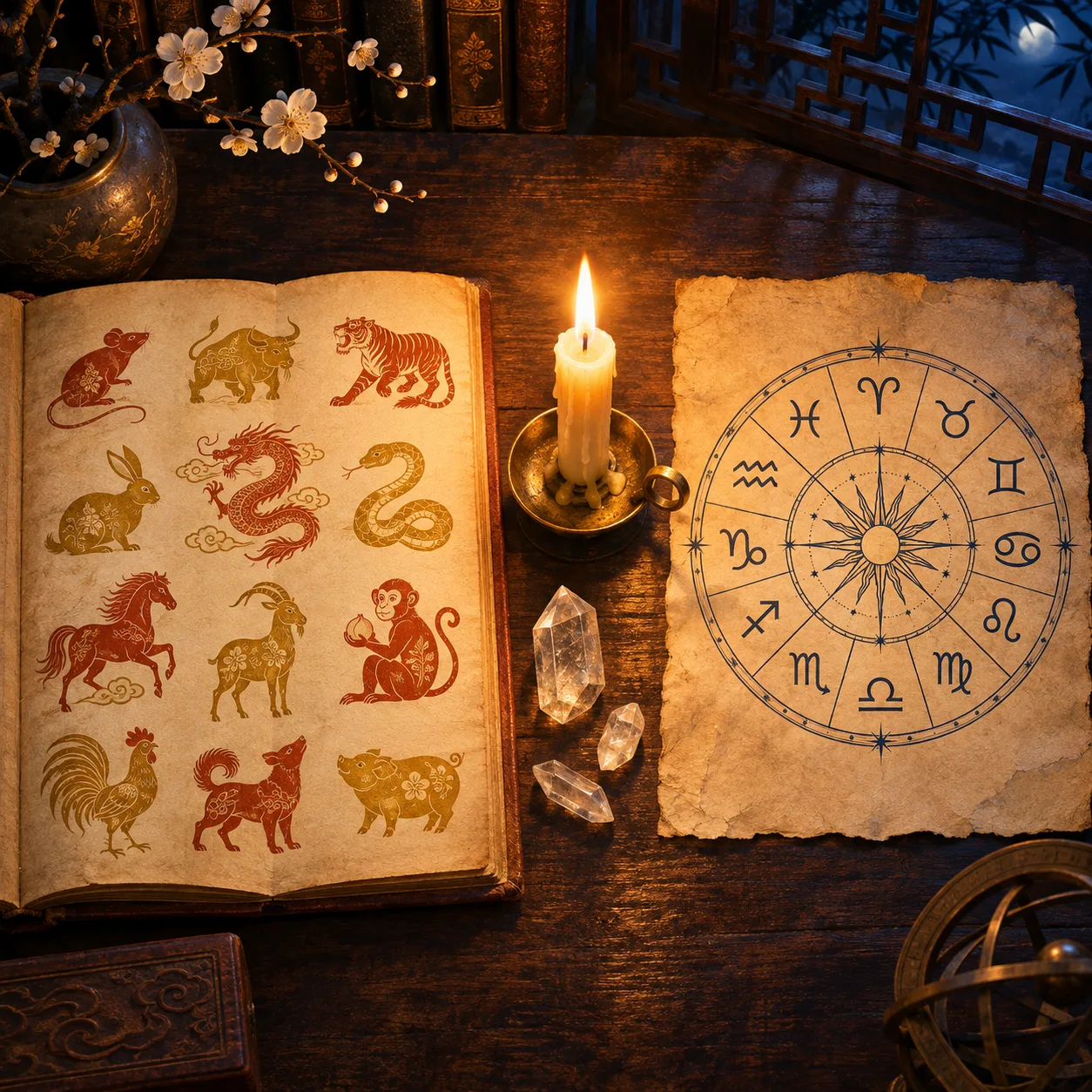
A person born on February 17, 2026 carries, at the same time, the sign of Aquarius and the animal Horse, based on the Chinese New Year classification. These two pieces of information don't come from the same calculation. One tracks the Sun's position at the moment of birth. The other identifies the year within a twelve-animal cycle. The two systems grew out of different cultures and carry symbolic layers that don't translate directly into one another.
The difference that explains everything: year versus month
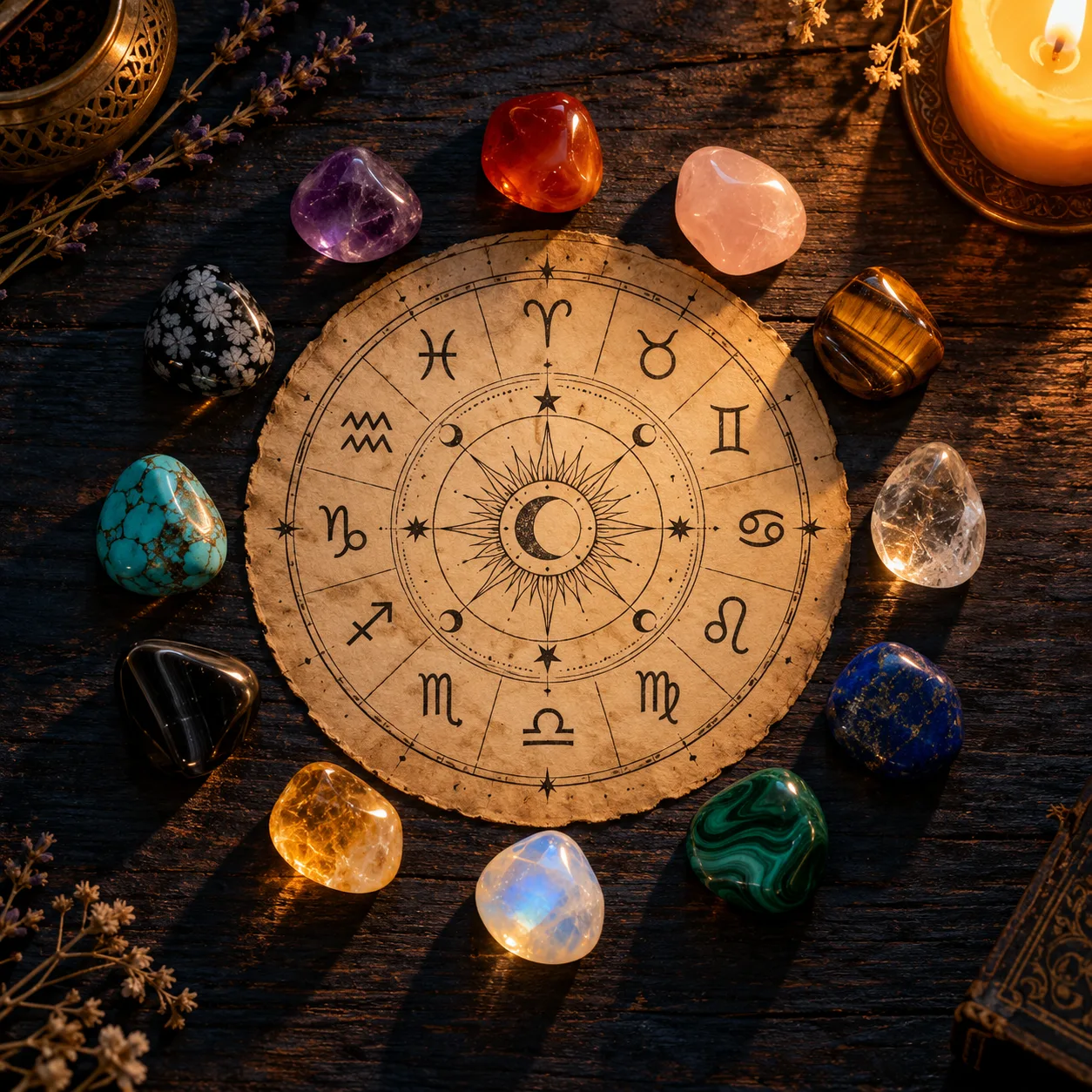
The Western zodiac divides the ecliptic, the Sun's apparent path across the sky, into twelve parts of 30 degrees each. The Sun moves through this circle over the course of a year. That's why your sun sign changes roughly every month: someone born on August 10 is a Leo, someone born on September 10 is a Virgo, in the tropical system.
In the Chinese classification by birth year, each year is assigned an animal within a fixed sequence: Rat, Ox, Tiger, Rabbit, Dragon, Snake, Horse, Goat, Monkey, Rooster, Dog and Pig. Anyone born between one Chinese New Year and the next shares the same yearly animal, regardless of the month.
This comparison deals with the Western sun sign and the Chinese yearly animal. Both are narrow slices of much larger traditions, not complete descriptions of either method of interpretation.
Why the Chinese zodiac's cutoff date moves around
The traditional Chinese calendar is lunisolar: it follows both the cycles of the Moon and the solar year. That's why Chinese New Year falls on a different date in the Gregorian calendar each year and never lands on January 1st.
The Chinese New Year calendar from timeanddate.com lists the 2026 celebration as falling on February 17. That's the cutoff date used here for the shift from the Year of the Snake to the Year of the Horse.
In 2025, the shift happened on January 29; in 2027, it will happen on February 6. So someone born on February 5, 2026 still belongs to the Year of the Snake, while someone born on February 18 already belongs to the Year of the Horse. Calculators that only look at the calendar year can get this wrong for people born in January or February.
The five elements and yin-yang in the Chinese cycle
While the Western zodiac assigns a fixed element to each sign, the Chinese cycle pairs the yearly animal with Wood, Fire, Earth, Metal or Water. These five categories make up the Wu Xing. Across the sequence of years, each element appears for two consecutive years, forming a ten-year cycle.
Combining that sequence with the twelve animals produces a 60-year cycle, known as the sexagenary cycle or Ganzhi. Polarity alternates too: when identifying the year within the cycle, even-numbered endings indicate yang and odd-numbered endings indicate yin. A Wood Dragon year, like 2024, won't come around again until 2084. That repeats the yearly combination, not every trait of two different people.
The table below treats each year as starting from its shift on the Chinese calendar. Anyone born before that shift should check the previous year instead.
| Year | Animal | Element | Polarity |
|---|---|---|---|
| 2024 | Dragon | Wood | Yang |
| 2025 | Snake | Wood | Yin |
| 2026 | Horse | Fire | Yang |
| 2027 | Goat | Fire | Yin |
| 2028 | Monkey | Earth | Yang |
Ruling planet and modality in the Western zodiac
Western tradition links each sign to a ruling planet. In the classical scheme, the Sun rules Leo and the Moon rules Cancer. Mercury, Venus, Mars, Jupiter and Saturn each rule two signs. In modern astrology, Uranus, Neptune and Pluto were assigned to Aquarius, Pisces and Scorpio respectively, though the classical rulerships are still used alongside them in many schools.
The four elements sort the signs into groups: Fire covers Aries, Leo and Sagittarius; Earth covers Taurus, Virgo and Capricorn; Air covers Gemini, Libra and Aquarius; Water covers Cancer, Scorpio and Pisces. This grouping doesn't line up directly with the Chinese five elements, even when the names overlap.
There are also three modalities: cardinal, fixed and mutable. Aries, Cancer, Libra and Capricorn are cardinal; Taurus, Leo, Scorpio and Aquarius are fixed; Gemini, Virgo, Sagittarius and Pisces are mutable. In symbolic terms, these categories relate to beginnings, stability and transition. They are not equivalent to the Chinese alternation between yin and yang.
Side by side: the two systems in brief
This table only compares the classifications described in this article. A repeated sign or a repeated yearly combination doesn't mean an entire birth chart repeats itself.
| Criterion | Chinese yearly animal | Western sun sign |
|---|---|---|
| Main unit | Year, within a 12-animal cycle | Solar position, within a yearly cycle |
| Elements | Wood, Fire, Earth, Metal and Water | Fire, Earth, Air and Water |
| Additional layer | Yearly element and yin or yang polarity | Fixed element, modality and ruling planet |
| Classification shift | Chinese New Year, by the criterion used here | The Sun entering the next 30-degree sector |
| Repetition | Animal repeats every 12 years; full yearly combination every 60 | Sun sign repeats every year |
Where each system comes from
The origin of the Chinese animal zodiac is still debated. Proposed timelines place its development somewhere between the Warring States period and the Qin dynasty, with documented consolidation during the Han dynasty. The legend of the race organized by the Jade Emperor belongs to folklore: it offers a cultural explanation for the animals' order, but it isn't a historical record of how the system was created.
The Western zodiac has Babylonian roots. The division of the ecliptic into twelve equal parts dates back to around 450 BCE. Centuries later, Claudius Ptolemy systematized the astrological tradition in the Tetrabiblos, a work from the 2nd century CE.
The constellations that lent their names to the signs aren't uniform in size. So the 30-degree zodiac sectors and the constellations themselves are not the same thing. The article on the difference between astrology and astronomy goes deeper into this distinction between symbolic interpretation and the scientific study of the sky.
Step by step: finding your correct Chinese sign
To use the Chinese New Year criterion without mixing up the calendar year and the cycle year, follow these steps. The example is someone born on February 5, 2026.
- Identify the calendar year of birth: 2026.
- Check the Chinese New Year date for that year: February 17.
- Compare the dates. Since February 5 falls before the shift, use 2025 as the reference year for the cycle.
- Find the matching animal: 2025 is the Year of the Snake, so the yearly animal in this example is Snake.
- For the element, use the adjusted reference year. Endings of 4 and 5 indicate Wood; 6 and 7, Fire; 8 and 9, Earth; 0 and 1, Metal; 2 and 3, Water. In this example, the result is Wood.
- Check the polarity of that same year: 2025 is odd, so it's yin. The full result is Yin Wood Snake.
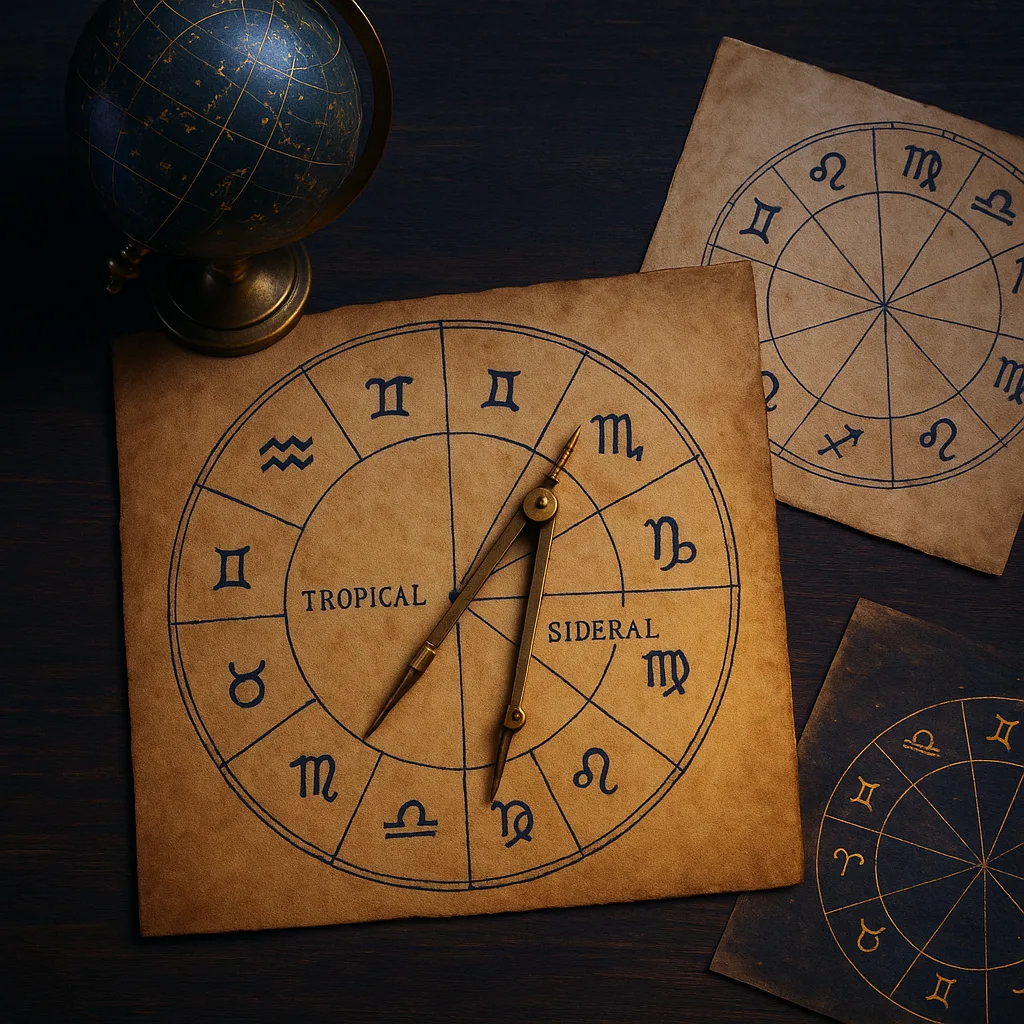
In the Western system, births close to a sign change require the exact birth time and a calculation of the Sun's position. Tables that only show date ranges are simplifications. It also matters which tradition is being used: the article on ayanamsha and the sign shift in Vedic astrology explains why different zodiac reference points can produce a different sign.
What this comparison shouldn't become
There's no direct correspondence between the twelve animals and the twelve Western signs. Horse isn't a translation of Sagittarius, for instance. Having twelve categories in each sequence doesn't make the calculation methods or cultural meanings equivalent.
It's also important to separate a shared category from individual interpretation. Two Aquarians can have very different charts in every other respect; two people born in the Year of the Horse can belong to entirely different combinations of element and polarity. None of these classifications is a scientific measure of personality or a guarantee of future events.
Frequently Asked Questions
How do I know my Chinese zodiac sign if I was born in January or February?
Check the Chinese New Year date for the year you were born. By the criterion used in this article, if your birth happened before that date, use the animal from the previous year. Make the same adjustment before identifying the element and polarity.
Does the Chinese zodiac sign change on January 1st?
No, not under the Chinese New Year classification. The shift follows the lunisolar calendar and falls on a different Gregorian date each year. In 2026, it falls on February 17.
Which system is older, Chinese or Western astrology?
Answering this means separating each tradition's history from the formation of its twelve categories. The Western zodiac has Babylonian roots, while the origin of the Chinese animal sequence is still debated, with its documented consolidation linked to the Han dynasty. These records don't allow the entire history of either astrology to be reduced to a single date.
Can you combine your Chinese sign with your Western sign?
It's possible to present both classifications together in a symbolic reading, as long as their criteria are explained separately. There's no direct equivalence between a yearly animal and a sun sign. The combination shouldn't be presented as a personality diagnosis or a scientific prediction.

Recomendado
Astrologia, Simbolismo e Mapa das Personalidades
A astrologia acompanha a humanidade desde as primeiras grandes civilizações. A ideia de que a vida biológica na Terra pode ser influenciada pelos astros gerou e gera grande fascínio no homem.
Lucas Moises · Zodiac signs and fun facts · Universo Astral Editorial Team
This article was produced by the Universo Astral editorial team, with AI tools for research and drafting, and went through automated checks of structure, links and sources before going live. If you spot anything inaccurate or outdated, let us know at our contact email.