Void of Course Moon: Understanding the Timing and Its Use in Planning

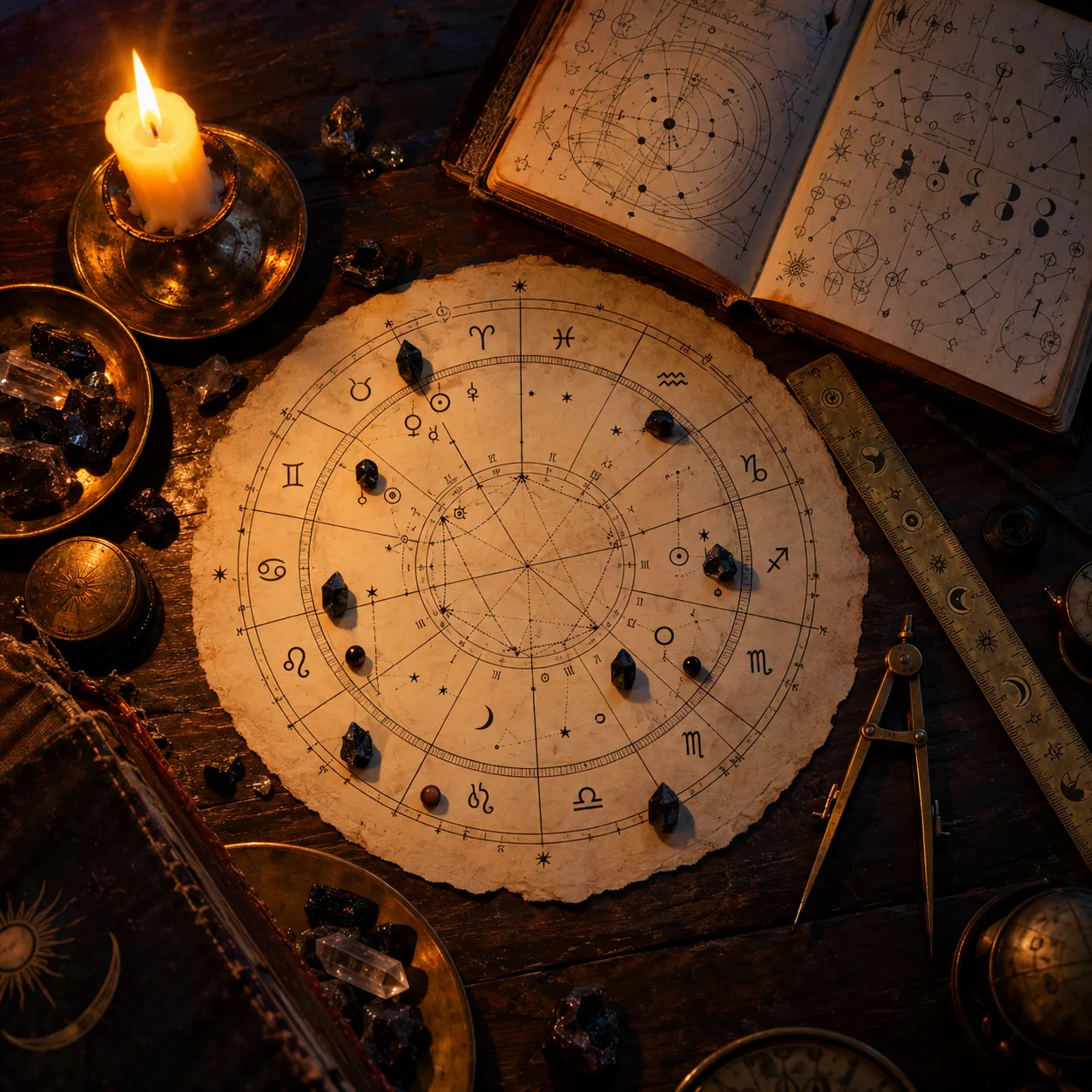
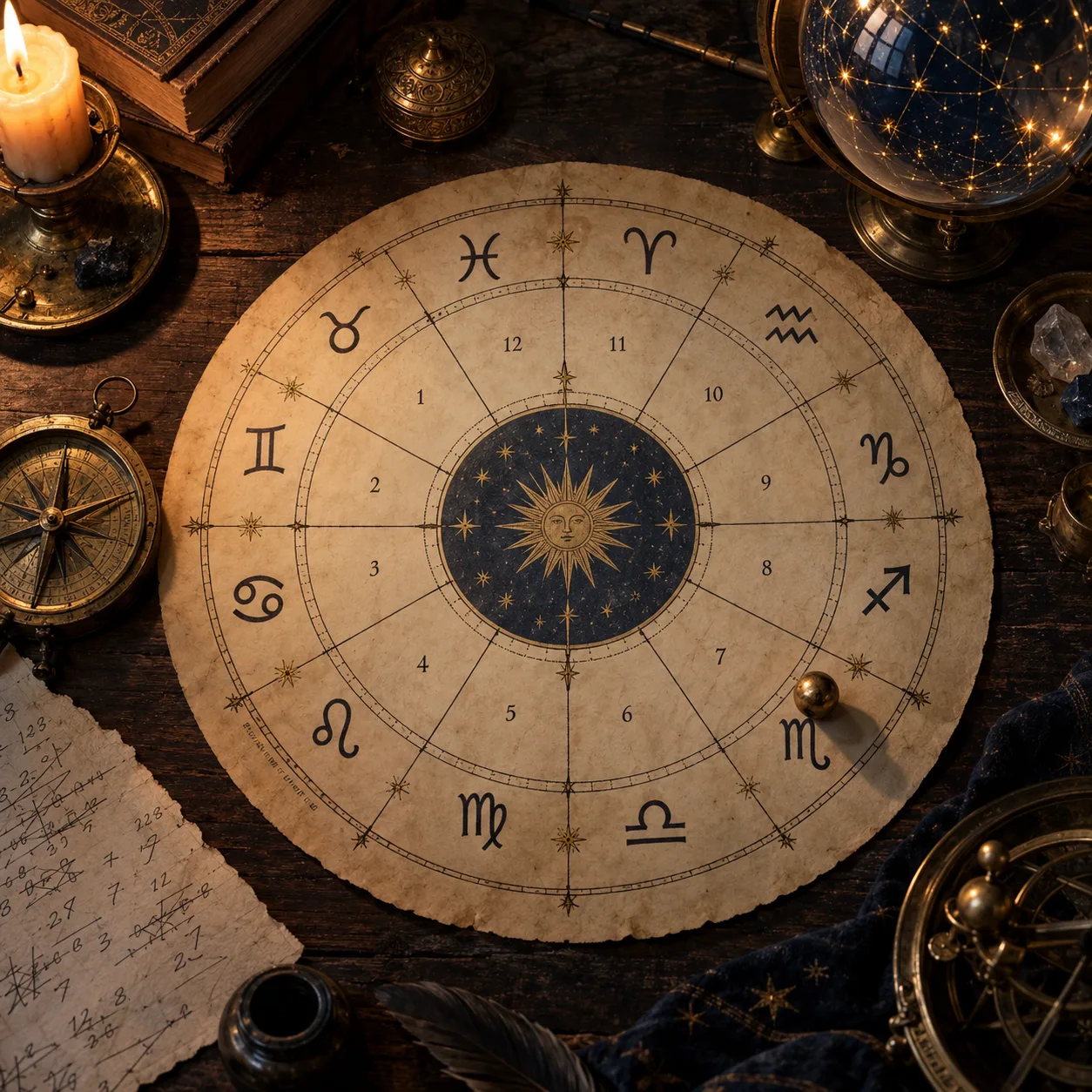
In astrological calendars, the term void of course Moon marks a pause between certain lunar aspects and the Moon's move into the next sign. It is also simply called "void of course." The popular advice to avoid starting new things during this window comes from a reading rooted in horary astrology, but it doesn't mean the whole day will be unproductive.
The term also has nothing to do with a retrograde Moon. In the zodiacal motion astrology considers, the Moon always moves forward. Mercury, Venus and Mars can appear to move backward when observed from Earth, but that's a different mechanism entirely.
How this window is defined
The standard used by many calendars sets two time markers as boundaries: the last exact angular contact considered relevant during the Moon's passage through a sign, and the moment it enters the next one. The stretch between those two points is called void of course.
Five aspects from the Western tradition factor into this calculation: conjunction (0° apart), sextile (60°), square (90°), trine (120°) and opposition (180°). This set, known as the Ptolemaic aspects, traces back to Hellenistic astrology.
After that last alignment, the Moon may still have part of the sign left to cross. That remaining distance, combined with the positions of the other planets, determines how long the window lasts.
Different methods and schools produce different results. William Lilly (1602 to 1681), author of Christian Astrology, published in 1647, is a historical reference point for horary astrology in English. In that branch, the chart cast for the moment a question is asked becomes the basis for answering it. Applying traditional rules requires close attention to each author's specific criteria; not every historical definition should be treated as equivalent to what modern calendars use today.
The circulation of Greek and Arabic texts helped shape European astrology during the Renaissance. Rules used in horary astrology were passed down through that period, before the practice lost academic standing during the Scientific Revolution of the 17th century.
Why it happens so often: the Moon's speed
Over a single day, the Moon moves through roughly 13° of the zodiac on average. Since a sign spans 30°, crossing one typically takes just over two days, about 2.3. Mercury and Venus usually move far less per day by comparison.
Because the Moon moves so quickly, the aspects expected within a sign can wrap up well before it reaches the next one. That's why calendars log these windows repeatedly throughout the month, generally between 10 and 15 times. Depending on the method used and how the planets are positioned, a window can be extremely brief or stretch close to two days.
How it differs from Moon phases and retrogrades
Moon phases track the geometry between the Sun, Earth and Moon, visible in how much of the lunar disk appears lit. NASA's explanation of Moon phases notes that the full cycle repeats roughly every 29.5 days. Calculating a void of course window, on the other hand, follows astrological aspects and sign boundaries. These are two separate reference points that can land close together on the calendar without representing the same event.
The New Moon listed in the draft for November 9, 2026, at approximately 07:02 UTC, illustrates this difference well: that time marks a specific phase. The astrological windows given for that same week have entirely different start and end times.
Mercury retrograde follows its own logic too. It describes an apparent reversal in the planet's movement as seen from Earth. Each episode typically lasts about three weeks, with three or four occurring per year. Lunar windows are far more frequent and usually much shorter.
| Reference point | What defines it | How to read it |
|---|---|---|
| Void of course Moon | Selected aspects and the Moon's entry into the next sign | A time window defined by astrological criteria. |
| Mercury retrograde | The planet's apparently reversed motion as seen from Earth | An observable apparent motion to which astrology assigns meaning. |
| Moon phases | Changes in the lit portion of the Moon as seen from Earth | The cycle lasts about 29.5 days; each main phase has a specific reference moment. |
To understand the symbolism behind each stage of the cycle, check out the article on New, Waxing, Full and Waning Moon. It helps clarify the difference between the meaning assigned to a phase and the criteria used to identify a void of course window.
How to find the start and end times
An ephemeris or astrological calendar will help you pinpoint the window. Before comparing times, check which time zone is being used and which planets and aspects factor into the calculation. Different methods can produce different results.
- Check which sign the Moon occupies on the date you're looking at.
- Review the exact aspects expected before that passage ends.
- Find the last aspect the calendar's method includes. That time marks the starting point.
- Locate the Moon's next sign change. That marks the end of the window.
- Read the source's notes on its criteria, especially when comparing a traditional approach to a modern calendar.
The draft lists three such windows for the week of November 8 to 15, 2026. Since it doesn't specify the time zone or name the calendars it draws from, the figures below should be read as data given in the text, without independent confirmation:
- November 9 into 10: starting at 11:25 PM on the 9th and ending at 8:36 AM on the 10th, a span of about 9 hours and 11 minutes. The aspect noted is a square with Jupiter, followed by the Moon's entry into Sagittarius.
- November 12: from 11:29 AM to 8:27 PM, a window of about 8 hours and 58 minutes. The listing ties the start to a trine with Jupiter and the end to the Moon entering Capricorn.
- November 14 into 15: from 6:55 PM on the 14th to 9:24 AM on the 15th, roughly 14 hours and 29 minutes. The reference given is a square with Venus before the shift into Aquarius.
These examples show how the two types of record differ: a phase marks a single instant, while a void of course period spans a range of time. To use either in your planning, you need to know its source and convert it to your local time zone.
Using this guideline in daily life
In horary astrology, a Moon lacking the expected aspects could be read as a sign that the matter in question wouldn't move forward. The popular advice to postpone new projects grew out of extending that reading to everyday situations.
Within that tradition, some people prefer to schedule hard-to-undo commitments, like signing an important contract or launching a business, for another time. It's a symbolic planning guideline, not proof that anything started during this window is doomed to fail.
Routine tasks and projects already underway usually draw fewer restrictions under this interpretation. There's no reason to assume an ordinary conversation, a regular workday or a household chore needs to stop because of the lunar calendar.
People who follow this practice often use the window to review finished work, organize materials or wrap up loose ends. Taking a pause to rest and tend to personal needs is another use commonly associated with this period.
The draft also mentions postponing elective surgery as astrological advice. The lunar calendar, however, offers no real basis for choosing or changing a medical date. That decision rests on clinical evaluation and guidance from the care team.
When following different astrological cycles, it helps to keep their timescales in mind. A lunar window can wrap up within the same day; a Mercury retrograde stretches on for weeks. Reading a planetary transit, meanwhile, connects the sky's current positions to a natal chart and calls for its own set of interpretive criteria.
Frequently asked questions
Does a Moon phase determine whether the Moon is void of course?
No. Phases follow the Moon's illumination cycle, which lasts roughly 29.5 days. To identify a void of course period, the calendar looks at the aspects expected before the Moon enters the next sign. One doesn't substitute for the other.
Is it connected to Mercury retrograde?
They're different concepts. Retrograde describes Mercury's apparently reversed movement over a few weeks. Void of course refers to a window defined by lunar aspects and the shift between signs, with no reversal in the Moon's actual motion.
Do I need to postpone every commitment?
No. Even among those who follow this tradition, caution tends to focus on starting major commitments. Routine obligations and ongoing work can continue as usual. Astrological interpretation doesn't prove that a given time will make a task unproductive.
Where can I find today's exact times?
Check an astrological calendar or ephemeris listing lunar aspects and sign ingresses. Make sure to check the time zone and methodology too. Under the most common standard, the window falls between the last selected aspect of that passage and the Moon's entry into the next sign.
Why do these windows happen so often?
The Moon crosses each sign in just over two days, moving about 13° on average per day. Because of that pace, its sequence of aspects wraps up quickly and can leave a gap before the next sign change.
Recomendado
Astro Reflexo
Descubra o que os astros revelam sobre quem você é. Em menos de um minuto, calculamos seu Sol, Lua e Ascendente com precisão astronômica e uma inteligência artificial escreve um resumo personalizado só para você.
Vanessa Teixeira · Tarot and moon transits · Universo Astral Editorial Team
This article was produced by the Universo Astral editorial team, with AI tools for research and drafting, and went through automated checks of structure, links and sources before going live. If you spot anything inaccurate or outdated, let us know at our contact email.