Three-Card Tarot Reading: A Practical Guide to Self-Knowledge
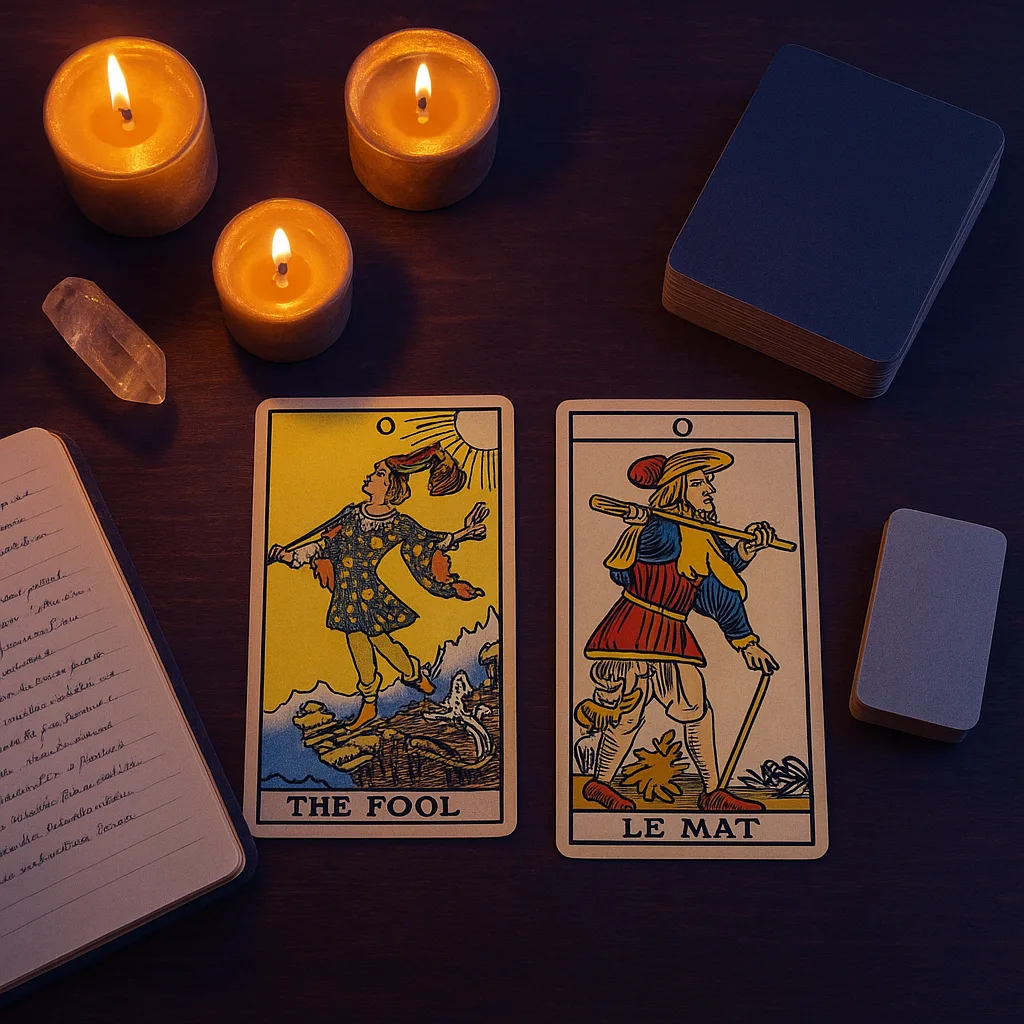
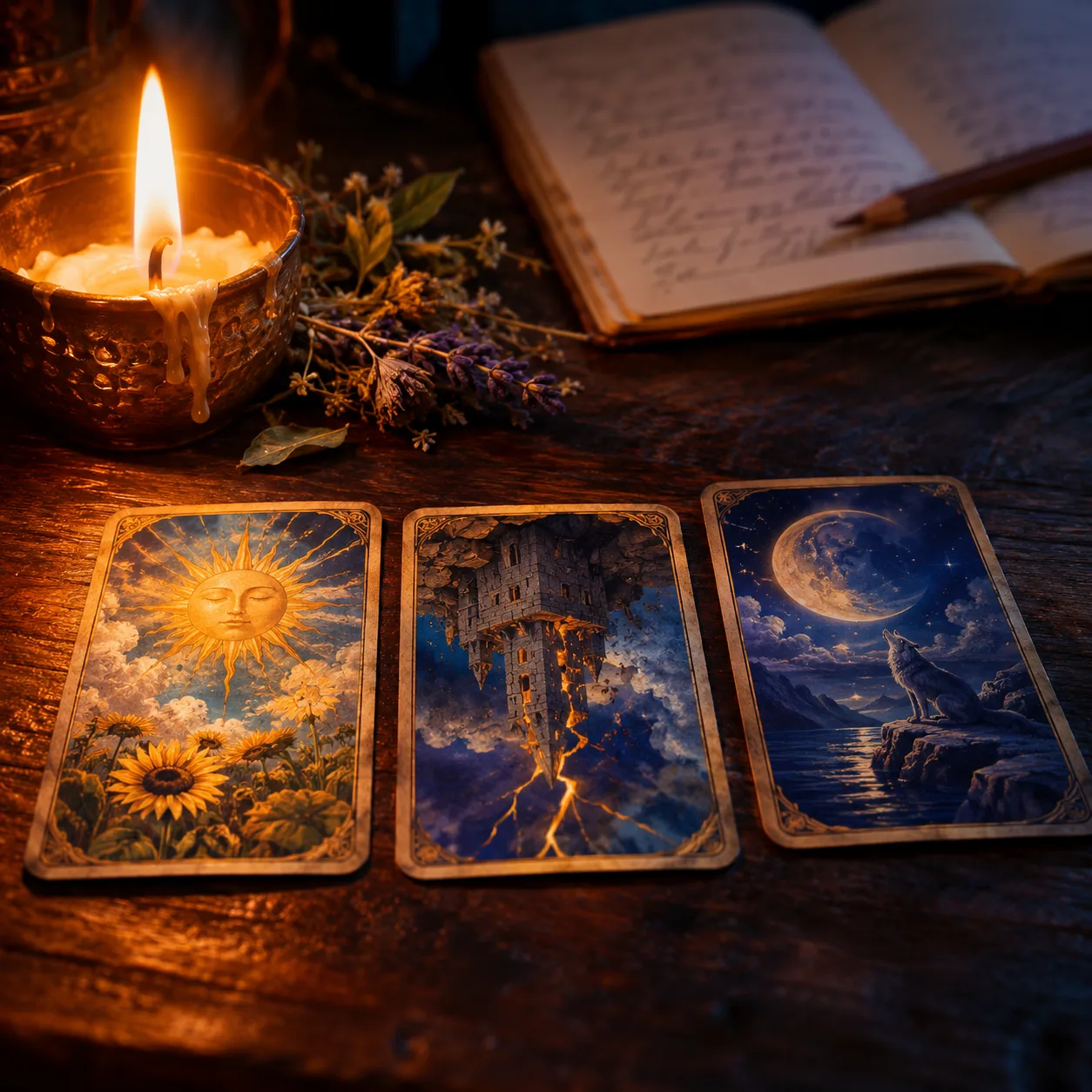
Three cards face down on the table. It seems simple, and it is. That simplicity is what makes the three-card spread one of the most useful tools for those who want to turn tarot into a practice of self-knowledge rather than mere curiosity about the future. It requires little time, demands minimal memorization of meanings, and still delivers a reading with a clear beginning, middle, and end, like a scene unfolding in three acts.
Before anything else, it's worth aligning expectations: tarot here is treated not as an oracle that predicts facts, but as a symbolic mirror. The cards don't decide anything for you. They organize questions, illuminate patterns that go unnoticed in the automatic rhythms of daily life, and make room for intuition to speak. Carl Jung already pointed out that symbols have the power to access layers of the psyche that rational logic alone cannot reach. That's why looking at a symbolic image can generate an insight that a to-do list never would.
It's worth noting that tarot as an object has a documented history: the National Library of France maintains historical tarot decks in its digital collection, including examples dating back centuries, showing how these cards crossed different cultural contexts before reaching the therapeutic and introspective use we practice today. Those interested in viewing these digitized pieces can consult the National Library of France.
Why three cards are enough to begin
There's a temptation, especially for beginners, to think that larger spreads with five, ten, or twelve cards bring more complete answers. In practice, the effect is usually the opposite: too much information at once confuses more than it clarifies, particularly for those still memorizing the basic meanings of the cards.
The three-card spread solves this with elegance. It's short enough to interpret in a few minutes, yet structured enough to tell a meaningful story. This makes it useful both for a quick daily question and for a deeper session about a life phase. This versatility is what makes it the most common entry point for those who want to use tarot as a tool for emotional well-being rather than as a crystal ball. Those seeking to explore this same structure with another approach can find more details in Three-Card Tarot: a Step-by-Step Guide to Know Yourself Better.
Different from asking the future
One thing separates a self-knowledge reading from a predictive one: the kind of answer you're seeking. You're not asking the deck to confirm a wish or announce an event. You're asking it to help you see something about yourself that may have been covered by routine, haste, or emotional defense mechanisms of the moment.
Position models, and why past-present-future isn't the only way
The most familiar three-card spread follows a timeline: the first card speaks of a past influence still echoing in the current situation, the second shows in more detail what's happening now (often revealing angles the person couldn't see while caught in their own experience), and the third points to a path or advice for moving forward.
But this is just one of several possible arrangements. The table below summarizes the models covered in this guide, making it easier to choose what fits your question:
| Position model | What it does | When to use it |
|---|---|---|
| Past, present, future | Shows the origin of a situation, its current state, and a possible path forward | General readings about a life phase |
| Situation, obstacle, advice | Identifies what's blocking something and suggests a direction | When there's already a clear impasse |
| Mind, body, spirit | Checks in internally across three dimensions of experience | Moments of broader self-assessment |
| Current situation, action, result of action | Connects a practical decision to its possible consequences | When there's a concrete choice to make |
| Pros, cons, advice | Organizes conflicting feelings about a question | Doubts with two opposing sides |
For those already familiar with the mind-body-spirit model and wanting to explore that specific layout further, see Body, Mind, and Spirit: The Three-Card Spread That Exposes Your Inner Conflicts, which details how this structure reveals internal tensions.
The golden rule, regardless of which model you choose, is to define what each position means before shuffling. Writing it down on paper, even just three quick words, prevents confusion about whether the second card represents the present or the challenge.
The step-by-step reading process
With the model chosen, the process itself is straightforward:
- Quiet yourself before shuffling. A few minutes of breathing, silence, or simply turning off notifications helps you step out of autopilot and into a more receptive state. The reading gains depth when it comes from a place that's more intuitive than rushed.
- Define your question with clarity. Vague questions like 'what will happen to me' generate equally vague answers. The more specific your intention, the more the reading can speak to it.
- Shuffle while holding the question in mind. Let your attention return to the issue as you shuffle. When it feels right, cut the deck or spread it out.
- Draw three cards and place them face down, in the order that matches your chosen model.
- Reveal one at a time, interpreting each card on its own first. Then look at all three together, as if they were scenes from the same story. The first card sets the stage, the second shows the heart of the matter, the third points to an outcome or direction. The richest meaning usually emerges when you find the connection between them, not when you read each one in isolation.
Questions that actually open doors
For self-knowledge readings, the type of question matters as much as the spread technique. Questions about other people, like 'what does she feel for me' or 'what will he do', take the focus away from you. The self-knowledge process works better when it moves from the inside out.
It also helps to avoid questions starting with 'why,' since they tend to generate defensive answers or justifications rather than real reflection. Prefer questions with 'how' or 'what,' which invite thinking about paths rather than assigning blame. Some examples that work well for this kind of reading:
- What do I need to understand about the phase I'm in right now?
- What pattern am I repeating without noticing?
- What is this situation teaching me?
- How can I handle better this emotion that keeps returning?
Open-ended questions like these make room for tarot to bring nuances that a yes-or-no question could never allow. If your question specifically involves a relationship with another person, there's a dedicated guide for that in Three-Card Tarot for Two: How to Read the Cards to Understand Relationship Dynamics.
After revealing the cards: keeping a record that solidifies learning
The reading doesn't end when the third card is revealed. Taking time right after to write about what appeared, the cards, how it felt to see them, the ideas that surfaced, transforms a single moment into reference material. A journal dedicated to these readings, revisited weeks or months later, often reveals patterns that a single isolated session never would.
It's worth remembering that this practice walks well alongside emotional self-care but doesn't replace therapy when the issue calls for it. Tarot, used this way, functions as a recurring invitation to pause and listen inward: a space of three cards where, for a few minutes, you allow yourself to look inside with more attention than daily life usually offers.
Frequently asked questions
What's the difference between a three-card spread and larger spreads?
The three-card spread is shorter and more direct, which makes interpretation easier for those still memorizing card meanings. Larger spreads with five, ten, or twelve cards bring more layers of information, but tend to confuse more than clarify when the goal is a quick self-knowledge exercise.
Do I need to know all 78 card meanings to do this reading?
You don't need to master the whole deck before starting. The three-card model was designed to reduce the memorization load, letting you interpret each card within the context of its position (past, present, or advice, for example) rather than relying solely on isolated memorized meanings.
Which position model should I choose to start?
For a first experience, the past-present-future model usually feels most intuitive, but if your question already involves a clear obstacle, the situation-obstacle-advice layout tends to work better. What matters is defining what each position means before shuffling, so you don't lose track during interpretation.
Can I do this reading about someone else, like a partner or family member?
The recommended focus here is on self-knowledge, so questions centered on you tend to spark more useful reflection than questions about what someone else feels or will do. For specific relationship questions, there's a dedicated guide that explores the dynamic between two people.
How often can I repeat this spread about the same topic?
There's no fixed rule, but repeating the same question in very short sequences tends to generate confusing or contradictory answers, since tarot works better as a single reflection point than as repeated confirmation. Recording your readings in a journal helps you notice over time whether a pattern truly repeats or whether each session simply brought a different layer of the same question.

Recomendado
Lewtemi Espelho de tarô acrílico tarô
Lewtemi Espelho de tarô acrílico tarô cartão decoração de parede mística presentes de bruxa para mulheres espaço sagrado cartomante espiritualidade astrologia bruxa magos arte decoração
Universo Astral Editorial Team · Tarot and moon transits
This article was produced by the Universo Astral editorial team, with AI tools assisting research and drafting and human review before publication. If you spot anything inaccurate or outdated, let us know at our contact email.