Three-Card Tarot for Couples: How to Read Cards Together to Understand Your Relationship

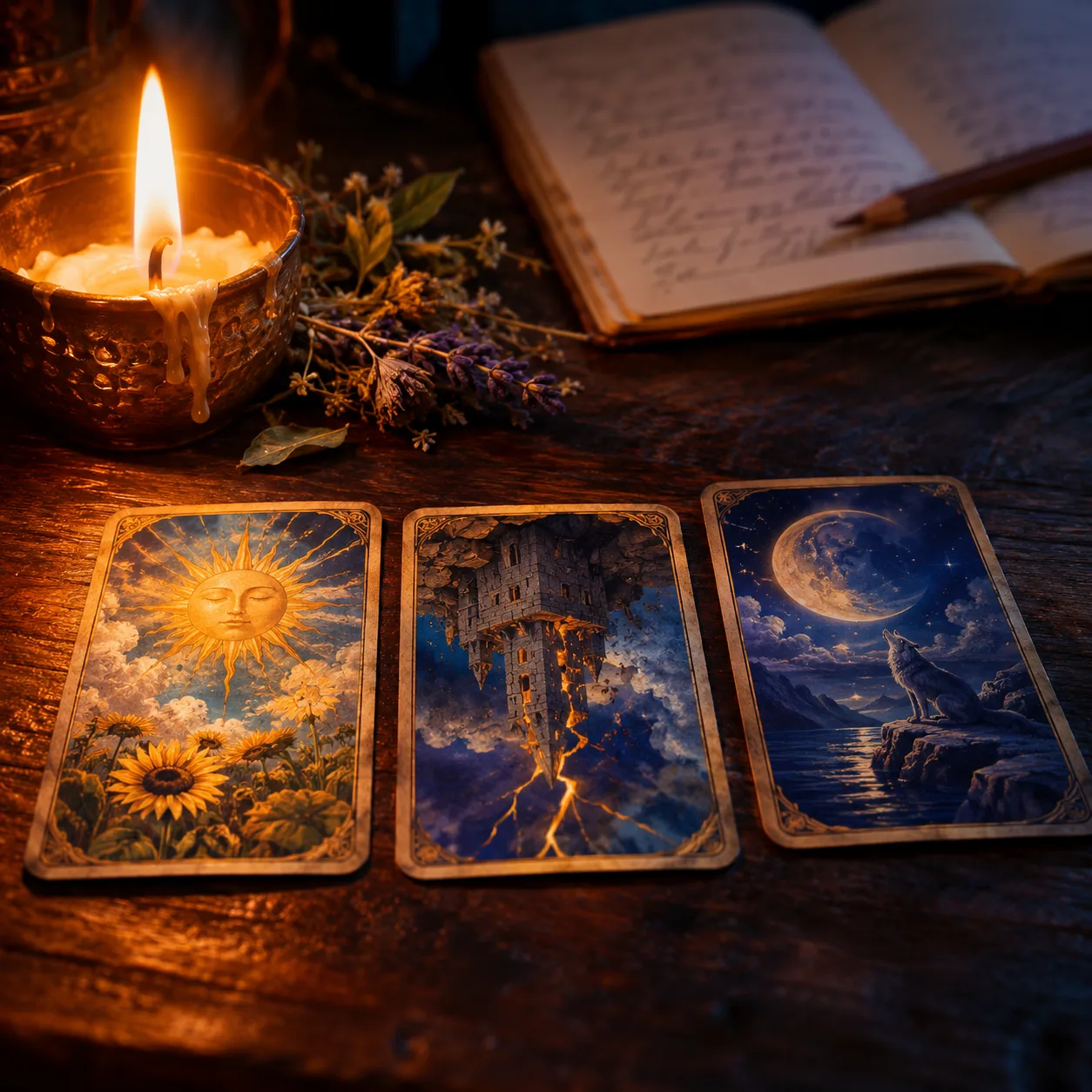
Pulling cards alone is one thing. Pulling cards next to another person, knowing you'll both look at the same symbol and possibly read something different in it, is an entirely different exercise. The three-card tarot, known as a tool for individual introspection, also works well as a mirror for two: a symbolic way of putting into words what a relationship feels, but doesn't always manage to name in direct conversation. Anyone who's used this format alone, as described in the guide to three-card tarot for getting to know yourself better, will recognize the structure, but using it as a couple changes the purpose: instead of looking inward at one person, the reading describes the space between two.
This two-person use requires care that solo readings don't demand: the cards will touch on sensitive points, and how each person reacts to the image can reveal as much as the card itself. Before thinking about positions and meanings, it's important to understand why this type of spread works well together, and where its limits are.
Why tarot works as a conversation mediator for couples
Relationships live by conversations that are hard to start: 'Why have you been distant this week?', 'What's weighing on us?', 'What am I not seeing?'. The problem is rarely a lack of willingness to talk: it's the lack of an opening that doesn't feel like an accusation. A tarot card, being a symbolic and neutral object, offers exactly that opening: instead of 'You've been distant lately', the conversation begins with 'This card speaks of isolation, do you feel that too?'.
It's this symbolic distance that lowers defenses. The cards don't point fingers at anyone; they describe energies, and it's up to the couple to decide together what that means in practice. It works almost like a projective test: each person sees in the image what was already latent within themselves, and the process of comparing the two readings (yours and your partner's) tends to be more revealing than the card alone. For those who want to better understand the symbolic weight of each suit in these responses, the article on tarot suits in love details how Cups, Pentacles, Swords, and Wands manifest differently within a relationship.
Tarot for two doesn't decide who's right. It creates neutral ground where both versions of the story can be heard at the same time.
It's worth noting that tarot, as a cultural object, has a history far older than its contemporary use in self-knowledge or couple readings. The Bibliothèque Nationale de France keeps digitized historical tarot decks, records showing how these cards circulated in Europe centuries before being associated with the divination or symbolic therapy we know today. This doesn't change the practical use of the deck in a couple, but it helps place the cards as an object with its own trajectory, not a recent self-help invention.
Before pulling the cards: aligning expectations with your partner
Unlike solo readings, here preparation involves two people agreeing on the rules before starting. Some agreements prevent the session from turning into an argument:
- Decide on the question together. Avoid closed questions like 'Do you love me?', prefer something like 'What needs attention in our relationship right now?'.
- Establish that both readings carry equal weight. Whoever shuffles or 'knows more' about tarot doesn't have the final say on what the card means for the couple.
- Accept discomfort as part of the process. If a card touches on something sensitive, the goal isn't to dodge it, but to note it as something to talk through calmly after the reading.
- Agree to stop if the session turns hurtful. Tarot should open conversation, never be used as ammunition in a fight.
Three spread models to explore your bond
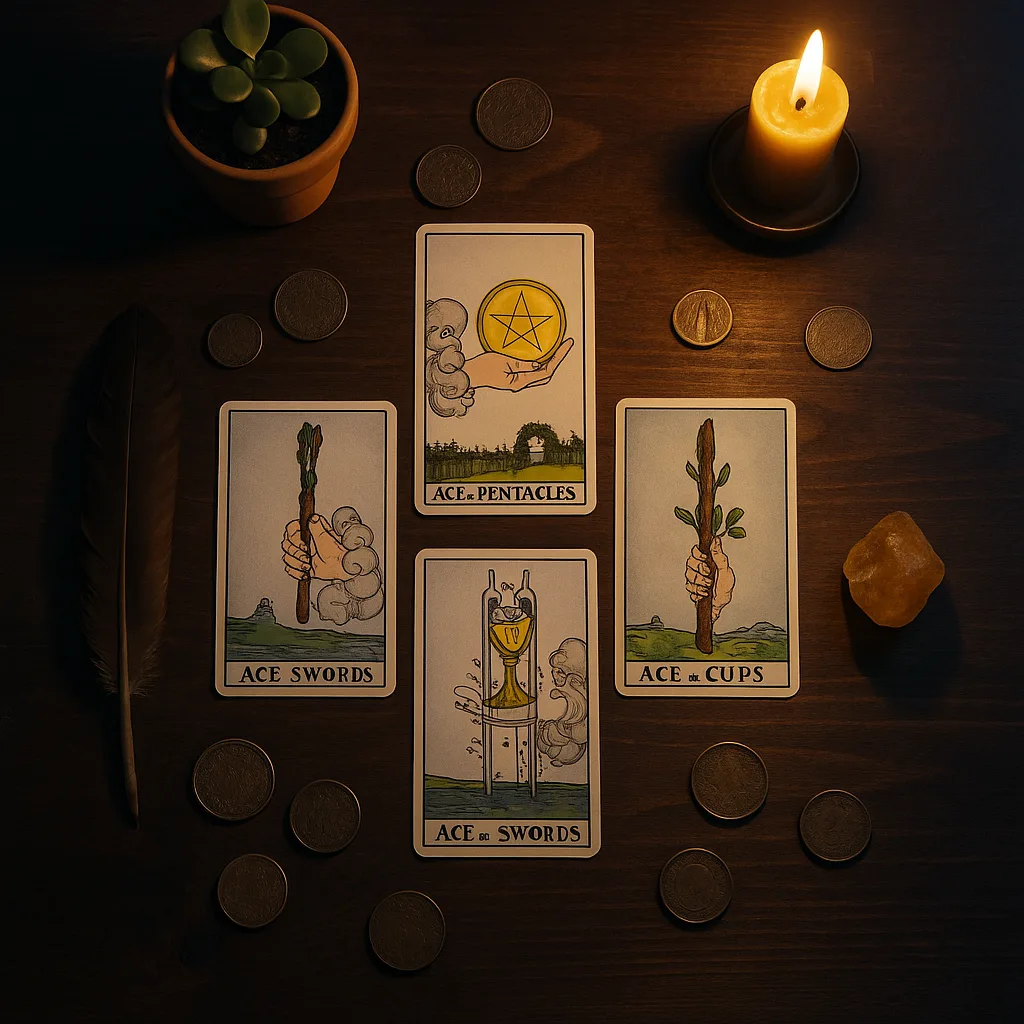
The three-card structure stays simple, but the positions shift focus: instead of time (past-present-future), they represent perspectives within the relationship. The table below summarizes the three positions of each model side by side to make it easier to choose when sitting down with your partner.
| Spread model | 1st card | 2nd card | 3rd card |
|---|---|---|---|
| Me, You, Us | What I bring to the relationship now | What I perceive you're bringing | The resulting energy from both forces meeting |
| What unites, what separates, what strengthens | What still brings the couple together | The real point of distance | A symbolic action to reinforce the connection |
| Root, moment, potential | What originally united the two | Where the relationship is now, honestly | Where it can go if what was revealed is tended to |
Me, You, Us
- First card (Me): what one person is bringing to the relationship now, their needs, fears, or expectations of the moment.
- Second card (You): what the other person is bringing, from the first person's symbolic perspective. It's worth pulling this card thinking 'What do I sense my partner is experiencing right now?' and then compare it with their actual perception.
- Third card (Us): the resulting energy from the meeting of these two forces, not always harmonious, and that's okay.
What unites, what separates, what strengthens
This variation is more direct for couples who sense specific friction and want to name it. The first card shows what still brings the couple together, even amid difficulty; the second, the real point of distance (which might be different from what each imagined); the third, a symbolic action capable of reinforcing the connection.
Root of the bond, current moment, relationship potential
Geared toward couples in a decision-making phase (reconciliation, moving, living together, a new step). The first card reclaims what originally united the two; the second describes honestly where the relationship is now; the third points to where it can go if both tend to what was revealed in the first two cards.
Interpreting together without turning the reading into an argument
The most delicate moment isn't flipping the card: it's what comes after, when both people begin interpreting the same image differently. This is normal, and often turns out to be the most valuable data from the session. A simple script helps keep the exercise productive instead of turning it into a debate:
- Each person shares their reading of the card before hearing the other's, so the first impression isn't influenced.
- Each one asks themselves 'What is this card showing me about myself, not about my partner?' before pointing out meanings to your partner.
- Both readings are written down separately instead of discussed right away.
- Only after being recorded are the notes compared, looking for where perceptions align and where they differ.
- Differences become topics for calm conversation, not disputes about who interpreted correctly.
It's common to notice that differences in interpretation mirror real differences in how you perceive things day to day. That alone often turns out to be more useful information than the 'correct' meaning of any card.
The limits of this practice
Tarot for two is a symbolic conversation tool, not a relationship diagnosis, and certainly not a substitute for couples therapy when there are structural conflicts, unresolved old hurts, or behavior patterns causing real suffering. It works well as a starting point for difficult conversations, but deeper issues (excessive jealousy, recurring lack of trust, chronic communication difficulties) deserve specialized professional support, someone who can look at the couple's dynamic with techniques and continuity that no card reading can offer.
Used this way, the three-card tarot functions less as prediction and more as invitation: a way for two gazes to pause, at the same time, before the same symbol, and perceive, sometimes for the first time in weeks, what each was carrying in silence.
Frequently asked questions
Which tarot deck should we use for a couple's reading?
Any deck both people feel comfortable with works; there's no specific deck for this use. What matters more is that both can look at the images without one person dominating the interpretation, since the exercise depends on balance between the two readings.
Who should shuffle the cards in a two-person reading?
The article recommends deciding this beforehand, precisely to prevent one person from taking on the role of 'conductor' for the session. Taking turns shuffling or sharing the task helps keep the weight of both readings equal.
Can tarot replace couples therapy?
No. The text is clear on this: the spread serves as a starting point for difficult conversations, but structural problems, like excessive jealousy or recurring lack of trust, require ongoing professional support, something no card reading offers.
What if the couple disagrees on how to interpret a card?
This is expected and, according to the article, often turns out to be the most revealing data from the session. The ideal is to write down both readings separately before comparing them, and treat the disagreement as a reflection of how you actually perceive things day to day, not as an error to fix.
Is there a best time to do this reading as a pair?
The article doesn't set a specific time, but suggests the three spread models serve different situations: a vague sense of distance calls for the 'Me, You, Us' model; an already-identified specific friction fits 'what unites, separates, strengthens'; and bigger decisions, like reconciliation or changes in living arrangements, work better with the root, moment, and potential model.

Recomendado
Incensário Cascata Refluxo Cerâmica
Efeito cascata hipnotizante A fumaça desce como uma cachoeira, criando um visual relaxante perfeito para momentos de calma e foco
Universo Astral Editorial Team · Tarot and moon transits
This article was produced by the Universo Astral editorial team, with AI tools assisting research and drafting and human review before publication. If you spot anything inaccurate or outdated, let us know at our contact email.