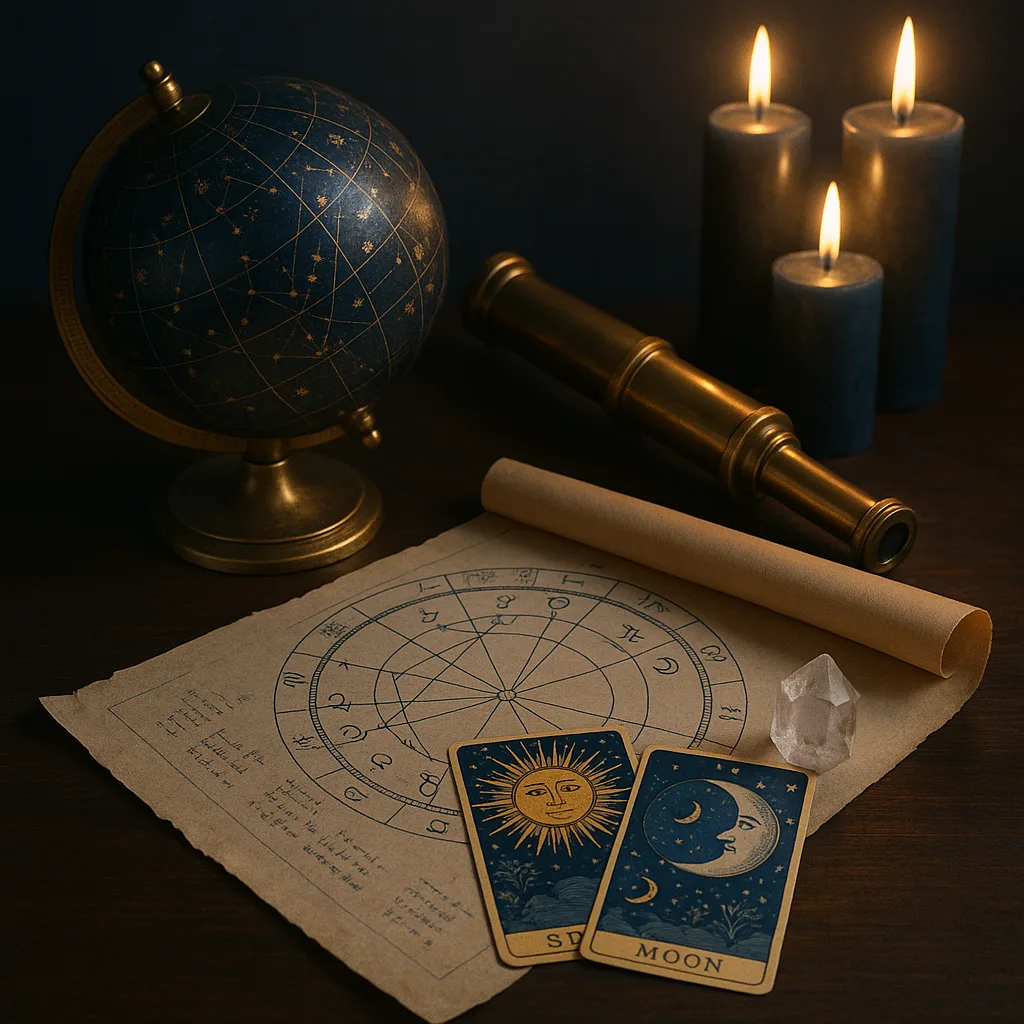
The Sky's Mathematicians: When Astrologers and Astronomers Were the Same Person
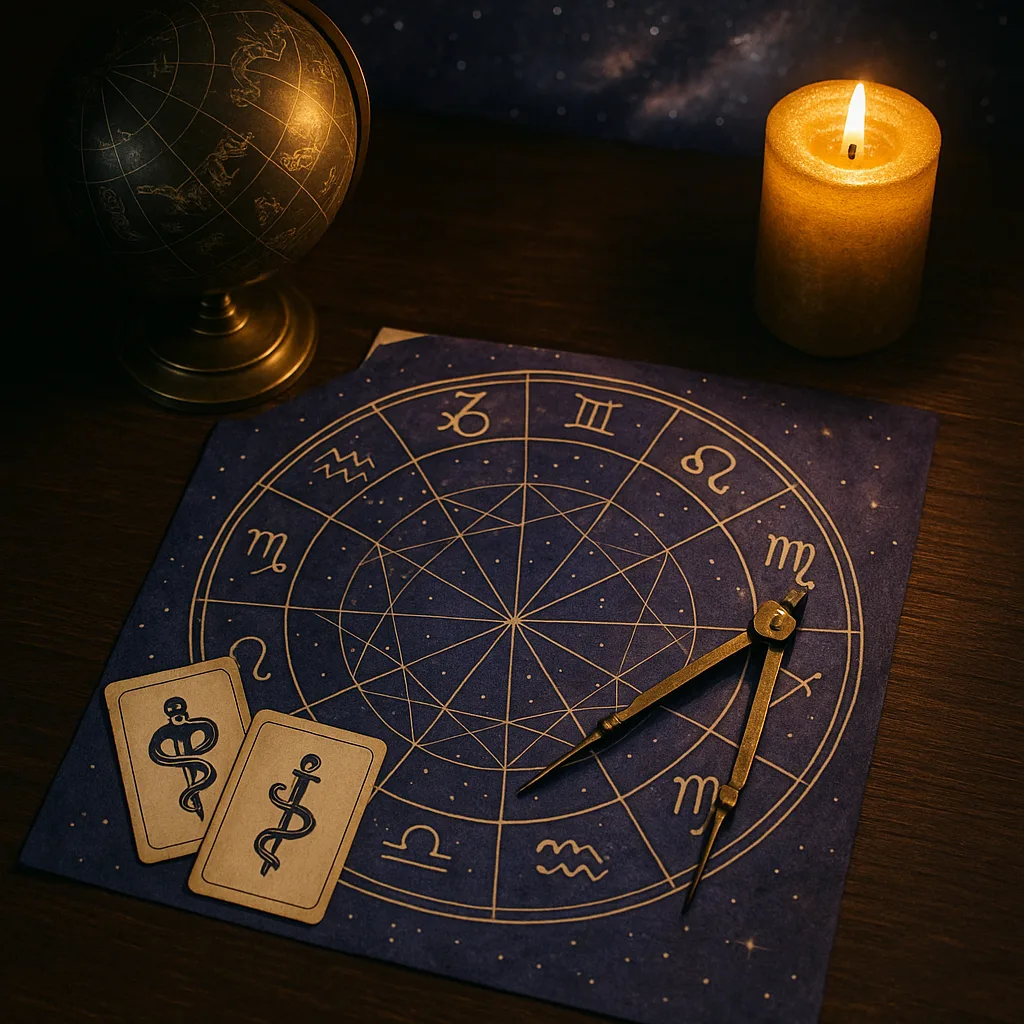
The Renaissance: when the sky became a stage for double geniuses
It's in the Renaissance that this fusion reaches its most curious point for modern eyes, precisely because it involves names we now know almost exclusively for their scientific side. Well into the 15th century, the Vatican and nearly every European court of note employed a full-time astrologer — and that professional was, almost without exception, a qualified mathematician responsible for calendars, annual forecasts, and instruments for astronomical observation.
It was an astrologer, Georg Joachim Rheticus, who made sure Copernicus's work on heliocentrism reached the world: he printed it, and with Copernicus's own blessing, added a chapter devoted to astrology. Tycho Brahe, born in 1546, is remembered today as one of history's greatest sky observers — but he also served as astrologer to the King of Hungary, and it was precisely his extraordinarily precise observations of planetary movements that later helped confirm Copernicus's theory.
And then there's Johannes Kepler, perhaps the most emblematic example of all. As Tycho Brahe's assistant, Kepler formulated the laws of planetary motion still taught in schools today — and, at the same time, cast astrological forecasts for nobles and influential figures of his era. He wrote works such as De Stella Nova and De Fundamentis Astrologiae Certioribus, in which he simultaneously championed rigorous scientific observation and the validity of a well-grounded astrology. In his 1610 work Tertius Interveniens, Kepler left behind a line that captures his spirit perfectly: he didn't want to abolish astrology, but to reform it — in his own words, to avoid “throwing the baby out with the bathwater.” Not even Galileo escaped this dual identity: he and his contemporaries were called by that same title, mathematicus, and no one saw anything strange in it.
A divide more recent than it seems
What these names reveal, taken together, is that the rigid divide between astrology and astronomy — one treated as exact science, the other relegated to the realm of belief — is a fairly modern development in the long history of sky-watching. For millennia, calculating a planet's position and interpreting its symbolic meaning were steps in the very same intellectual process, practiced by the same brilliant minds, funded by the same courts and universities. Ptolemy cataloging stars and writing about temperaments, Kepler working out orbits while casting horoscopes, Tycho Brahe watching the sky both for science and for his king — all of them show us that humanity's curiosity about the heavens has always held these two faces side by side, with neither needing to cancel out the other.
Looking up at the night sky today, it's worth remembering that this simple gesture — lifting our eyes and trying to understand what moves up there — was once, at the very same time, cutting-edge science and symbolic language in the hands of the very same people. That dual legacy lives on every time someone pores over a birth chart with the same care and curiosity an astronomer brings to a constellation.

Recomendado
Astrologia, Simbolismo e Mapa das Personalidades
A astrologia acompanha a humanidade desde as primeiras grandes civilizações. A ideia de que a vida biológica na Terra pode ser influenciada pelos astros gerou e gera grande fascínio no homem.

Recomendado
Estátua Gato Bastet Egito Antigo
Inspiração Egípcia Autêntica Representa Bastet, a deusa egípcia da proteção, harmonia e energia feminina.