Sun, Moon, and Rising Sign: The Astrological Trio That Reveals Who You Really Are
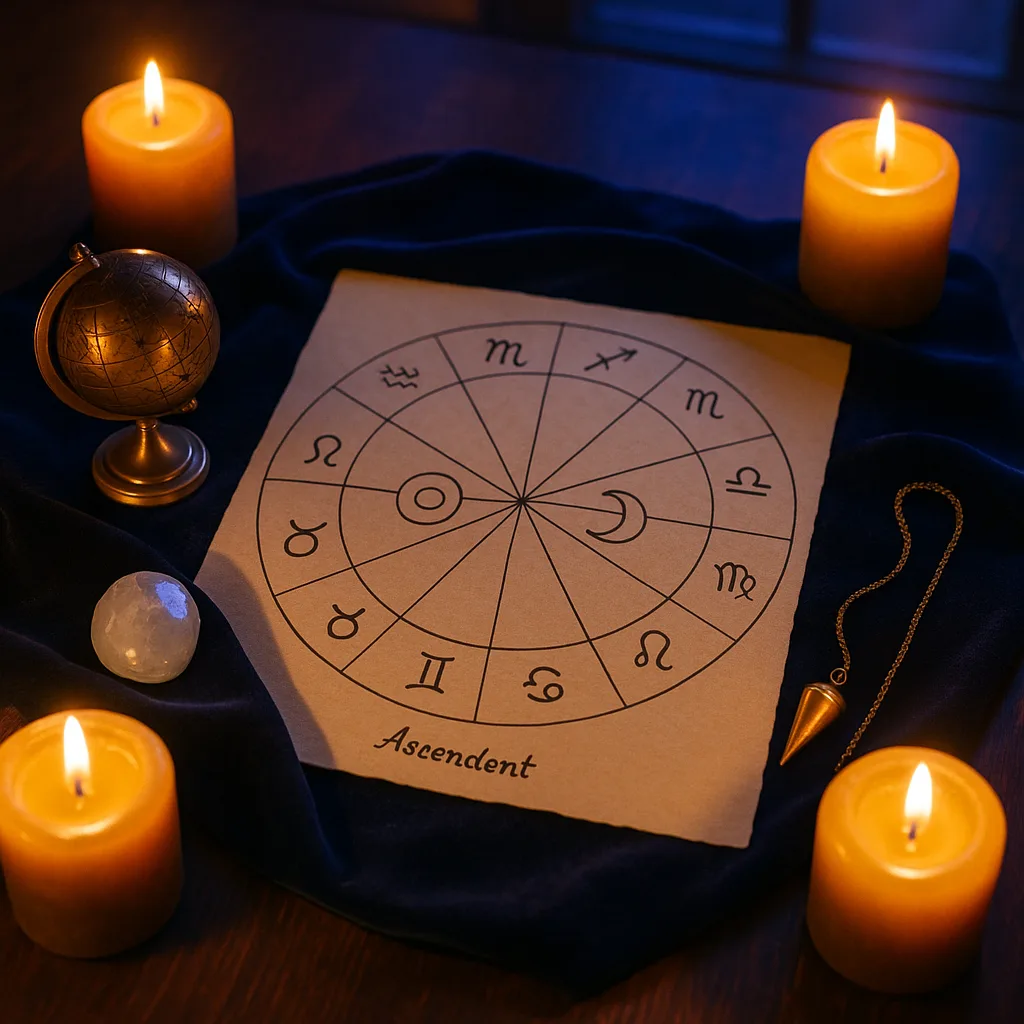
The sign everyone knows is just a fraction of the full picture
Almost anyone can tell you their sign without a second thought. But that quick answer carries a real limitation: it represents only one specific point in the sky at the exact moment you were born, while in reality the entire sky was in constant motion, with every planet occupying its own unique position. Among these countless points, three stand out and form what modern astrology calls the Big Three: the Sun, the Moon, and the Rising Sign (Ascendant). Together, they act like overlapping layers that build your identity: one reveals your deepest nature, another speaks to your emotional world, and the last shows how you come across to others. Understanding this distinction changes how you read a birth chart, and helps explain why two people born under the same sign can have such different personalities.
The Sun: the essence that drives your purpose
The sun sign is the most well known of all, and the easiest to identify since all you need is a birth date. The Sun stays in each sign for about a month, which is why people born around the same time often share the same solar sign. It represents the innermost core of who you are: the central traits of your personality, the drive that pushes you toward your life's purpose, the inner light you spend your life trying to express. In astrological tradition, the Sun is also symbolically linked to the father figure and to authority, acting like an internal compass pointing toward the person you're becoming.
Think of the Sun as the cover of a novel about yourself. It introduces the book's main theme, but on its own, it doesn't give you the whole story.
The Moon: what you feel deep down
While the Sun represents what's immediately visible, the Moon holds the more private side of the birth chart. It moves much faster, cycling through all 12 signs in about four weeks, spending just over two days in each one. That's why people born in the same week, or even on the same day, can have completely different moon signs, depending on the exact time of birth.
Your Moon placement relates to your emotions, your gut instincts, your emotional memories, and the behaviors that resurface when you're seeking comfort. It's the symbolic link to the mother figure, to your roots, and to whatever makes you feel safe. There's a saying among astrology enthusiasts that captures this well: your lunar impulses tend to show up right when your guard is down, or put more casually, after a few drinks. It's your most authentic, unguarded self, far removed from any social performance.
Rising Sign: the first impression you give off
Your Rising Sign, or Ascendant, is whatever sign was appearing on the eastern horizon at the exact moment you were born. Unlike the Sun and Moon, it shifts fast, roughly every two hours, which makes your precise birth time essential for calculating it correctly. Without that exact information, usually taken from a birth certificate, it's difficult to determine your Rising Sign with confidence.
It's often called your social mask: it shapes how you present yourself to the world, the energy you give off before you say a word, and how people perceive you on first meeting. The Rising Sign also defines the 1st House of the birth chart and sets the layout for all the other houses, making it, in many ways, the entry point for any astrological reading.
Why each planet's speed matters
One practical way to picture the difference between these three elements is to look at how quickly each one moves through the zodiac:
- Sun: changes signs roughly once a month, making it the easiest to identify, since all you need is a birth date.
- Moon: changes signs roughly every two and a half days, requiring closer attention to the date and, ideally, the time of birth.
- Rising Sign: changes signs roughly every two hours, requiring the exact time and location of birth for a reliable calculation.
The faster a point in the sky moves, the more sensitive it is to small shifts in timing, and the more precise your birth data needs to be for an accurate reading. That's why the Rising Sign tends to be the trickiest to calculate without exact information, while the Sun is something virtually everyone knows off the top of their head.
Why people with the same sign can be so different
This is one of the most eye opening parts of understanding the Big Three: just because two people share the same sun sign doesn't mean they'll be alike in other ways. Their Suns might match perfectly, but the Moon shapes how each person experiences and reacts to emotions, while the Rising Sign determines how each one shows up and presents themselves socially. Two Taureans, for example, might share a similar core, drawn to stability and pleasure, but if their Moons and Rising Signs differ, the way that plays out in real life can be almost opposite.
This nuance is exactly why generic horoscopes based solely on the sun sign often feel like they don't quite fit. Sticking to just the Sun is like judging a book only by its cover: it gives you a hint about the theme, but leaves out the plot details, the supporting characters, and how the story actually ends.
The Big Three as a social media phenomenon
Lately, questions like 'what's your Big Three?' have taken over platforms like TikTok and Instagram, becoming almost a way for younger generations to introduce themselves. It's no coincidence that this trend is driven largely by millennials and Gen Z, who turn to astrology less for predictions and more as a tool for self discovery. Recent research in humanistic psychology has pointed to this use of astrology as a kind of symbolic vocabulary for expressing identity, a way to name inner feelings that are often hard to put into everyday words.
Astrology functions, above all, as a symbolic system for self reflection, not as an exact science backed by empirical proof. That's where its value lies: as a mirror, never as a verdict.
How to calculate your own Big Three
To pinpoint your Sun, Moon, and Rising Sign accurately, you'll need three pieces of information: your birth date, your exact location (city and state or country), and, most importantly, the precise time you were born, ideally taken straight from your birth certificate. With those details, you can build a full birth chart that reveals not just this trio, but the entire celestial layout of that unique moment.
Discovering your Sun, Moon, and Rising Sign is like learning the cover, title, and subtitle of a story only you could write. None of the three on its own tells the whole tale, but together, they start to paint a picture that's much closer to who you really are, what you feel, and how you show up in the world.
Sticking to just your sun sign is like reading only the book's cover; discovering your Big Three is where the real story begins to unfold.
Recomendado
Astro Reflexo
Descubra o que os astros revelam sobre quem você é. Em menos de um minuto, calculamos seu Sol, Lua e Ascendente com precisão astronômica e uma inteligência artificial escreve um resumo personalizado só para você.

Recomendado
Estátua Gato Bastet Egito Antigo
Inspiração Egípcia Autêntica Representa Bastet, a deusa egípcia da proteção, harmonia e energia feminina.
Universo Astral Editorial Team · Birth charts and numerology
This article was produced by the Universo Astral editorial team, with AI tools assisting research and drafting and human review before publication. If you spot anything inaccurate or outdated, let us know at our contact email.