Missing Element in Your Birth Chart: Balancing Fire, Earth, Air & Water
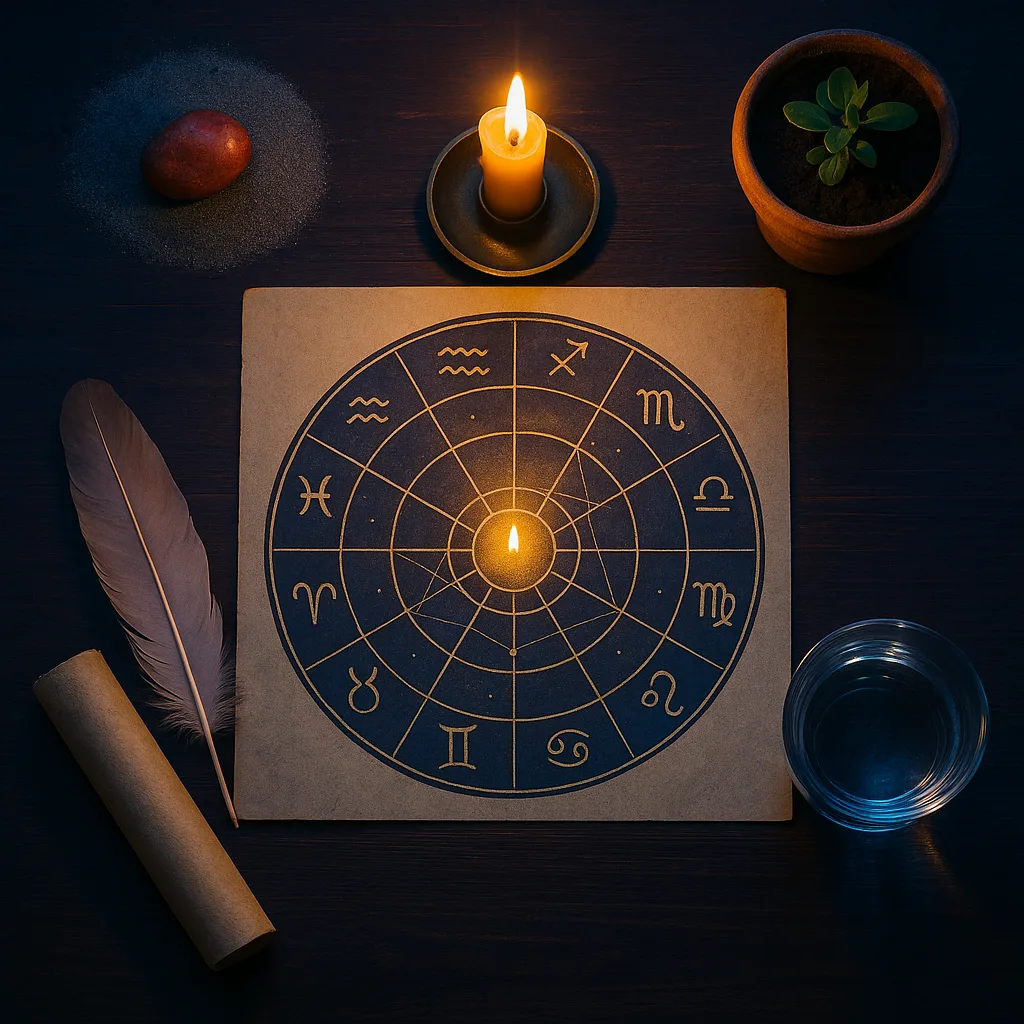
Beyond the sun sign: the elements live throughout the whole chart
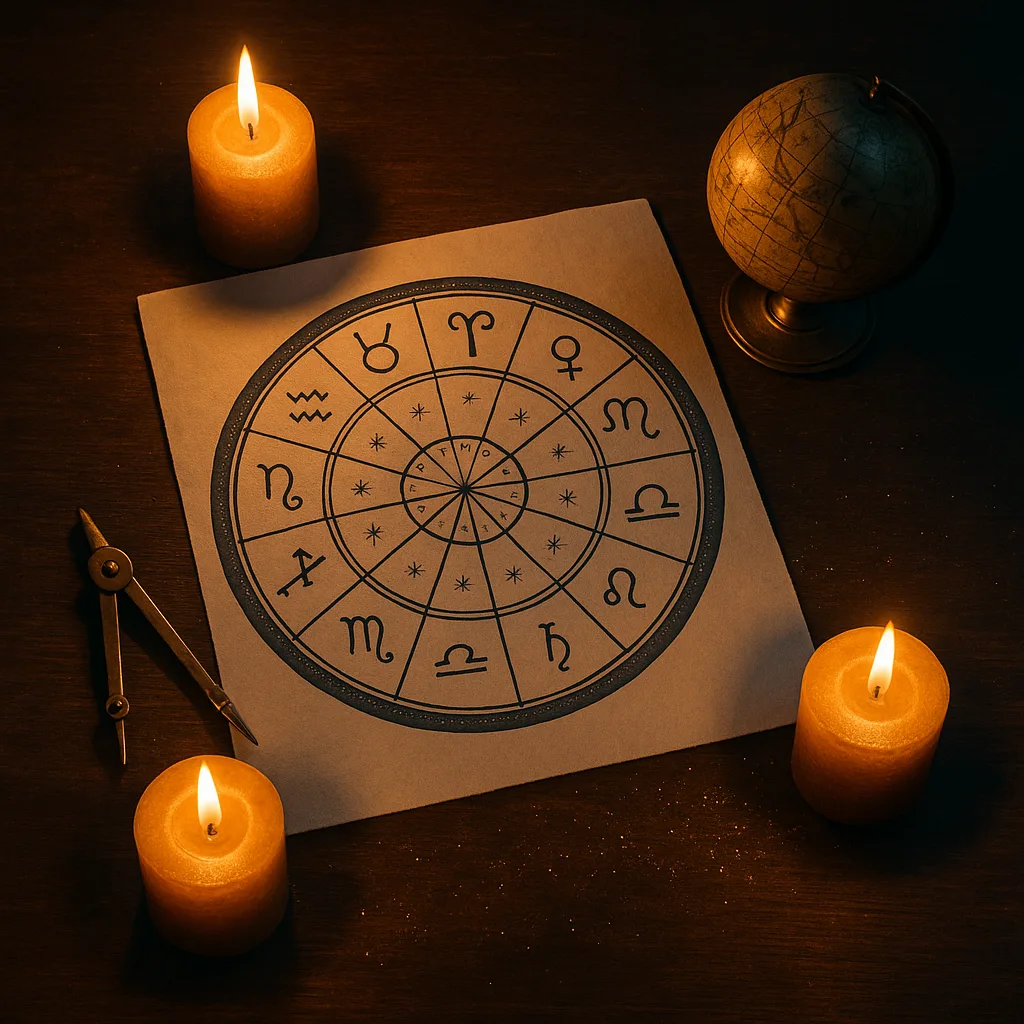
Almost everyone has heard that Aries is a fire sign, Taurus is earth, Gemini is air, and Cancer is water. That's true, but it only tells part of the story. The element of your sun sign speaks to one part of your identity: the conscious energy, the part of yourself you show and recognize. But your birth chart has ten planets, twelve houses, and several sensitive points, and each one also carries an element, because each one sits in one of the twelve zodiac signs.
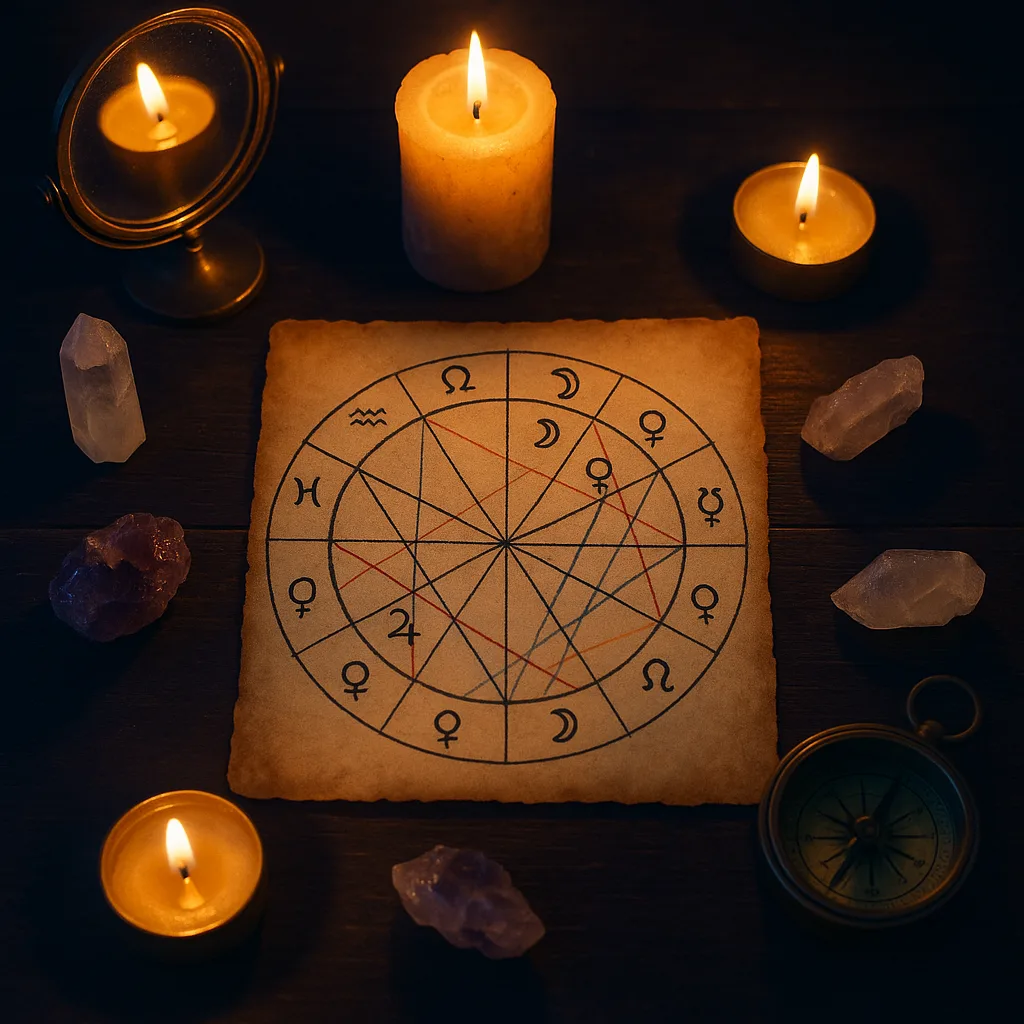
That means someone with the Sun in Aries might have Moon in Taurus, Venus in Pisces, Mars in Capricorn, and an Aquarius rising: a genuine mix of fire, earth, water, and air coexisting in the same natal chart. When an astrologer adds up the elements present across the chart (there are several ways to do this, and every practitioner tends to have a preferred method), the result usually reveals something richer than the sun sign alone: a tendency toward too much of one element, or a near total absence of another. That imbalance is often where the reading gets interesting.
A little origin story
The idea that everything in the world, and in the soul too, can be reduced to four basic substances predates astrology as we know it today. The Greek philosopher Empedocles, in the 5th century BCE, proposed that fire, earth, air, and water were the fundamental forces behind all matter, and the Stoics later adopted this view, linking it to human temperament as well. Astrologers of antiquity and the Middle Ages folded this logic into the zodiac, and it was taken seriously as science until the 17th century, when modern chemistry began explaining matter differently. Astrology never dropped the idea, not because it ignores science, but because the four elements remain a useful way to describe temperament, and symbols don't lose their value just because chemistry moved on.
The triplicities: trios that click by nature
In technical language, each element forms what's called a triplicity: three signs spaced exactly 120 degrees apart on the zodiac wheel, forming astrology's most harmonious aspect, the trine. That's why Aries, Leo, and Sagittarius, all fire signs, tend to recognize in each other a similar drive to take action. Taurus, Virgo, and Capricorn share an appreciation for solidity. Gemini, Libra, and Aquarius connect through intellectual curiosity. Cancer, Scorpio, and Pisces move together through emotional sensitivity.
It's also worth noting the order in which the elements repeat around the zodiac: fire, earth, air, water, then fire again. This sequence isn't random, it tells a story. Fire sparks something into being (the impulse, the initial spark), earth gives it shape and substance, air spreads it and turns it into thought and connection, and water dissolves it into emotion and wisdom, preparing the ground for a fresh spark of fire. In a sense, the zodiac narrates, twelve times a year, the story of a birth all the way to a dissolution.
Active and receptive: the polarity behind the elements
There's another layer that helps explain why fire and air seem to carry similar energy, just as earth and water do: polarity. Fire and air are yang elements, active and pushing outward: fire through direct action, air through exchange and ideas. Earth and water are yin, receptive, absorbing and sustaining: earth through physical permanence, water through emotional absorption. Neither polarity is better than the other. A healthy chart usually calls for both, in whatever proportion suits that particular person.
Each element's temperament, in a few words
When an element shows up strongly in a birth chart, it tends to shape how a person reacts to the world:
- Fire (Aries, Leo, Sagittarius): impulse, enthusiasm, the courage to act before overthinking. This is the element of spirit and will. People with strong fire tend to lead, fall fast for ideas and projects, and struggle to sit still.
- Earth (Taurus, Virgo, Capricorn): practicality, patience, an attachment to what's tangible and provable. This is the element that builds structure, honors commitments, and prefers concrete results over pretty promises.
- Air (Gemini, Libra, Aquarius): intellect, language, the ability to connect people and ideas. This is the element of communication. People with prominent air tend to think out loud, negotiate well, and need constant mental stimulation.
- Water (Cancer, Scorpio, Pisces): sensitivity, intuition, deep emotional memory. This is the element that feels before it understands rationally, and that tends to pick up on invisible layers in relationships and environments.
When an element is missing, or way overrepresented
No chart is made of just one element, and it's precisely the imbalance, too much or too little of a given energy, that usually catches an astrologer's eye during a reading. There's no single counting formula (each practitioner may weigh the Sun, Moon, ascendant, and other planets differently), but the principle is always the same: notice where the energy piles up and where it barely shows up at all.
Too much fire
Too much fire in a chart can translate into impatience, irritability, and trouble listening before reacting. This is the person who starts a hundred projects and finishes few, burning out fast from the sheer intensity of their own enthusiasm. In these cases, many astrologers suggest consciously seeking out water qualities: slowing down, allowing yourself to feel without needing to act right away, or simply making more room for rest and introspection.
Not enough fire
A lack of fire tends to show up as low initiative, trouble believing in your own courage, or a sense of stagnation and a life that's lost its spark. It's not laziness, it's a lack of internal fuel to take the first step. Small self affirmation rituals, physical activity, and environments that encourage spontaneity tend to help relight that flame.
Too much and too little earth
Excess earth can create rigidity: too much routine, fear of stepping outside the predictable, excessive attachment to material things. A lack of earth often shows up as trouble organizing practical life, finishing what you start, or handling money and routine, even when the ideas are brilliant.
Too much and too little air
Excess air can mean scatteredness, trouble truly feeling things (everything turns into analysis, never lived experience), or mental anxiety from overstimulation. A lack of air tends to appear as difficulty communicating, seeing your own point of view with any distance, or exchanging ideas without feeling exposed.
Too much and too little water
Excess water can flood everything: emotions that take over before any rational thought kicks in, trouble setting boundaries, a tendency to absorb other people's pain as if it were your own. A lack of water often shows up as difficulty recognizing your own feelings, a certain defensive coldness, or trouble connecting emotionally even when you want to get closer.
A bridge to psychology: the elements according to Jung
One crossover gaining traction in more contemporary readings is the parallel between the four elements and the four psychological functions described by Carl Jung. In this reading, each element corresponds to a way of processing experience:
- Fire, intuition: perceiving possibilities, envisioning the future, the insight that arrives before any logical explanation.
- Earth, sensation: contact with the present moment, the five senses, whatever can be touched and verified.
- Air, thinking: rationality, analysis, the search for logic and coherence.
- Water, feeling: evaluating through emotional worth, empathy, connection.
This correspondence isn't a fixed rule of classical astrology, but it helps a lot of people understand more concretely why certain people process the same situation so differently. One sees possibilities (fire), another wants data (earth), another wants to debate it (air), and another wants to know how it makes everyone feel (water).
Elements and modalities: the two halves of a sign's character
To truly understand a sign, or a planet placed in it, traditional astrology crosses the element with the modality (cardinal, fixed, or mutable). If the element describes what that energy is made of, the modality describes how it acts in the world: whether it initiates (cardinal), sustains (fixed), or adapts (mutable). Taurus, for example, is fixed earth, practicality that plants its feet and resists change. Capricorn is cardinal earth, practicality that launches ambitious projects. It's this combination of two variables, element and modality, that gives the twelve signs their distinct personalities, even when they share an element or modality with one another.
The elements show up in tarot, too
The four elements aren't exclusive to astrology. In tarot, the four suits of the minor arcana mirror the exact same logic: Wands represent fire (action, will, creativity), Cups represent water (emotions, bonds), Swords represent air (thought, conflict, mental clarity), and Pentacles represent earth (work, body, resources). Anyone who studies both systems quickly notices that fire, earth, air, and water function almost like a universal alphabet for describing human experience, running through different symbolic traditions.
How to look at your own chart through this lens
If you already have access to your full birth chart, a simple way to start this kind of observation is to look at the element of each personal planet (Sun, Moon, Mercury, Venus, and Mars) plus your ascendant. Notice if any element repeats several times, a sign of strength, or if any element doesn't show up at all in those points, a sign of a shortage worth working on, not as a flaw, but as an invitation for growth.
Keep in mind that an excess element isn't a life sentence, and a missing element isn't a permanent limitation. These are tendencies the chart points out for you to notice in your own life, with curiosity rather than judgment. The four elements don't compete with each other, they complete each other. A chart with fire, earth, air, and water well distributed tends to find, over time, its own way of balancing action and pause, reason and feeling, matter and spirit.

Recomendado
MAPA ASTRAL E NUMEROLÓGICO PERSONALIZADO
Mapa Astral + Numerologia Um mergulho profundo na sua essência. E se tudo o que você procura… já estivesse dentro de você - esperando para ser revelado?
Recomendado
Astro Reflexo
Descubra o que os astros revelam sobre quem você é. Em menos de um minuto, calculamos seu Sol, Lua e Ascendente com precisão astronômica e uma inteligência artificial escreve um resumo personalizado só para você.

Recomendado
Manual Prático da Astrologia
O universo sempre exerceu um fascínio indescritível sobre a humanidade. De todas as suas maravilhas, a astrologia se destaca como uma antiga arte que tem intrigado e inspirado gerações.
Universo Astral Editorial Team · Birth charts and numerology
This article was produced by the Universo Astral editorial team, with AI tools assisting research and drafting and human review before publication. If you spot anything inaccurate or outdated, let us know at our contact email.