What Court Cards Reveal About Your Romantic Partner
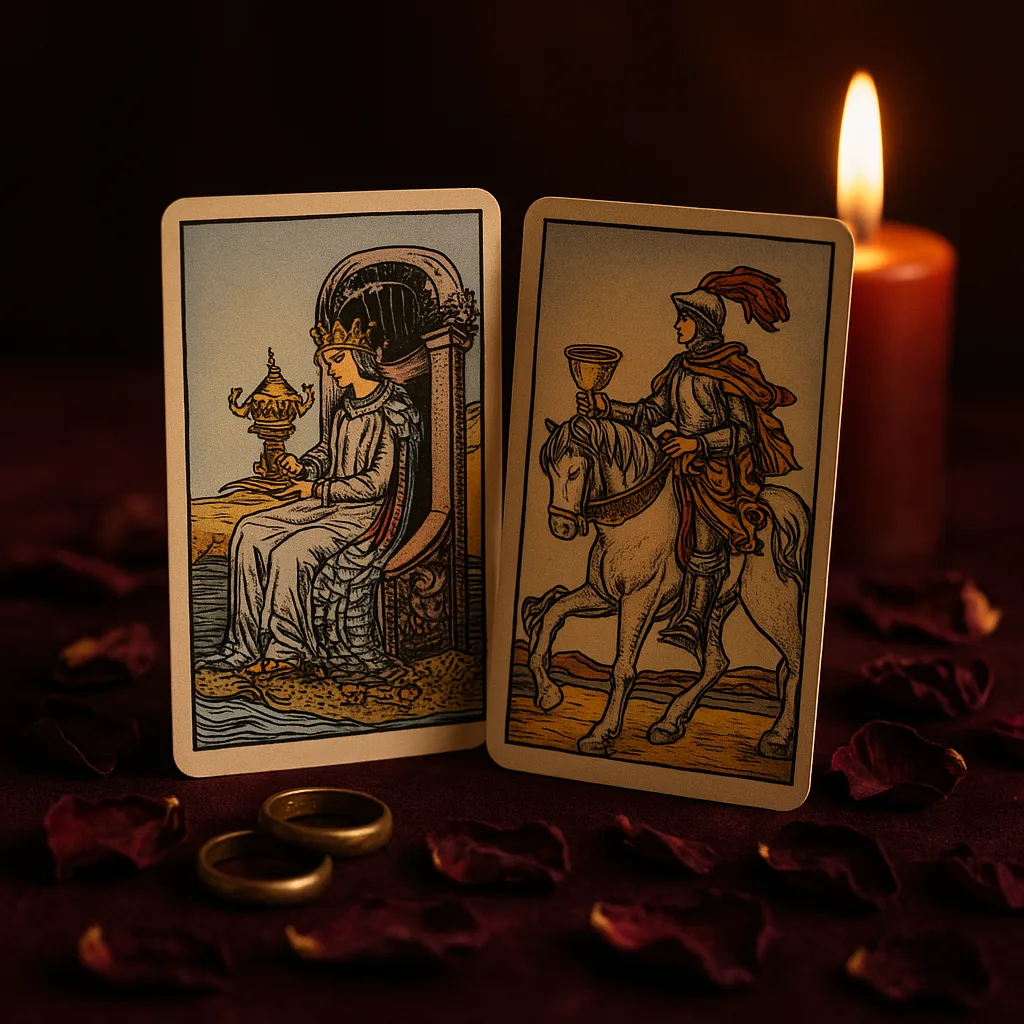
When Tarot draws the face of the person beside you
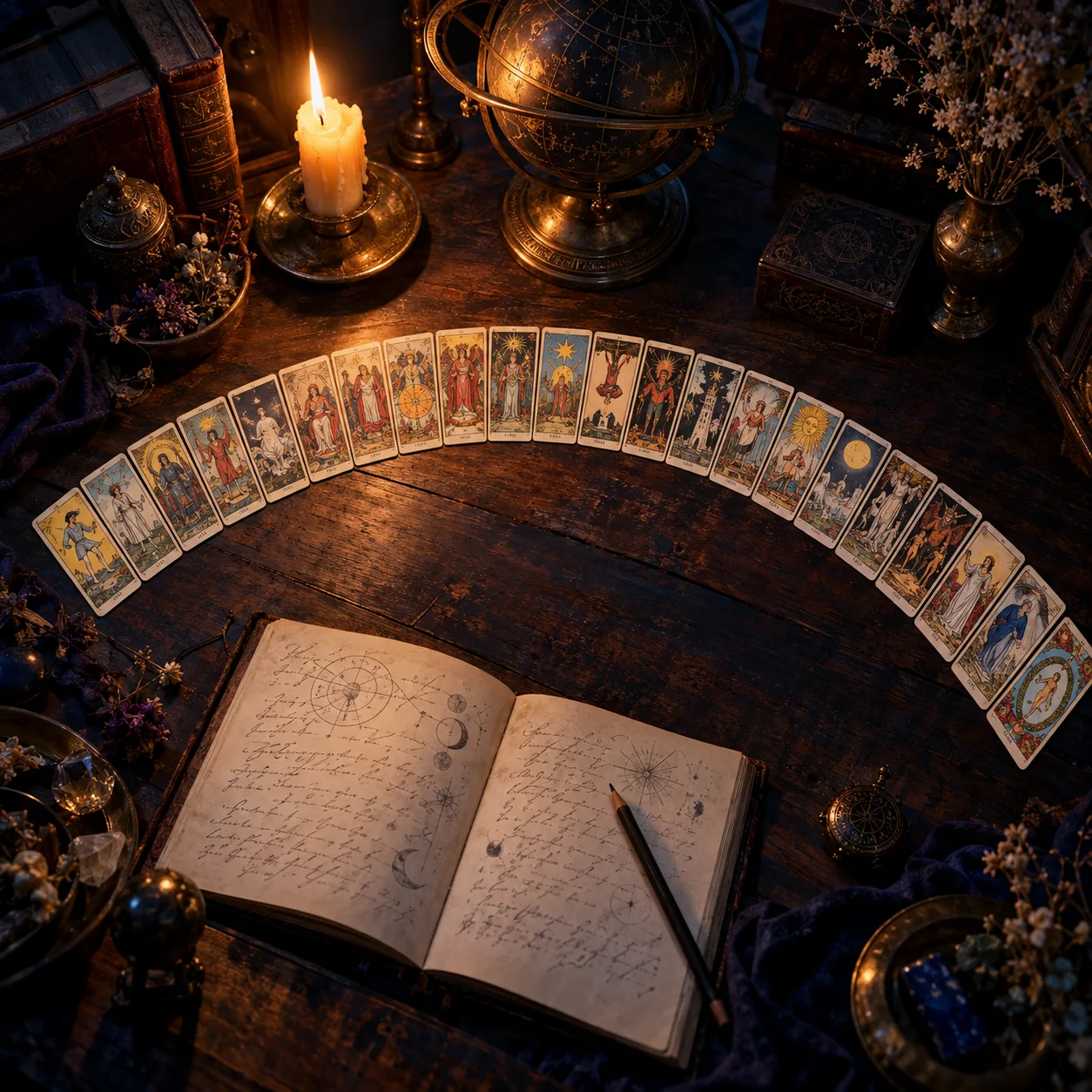
One question repeats in almost every love reading: what is this person really like? Numbered cards describe situations, and the Major Arcana speak of forces and lessons. But when it comes to understanding the personality of someone entering (or already in) your romantic life, the court cards are what usually appear to give shape and temperament to that figure. This is why many tarot readers reserve these 16 cards to represent specific people in a spread, especially for questions about attraction, romance, or partnership. To understand the logic behind the four ranks (Page, Knight, Queen, and King) and why tarot organizes the court this way, it helps to read the article about what each court position represents.
This doesn't mean every Queen or every Knight is literally a real person. But in romantic context, this reading carries special weight: the court card appearing alongside the question 'how does he or she behave with me?' almost always describes a style of loving, a way of relating, a manner of handling (or avoiding) commitment.
It's worth noting that this custom of using court figures to represent real people isn't a recent invention. The Bibliothèque Nationale de France maintains digitized collections of historical tarot decks, including European examples from the fifteenth and eighteenth centuries, which already featured Pages, Knights, Queens, and Kings as fully characterized human figures, long before tarot became popular as a tool for symbolic reading. Anyone wanting to see these original images can consult the collection at bnf.fr.
Pages: the beginning still uncertain
In love questions, the Page rarely represents an established partner. This card speaks of beginning, of tentative exploration, of someone (or a feeling) still discovering what they want. A Page of Cups might be that person who sends sweet messages but doesn't yet know if they want real involvement; a Page of Swords could be someone curious about you, full of questions, but with no commitment yet. If this card appears representing the romantic partner, the message usually is: don't force a label too early, things are still in their sprouting phase.
When the Page is warning, not person
In some readings, the Page can also mean a message on its way: an unexpected contact, an answer that was taking too long, a reunion still to come. It helps to observe the surrounding cards before deciding whether it's a person or a message.
Knights: the intensity that can confuse
The four Knights are perhaps the most treacherous figures in the deck when it comes to love, because they usually represent movement, and movement isn't always the same as commitment. The Knight of Cups is the unmistakable romantic, the one who declares feelings with ease and knows how to seduce with beautiful words; the trap is confusing emotional intensity with constancy. The Knight of Wands brings quick passion, immediate chemistry, but also impatience: the type who arrives with everything and can disappear just as fast. The Knight of Swords speaks with cutting sincerity, straight to the point, sometimes too harsh for someone expecting gentleness. The Knight of Pentacles is the slowest of the four: advances little, but with real intention to build something solid, even if unhurried.
A Knight in love almost always represents a person in action. The question that remains is: is that action drawing you closer, or just circling around you?
Queens: how each one loves and cares
The Queens, in romantic context, portray emotional maturity and how someone offers care within a relationship. The Queen of Cups loves with almost intuitive depth, feels her partner before he even speaks, but can get lost in idealization. The Queen of Pentacles shows affection in practical ways: food made with love, constant presence, material and emotional support that doesn't need speeches. The Queen of Swords loves with honesty, sometimes too cold on the surface, but loyal and clear about what she wants (or doesn't want) in a relationship. The Queen of Wands brings independent passion, someone who loves without giving up her own identity and expects the same from her partner.
Kings: how each one exercises commitment
If the Queens show care from within, the Kings show how commitment organizes itself outward: how that person makes decisions within the relationship, how he leads (or imposes) the direction of the bond. The King of Cups balances feeling with responsibility, knows how to welcome without drowning in another's emotion. The King of Pentacles offers stability and provision, but can confuse material security with sufficient proof of love. The King of Swords decides with rationality, sometimes leaving little room for the emotional side of partnership. The King of Wands leads with enthusiasm and vision for the future, but risks prioritizing his own ambitions before the partnership itself.
Quick reference: the 16 cards and their romantic profile
To consult more directly, the table below brings together what each court card usually indicates when representing the romantic partner in a spread:
| Card | Stage of relationship | Main romantic trait |
|---|---|---|
| Page of Cups | Uncertain beginning | Sweet affection, but still undefined |
| Page of Swords | Uncertain beginning | Curiosity without commitment |
| Knight of Cups | Movement | Intense romance, risk of inconsistency |
| Knight of Wands | Movement | Quick passion, impatience |
| Knight of Swords | Movement | Direct sincerity, can sound harsh |
| Knight of Pentacles | Movement | Slow progress, intention to build |
| Queen of Cups | Emotional maturity | Intuitive care, risk of idealization |
| Queen of Pentacles | Emotional maturity | Practical and constant affection |
| Queen of Swords | Emotional maturity | Clear honesty, loyalty |
| Queen of Wands | Emotional maturity | Independent passion |
| King of Cups | Commitment in action | Balance between feeling and responsibility |
| King of Pentacles | Commitment in action | Stability and provision |
| King of Swords | Commitment in action | Rational decision-making, little emotional space |
| King of Wands | Commitment in action | Leadership and vision for the future |
Two court cards side by side: when the couple appears whole
A particularly revealing reading happens when two court cards emerge close together in a love spread, one representing you, another representing your partner. Comparing the elements usually explains much about the dynamic: two fire suits (Wands) together tend to create intense passion, but also ego friction; fire and water (Wands and Cups) can mean a balance between action and feeling, as long as neither suffocates the other; earth and air (Pentacles and Swords) often describes a relationship that needs to learn to unite practicality with communication. No combination is doomed to failure; every combination just asks for more awareness to work. To understand the logic of the suits more broadly, including outside the romantic field, see the article about what each suit reveals in work and finances, or focus directly on the romantic angle with how the four suits appear in a romantic relationship.
What to do when the court card scares you
It's common to worry when seeing a Knight of Swords or a Queen of Swords representing someone you care about, fearing coldness or harshness. Every court card has shadow and light: the same clarity that can sound harsh can also be the honesty a relationship needs to not sink into misunderstandings. Before labeling someone as a 'bad card,' it's worth asking which part of that energy is being lived, the mature version or the still-unbalanced version of that archetype.
Using the court to know yourself in love too
The reverse exercise is also valuable: instead of asking only who the other person is, ask which court card represents you in a relationship. Maybe you arrive as Knight of Cups, all surrender and romance, or as Queen of Pentacles, offering stability before even hearing if that's what the other person needs. Understanding your own role within this court is often the first step to understanding why certain bonds work, and why others simply don't fit.
Frequently asked questions
How do I know if the court card represents a person or a situation?
Observe the surrounding cards in the spread and the context of the question asked. If the question was about someone specific ('how does he behave with me?'), the court card tends to describe that person. If the question was broader, it might indicate just an energy or a message on its way, as happens with the Page.
Which court card indicates a truly committed partner?
Kings and Queens, in general, suggest more maturity and constancy than Pages and Knights. But commitment also depends on the suit: the King of Pentacles, for example, usually indicates practical stability, while the Knight of Wands tends to represent intense, passing passion.
What does it mean when the Knight of Swords appears in a love question?
Usually indicates a person who communicates directly and sincerely, sometimes too harshly for someone expecting gentleness. Not necessarily a negative card: the frankness of this energy might be exactly what prevents misunderstandings in a relationship.
Can I use court cards to understand my own role in a relationship?
Yes. Beyond representing the partner, the 16 court cards can be read as a mirror of how you yourself behave in love, whether you arrive as an insecure Page, a Knight in motion, a Queen or King already established in your own way of caring and committing.

Recomendado
Lewtemi Espelho de tarô acrílico tarô
Lewtemi Espelho de tarô acrílico tarô cartão decoração de parede mística presentes de bruxa para mulheres espaço sagrado cartomante espiritualidade astrologia bruxa magos arte decoração
Universo Astral Editorial Team · Tarot and moon transits
This article was produced by the Universo Astral editorial team, with AI tools assisting research and drafting and human review before publication. If you spot anything inaccurate or outdated, let us know at our contact email.