Palmistry: What the Lines on Your Palm Reveal About You
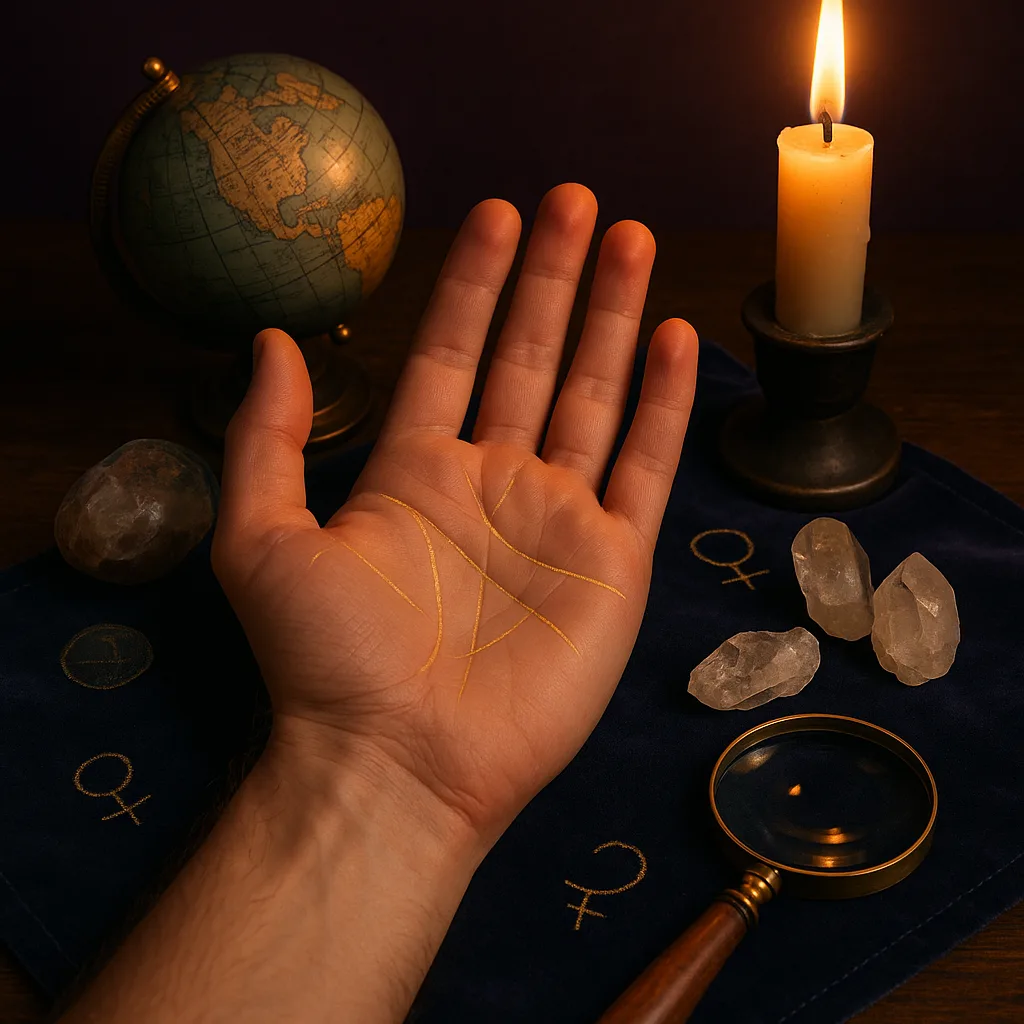
An Old Practice, Read in a Simple Gesture
Look at your palm under good light and you'll find at least three deep lines cut into the skin. This is where palmistry begins: a word rooted in the Greek kheir (hand) and manteia (divination). The practice of reading the lines, mounts, and contours of the hand is believed to have started in India thousands of years ago, tied to Vedic astrology and the I Ching. According to legend, the sage Valmiki wrote one of the earliest texts on the subject, and the practice later spread to China, Egypt, Tibet, Persia, and Greece.
Several historical figures took an interest in it. Anaxagoras studied palm reading in classical Greece. Aristotle reportedly wrote a treatise on the subject for Alexander the Great, who is said to have examined his soldiers' hands regularly. Julius Caesar, according to popular accounts, believed he could judge his commanders' character just by looking at their palms. But it was the Roma people who kept this art alive and spread it over the centuries. For many Romani communities, hand reading has long been knowledge passed down through generations of women, typically practiced by the women of the tribe.
Between Superstition and Method
Medieval Europe treated the practice unevenly. In England, palm reading could easily be confused with witchcraft. In Germany during the same period, it took on a more structured, investigative character. That push toward system building picked up later: in the late 19th century, researcher Edward Heron-Allen published a comprehensive work on cheirosophy, and a few years later, at the start of the 20th century, William G. Benham released a study meant to set firmer guidelines for reading hands. Mostly between the 19th and 20th centuries, palmistry moved out of traveling camps and into books and classrooms open to the general public.
The terms palmistry and chirology are often used as if they mean the same thing, but they don't. Chirology is a more objective, descriptive analysis of the hand's physical traits: finger shape, skin texture, measurements. Palmistry is a divinatory system, aimed at forecasting tendencies and future paths through the grooves of the palm. Neither has scientific backing, and collaborative knowledge platforms typically classify palmistry as pseudoscience. That doesn't take away its value as a symbolic tool for personal reflection, similar to tarot or birth charts: more an invitation to think about yourself than a verdict on what's coming.
The Three Lines Every Reading Starts With
Whatever approach is used, nearly every practitioner starts by looking at the three most visible lines on the palm.
The Life Line begins near the base of the thumb, curves around that area, and runs toward the wrist. It's traditionally linked to physical energy and zest for life, and it's also one of the most misread lines: contrary to popular belief, it doesn't determine how long someone will live. Instead, it reflects vitality at different stages of life. A line that hugs the thumb closely is often associated with a cautious temperament and a preference for the familiar, while a wider, more sweeping line suggests an adventurous nature and a drive to explore.
The Head Line crosses the palm horizontally, between the life line and the heart line, and speaks to reasoning, planning, and decision-making. A long, straight head line tends to indicate logical, methodical thinking; a short, wavy one points to a mind drawn to creativity and intuition. In deeper readings, this line is also cross-referenced with career choices and mental disposition.
The Heart Line sits along the upper part of the hand and covers bonds, relationships, and ways of loving. According to popular belief, a heart line that starts beneath the index finger signals contentment in relationships, while one that starts beneath the middle finger suggests a tendency toward romantic instability. Shorter lines are said to be typical of people who value emotional independence, and breaks or branches are thought to indicate multiple romantic chapters over a lifetime.
Other Lines and What They're Said to Mean
Beyond these three central lines, palmistry practitioners often look at other markings, each tied to a different area of life:
- Fate Line (or Saturn Line): runs vertically through the middle of the palm toward the middle finger, read as an indicator of career direction and life purpose. An estimated seven in ten people show this line clearly, but like the life line, it doesn't predict lifespan, only possible directions.
- Sun Line (or Apollo Line): connected to creative expression, outward recognition, and a sense of fulfillment. A clear, well-defined sun line is read as a sign of a path with satisfaction and visible achievements.
- Mercury Line (or Health Line): runs from the base of the pinky finger toward the wrist. Here, faintness is considered a good sign: its absence is read as vital balance, while a strongly marked line might suggest digestive weakness or a need for closer attention to physical health.
- Intuition Line: forms a small arc along the side of the hand opposite the thumb, near the base, linked to sensitivity beyond the five senses, a detail closely watched by those who practice extrasensory readings.
- Marriage Line: positioned at the base of the pinky finger, and probably the most colorful of the group. Popular belief holds that the closer it sits to the heart line, the sooner an important relationship will happen, and that a split at its end suggests a breakup. It works more as folk curiosity than as reliable guidance.
When the Palm Mirrors the Sky
Astrology enthusiasts often feel a strong connection to palmistry, and the two traditions have run side by side for centuries. That's why the palm is also divided into areas called mounts, each named after a celestial body: the Mount of Venus, at the base of the thumb, tied to sensuality and affection; the Mount of Jupiter, below the index finger, linked to ambition and leadership; the Mount of Saturn, beneath the middle finger, associated with discipline and inner reflection, among other regions. A full hand reading combines the lines with the texture of these mounts, forming something like a small horoscope etched into the skin.
No line stays fixed like a permanent mark. Skin changes, scars appear, and the shape of a hand shifts over the years, which is why many traditional practitioners say the hand tells a story that keeps being rewritten, not a fate sealed at birth.
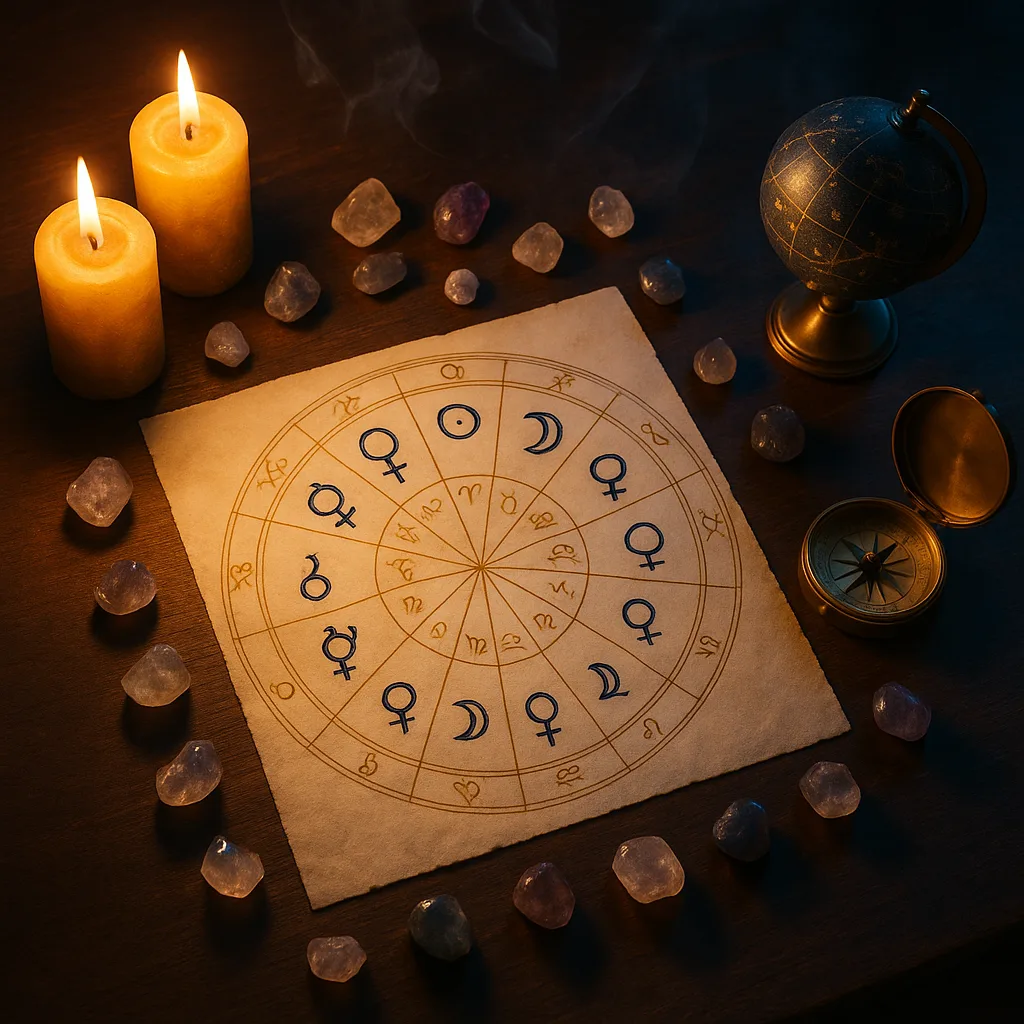
Recomendado
Astro Reflexo
Descubra o que os astros revelam sobre quem você é. Em menos de um minuto, calculamos seu Sol, Lua e Ascendente com precisão astronômica e uma inteligência artificial escreve um resumo personalizado só para você.
Universo Astral Editorial Team · Zodiac signs and fun facts
This article was produced by the Universo Astral editorial team, with AI tools assisting research and drafting and human review before publication. If you spot anything inaccurate or outdated, let us know at our contact email.