What Moon Phase Were You Born Under? Your Natal Lunation Explained
The Moon That Stays With You Forever
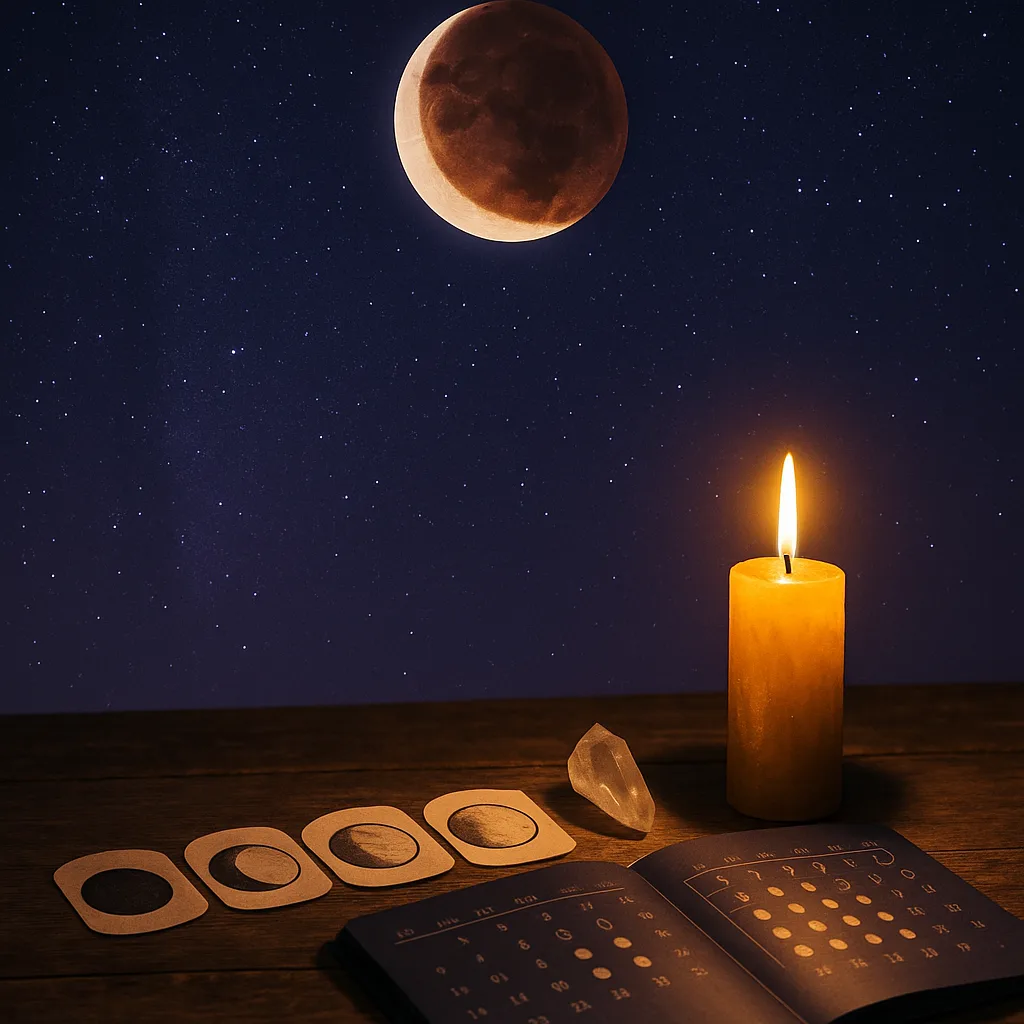
Every month the Moon moves through the same four main phases (new, waxing, full, waning) before starting the cycle again. That's the transiting lunation, the collective clock everyone watches in the sky and feels in their own way, shifting position every few days. But there's another Moon, rarely discussed, that never changes: the exact phase it was in at the moment you were born. That fixed snapshot of the sky is what astrology calls your natal lunation. It works like a kind of lunar temperament, an almost factory-set way of handling beginnings, crises, and endings.
The Moon in the sky asks what a given month requires of you. Your natal lunation answers a different question: what's your natural style for moving through any cycle, in any month of your life? That personal, fixed layer, almost like a signature, is the one worth understanding.
How to Find the Phase You Were Born Under
To identify your natal lunation, you need two pieces of information: the position of the Sun and the position of the Moon on the day you were born. Any basic birth chart shows both. The angle between those two points determines the phase. If the Sun and Moon were close together, you were born near a New Moon. If they were on opposite sides of the sky, your natal Moon was Full. The angles in between produce the other phases. You don't need to calculate degrees yourself, just pull up a birth chart, printed or from an online service, and check the angular distance between the Sun and Moon at the moment of your birth.
The Eight Types of Natal Lunation
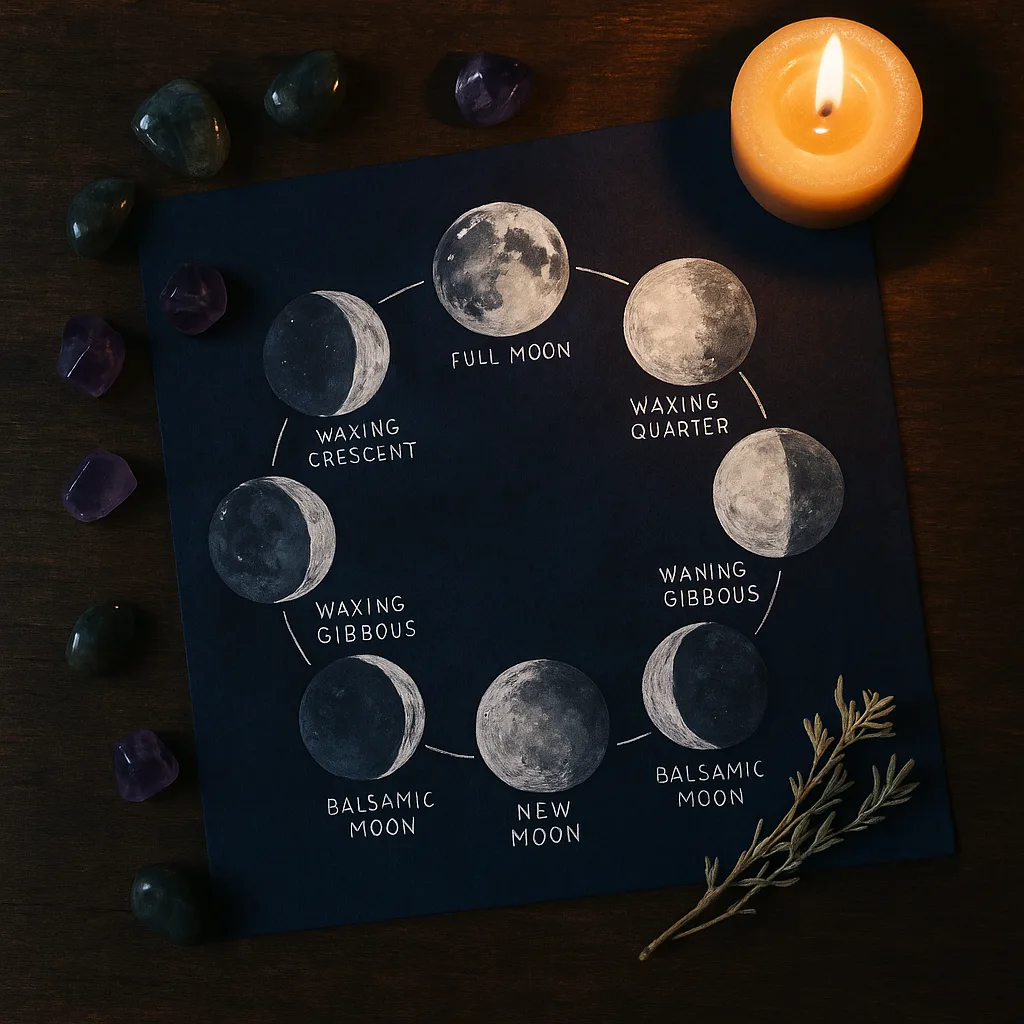
Astrologer Dane Rudhyar, one of the first to systematize this concept in the 20th century, divided the lunar cycle into eight natal phases, each linked to a particular psychological disposition. It helps to know all eight, even though you were only born under one:
- Natal New Moon: instinctive drive. People who act before fully understanding why, moved by an almost blind calling to start things.
- Natal Waxing Crescent Moon: the strength of someone who builds against the resistance of their surroundings, sometimes fighting to get a new idea accepted by others.
- Natal First Quarter Moon: a temperament of crisis and action. People who grow by facing obstacles head-on and learn by dealing with them, not avoiding them.
- Natal Waxing Gibbous Moon: an inclination to refine and adjust details, a perfectionism in service of a bigger purpose not yet fully visible.
- Natal Full Moon: clarity and self-awareness from an early age. People who tend to see themselves from the outside, sometimes with a heaviness, sometimes with a strong sense of mission.
- Natal Disseminating Moon: a calling to communicate, spread, and teach what has already been lived and understood. These are figures who naturally attract people seeking guidance.
- Natal Last Quarter Moon: a temperament of transition and internal reorganization, with constant questioning of old structures, whether one's own or inherited.
- Natal Balsamic Moon: the sense of closing something larger than one's own individual life, often described as a thread between a civilizational cycle that's ending and another that hasn't yet begun.
Why This Changes the Way You Experience Each Month
Here's the part that makes this concept useful: your natal lunation doesn't replace the Moon in the sky, it filters your experience of it. Two people can be under the exact same transiting Full Moon and live it in opposite ways. Someone with a natal New Moon lunation tends to feel the month's Full Moon as a call to act on whatever has become clear, almost like a nudge. Someone with a natal Balsamic lunation might feel that same Full Moon as an uncomfortable moment of exposure, something they'd rather watch from a distance than take center stage in.
Likewise, someone with a natal Last Quarter lunation might find the sky's Waning Moon redundant. After all, they're already living in question-everything mode pretty much every month, eclipse or not. The Moon's transit doesn't stop mattering, it just adds onto a background pattern you've carried since birth, one rarely mentioned when people talk only about what the Moon is doing today.
The Moon in the sky changes phase every week. The Moon you were born under never changes, it just waits to be recognized.
What to Do With This Information
Knowing your natal lunation isn't about predicting anything. It's about naming a pattern you may already sense in yourself without having a word for it. If you've always been the type to act first and understand later, you might find meaning in a natal New Moon. If you've always felt like you were closing a chapter even during seemingly calm periods of life, the key might lie in a Balsamic lunation. The simplest exercise is this: find your phase, read its description, and notice whether it sheds light on something, a tendency, a recurring struggle, a way of handling endings, that you've been carrying all along without connecting it to the sky on the day you were born.
Universo Astral Editorial Team · Tarot and moon transits
This article was produced by the Universo Astral editorial team, with AI tools assisting research and drafting and human review before publication. If you spot anything inaccurate or outdated, let us know at our contact email.