Eclipse on the Sturgeon Moon: What Every Lunar Phase Means
A Month When the Sky Didn't Skip a Single Phase
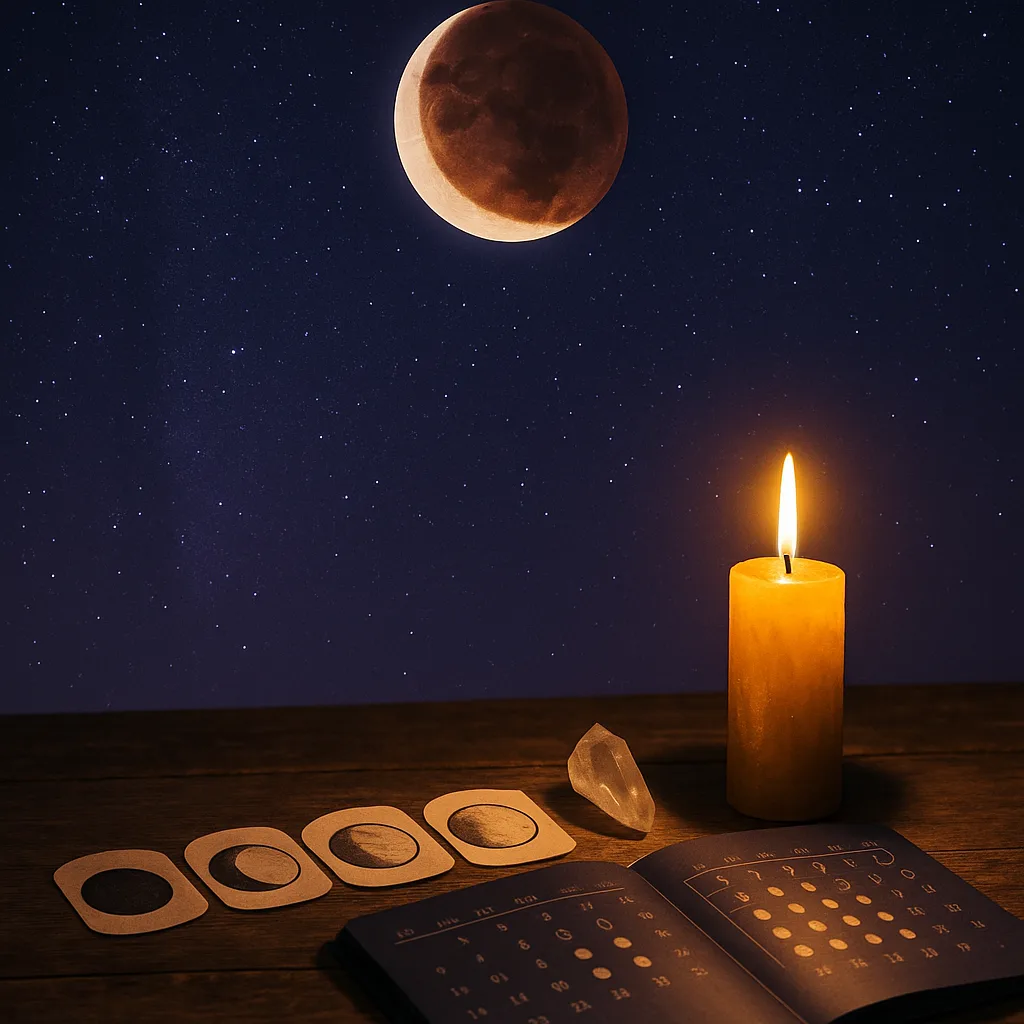
Today, August 29, 2026, the Moon is nearly full, 98% of its disk illuminated, according to Brazil's National Institute of Meteorology (Inmet). But this near full Moon carries a recent and rare story: overnight between August 27 and 28, it passed through part of Earth's shadow in a deep partial eclipse, darkening about 96% of its disk and leaving only a thin bright sliver visible. This is the so called Sturgeon Moon, August's Full Moon, which officially occurred at 04:18 UTC on the 28th. An event like this, right at the peak of the cycle, gives a good reason to look at something many people have heard of but rarely stop to consider: what each Moon phase actually symbolizes, and why that symbolism has repeated, month after month, for thousands of years of human skywatching.
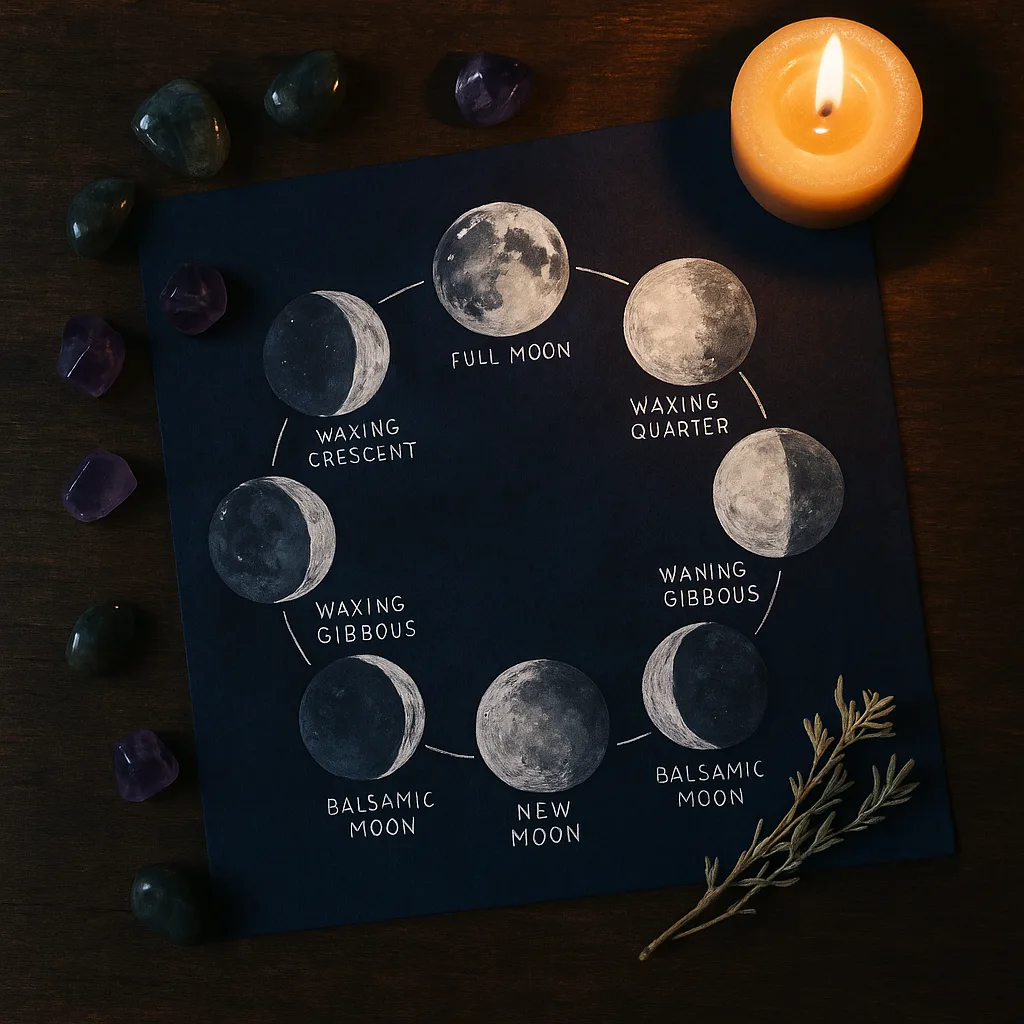
August 2026 moved through all four main phases without skipping any: Waning Moon on August 5, New Moon on August 12, Waxing Moon on August 19, and Full Moon on August 28. A complete cycle of about 29.5 days, as always, but this month came with the added layer of an eclipse right at the moment of culmination. This real calendar is a useful guide for understanding what astrological tradition and popular wellness practices associate with each moment of the lunar cycle.
New Moon: The Moment the Sky Goes Blank on Purpose
On August 12, the Moon aligned with the Sun, the moment it literally disappears from our night sky because its illuminated side faces away from Earth. Symbolically, this is the zero point of the cycle: nothing visible, everything in potential. In popular astrological readings, the New Moon marks the start of a new emotional chapter, an invitation to introspection before action, a moment to set intentions rather than chase them right away.
There's a neat overlap between this symbolism and real astronomy. Since there's no moonlight on New Moon nights, this is the week when the sky gets darkest and easiest to observe: you can see the Milky Way, nebulae, and galaxies that Full Moon brightness usually washes out. The astrological idea of a fertile void lines up with the moment the sky reveals its greatest depth to anyone watching.
Waxing Moon: The Two Stages of Building Something
On August 19, the Moon entered its waxing phase, and lunar astrology usually splits this stage into two distinct moments. The Waxing Crescent is the phase of first steps: trial and error, course corrections, the flexibility of someone still figuring out the shape of their own project. The First Quarter Moon that follows has a different texture. This is when the first real obstacles show up, and the question shifts from where do I start to will I keep going anyway.
Folk planting traditions, without solid scientific backing but present for generations in rural culture, associate the Waxing Moon with plants that grow upward. The logic stays consistent: this is the phase of expansion, of everything still on an upward path that needs support to keep going.
Full Moon: When the Sturgeon and the Eclipse Meet
Now we reach August 28, the Sturgeon Moon, a name rooted in Native American tradition tied to the time of year when these fish were most abundant in the Great Lakes. Astronomically, the Full Moon happens when the satellite sits on the opposite side of its orbit from the Sun, with Earth in between: the side we see is fully lit, a bright disk visible all night. By definition, it's the point of maximum brightness in the cycle, and symbolically, the point of maximum manifestation.
In popular astrology and wellness practices, the Full Moon is treated as one of the most powerful phases: energy tied to abundance, heightened intuition, emotions running higher, for better and for worse. It's the phase of harvesting what was planted at the New Moon, but also the phase when nerves tend to run closer to the surface.
The partial eclipse that accompanied this Full Moon adds another layer to the symbolic reading. One clarification matters here: Blood Moon isn't an official astronomical term. It's usually reserved for total eclipses, when the entire Moon takes on a reddish hue. Since this eclipse was partial, with about 96% of the disk in shadow, the effect was similar: most of the darkened surface took on that characteristic coppery tone, even without a true total eclipse. For those who read the sky symbolically, an eclipsed Full Moon tends to be interpreted as an even more charged culmination, a closing of a cycle that calls for extra attention to whatever emotions rise to the surface.
Waning Moon: The Rest Before the Next Beginning
After peak brightness, there's only one direction left: fading. The Waning Moon, which in August appeared at the start of the month on the 5th, closing out the previous cycle, carries the opposite meaning of the Full Moon. It's the phase of endings, of release, of introspection that prepares the ground for the next fresh start.
In popular practices tied to this phase, it's common to see recommendations for closing rituals: energy cleansing baths, letting go practices, decisions that had been put off. The idea behind it is simple: just as the Moon's light fades until it disappears, this is considered the most favorable phase to let go of whatever no longer serves you, a worn out bond, a heavy habit, a chapter that should have been closed long ago.
What Comes After the Sturgeon Moon
The cycle doesn't stop here. The next Full Moon is set for September 26, 2026, at 16:49 UTC, the one closest to the September equinox, which is why it's traditionally called the Harvest Moon. The 2026 lunar calendar still holds two bigger events for the end of the year: the Beaver Supermoon on November 24 and the Cold Supermoon on December 24, moments when the Full Moon coincides with the satellite's closest approach to Earth, making it look bigger and brighter in the sky.
Each of these dates will repeat, in its own way, the same symbolic pattern August just showed: an emptying out, a rebuilding, a peak, a withdrawal. Knowing how to recognize each stage makes it easier to notice this rhythm repeating in the sky, and perhaps within yourself as well.
Recomendado
Astro Reflexo
Descubra o que os astros revelam sobre quem você é. Em menos de um minuto, calculamos seu Sol, Lua e Ascendente com precisão astronômica e uma inteligência artificial escreve um resumo personalizado só para você.

Recomendado
Astrologia, Simbolismo e Mapa das Personalidades
A astrologia acompanha a humanidade desde as primeiras grandes civilizações. A ideia de que a vida biológica na Terra pode ser influenciada pelos astros gerou e gera grande fascínio no homem.

Recomendado
Manual Prático da Astrologia
O universo sempre exerceu um fascínio indescritível sobre a humanidade. De todas as suas maravilhas, a astrologia se destaca como uma antiga arte que tem intrigado e inspirado gerações.
Universo Astral Editorial Team · Tarot and moon transits
This article was produced by the Universo Astral editorial team, with AI tools assisting research and drafting and human review before publication. If you spot anything inaccurate or outdated, let us know at our contact email.