Three-Card Tarot Spread: A Complete Guide to Self-Discovery
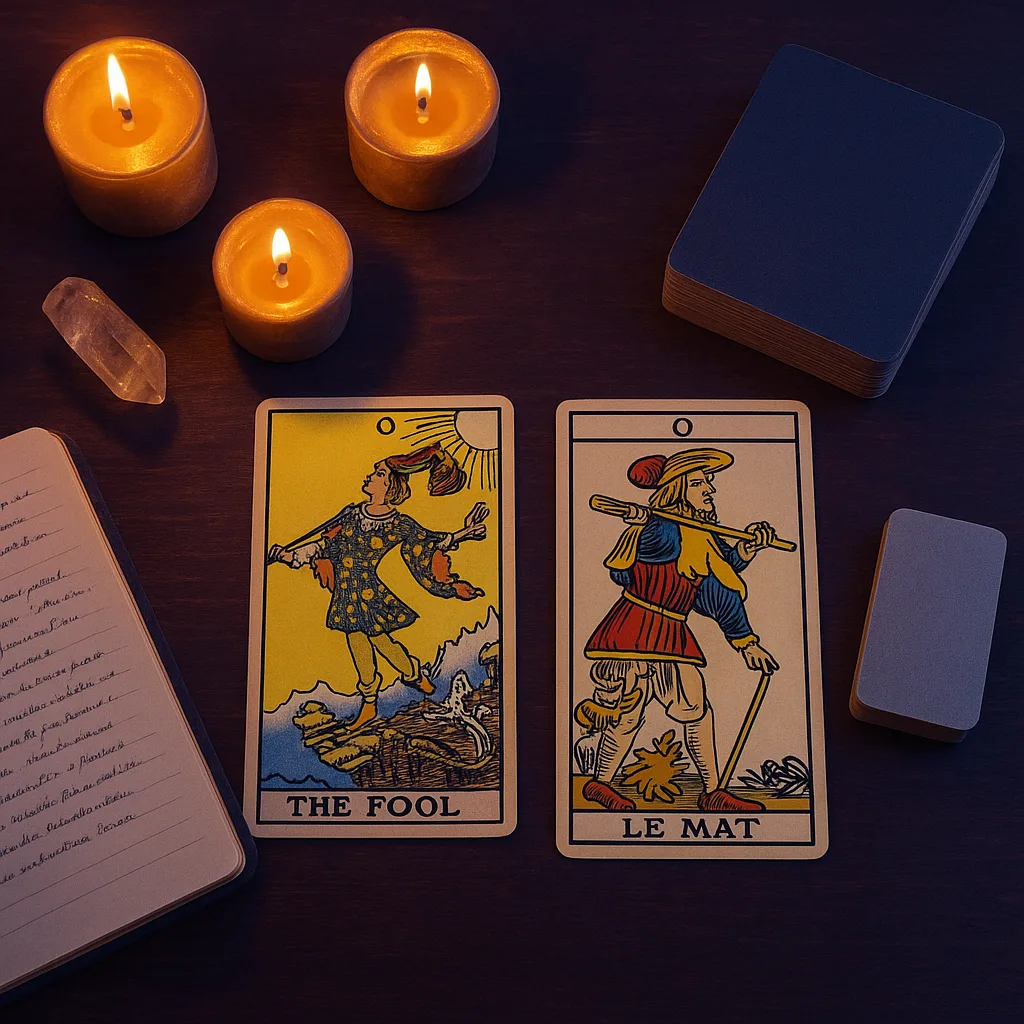
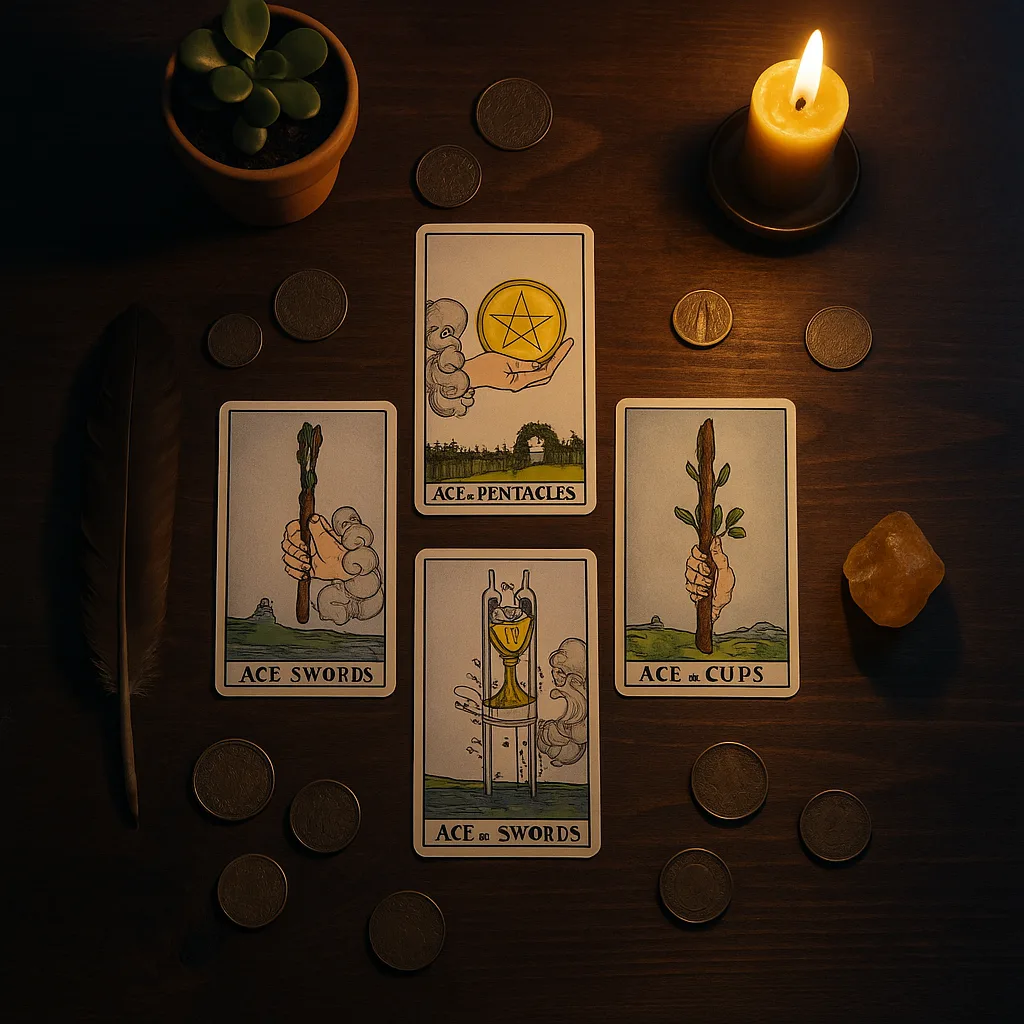
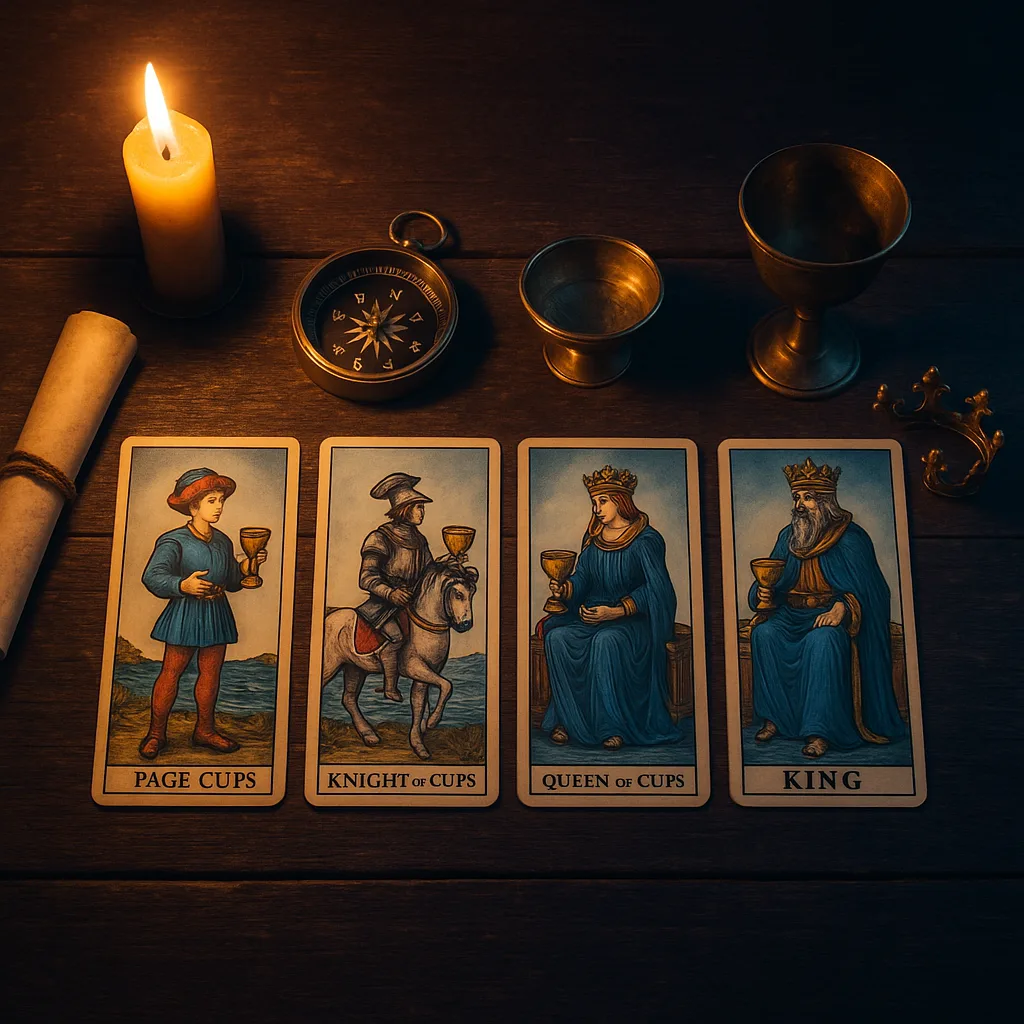
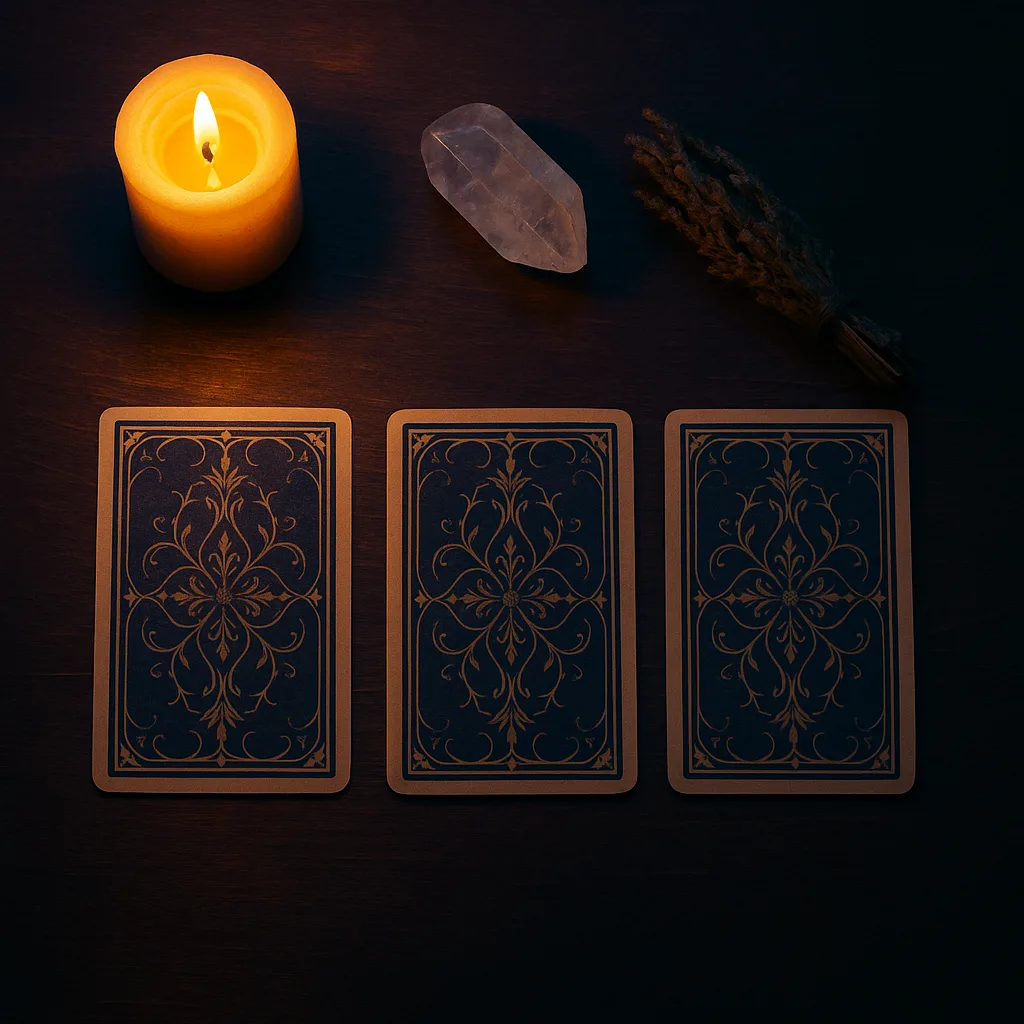
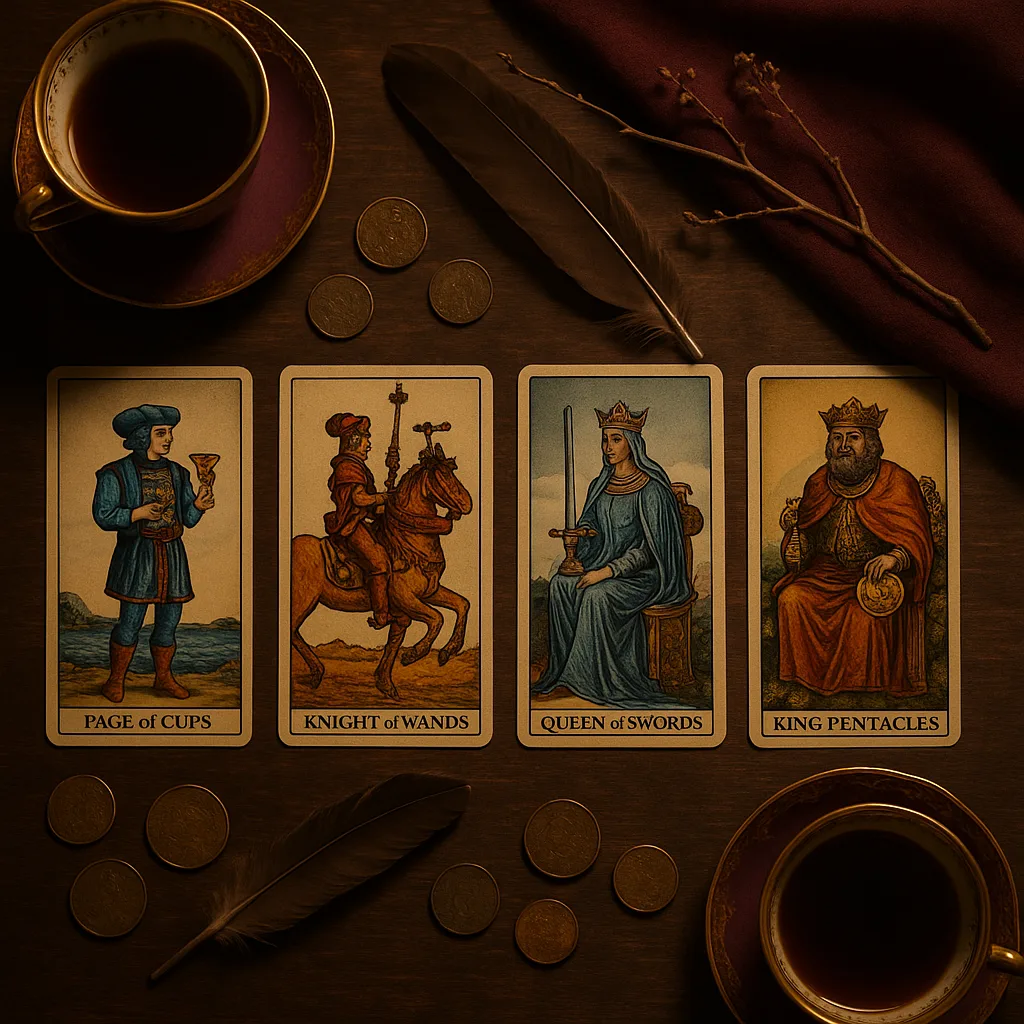
Three cards, face down, on the table. It looks simple, and it is. That simplicity is exactly what makes the three-card spread one of the most popular tools for anyone who wants to turn tarot into a self-discovery practice, rather than idle curiosity about the future. It takes little time, requires almost no memorization of card meanings, and still delivers a reading with a beginning, middle, and end.
First, a note on what this practice is and isn't: tarot here isn't an oracle that predicts facts, but a symbolic mirror. The cards don't decide anything for you; they organize questions, highlight patterns that go unnoticed in the autopilot of everyday life, and make room for intuition to speak. Carl Jung pointed out that symbols can reach layers of the psyche that rational logic can't access on its own, which is why a symbolic image can spark an insight that a to-do list never could.
Why three cards are enough to get started
There's a temptation, especially for beginners, to assume that bigger spreads, five, ten, twelve cards, deliver more complete answers. In practice, the opposite tends to happen: too much information at once confuses more than it clarifies, especially for someone still learning the basic meanings of the cards.
The three-card spread avoids this problem. It's short enough to interpret in a few minutes, yet structured enough to tell a meaningful story. That makes it useful for both a quick daily question and a deeper reflection session about a particular life moment. This versatility is what makes it the most common entry point for anyone who wants to use tarot as a tool for emotional well-being rather than a crystal ball.
Different from asking fate for answers
One thing that sets a self-discovery reading apart from a predictive one is the kind of answer you're looking for. You're not asking the deck to confirm a wish or announce an event. You're asking it to help you see something about yourself that might have been hidden by routine, by rushing through life, or by your own emotional defenses in the moment.
Position layouts, and why past-present-future isn't the only option
The best-known three-card layout follows a timeline: the first card speaks to a past influence still echoing in the current situation, the second shows in more detail what's happening right now, often revealing angles the person couldn't see because they're too immersed in their own experience, and the third points to a path or piece of advice for moving forward.
This is just one of several possible layouts. For more targeted self-discovery, some layouts work even better:
- Situation, Obstacle, Advice: great when you already know there's a roadblock and want to understand what's standing in the way.
- Mind, Body, Spirit: designed for an internal check-in, looking at yourself through three different dimensions.
- Current Situation, Action, Result of Action: ideal when the question involves a practical decision to be made.
- Pros, Cons, Advice: useful for sorting out mixed feelings about something.
The golden rule, whichever layout you choose, is to define the meaning of each position before shuffling. Writing this down on paper, even if it's just three quick words, keeps you from getting confused midway through the reading, wondering whether the second card represented the present or the challenge.
The reading, step by step
Once you've chosen your layout, the process itself is straightforward:
- Settle in before shuffling. A few minutes of breathing, silence, or simply turning off notifications helps you step out of autopilot and into a more receptive state. The reading gains depth when it comes from intuition rather than rushing.
- Define your question clearly. Vague questions like 'what's going to happen to me' produce equally vague answers. The more specific your intention, the more the reading can actually speak to it.
- Shuffle while holding the question in mind. Let your mind return to the question as you shuffle; when it feels right, cut the deck or fan it out.
- Draw three cards and place them face down, in the order that matches your chosen layout.
- Reveal them one at a time, interpreting each card on its own first, then look at all three together, as if they were scenes from the same story. The first card sets the stage, the second reveals the heart of the matter, the third points to an outcome or direction. The richest meaning usually emerges when you look for the connection between the cards, not when you read each one in isolation.
The questions that really open doors
For self-discovery readings, the type of question matters just as much as the spread itself. Questions about other people, like 'what does she feel for me' or 'what is he going to do,' shift the focus away from you, and the self-discovery process works best when it moves from the inside out.
It's also worth avoiding questions that start with 'why,' since they tend to trigger defensiveness or self-justification rather than real reflection. Favor phrasings with 'how' or 'what,' which invite you to think about paths forward instead of blame. A few examples that work well for this kind of reading:
- What do I need to understand about the phase I'm going through right now?
- What pattern am I repeating without realizing it?
- What is this situation trying to teach me?
- How can I better handle this emotion that keeps resurfacing?
Open-ended questions like these leave room for tarot to bring out nuances that a simple yes-or-no question never could.
After flipping the cards: writing it down to lock in the lesson
The reading doesn't end when the third card is revealed. Taking a few minutes right afterward to write about what came up, the cards themselves, how they felt to look at, the ideas that surfaced, turns a one-time experience into material you can revisit. A journal dedicated to these readings, looked back on weeks or months later, tends to reveal patterns that a single isolated session never could.
Finally, this practice pairs well with emotional self-care, but it doesn't replace therapy when the situation calls for it. Used this way, tarot works as a recurring invitation to pause and listen inward, a few minutes where you allow yourself to look inside with more attention than everyday life usually offers.

Recomendado
Lewtemi Espelho de tarô acrílico tarô
Lewtemi Espelho de tarô acrílico tarô cartão decoração de parede mística presentes de bruxa para mulheres espaço sagrado cartomante espiritualidade astrologia bruxa magos arte decoração
Recomendado
Lewtemi Espelho de tarô acrílico tarô
Lewtemi Espelho de tarô acrílico tarô cartão decoração de parede mística presentes de bruxa para mulheres espaço sagrado cartomante espiritualidade astrologia bruxa magos arte decoração
Universo Astral Editorial Team · Tarot and moon transits
This article was produced by the Universo Astral editorial team, with AI tools assisting research and drafting and human review before publication. If you spot anything inaccurate or outdated, let us know at our contact email.