Three-Card Tarot for Yourself: A Step-by-Step Guide to Turn the Deck Into a Mirror
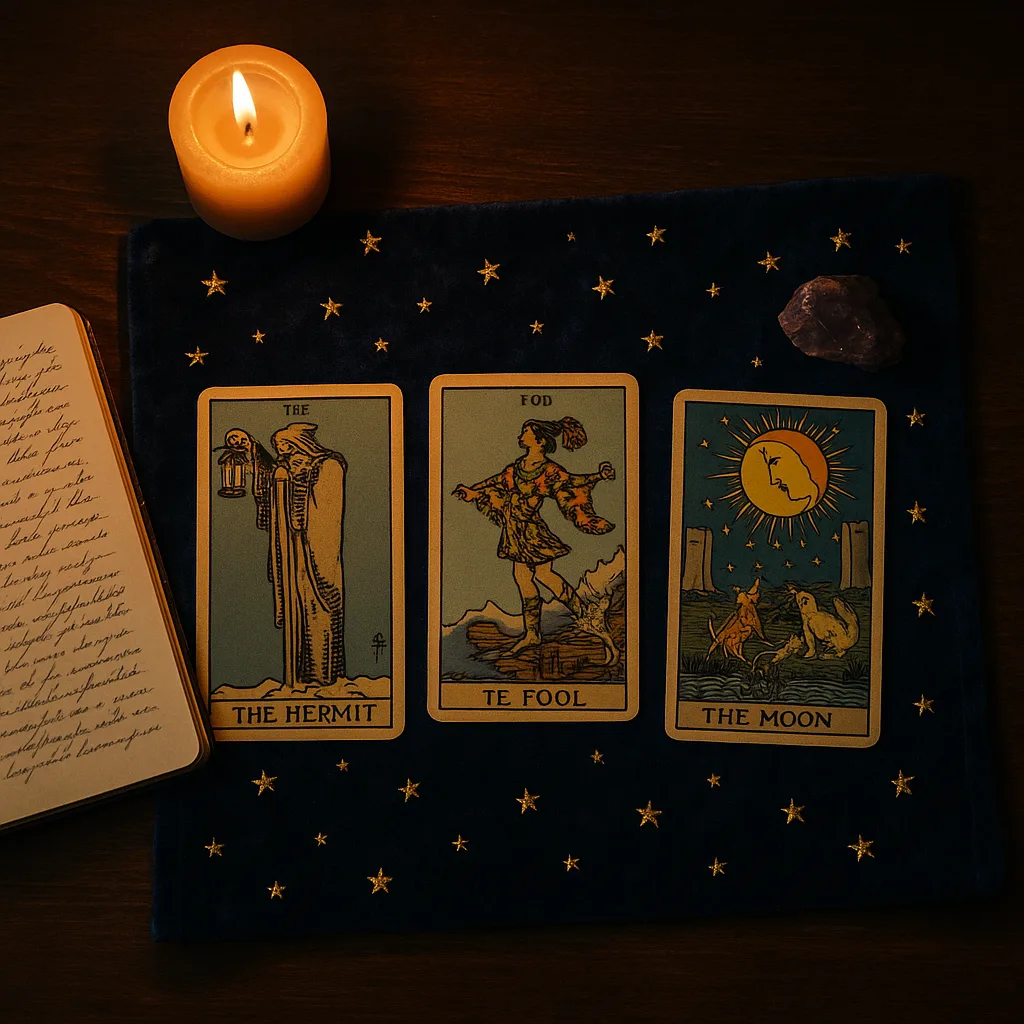
Three Cards on the Table, One Question Within You
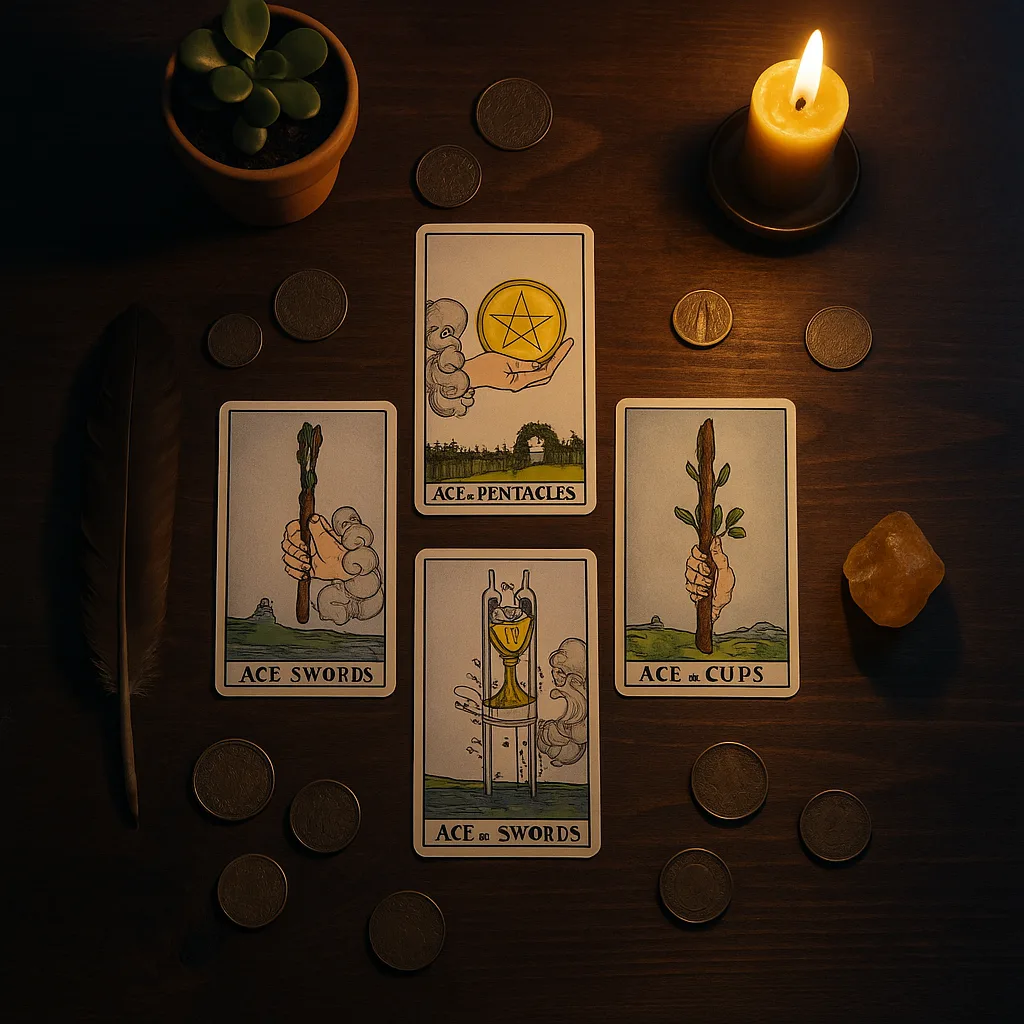
Picture shuffling the deck alone, in silence, and turning over three cards on the table. There is no reader on the other side and no ready-made answer waiting to be revealed, just you, the images, and a willingness to listen to what usually gets drowned out by daily routine. It is in this solitary meeting with the deck that the three-card spread shows its strength: it does not promise to predict the future with precision, but it offers a mirror for observing how you think, feel, and react to life right now.
Tarot is a symbolic tool for reflection and self-discovery, not a substitute for medical diagnosis, legal advice, or financial decisions. For those areas, pair any reading with guidance from qualified professionals. What the deck offers is different: an invitation to look inward with more honesty.
Why Exactly Three Cards
A single card is revealing but limited. It shows a snapshot without context. Five or more cards, on the other hand, tend to confuse people who are still learning how to weave relationships between positions. Three is the minimum number at which a true story begins to take shape, with a beginning, a middle, and an end. Our brains naturally recognize three-part structures as narrative, which is why this spread works well for beginners and for people who've been reading tarot for years and just want a quick answer for the day.
The key point for self-discovery is this: the three cards shouldn't be read separately, as if they were three isolated answers. Together they form a sentence, a line of reasoning. The middle card changes meaning depending on what came before it; the final card carries different weight depending on what precedes it. Reading tarot for self-knowledge is, above all, about learning to follow that narrative thread without cutting it into pieces.
Setting the Space and Mind Before You Shuffle
Even before touching the cards, there's invisible groundwork that makes all the difference: quieting the body and mind. The richest readings don't come from the intellect trying to decode every symbol like a puzzle, but from a quieter, more receptive state, where intuition has room to speak. Set aside a few minutes with your phone out of reach, maybe light a candle or slow your breathing, and only then begin.
Choose a deck you genuinely connect with. The imagery needs to speak to you, so flip through a few before deciding. You don't need to memorize all seventy-eight meanings by heart; knowing the basics of the major and minor arcana is enough to start practicing with a three-card spread, which is the right structure for someone at this stage of the journey.
The Question Matters More Than the Technique
The question you formulate before shuffling is the most underrated part of any reading for self-discovery: it is what truly shapes the outcome. Closed, yes-or-no questions tend to drain tarot's reflective potential. The invitation is to trade "what's going to happen to me?" for something like "what inner issue lies behind this conflict I'm going through?" or "what do I need to see about myself right now?"
This shift in focus, from the external (what will happen) to the internal (what is happening within me), is what turns a simple spread into a genuine self-discovery exercise. The intention behind the question shapes the kind of answer the cards give you back.
Choosing the Layout for Your Three Positions
Once you've settled on your question, choose the layout that matches the kind of reflection you're after. A few tried-and-true variations:
- Past, Present, and Future: the classic. The first card shows the influences and patterns that shaped where you are; the second, the energy of the present moment; the third, where things seem to be heading if nothing changes.
- Body, Mind, and Spirit: a holistic check-in. The first card speaks to the outer plane, actions, environment, how others perceive you; the second, your inner emotional state; the third, the deeper, almost spiritual needs asking for attention.
- Situation, Action, and Possible Outcome: ideal when you're facing a concrete decision, like a work dilemma. The first card names the central challenge; the second suggests a course of action; the third points to a likely outcome if that advice is followed.
- Strengths, Weaknesses, and Advice: especially useful for career and personal-development questions, helping map out inner resources, blind spots, and a path forward.
- Keep, Release, and Embrace: a valuable thematic variation for moments of transition, when the underlying question is about what's worth continuing to carry and what can finally be let go.
If your intention is to understand a life pattern, the past-present-future timeline tends to work best. If what you're after is a snapshot of your current balance, mind-body-spirit usually brings more clarity.
The Moment of the Draw
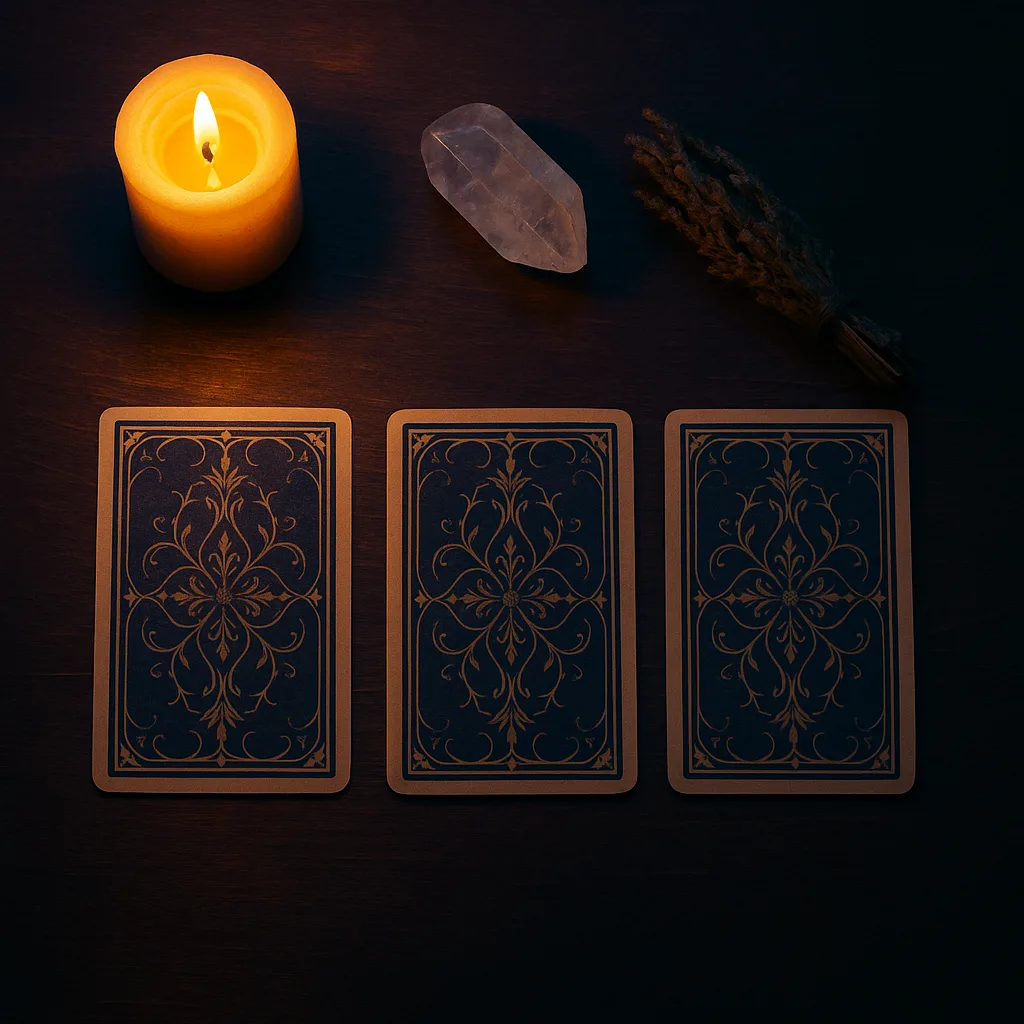
With your question set and your layout chosen, shuffle the cards while mentally focusing on the intention behind the reading. When it feels right, pull three cards and lay them out in a row, left to right, matching the order of your chosen positions. There is no need to rush here. Some people prefer to cut the deck into three piles and draw one card from each, while others pull straight from the top. The method matters less than the attention you bring to the gesture.
Reading the Story, Not the Loose Words
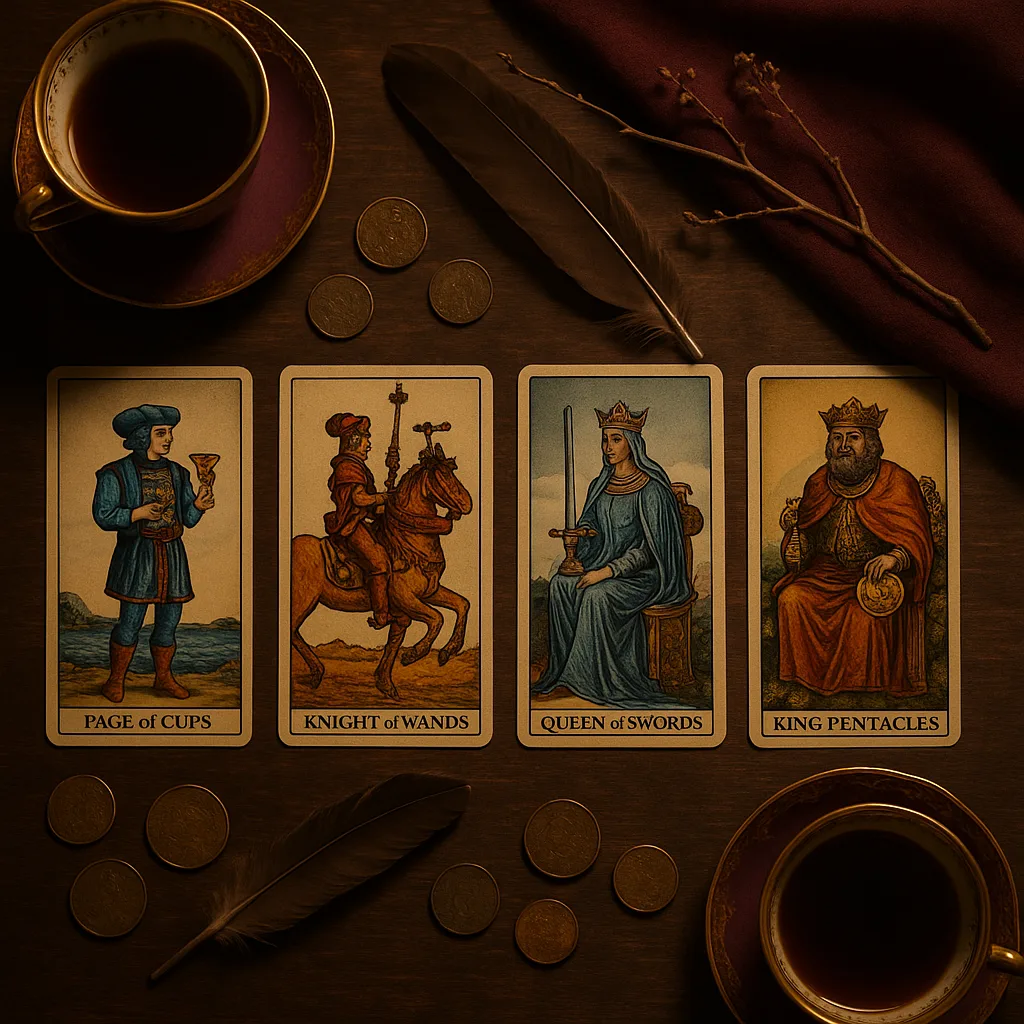
With the three cards face up, resist the urge to rush to a meanings booklet and read each card like a dictionary definition. The real exercise is asking what sentence these three images form together, how the first card explains the second, and how the second leads into the third.
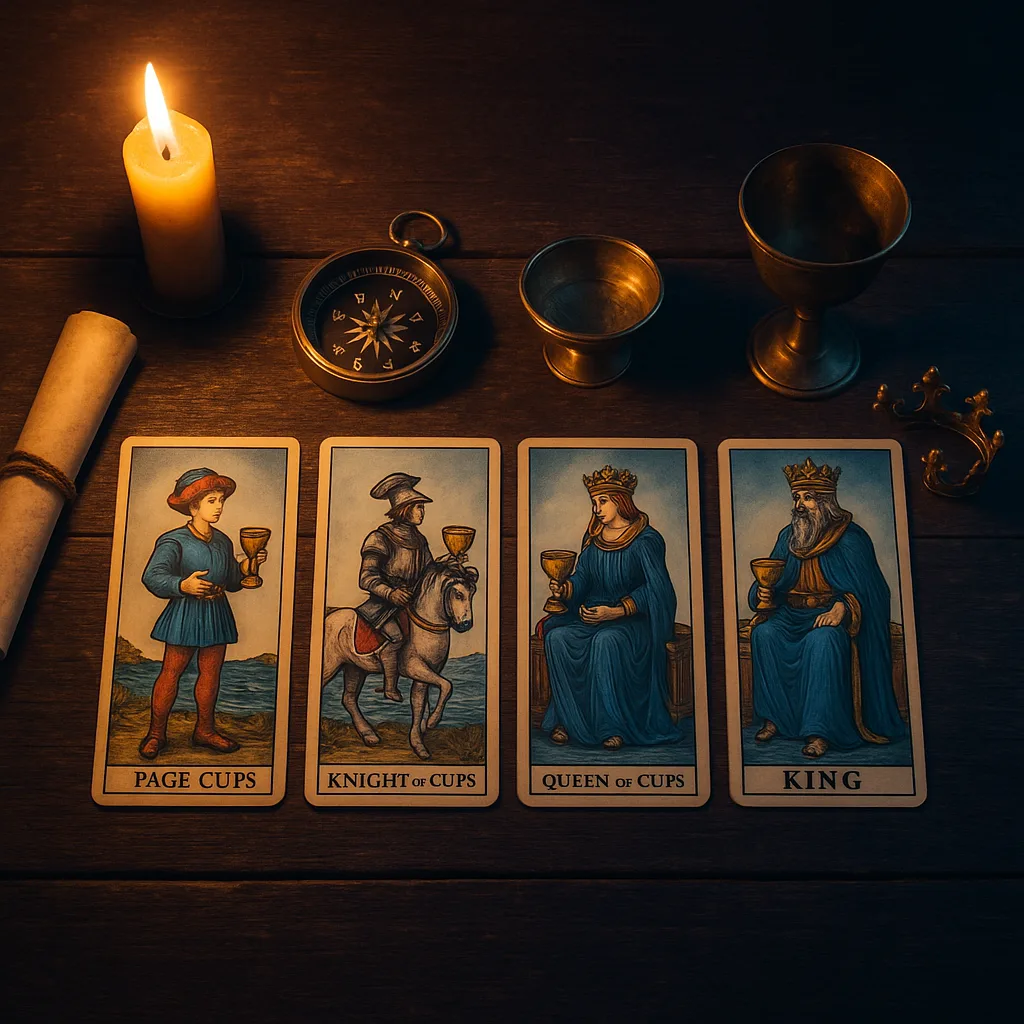
Beyond the traditional meaning of each arcana, notice the visual details that catch your eye: the dominant colors, the gestures of the figures, the objects in the scene, where the characters are looking. These small symbolic elements often carry more truth about your current moment than any manual's interpretation. The most personal layer of the reading lives in what the image stirs up in you specifically.
After the Reading: Journaling as Part of the Process
A step that's often overlooked is recording the reading. After interpreting the three cards, take a few minutes to write in a journal what you felt, which words or images resonated most, and what connections you made to your real life. This habit turns a single reading into an ongoing process of self-discovery: over time, rereading these notes reveals patterns that one spread alone could never show, such as which cards keep reappearing, which themes repeat, and the direction you've been moving in.
Practicing tarot for self-discovery does not require any special gift, just a willingness to sit with your own questions and listen to what surfaces. Every three-card spread is a small conversation with yourself, and like any good conversation, it deepens through repetition rather than rushing toward definitive answers.

Recomendado
Lewtemi Espelho de tarô acrílico tarô
Lewtemi Espelho de tarô acrílico tarô cartão decoração de parede mística presentes de bruxa para mulheres espaço sagrado cartomante espiritualidade astrologia bruxa magos arte decoração

Recomendado
Incensário Cascata Refluxo Cerâmica
Efeito cascata hipnotizante A fumaça desce como uma cachoeira, criando um visual relaxante perfeito para momentos de calma e foco
Universo Astral Editorial Team · Tarot and moon transits
This article was produced by the Universo Astral editorial team, with AI tools assisting research and drafting and human review before publication. If you spot anything inaccurate or outdated, let us know at our contact email.