The Four Moon Phases: The Emotional Rhythm the Sky Repeats Every Month
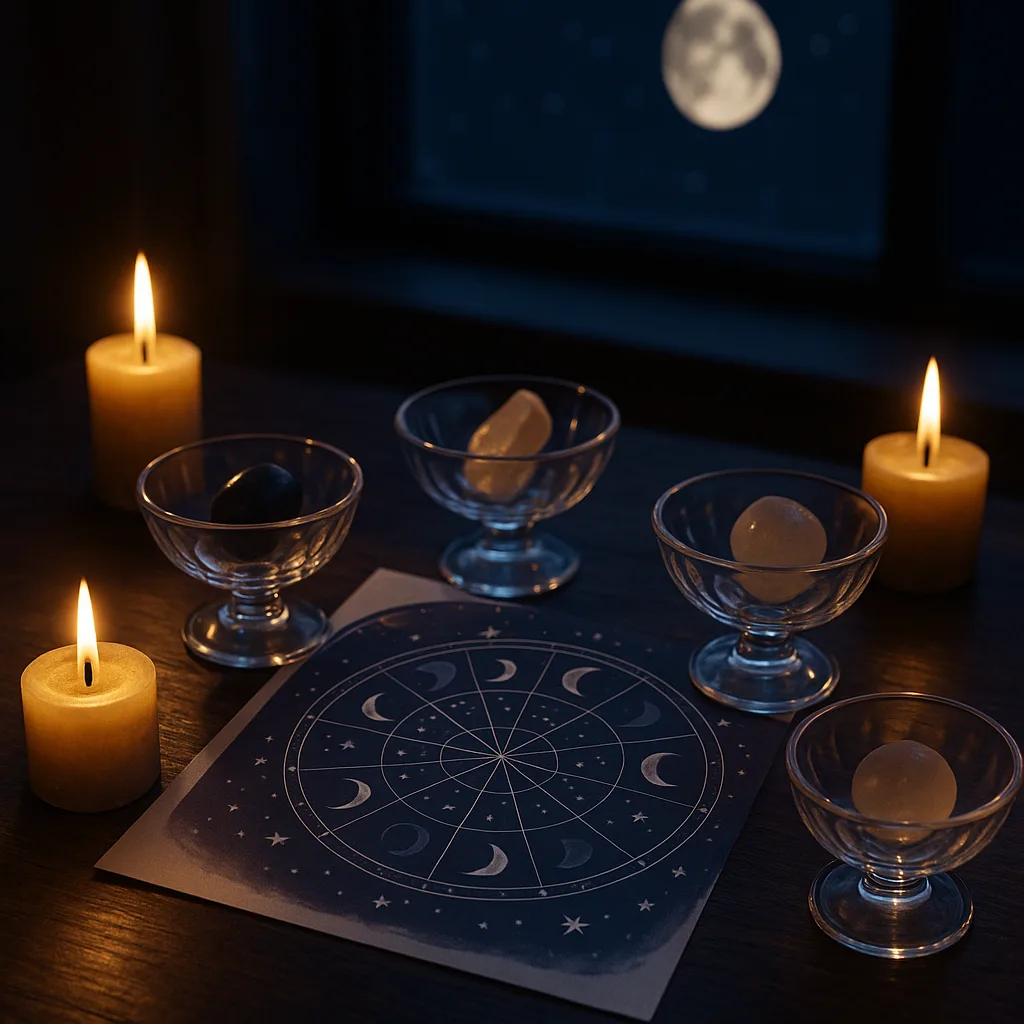
A clock the sky has been drawing for millennia
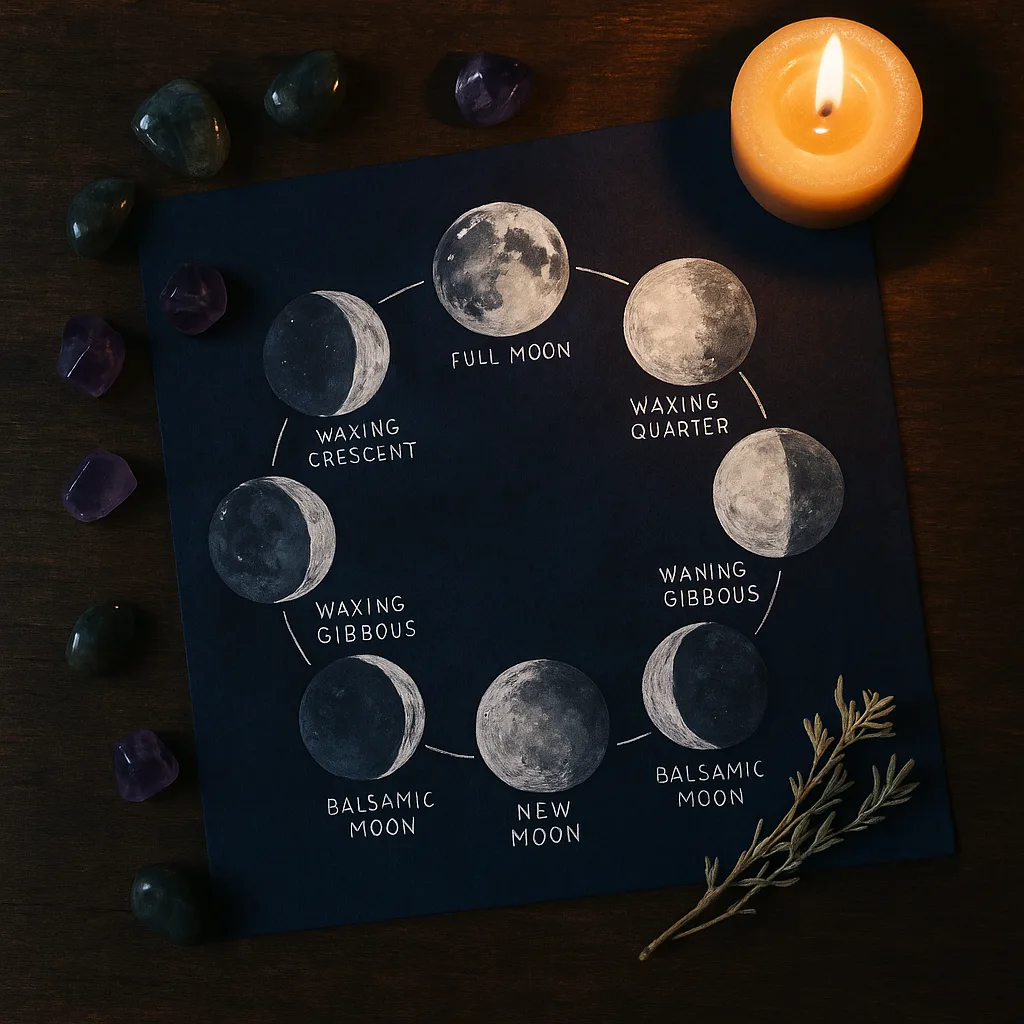
Long before printed calendars or reminder apps existed, people already knew what time it was just by looking up. The Moon takes roughly 29 and a half days to complete its cycle, and it has long worked as a kind of emotional clock, one that tracks intentions, harvests, and fresh starts rather than hours and minutes. Each of its four main phases carries a different symbolic meaning, a kind of season within the month, and understanding this rhythm offers a simple way to track your own inner cycles.
None of this is about precise prediction or fixed rules. It's about symbolic language, the kind that cultures from the Egyptians to the Greeks, and from Indigenous peoples to Eastern traditions, have used to make sense of time and change. Let's walk through each phase.
🌑 New Moon: the blank page
When the Moon disappears from the sky, swallowed by the Sun's light, it hasn't actually vanished. It's simply invisible to us, caught in an alignment that astrological tradition reads as a symbolic reset. It's the moment of zero, the dark space from which everything begins before taking shape.
Many cultures chose this exact phase to mark the beginning of their calendars and rituals. In Ancient Egypt, the New Moon was synonymous with renewal; in Hindu and Buddhist traditions, it's linked to quiet wisdom and offerings of new beginnings. Today, many people use these days to write down intentions, plan a new project, or simply pause before taking the next step. It's a phase of quiet groundwork more than action: planting the seed before waiting for the sprout.
🌒 Waxing Moon: the push forward
As the Moon begins to show its silvery sliver growing in the sky, the symbolic energy shifts tone: it moves out of introspection and into motion. Greek tradition already linked this phase to expansion and growth. Biodynamic farmers still follow the same logic today, planting crops that grow upward specifically during the waxing moon.
Symbolically, this is the best phase to roll up your sleeves: pick up that project you shelved, send the message you kept postponing, start that workout routine. The energy here is young, creative, and a bit impatient. It wants to see things materialize. If the New Moon was the time to dream, the Waxing Moon is the time to act on the dream.
The gibbous phase: the pause before the climax
Shortly before the Moon becomes completely full, it passes through a quieter stage called gibbous, when it's almost round but not yet at its peak. Symbolically, this is an invitation to reassess what's been planted, and to adjust course if something is missing. It's a strategic pause, a moment of reflection and fine-tuning before the big turning point.
🌕 Full Moon: the peak, the clarity, and the light that can't be hidden
The Full Moon is the most legendary phase of all. Round, bright, and impossible to ignore in the night sky, it's symbolically read as the moment of harvest, when whatever was planted at the New Moon finally shows its fruits, sweet or not.
It's also the phase most associated with rituals across different traditions: in Wicca, it's considered favorable for healing and protection work; in contemporary wellness practices, so-called 'moon baths' have become popular, moments of meditation and emotional release done under its light. Many cultures name every Full Moon of the year (Wolf Moon, Harvest Moon, Sturgeon Moon), almost always tied to something nature offers during that time of year.
The popular belief that the Full Moon makes people more restless, sleepless, or emotional is old folklore without solid scientific backing. That doesn't diminish its symbolic value, though. As a metaphor for clarity and for things coming to light, it remains a good moment to celebrate and to close out cycles.
🌘 Waning Moon: letting go of what's already served its purpose
After reaching its peak brightness, the Moon begins to shrink, gradually giving its light back to the darkness. Symbolically, this is the phase of letting go, not out of sadness but out of wisdom: not everything we harvest needs to be kept.
It's the moment traditionally linked to purification, to closing out habits that no longer serve us, and to a gentler kind of introspection, without the urgency of the New Moon or the brilliance of the Full Moon. In Wicca, it's seen as the ideal phase to release negative patterns; in wellness rituals, it's associated with detoxes, symbolic cleanses, and surrender, releasing back to the earth whatever has already fulfilled its purpose. Before the cycle begins again at the next New Moon, the Waning Moon asks for one simple thing: empty space for the new to arrive.
The 2026 sky as a backdrop
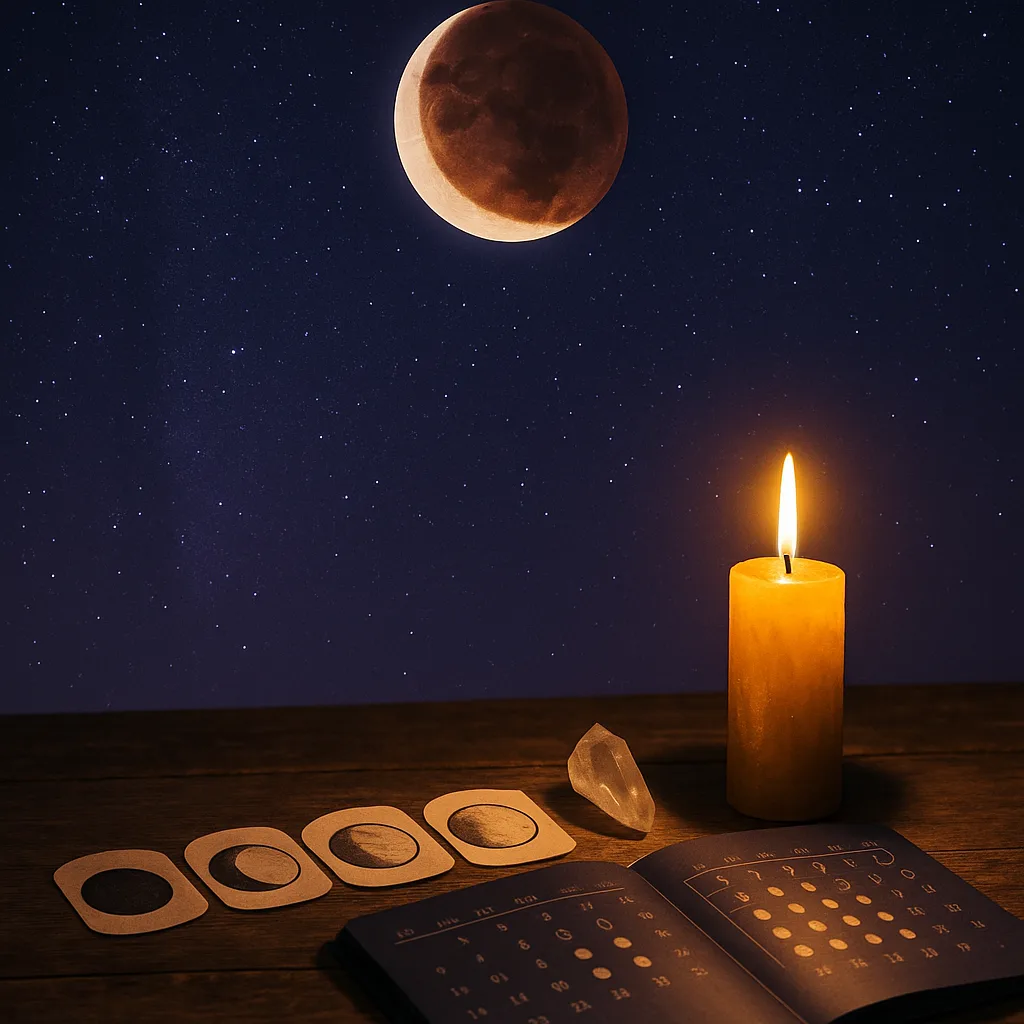
2026 offers several chances to watch this cycle unfold. In August, the New Moon coincides with a total solar eclipse, a rare alignment that amplifies this phase's already strong symbolism of new beginnings. Weeks later, August's Full Moon, the so-called Sturgeon Moon, arrives alongside a partial lunar eclipse, reinforcing the clarity and revelation this phase already carries. The year also brings four supermoons, moments when the New or Full Moon coincides with its closest approach to Earth, making its brightness, and for many its symbolic energy, even more intense.
How to use this rhythm in everyday life
You don't need any elaborate ritual to start paying attention to the Moon's phases. Here are a few simple ideas:
- At the New Moon, take a few minutes to write down, even casually, what you'd like to begin or cultivate.
- At the Waxing Moon, choose one small, concrete action that pushes that desire forward.
- At the Full Moon, notice what's already borne fruit, and allow yourself to celebrate, even the quiet harvests.
- At the Waning Moon, ask yourself what can be released, closed out, or simplified before the next cycle begins.
In the end, looking up at the Moon is a reminder that nothing, not its phases, not us, needs to always be at its peak. There's beauty in the darkness too, in growing slowly, in letting go. The sky repeats this message every month. It's up to each of us to decide whether we'll stop and listen.
Recomendado
Astro Reflexo
Descubra o que os astros revelam sobre quem você é. Em menos de um minuto, calculamos seu Sol, Lua e Ascendente com precisão astronômica e uma inteligência artificial escreve um resumo personalizado só para você.

Recomendado
Estátua Gato Bastet Egito Antigo
Inspiração Egípcia Autêntica Representa Bastet, a deusa egípcia da proteção, harmonia e energia feminina.
Universo Astral Editorial Team · Tarot and moon transits
This article was produced by the Universo Astral editorial team, with AI tools assisting research and drafting and human review before publication. If you spot anything inaccurate or outdated, let us know at our contact email.